
Lidl's Electric Trucks for Electrification
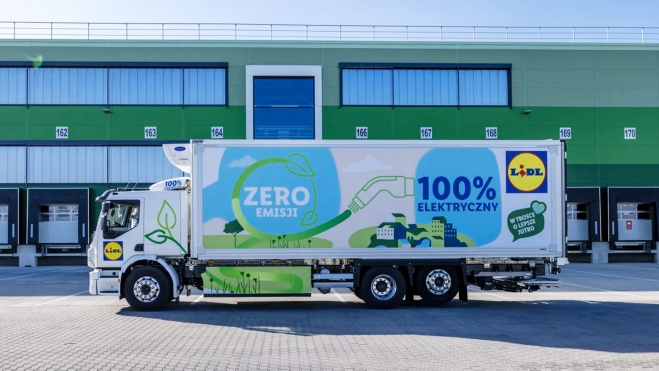
The electrification of heavy goods vehicles faces significant challenges, particularly regarding truck price, weight, and battery size. Developing an adequate charging infrastructure is also imperative. However, some large companies have begun to demonstrate that its use can be profitable even in contexts beyond the limited scope of conventional urban routes. Lidl is one of the companies that has opted for this approach.
The supermarket chain has decided to significantly expand its collaboration with Einride in Sweden after six years of working together. The company's electric trucks have experienced a remarkable increase in performance, going from approximately 474,000 kilometers per year to 832,000 kilometers. This represents a significant increase of 76%. Furthermore, it is crucial to highlight another important aspect: a shift away from predominantly regional routes, with an increase in longer-distance journeys.
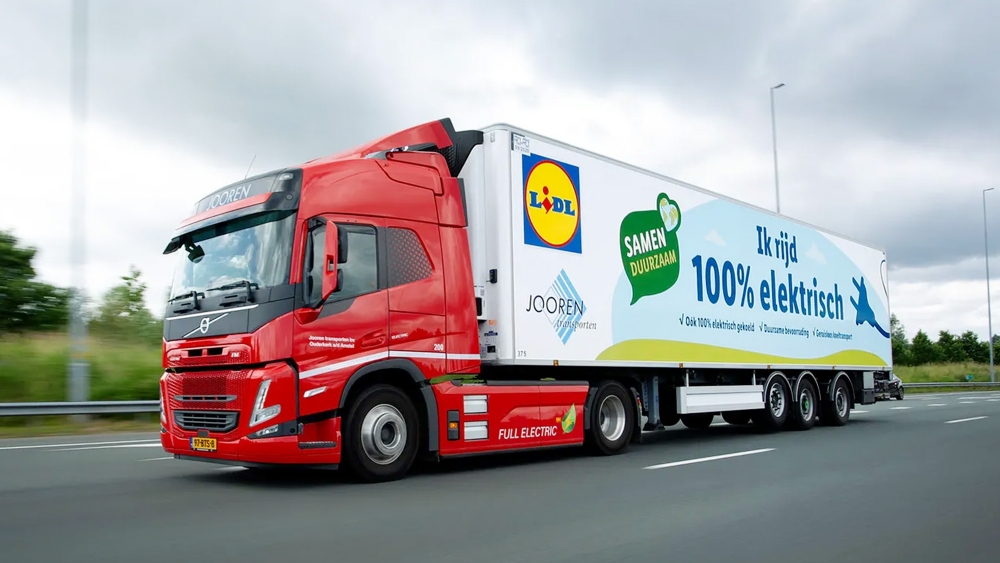
From 474,000 to 832,000 electric kilometers each year.
The partnership between the two companies began in 2020 and, to date, has focused primarily on Stockholm. The new phase of the project will expand operations to cities such as Värmland, Östergötland, Mälardalen, and Dalarna, as well as certain areas of Västergötland and Småland. The electric trucks managed by Einride for LIDL will add approximately 358,000 kilometers each year compared to the current program. The geographical expansion of this initiative aims to demonstrate that these vehicles are no longer limited exclusively to short-haul regional operations.
Rasmus Laursen, Head of Logistics at LIDL Sweden, believes that the results obtained so far justify this expansion. "Since we began our collaboration with them in Stockholm, we have observed that electric transport can be operationally efficient and cost-competitive compared to diesel," he says.
For Lidl, extending this approach to other regions represents a further step in its strategy to reduce emissions associated with its logistics chain. The significance of this decision lies in the fact that it is not a modest experimental demonstration, but rather involves hundreds of thousands of kilometers of actual commercial transport carried out annually.
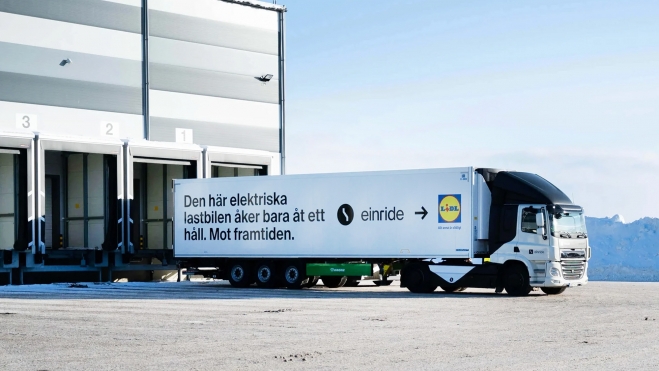
LIDL asserts that electric trucks can compete on cost.
Einride manages operations through its Freight Capacity as a Service (FCaaS) system, which integrates the vehicles themselves, the necessary charging infrastructure, and a digital platform to manage the entire operation. One of the key components is Saga AI, the planning and optimization software developed by Einride. This platform uses operational data and the specific needs of each client to calculate aspects such as the number of vehicles required and their energy consumption. The ultimate goal of this initiative is to reduce transport costs through a combination of electrification, infrastructure, and software.
Profitability is a central theme in the discourse of both companies. Einride maintains that electric transport is progressively becoming a scalable and economically competitive alternative to diesel trucks. For its part, LIDL claims to have verified this competitiveness during the six years it has been working with the Swedish company.
Carl Ceder, Einride's Vice President for the Nordic countries, believes that the expansion demonstrates that a significant milestone is being reached for this type of transport. “This isn’t just a future aspiration, but a viable and economically attractive reality,” the executive asserts. Furthermore, the possibility of a “structural change” in how transport capacity is provided is mentioned.
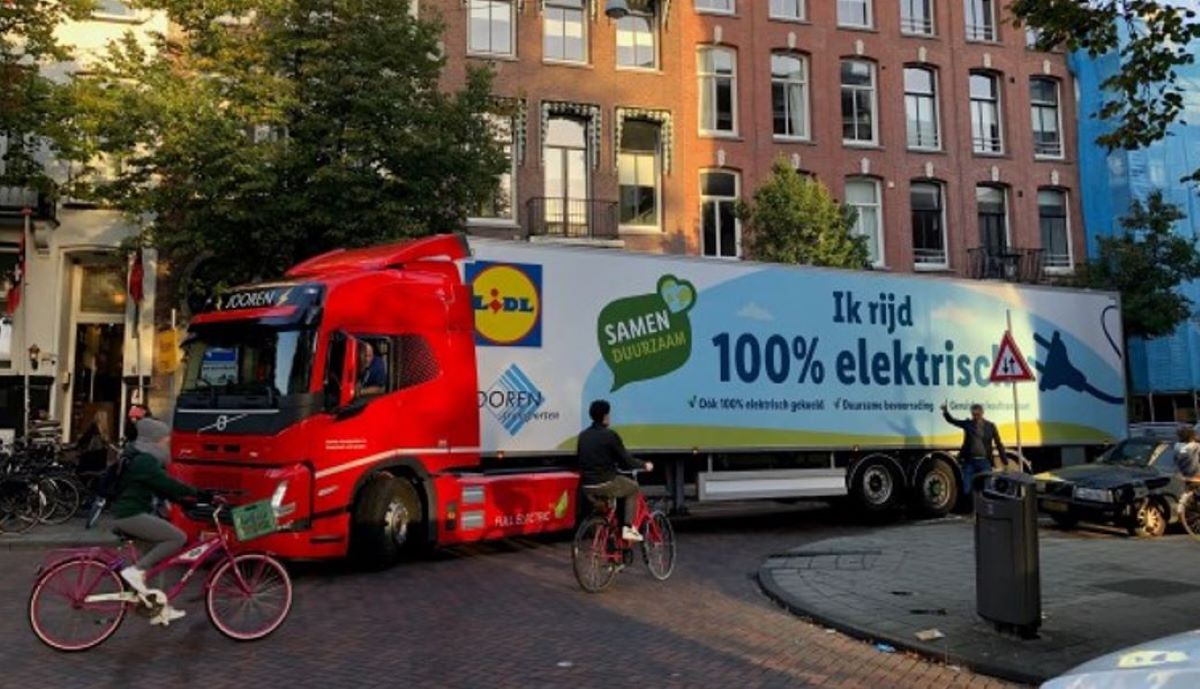
Electric trucks are beginning to disappear from regional routes.
Schwarz Group, the parent company of the German food chain, has decided to temporarily suspend the acquisition of new electric vehicles for corporate use in Germany. However, this decision does not imply a suspension of electrification efforts across all divisions of the company. Heavy transport is precisely one of the areas where significant progress is being made. LIDL has successfully implemented the use of electric trucks in other European markets and currently plans to substantially expand its operations in Sweden, a country that stands out as one of the leaders in decarbonizing transport in Europe.
The significance of this expansion lies not only in reaching 832,000 kilometers annually. To date, a significant portion of heavy transport electrification projects have focused on predictable and relatively short journeys, where trucks can periodically return to a base to recharge their batteries. Einride and Lidl intend to begin implementing this approach on longer routes.