Download the audio
- Introduction.
The class develops Amazon’s electrification efforts using electric trucks in the United States.
- Amazon’s Electrification.
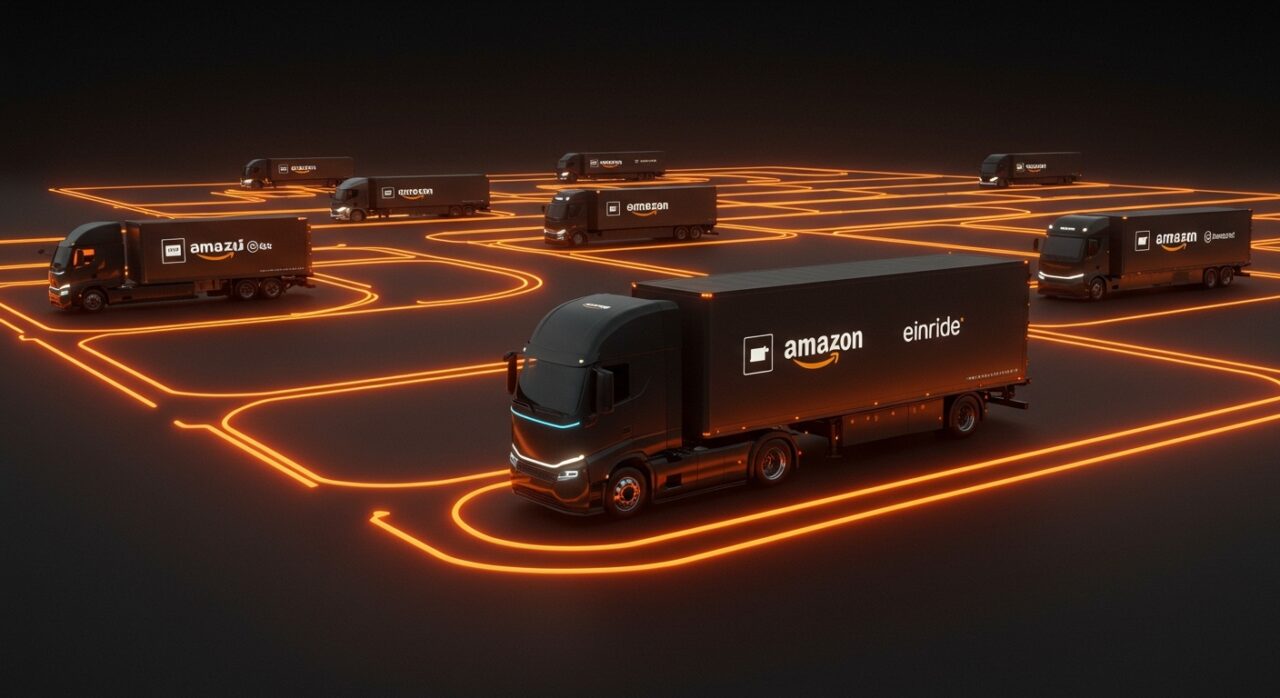
Amazon has taken another step forward in the electrification of its logistics network. The company has formed a strategic partnership with the Swedish firm Einride to deploy 75 electric trucks in the United States, supported by a charging infrastructure at five key locations in its transportation network. The operational goal is ambitious, as the deployment is designed to cover up to 3 million miles per year, which is equivalent to nearly 4.83 million kilometers.
The significance of this news extends beyond the number of trucks involved to the methodology used to put them into service. According to Reuters, Amazon has not provided detailed information regarding the investment made in the agreement, thereby keeping its financial terms confidential. It is also noted that Einride will provide vehicles, charging stations, and management software, allowing Amazon to advance its electrification efforts without having to directly acquire and operate all the assets.
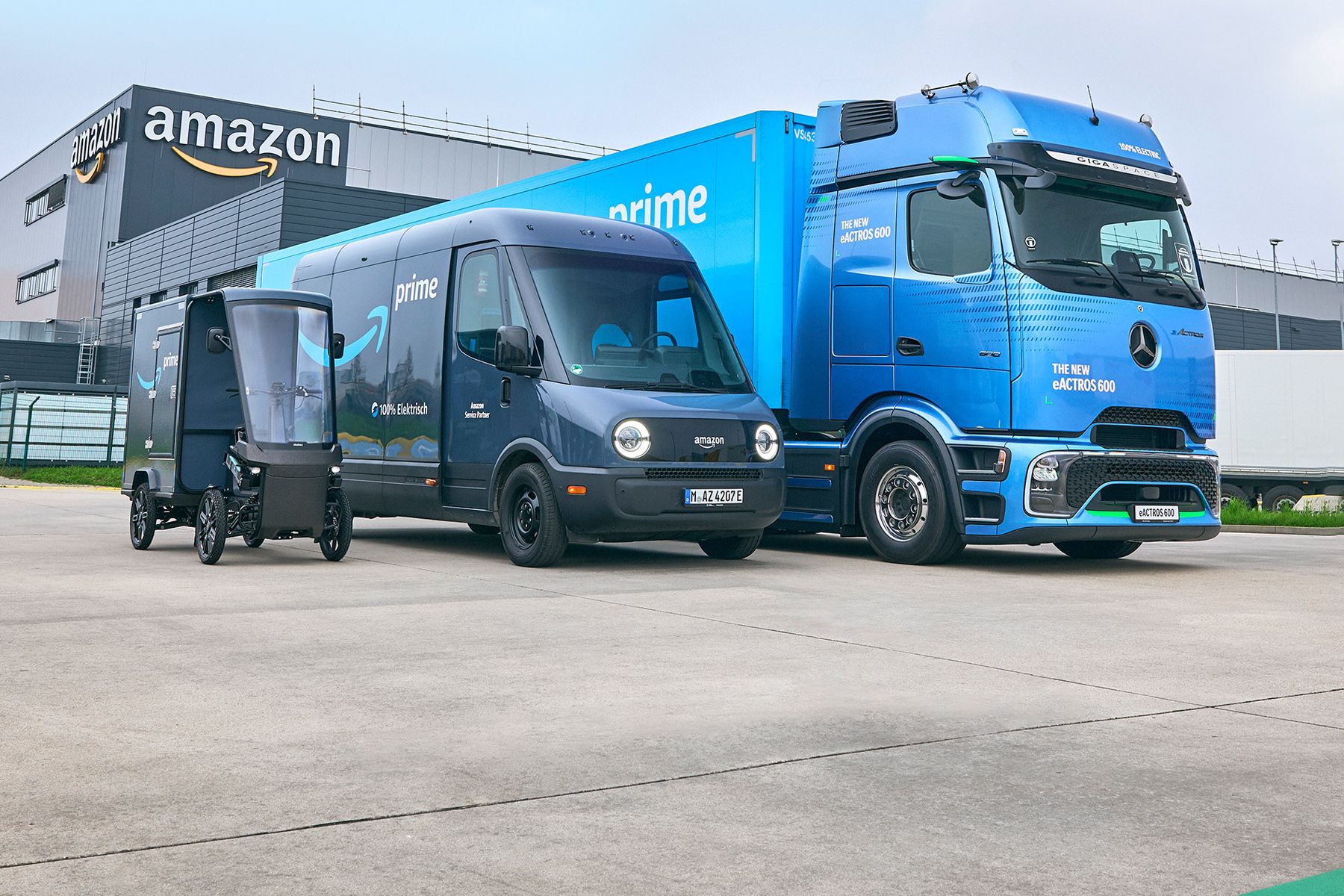
To date, Amazon’s electrification efforts have been most evident in the last mile, where delivery vans are the most distinctive symbol. Consequently, these trucks will be deployed for the so-called “middle mile”—that is, the segment connecting logistics centers, sorting centers, and distribution stations. While this may be perceived as a secondary aspect for the customer, this component is of vital importance for the actual volume of goods handled by the e-commerce leader in its daily operations.
On the technical side, Reuters has reported that specific details regarding the manufacturer of the 75 trucks in the United States have not yet been disclosed, nor have detailed specifications regarding battery capacity, range, or charging power. It has been confirmed that the vehicles in question will be manned heavy-duty electric trucks, ruling out the use of autonomous vehicles. Their operation will be integrated with Einride’s proprietary software, called Saga AI, to manage Amazon’s specific loads and plan recharging efficiently. In a heavy-duty electric truck, this digital layer is no trivial matter, as its daily reliability is crucial for route planning and execution.
As an example of the type of heavy-duty electric vehicle Amazon is already incorporating into its fleet, the company itself announced in early 2025 the purchase of more than 200 Mercedes-Benz eActros 600s for Germany and the United Kingdom. This 40-ton model offers a range of up to 500 kilometers per charge, thanks to a total battery capacity of approximately 621 kWh. At the time, Amazon stated that it was deploying 360 kW fast chargers at its facilities, with a capacity that allows the truck to reach an 80% charge in less than an hour. For now, these specifications have not been confirmed for the 75 trucks in the United States. However, they do reflect the technical level at which Amazon intends to operate when electrifying high-traffic routes.
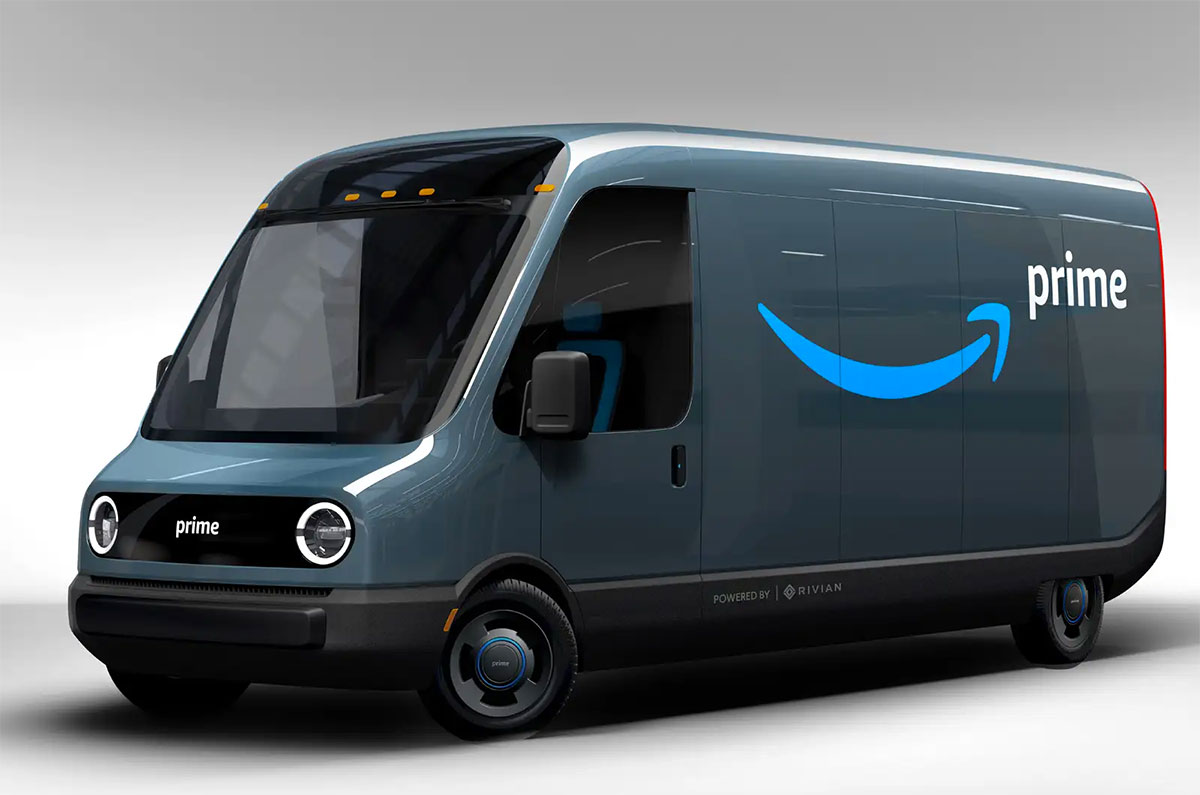
In its 2024 sustainability report, Amazon confirms that it operates more than 31,400 electric vans and other electric vehicles globally, including more than 24,000 Rivian vehicles. To support this growth, the company has installed 24,000 chargers at 50 delivery stations across the United States, creating the country’s largest private charging network. In 2024, the company delivered a total of 1.5 billion packages using electric vehicles.
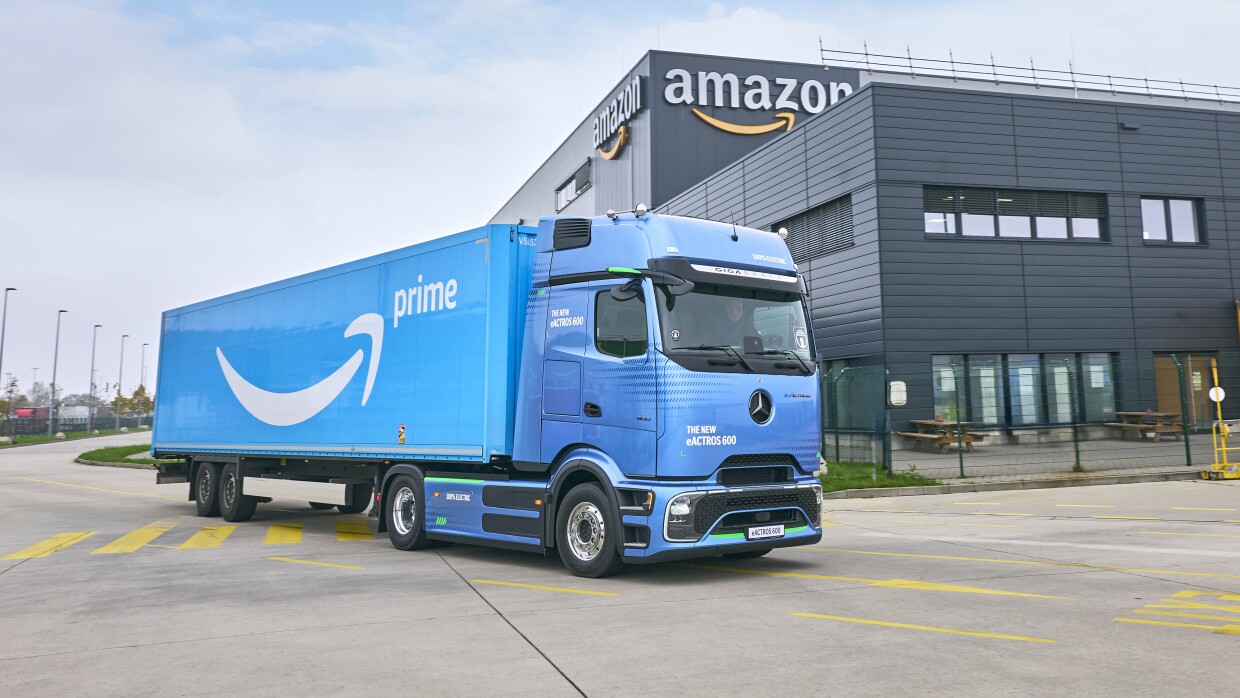
Likewise, the electrification of middle-mile transport is gaining increasing importance within the group. According to Amazon, its more than 200 eActros 600s are expected to join a fleet of 300 electric middle-mile vehicles that will be deployed in the United Kingdom by the end of 2025 and in Germany in 2026. Meanwhile, in 2024, the company had 360 electric yard hostlers in North America, vehicles used to move trailers within logistics centers that often go unnoticed outside the industry.
This move is particularly significant, as it comes at a critical juncture for the electric truck sector in the United States. According to Reuters, this market continues to face two fundamental challenges: the high cost of vehicles and limited heavy-duty charging infrastructure. The agency itself cites Nikola’s bankruptcy in 2025 as evidence that the electrification of heavy-duty transportation still faces significant challenges, even for companies that initially promised a revolution in this sector.
For its part, Einride maintains that the electrification of freight vehicles is not limited to the direct replacement of diesel engines with electric ones, but rather involves a comprehensive restructuring of routes, loading times, logistics windows, and the use of existing infrastructure. In this context, the software carries nearly as much weight as the truck itself. It is worth noting that the Reuters news agency has highlighted the integration of Saga AI, as well as the fact that Einride has been marketing its solution as a combination of vehicles, chargers, and smart management for an extended period, rather than merely placing hardware on the table.
Meanwhile, Reuters notes that Einride announced in February that it had raised approximately $113 million through a PIPE transaction and that it aims to go public via its planned merger with Legato Merger Corp III. Securing a contract with this level of visibility not only provides the company with operational momentum but also grants it access to a global distribution network. Furthermore, it provides a highly significant commercial credential at a time when the market demands tangible demonstrations of scalability, not just technological promises.
- Thank you for your time.
The class has developed Amazon’s electrification efforts using electric trucks in the United States, see you soon.