Battery swapping technology for motorcycles and light electric vehicles
While Europe is in the process of implementing an electric vehicle charging infrastructure to optimize energy recovery efficiency, Kenya is implementing an alternative solution that involves swapping batteries in a record time of less than two minutes. SUN Mobility, in collaboration with Vivo Energy, has launched its open battery swapping network in the country, which will also serve as a starting point for its expansion across Africa.
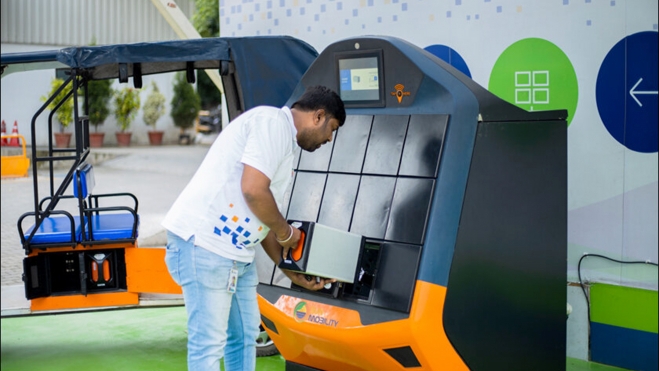
The infrastructure, currently in the implementation phase, consists of 35 operational stations between Nairobi and Mombasa. Its main objective is to facilitate the transport of people and goods using vehicles such as motorcycles, scooters, passenger tuk-tuks, and electric cargo tricycles. It is important to note that this technology is not limited to a single manufacturer, allowing for the integration of various vehicles into the open architecture developed by SUN Mobility.
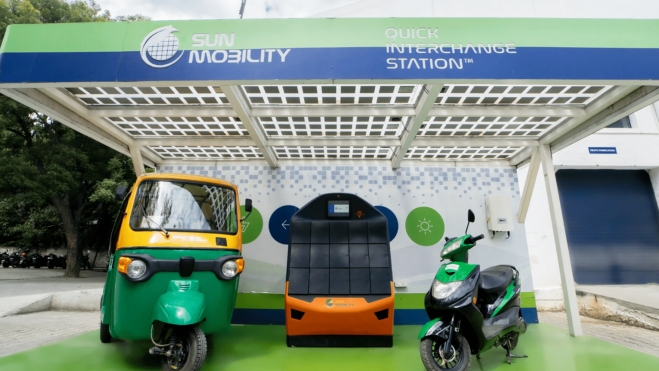
On a motorcycle, swapping the battery can make more sense than charging it.
Battery swapping is particularly advantageous for small vehicles, as their batteries are compact enough to be quickly removed and replaced.
The driver arrives at a station, hands over the battery pack with a low charge, and receives another with a significantly charged one. SUN Mobility guarantees that its stations can complete the process in under two minutes and perform more than 200 swaps daily.
For an individual user, saving half an hour might be a small benefit. For a delivery driver, professional motorcyclist, or tuk-tuk driver who works long hours, it can mean something far more significant: virtually eliminating the downtime of their vehicle.
It's worth noting that Kenya had already begun testing this system. In February, an electric tricycle using SUN Mobility's technology was launched in Nairobi. This vehicle was capable of swapping its batteries in record time, allowing for a rapid return to service.
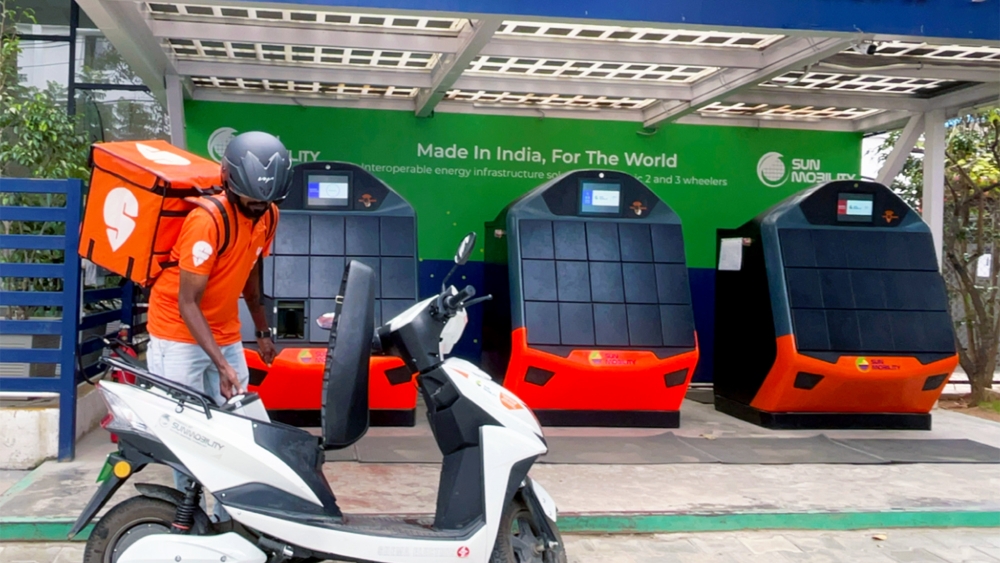
The battery doesn't necessarily have to be purchased with the vehicle.
The exchange also presents another difference compared to the typical European model. SUN Mobility offers a service that separates the vehicle from its battery through a Battery-as-a-Service (BaaS) scheme. Instead of assuming the full cost of the battery when purchasing the motorcycle or tricycle, the user can choose to pay only for the energy used.
The company maintains that separating these two elements reduces one of the main barriers to entry into the electric vehicle market: the initial price of the battery. It also addresses the transfer of responsibilities to the grid operator, including maintenance, battery health, and replacement.
This model is particularly attractive for light commercial vehicles, where the acquisition cost and downtime have a significant impact on the bottom line.
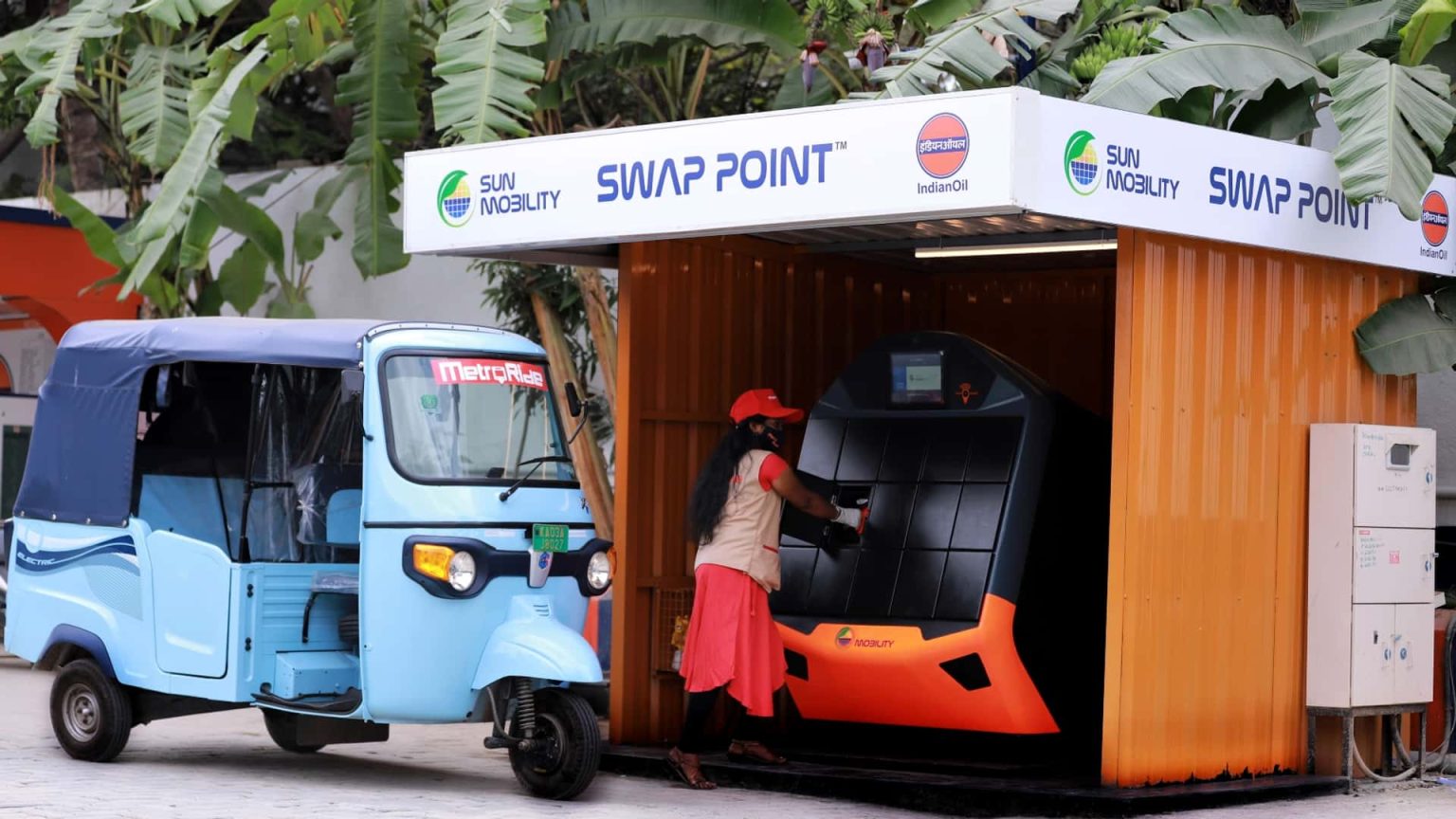
Africa can follow a different path than Europe.
The project carried out in Kenya demonstrates that the electric transition doesn't necessarily have to unfold in the same way in all markets. In the tourism sector, it makes more sense and is more convenient to install fast, home chargers for vehicles equipped with a large, fixed battery. For motorcycles, mopeds, and tricycles, removing a small battery pack can be significantly easier than building an infrastructure capable of handling large-scale charging in a short period.
Furthermore, a network compatible with different manufacturers would prevent each brand from having to install its own stations, which could limit battery swapping if incompatible systems proliferated.
SUN Mobility intends to use Kenya as a platform to extend this ecosystem to other African markets in collaboration with Vivo Energy.
The race to reduce charging times could lead to two markedly different responses. One strategy involves building increasingly powerful chargers. The other, much simpler alternative conceptually, allows drivers to travel without interrupting their journey: an empty battery is removed, a full one is installed, and the trip resumes.