
Converting old gasoline-powered motorcycles into 100% electric ones
Buying an electric motorcycle isn't the only way to stop using gasoline. In India, another growing trend is retrofitting existing vehicles to run on electricity by removing their internal combustion engines.
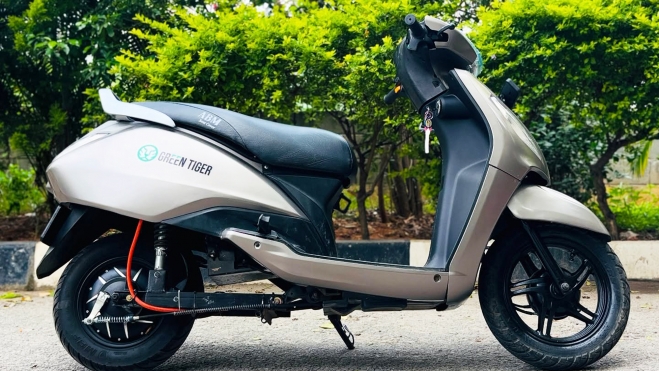
Green Tiger Mobility, a company founded by Ashish Dokania, specializes in retrofitting gasoline-powered mopeds. After setting up facilities in Bengaluru and Hyderabad, the company has expanded its operations to Nagpur, where the project has received public support from the Indian Minister of Road Transport, Nitin Gadkari.
This approach is particularly appealing in a country with a large fleet of two-wheeled vehicles. Instead of dismantling a motorcycle that retains its frame, suspension, and other usable components, only the parts necessary for it to run on electricity are replaced.
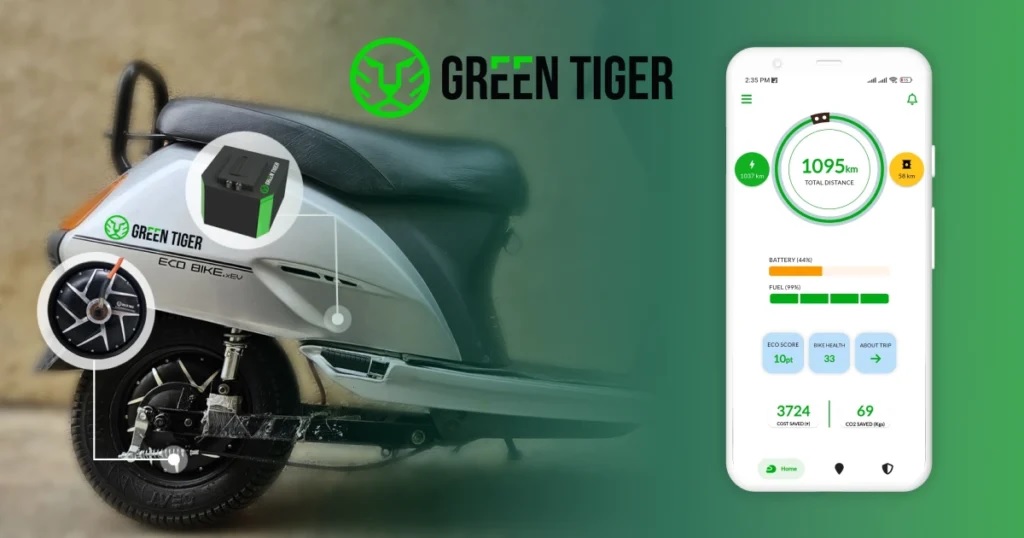
What needs to be changed to convert a gasoline motorcycle to electric?.
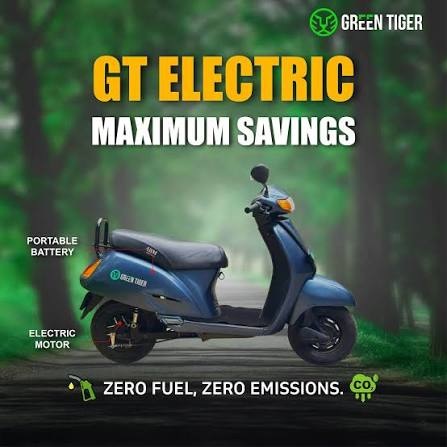
The process is more involved than simply installing a battery and a small motor. According to the company, the kit consists of a battery, an electric motor, a controller, a rear wheel, a display, a throttle, wiring, and the necessary brackets. Modifying the motorcycle involves adapting certain components, such as the swingarm and suspension.
The result is a vehicle that retains much of its original structure but eliminates the combustion engine, fuel tank, and other gasoline-related components.
This reuse can offer two advantages. First, it avoids the need to purchase a completely new vehicle. Second, it allows for the reuse of materials and components with a long remaining lifespan. The challenge lies in making the conversion economical enough to offset the initial costs.
The battery accounts for approximately half the cost.
This is where the main obstacle arises. Dokania states that battery-related components represent approximately 50% of the total conversion cost. While lead-acid batteries are more economical, they have a shorter lifespan compared to lithium-ion batteries, which, according to company estimates, can last up to 50,000 kilometers.
Furthermore, they can be designed as removable batteries, allowing the owner to take them home for charging. This solution is particularly beneficial for those who live in buildings without charging points in the parking area.
Gadkari has specifically requested that these conversions remain affordable so they are not limited to users with higher purchasing power.
And when the battery is no longer suitable for the motorcycle, it can still have another life.
The project also presents a second interesting idea. Once a used battery has experienced a significant loss of capacity, making it unsuitable for use in vehicles, Mr. Gadkari proposes reusing it as a stationary energy storage system in homes. Although it no longer provides the necessary range for a motorcycle, it can continue to store electricity from the grid or solar panels.
This is an innovative and different way of understanding electrification. This approach is not limited to simply replacing millions of gasoline-powered motorcycles with new electric motorcycles, but also involves the efficient use of existing vehicles, upgrading their propulsion systems, and reusing their batteries once they are depleted.
In European markets like Spain, the major additional challenge would be obtaining homologation for a modification of this magnitude. However, from a technical perspective, India is demonstrating that motorcycle electrification doesn't have to be limited to dealerships.