

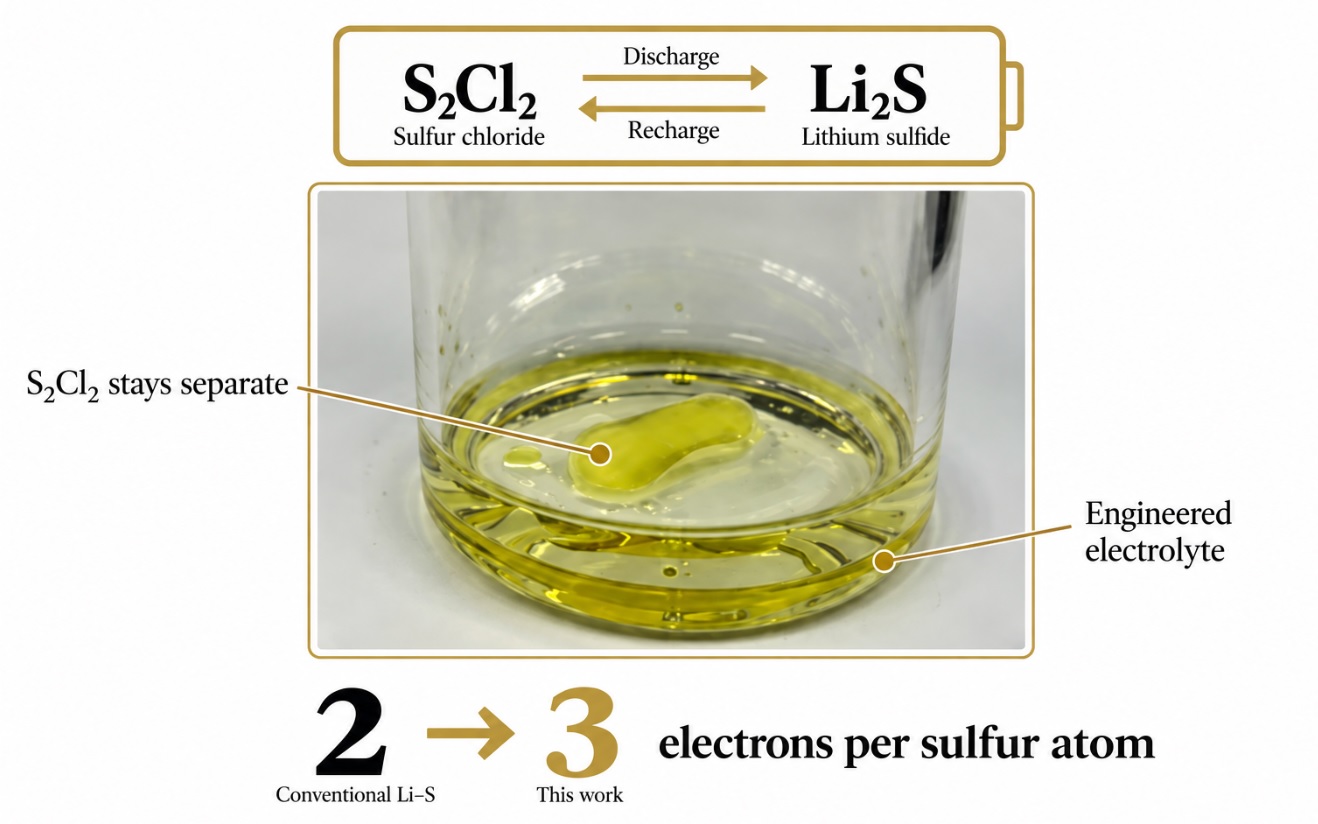
The Potential of Lithium-Sulfur Batteries in Electric Vehicles
Lithium-sulfur batteries have long been considered a promising alternative to conventional lithium-ion cells, as sulfur is an abundant element capable of storing a significantly greater amount of charge per unit of weight. However, their long-term implementation and practical application have proven to be a significant challenge.
As detailed in a study published in the journal *Nature Energy*, a joint team from Vanderbilt University and the University of Maryland describes a new approach in which sulfur participates in an additional energy-storage reaction. The result is a sulfur-based battery that operates at a higher average voltage and stores more charge.
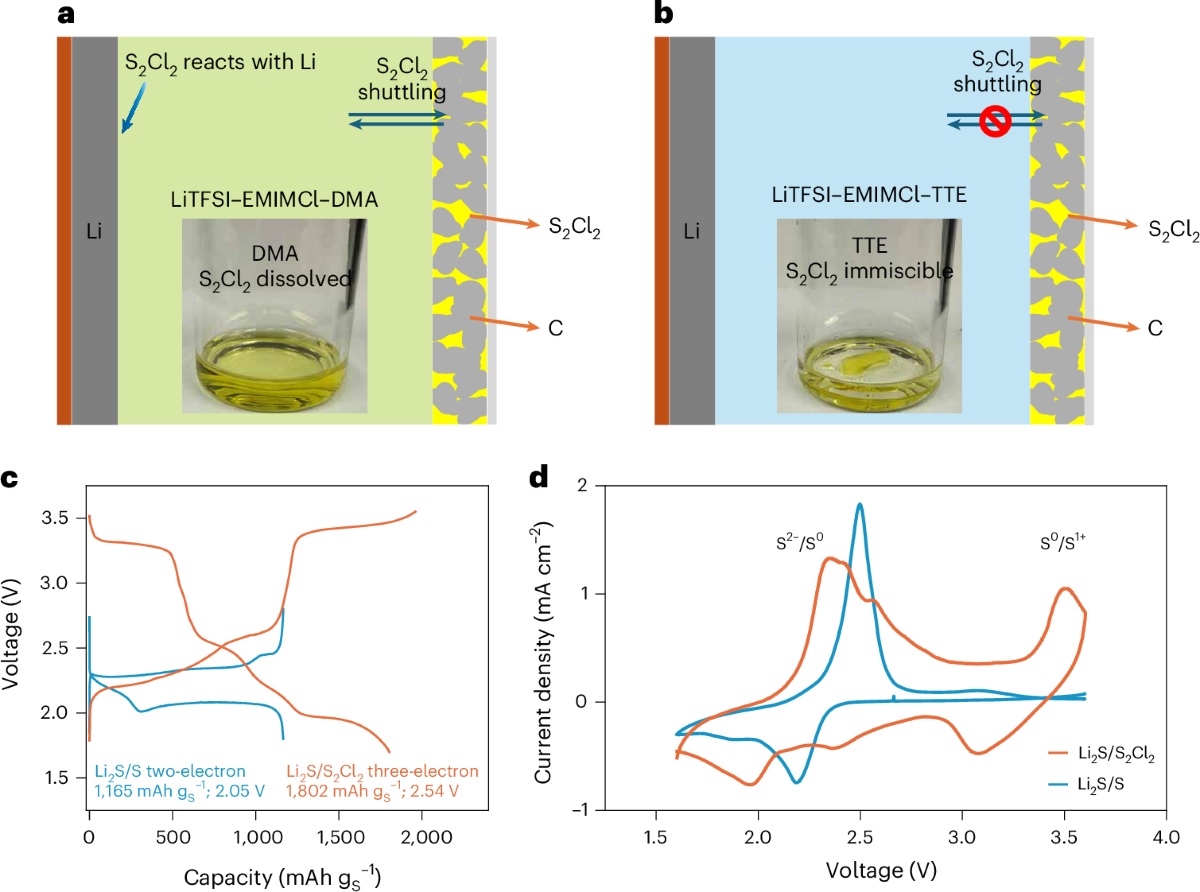
A lithium-sulfur battery prototype stores 1,700 watt-hours of energy.
In contrast to conventional systems, where each sulfur atom exchanges two electrons, the new system incorporates chlorine to facilitate the transfer of a third electron. Laboratory tests showed an approximately 58% increase in the sulfur’s storage capacity, as well as an increase in the average operating voltage from about 2.05 volts to 2.54 volts. By combining greater charge-storage capacity with a higher voltage, it has been demonstrated that one kilogram of sulfur in the experimental cell can store more than 1,700 watt-hours of energy.
To ensure reversibility, the researchers used molecular simulations to design an electrolyte. This electrolyte keeps the chlorine reactive while simultaneously preventing the resulting sulfur-chlorine compound from dissolving and migrating toward the metallic lithium anode.
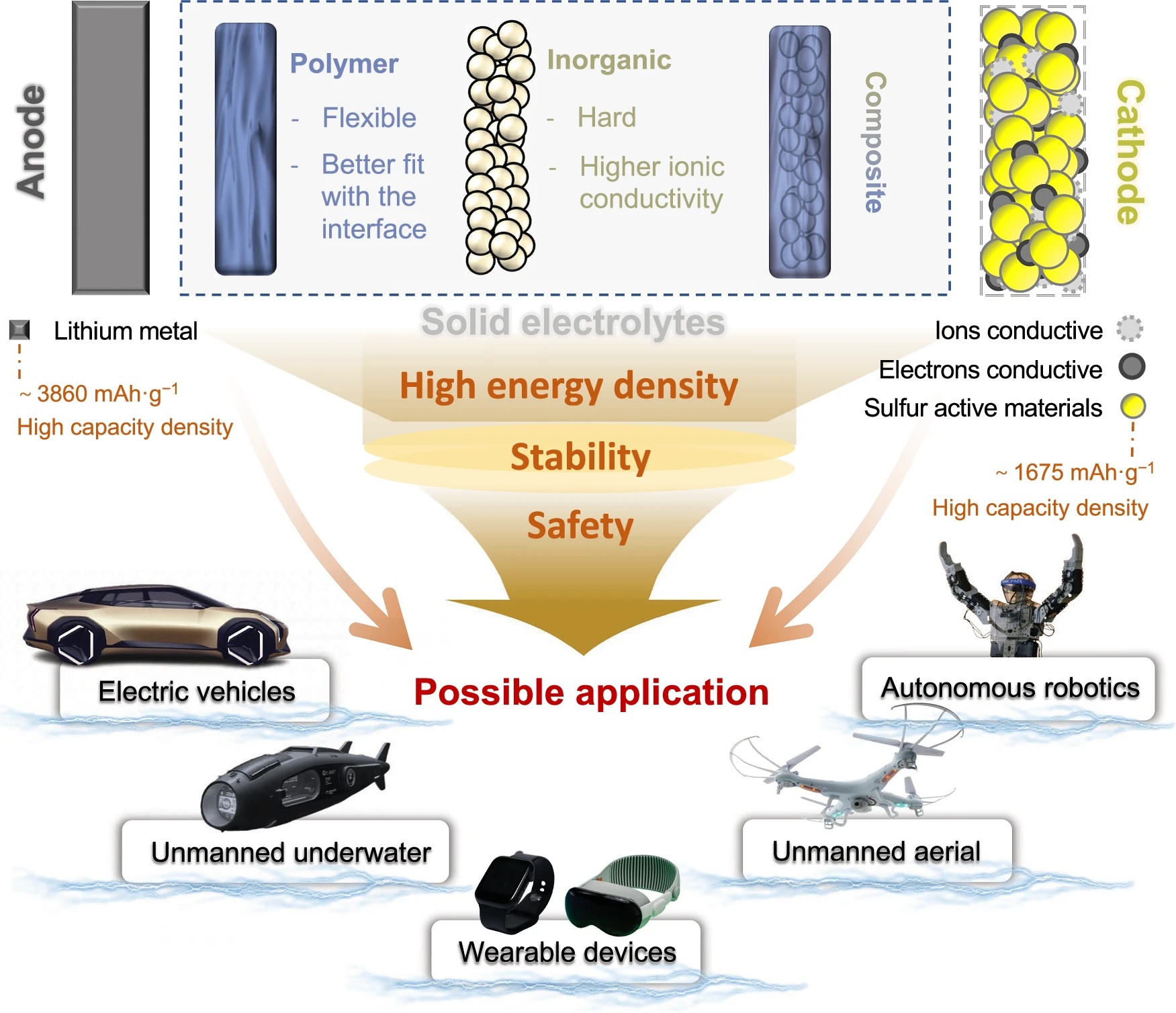
78% of capacity is retained after 100 charge cycles. As confirmed by various spectroscopic techniques, sulfur repeatedly enters this new state during charge and discharge processes. A pouch-type cell demonstrated a 78% retention of its initial capacity after 100 charge cycles.
However, it should be noted that significant work remains to be done before commercial implementation, as the current prototype utilizes a lithium-metal anode and higher electrolyte concentrations. Taking into account all essential battery components—not just the electrode—scientists estimate that this approach could achieve a gravimetric energy density at the cell level of 477 Wh/kg. This figure is approximately 37% higher than that of comparable conventional lithium-sulfur systems.
According to Deen Jiang, a professor of Chemical Engineering and Chemistry at Vanderbilt University and co-author of the study, "the traditional way of conceptualizing lithium-sulfur batteries does not fully leverage the redox capacity of sulfur." "Our goal was to verify the feasibility of expanding the redox capacity of sulfur for use in energy storage."