

Electrifying Diesel Trucks Using an Electric Semi-Trailer
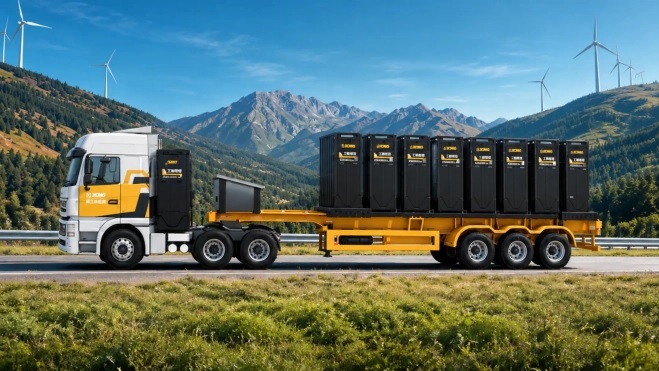
The electrification of heavy transport faces a significant obstacle: the high cost of replacing current diesel fleets with next-generation electric trucks. Therefore, while manufacturers focus on developing higher-capacity battery vehicles, a US startup proposes an innovative approach: instead of replacing the truck, it suggests partial electrification using a motorized trailer equipped with a high-capacity battery, located between the tractor unit and the semi-trailer.
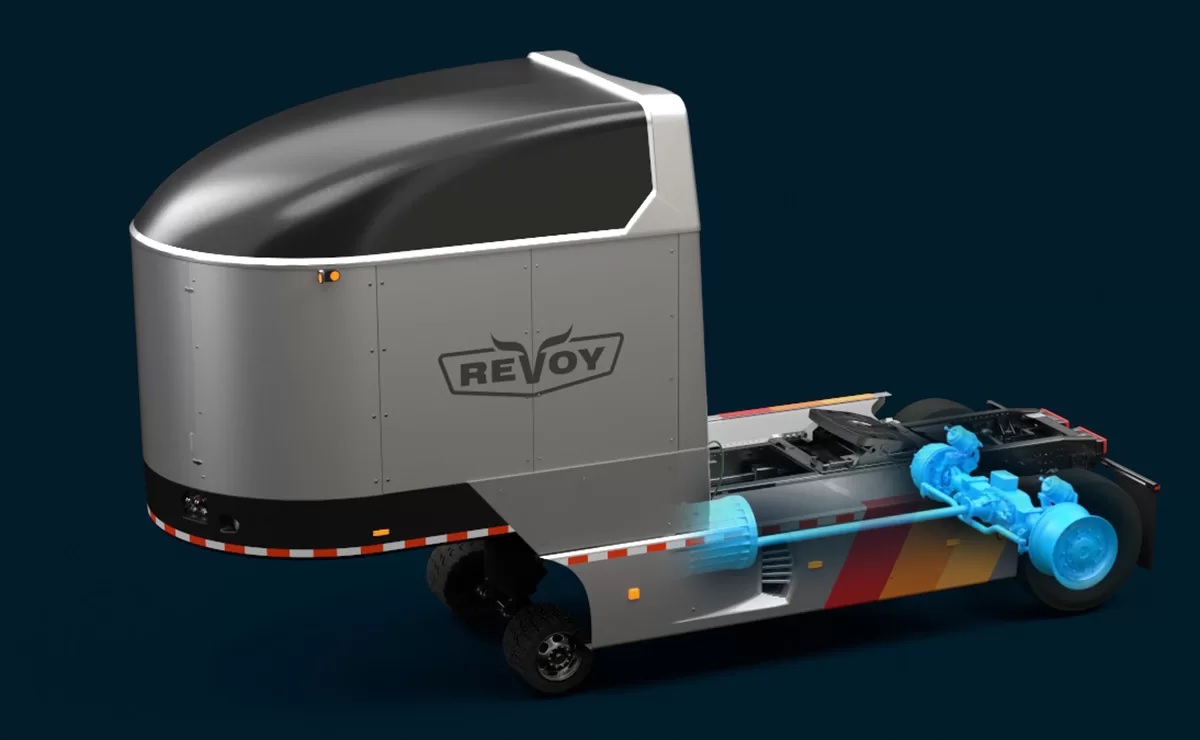
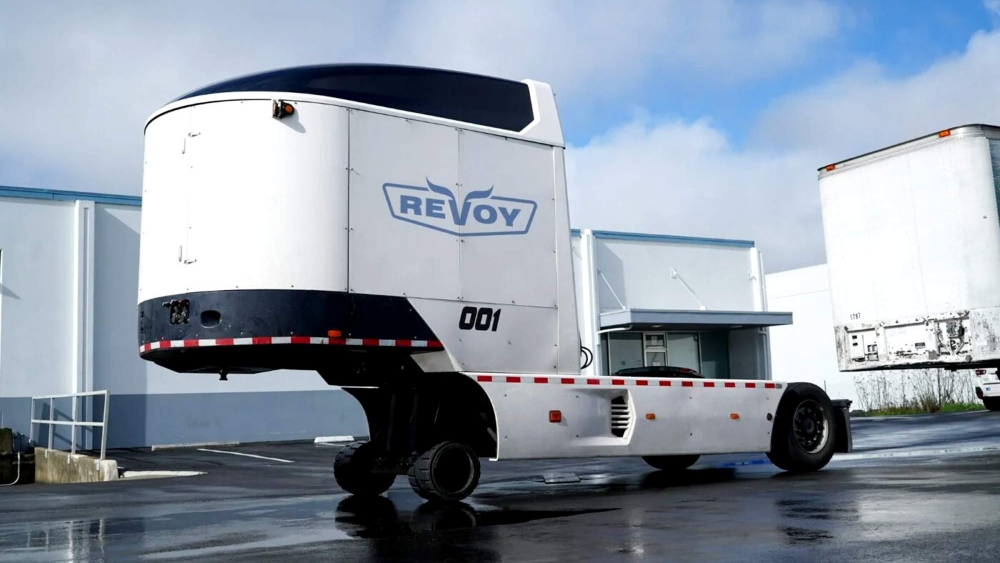
The company, called Revoy, recently secured $27 million in funding from investors to accelerate the development and commercialization of this technology. The proposed solution is called the electric truck dolly and consists of a self-propelled platform that attaches to the standard fifth-wheel hitch of any tractor unit.
Lower fuel consumption and 85% fewer emissions.
Unlike a conventional trailer, this module incorporates an electric drive axle powered by a 575 kWh LFP (lithium iron phosphate) battery, a capacity comparable to that of many heavy-duty electric trucks. The system allows for the integration of electric assistance into a diesel truck while driving, without requiring modifications to its original mechanics, resulting in a significant reduction in fuel consumption and emissions.
The operation is quite straightforward: when the driver accelerates, the system interprets the power demand, and the electric axle provides the necessary torque to move the unit, thus relieving the diesel engine of some of its load. During braking, the electric motor acts as a generator, enabling energy recovery through regenerative braking and partial battery recharging. This process occurs automatically, without requiring the driver to make any adjustments to their usual driving style.
According to Revoy, the system can propel an articulated trailer weighing up to 36.3 tons for a range of 320 to 400 kilometers in electric mode, depending on the type of route. The company guarantees that this assistance reduces carbon dioxide emissions by up to 85%, while also significantly optimizing fuel efficiency. Under normal conditions, a typical American heavy-duty truck consumes between 29 and 39 liters of diesel per 100 kilometers, while with Revoy's system, that figure could be reduced to the equivalent of between 6 and 12 liters.
It's not for sale; it's a subscription service.
It's worth noting that one of the project's highlights is the combination of technology and business model, which represents a significant innovation in the business world. Instead of selling the semi-trailer directly, Revoy will offer the service through a per-kilometer subscription. The company will provide the electric platforms and make them available to fleets operating in corridors with existing charging infrastructure. In this way, carriers will not have to make a large initial investment to electrify part of their operations, which is one of the main obstacles to the widespread adoption of electric trucks.
Recharging represents a significant change from the usual model, since, instead of connecting the vehicle to a high-power charger for long periods, Revoy plans to deploy stations where the battery module can be swapped for a fully charged one in less than five minutes. The procedure is similar to the battery swapping used by certain brands of electric cars and motorcycles, such as NIO and Silence, although it has been adapted for heavy transport. The company estimates that this system mitigates one of the main drawbacks of electric commercial vehicles: the downtime required to recharge the batteries.
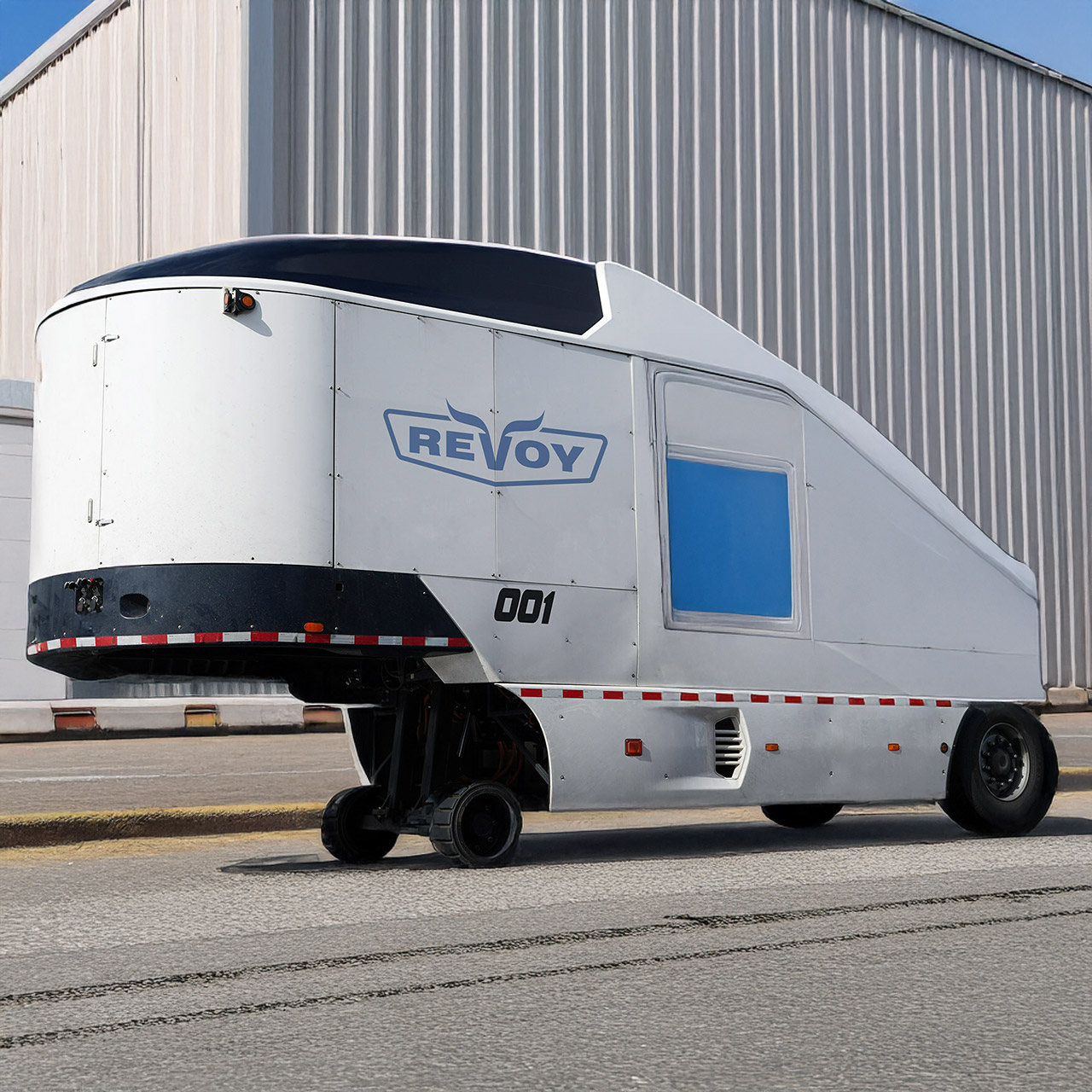
The module also incorporates various electronic assistance systems that go beyond propulsion. Among the system's features are jackknife avoidance, rollover mitigation, blind spot detection, and even functions that facilitate reversing maneuvers. The main objective of this project is twofold: to reduce fuel consumption and to increase driving safety.
The recent funding round, which totaled $27 million, brings Revoy's total investment to $41 million. With the aim of beginning commercial operations this year, the company has secured the necessary resources to carry out its expansion plans. The project will be implemented on a route of approximately 200 miles (320 kilometers) near Portland, Oregon. An initial fleet of four electric platforms will be used. Simultaneously, work is underway on a second generation of the system that will utilize a smaller, more economical battery while maintaining similar range, in order to reduce costs and facilitate future expansion.