
CATL will create a battery-swapping network for electric trucks.
It will begin by establishing a network in the United Kingdom that will support hundreds of thousands of trucks across the continent.
Heavy-duty trucking is at a pivotal moment in its transition toward sustainability—a process that is not without its challenges. While electric motors already demonstrate operational efficiency similar to that of traditional combustion alternatives—and even superior in some cases—managing charging times remains the main obstacle for transportation companies. The massive batteries required to power heavy-duty vehicles necessitate prolonged stops at high-power chargers, which impacts logistics profitability. To address this issue, CATL has designed a strategy that promises to transform Europe’s transportation infrastructure through the widespread deployment of battery-swapping stations for electric trucks.
This initiative is being carried out through a 50-50 strategic partnership with Octopus Energy, the UK’s largest energy retailer. The two companies have formed a joint venture called Swaptopus, whose main objective is to deploy an automated battery-swapping network for heavy-duty vehicles. The project, which will mobilize more than 30,000 million pounds (nearly 35,000 million euros) in private investment, aims to provide technical support for the 300,000 electric trucks already in operation across the continent and to optimize the use of local energy resources.
Swap Technology vs. Ultra-Fast Charging
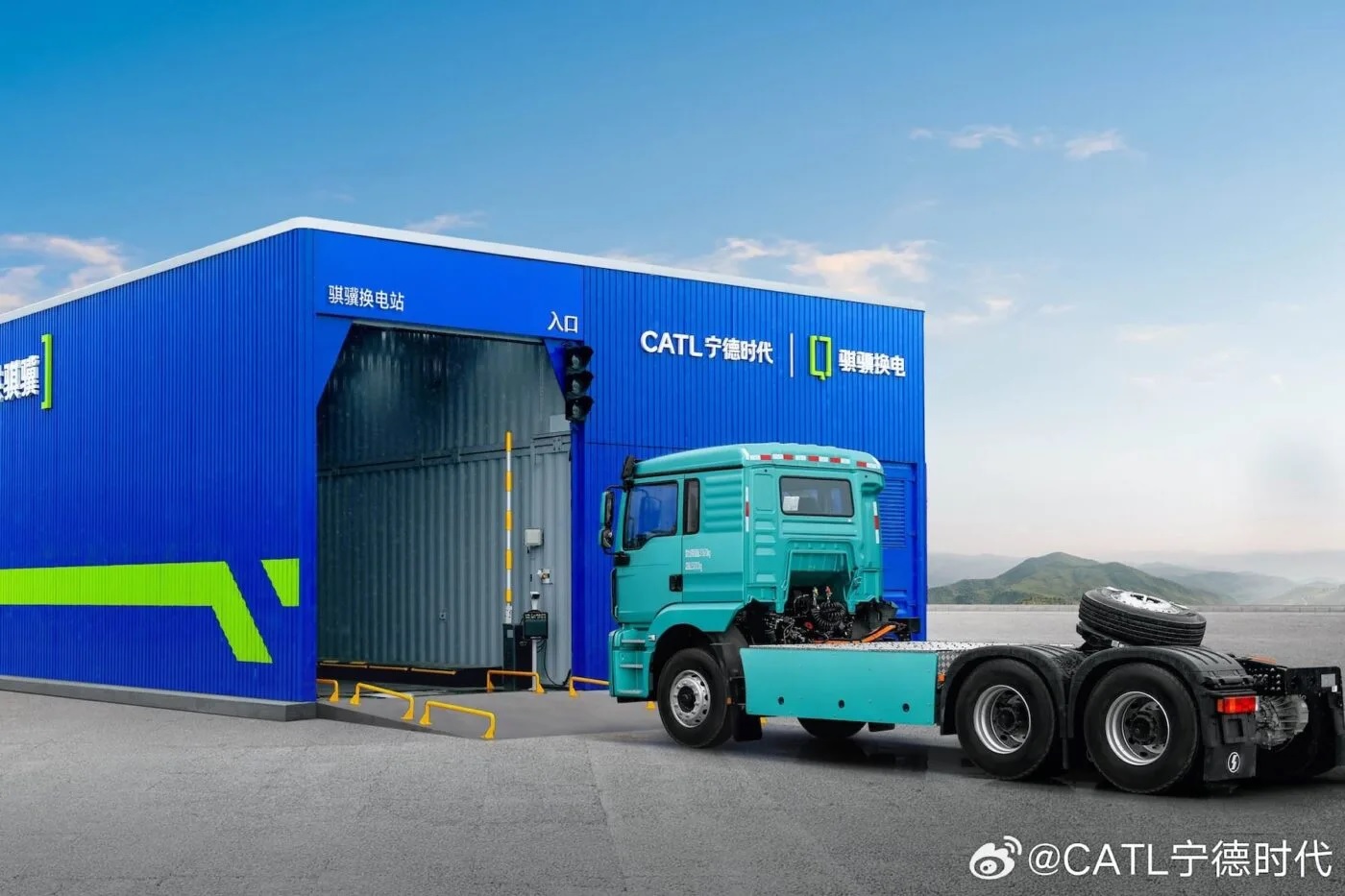
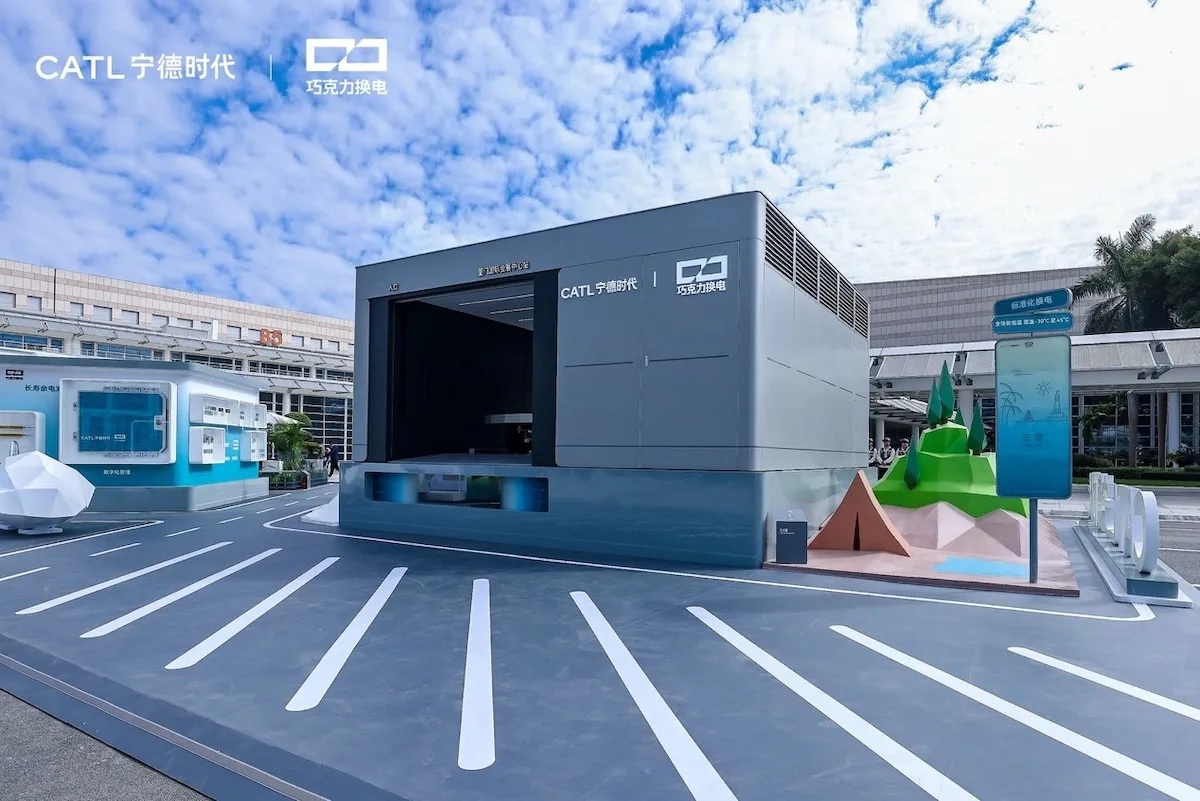
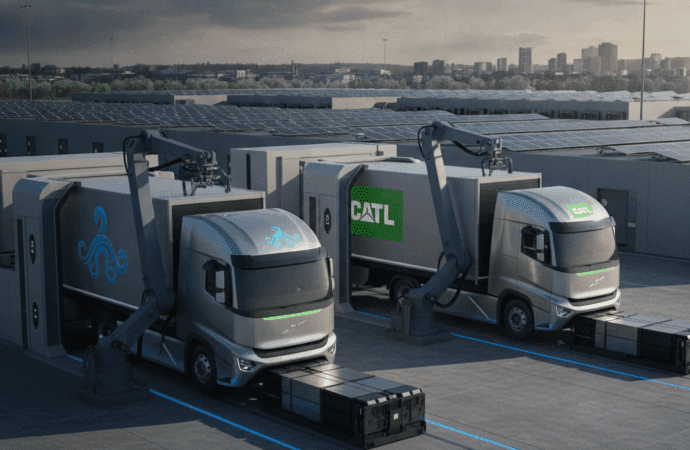
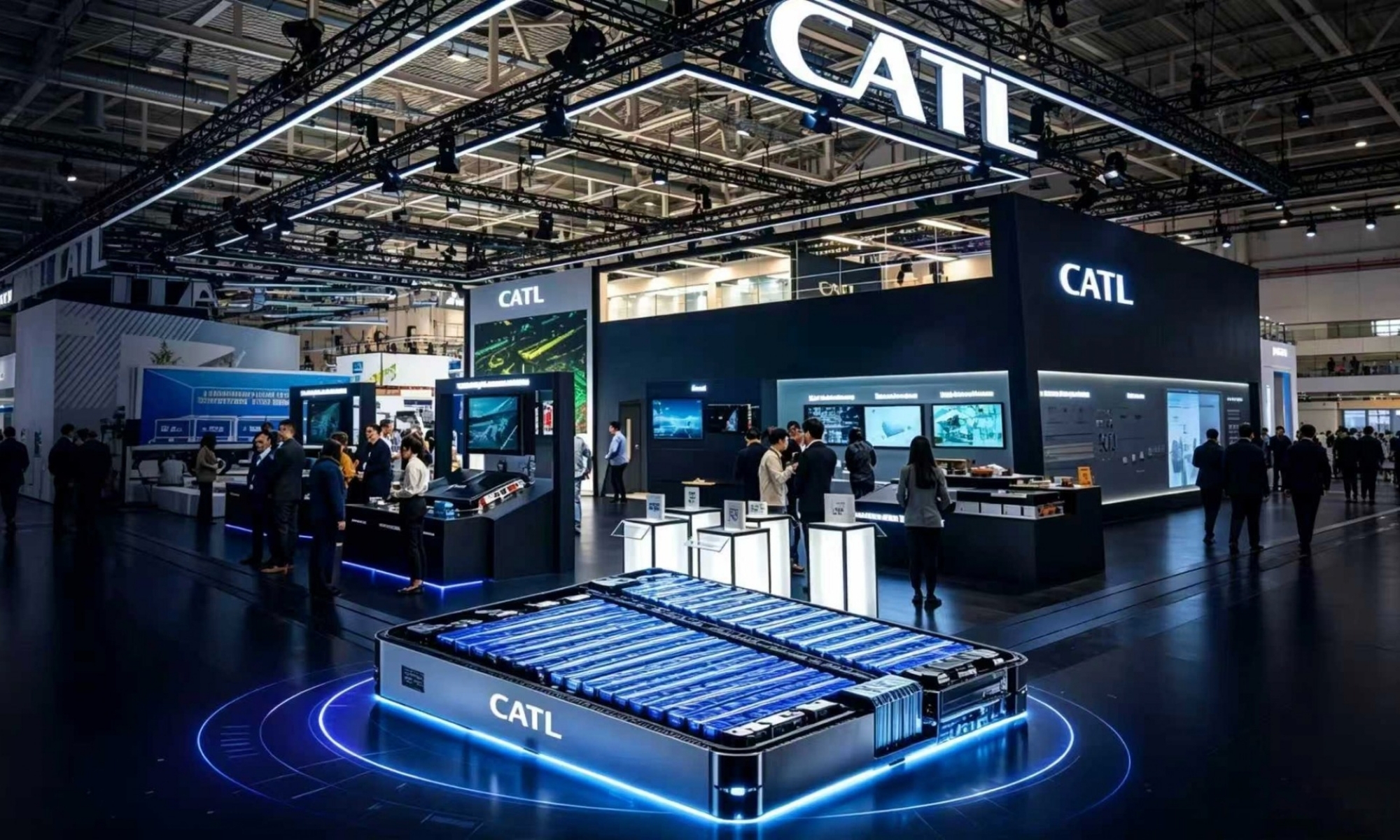
This partnership’s proposal is based on an operational principle that transforms traditional refueling dynamics. Instead of subjecting the vehicle to critical charging powers that accelerate cell degradation, the truck pulls into a robotic platform that removes the depleted battery pack and replaces it with a charged one in just five minutes. From an operational standpoint, this transfer speed far exceeds the time it takes to fill a conventional fuel tank and allows a battery pack with a capacity exceeding 500 kWh to be integrated into the vehicle immediately.
The feasibility of this rollout is based on the experience CATL has gained in its domestic market through its specialized subsidiary, Qiji Energy. The manufacturer already operates hundreds of active stations in China and plans to cover 80% of the country’s major logistics routes by the end of the decade. The technology relies on standardized modules installed under the truck’s chassis, which provides significant structural flexibility, as it allows transportation companies to adjust the volume and weight of the batteries based on the payload of the route they will be traveling. By separating ownership of the vehicle from that of the battery, the acquisition cost of electric trucks is significantly reduced, thereby eliminating another barrier to entry for companies in the sector.
A well-defined roadmap for deployment.
The rollout of this network in Europe will follow a very detailed, phased plan. The plan calls for the first mega-hubs to begin operations in the United Kingdom in 2027, serving as full-scale testing and logistics validation environments. Once everything has been verified to be functioning correctly, the rollout will expand evenly across the continent, with the goal of having more than 30 large, strategically distributed transfer stations operational by 2035.
These centers will not function as isolated service points but will be scaled to handle the continuous flow of thousands of heavy-duty trucks per day. The industry’s interest in this infrastructure has grown in tandem with fuel price volatility. However, for the model to be fully efficient at the European level, a round of discussions with the continent’s major manufacturers will be necessary, since most electric trucks from European brands use fixed battery architectures integrated into the frame, unlike Asian manufacturers, who already produce vehicles with specific type approval and chassis natively adapted for CATL’s modular, interchangeable system.
Swap stations as assets for stabilizing the power grid.
In addition to the logistical benefits and reduced vehicle downtime, the Swaptopus project incorporates an important energy dimension. The swap stations constantly house dozens of high-capacity battery packs undergoing thermal conditioning and charging. Managed by advanced software and artificial intelligence, these facilities can also function as a virtual power plant.
This capability ensures that the network of centers does not draw electricity indiscriminately but instead enables smart, bidirectional charging through Vehicle-to-Grid (V2G) and Battery-to-Grid (B2G) technologies. The batteries stored at Swaptopus centers will be recharged primarily during hours of lower overall demand or at times of peak renewable energy generation, when market prices are most competitive. Conversely, during peak demand periods for the overall power system, the stations can halt recharging or feed excess energy into the main grid. This dynamic balancing mechanism reduces system operating costs and alleviates infrastructure strains associated with the massive electrification of road transportation.