

Slide 1: Introduction.
This chapter develops battery swapping, which is a feasible solution for recharging electric vehicle batteries in some urban fleets.
Slide 2: Battery swapping.
- Battery swapping is a fully automated system that consists on the following.
The vehicle is parked on a platform, and through a mobile application, the swapping process begins.
- A mechanical arm removes the original battery located at the bottom of the vehicle.
- Then install a new battery in less than five minutes.
- The swapped battery is removed for recharging.
To be used in another vehicle.
- Types of fleets.
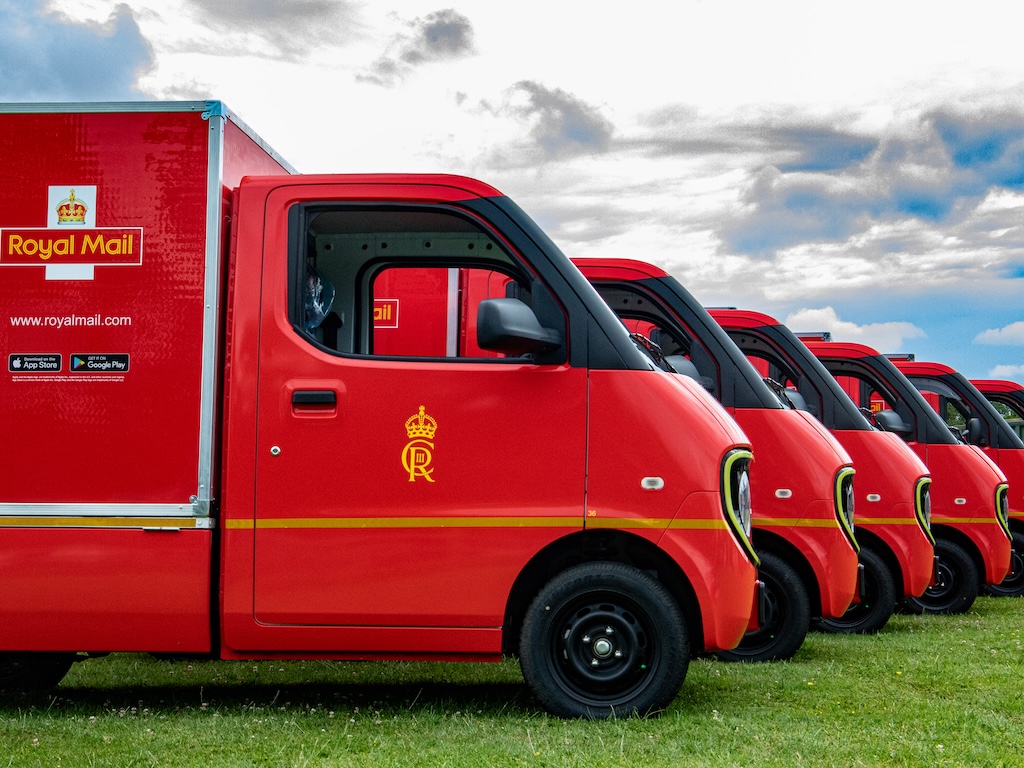
Battery swapping is feasible in some urban fleets, such as taxis, carsharing, or buses, and in fleets that operate in a certain geographic area such as mining, ports, or airports.
A vehicle that has the necessary autonomy during the day to provide the service, and can be recharged at night with slow charging at a charging point, does not need to swap the battery.
- Battery swapping is a much older solution than is believed.
In 1943 there were electric taxis in Barcelona with batteries that were swapped with new ones when they ran out.
The battery swapping was done manually with a folding crane.
Slide 3: Advantages of battery swapping.
The advantages of battery swapping in a fleet of vehicles are the following:
- The main advantage is that it saves recharging time.
The process is faster compared to conventional charging, it takes less than 5 minutes to swap the battery.
- There is no need for charging points or connectors to electrically power the vehicle.
- Recharging the battery can be done with slow charging.
It is always recommended to recharge the battery with the slowest recharge possible to avoid degrading the battery.
- Less total charging power is needed.
Therefore, the contracted power in our facilities and the necessary infrastructure is much less compared to fast charging.
- Battery degradation is less.
When recharging with slow recharge, battery degradation is much less than with fast recharge.
- The cost of energy is lower.
Because it can be recharged at night at the cheapest possible rate, compared to a quick recharge carried out during the day.
- The size of the fleet is smaller.
The vehicles are always available to provide the service, and there is no waiting for the vehicle to recharge at a charging point, so fewer vehicles are needed with cost savings.
- Vehicles may have batteries with lower capacity and autonomy.
Vehicles with large battery capacities and ranges are not needed, so the price of the vehicles is lower.
- The residual value of the vehicles is higher.
The residual value of the electric vehicle depends greatly on the condition of the battery; since it degrades less than with rapid recharges, the residual value is higher.
Slide 4: Disadvantages of battery swapping.
The disadvantages of battery swapping in a fleet of vehicles are the following:
- The big problem it presents is compatibility with vehicles.
Today, battery swapping is not standardized, each manufacturer has its battery designed for its vehicles.
Some technological challenges need to be overcome. For battery swapping to be viable on a global level, standardization of batteries is needed in terms of power, energy, control unit and chemistry. It is not unfeasible, but it is complicated since the manufacturers must agree.
At the moment, there are few manufacturers that are committed to the inclusion of this type of interchangeable batteries, with the company Nio being one of those that is most committed to this, offering an alternative to swap battery for almost 8,000 euros less than rechargeable ones.
New batteries are being developed for swap made up of swapping modules, so only the modules without power are changed, and the entire battery does not have to be swapped, it is a solution to standardize the battery swapping.
- Necessary infrastructure.
There must be a battery swapping station for each vehicle manufacturer, or for batteries used by several vehicle models.
It is recommended that the battery swapping be carried out at our facilities, ensuring that we always have the battery available.
If the exchange is carried out in third-party or public facilities, the batteries may not be available, they may not work, etc. and the vehicle cannot be used.
In a fleet there are usually several brands of vehicles, so it is most likely that we will have a part of the fleet that uses battery swapping, and another part uses charging points.
- The storage/charging station has a battery storage limit.
Stations that have integrated swap, storage and recharging have a maximum limit of batteries that can be used.
At stations that only swap the battery, the battery must be removed manually and stored in a special cabinet for battery storage and recharging.
- Minimum size.
You must have a minimum fleet size for battery swapping to be economically viable.
- Acquisition of the vehicle.
There are vehicle brands that are prepared or that vehicles can adapt to battery swapping, but others are not.
Slide 5: The Nio case.
- Nio is a Chinese electric vehicle manufacturer that has developed its own automated battery swapping stations.
Which allows electric vehicles to be recharging in record time.
It has just presented the 4.0 model, which has currently been released in China but will soon reach other foreign countries, including Europe.
These battery swapping stations have not only been updated for compatibility with Nio electric car models, but also with the new Onvo brand, and with the door open so that vehicles resulting from strategic alliances can also use it.
- A battery swapping can be completed in less than two and a half minutes.
The storage area for the packs has also grown, and can now accommodate a total of 23 batteries, making it possible, on paper, to carry out a total of 480 daily battery swapping.
Along with the automated installation, a charger with a maximum power of 640 kW has also been added, which works at 765 A and offers a voltage of 1,000 volts.
The charging cable it is equipped with is liquid-cooled and its weight has been reduced to 2.4 kilos, making it more comfortable to handle.
Nio already has 2,432 stations in operation, and 22,633 charging points, only counting those in China.
The brand has begun building battery swapping stations in Europe, with 45 stations open today, the majority of which, 17, are in Germany.
- Between June 1 and 30, Nio performed 2,066,358 battery swapping services, with an average of 68,876 battery swapping per day.
Since its founding and until July 1, 2024, Nio has sold 537,020 vehicles, all of them electric.
Nearly 70,000 trades a day every day of the month, according to data collected by Nio's own app.
According to the company itself, these numbers imply that, approximately, in June, 48 battery swapping were made simultaneously every minute throughout China.
And this, which speaks for itself about the enormous size of the Chinese market, is only for Nio brand cars.
- On average, each Nio customer used the battery exchange service six times a month.
The average duration is around three minutes, less than completely filling a fuel tank in a car with a combustion engine.
According to data from the brand, 79.9% of owners have a battery exchange station less than 3 kilometers from their home or office.
Slide 6: The Geely case.
- The Chinese manufacturer Geely is also committed to a battery swapping system similar to that of Nio but for trucks.
Geely, one of the most important automotive groups in China and currently owns Volvo Cars and Polestar.
- In a few minutes, the system swaps the battery from the truck, which is located behind the cabin and swaps another fully charged battery.
This system is somewhat different from Nio, since it does not lift the vehicle to swap the battery from the floor of the car, but rather the battery is in an easier place for extraction.
- The system is capable of battery swapping of sufficient size to store 280 kWh of energy.
Which offers these trucks a range of around 190 kilometers.
- Geely has indicated that this process requires only 5 minutes.
A time comparable to refueling at a gas station.
Slide 7: The Silence case.
- The NanoCar Silence S04 is a light, 100% electric two-seater vehicle that is manufactured entirely in Spain.
- Its two batteries, designed to be swapped as if they were a car.
All Silence brand electric vehicles share the same battery swapping system.
It is the same battery swapping system that electric scooters use.
- Allows you to swap batteries for charged ones in less than 30 seconds.
- They can be charged at any household outlet.
Or swap it at one of the 120 battery stations with 1,200 swap points that the brand has in the main Spanish cities.
Before the end of the year, the company will have 160 stations and 1,600 battery swapping points in Spain.
- No changing station is necessary.
Nor any charging point if the public station network is used.
- The S04 can be purchased in two ways: subscription to the battery service or purchase of the batteries themselves.
The subscription option reduces up to 35% of the initial cost of the vehicle, with a monthly fee from €19.99 for three charging cycles included.
Slide 8: The Honda case.
- Electric vehicles are increasingly playing a leading role in last-mile delivery, especially in urban areas.
Small electric vans are perfect for the so-called last mile delivery, that is, the transportation of the packages we order from the last logistics warehouse through which they pass to our home or business.
- The drawback of this type of vehicle is that they need to be stopped for a while to recharge their battery.
And that, in a business in which every minute counts, and does not stop looking for ways to optimize itself, can be a problem for the delivery company.
Honda intends to solve it with a solution that already has some experience in the world of motorcycles and that some manufacturers are also betting on with their cars, the battery swapping.
- Honda proposes to solve this with a van with battery swapping: the Honda MEV-Van.
The peculiarity of the MEV-Van is that it does not use a conventional battery like the N-Van e, but rather uses battery swapping to end recharging times in one fell swoop.
The swappable battery modules are located under the cabin floor and are accessed through several hatches. When there is little autonomy left, simply remove the discharged modules and place fully charged ones at the battery swapping stations.
- Honda has not revealed technical data of this small delivery van.
The N-Van e on which it is based offers 210 kilometers of autonomy. In both cases, they are small vehicles focused on urban and, at most, interurban use.
The delivery company Yamato Transport, the largest in Japan, will test the Honda MEV-Van to check the viability of this type of vehicle in real use conditions.
Initially, a single Honda MEV-Van will be launched in Gunma Prefecture, Japan.
Slide 9: Battery cabinet.
- Batteries must be stored in a battery cabinet.
If the battery swapping/charging station does not have a battery store, you must have a cabinet to store and recharge them.
Batteries cannot be stored and recharged anywhere.
- It is important to follow the manufacturer's instructions to charge, store and use these batteries safely.
- Storing batteries properly in a battery cabinet is important to ensure their safety and longevity.
Below are some general guidelines that may be useful:
Store in a cool, dry place, away from moisture and extreme heat. Extremely high or very low temperatures can negatively affect battery capacity and life.
It is important to store batteries in a safe place away from heat sources and flammable materials.
Short circuit protection It is important to protect the battery terminals to prevent short circuits.
Store batteries in a fire-resistant cabinet for 120 minutes.
It is recommended that the cabinet have an overpressure window in the ceiling to prevent the build-up of potentially dangerous vapors emitted by the batteries.
It is recommended that the closet have a water irrigation system on the inside of the container, with a dry connection on the outside for added safety.
It is recommended that the cabinet have a fire detector connected to an autonomous switchboard outside the container, equipped with an acoustic and visual siren.
Slide 10: Recommendations for fleets.
- Carry out a preliminary study before electrifying the fleet.
The battery swapping is incipient in Europe, most fleets install charging points to recharge their electric vehicles.
It is currently a technology that is being developed, and is feasible in some urban fleets and in fleets that operate in a delimited geographical area such as mining, ports, airports, or logistics centers.
Every day there are more vehicles that use battery swapping, and even in hydrogen vehicles, interchangeable hydrogen cartridges are under study.
Before electrifying the fleet, it is recommended to study the use of battery swapping in our facilities, such as what type of stations are on the market, in which vehicles it can be carried out, in which batteries, batteries can be rented, etc.
- Carry out an economic study.
An economic study must be carried out to find out if battery swapping is economically viable compared to charging points.
The cost of facilities such as the changing station, the battery cabinet, as well as the cost of energy, the cost of contracted power, etc. must be included.
- Acquisition of vehicles.
Although today most electric vehicles are not prepared for battery swapping, they can be modified so that it can be done.
We can contact a vehicle manufacturer to modify the vehicle so that the battery swapping can be carried out, although it has to be done with a minimum size of vehicle to be economically viable for both parties.
- Owned battery swapping station.
It is recommended to swap batteries at our facilities because we will always have the battery available.
If the battery swapping is carried out in third-party or public facilities, it may be that there is no battery available, the station is closed, etc. and the vehicle cannot be used, it is a risk that is taken, but all the infrastructure costs are saved.
- Batteries owned or rented.
There are vehicle manufacturers that allow you to own or rent the battery when battery swapping.
It is recommended to rent the battery if it is economically viable, because the price of the vehicle is lower, and there is no economic depreciation of the battery caused by degradation.
Slide 11: Thanks you for your time.
In this chapter, battery swapping has been developed, which is a feasible solution for recharging electric vehicle batteries in some urban fleets compared to charging points, see you soon.
Download the audio