

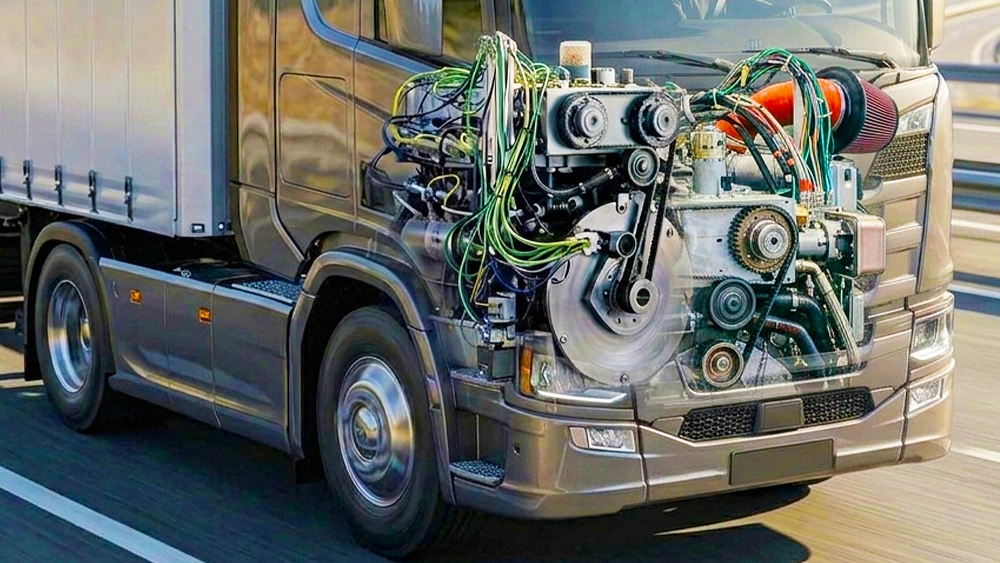
The closed-cycle hydrogen engine that replaces the diesel engine in heavy-duty trucks.
Europe had declared the era of the internal combustion engine for heavy-duty transportation over several years ago. Electrification—using batteries or hydrogen fuel cells—is emerging as the leading option for vehicles such as trucks, agricultural machinery, and large vessels.
However, German research has reignited the debate with a technology that combines combustion, hydrogen, and zero direct emissions.
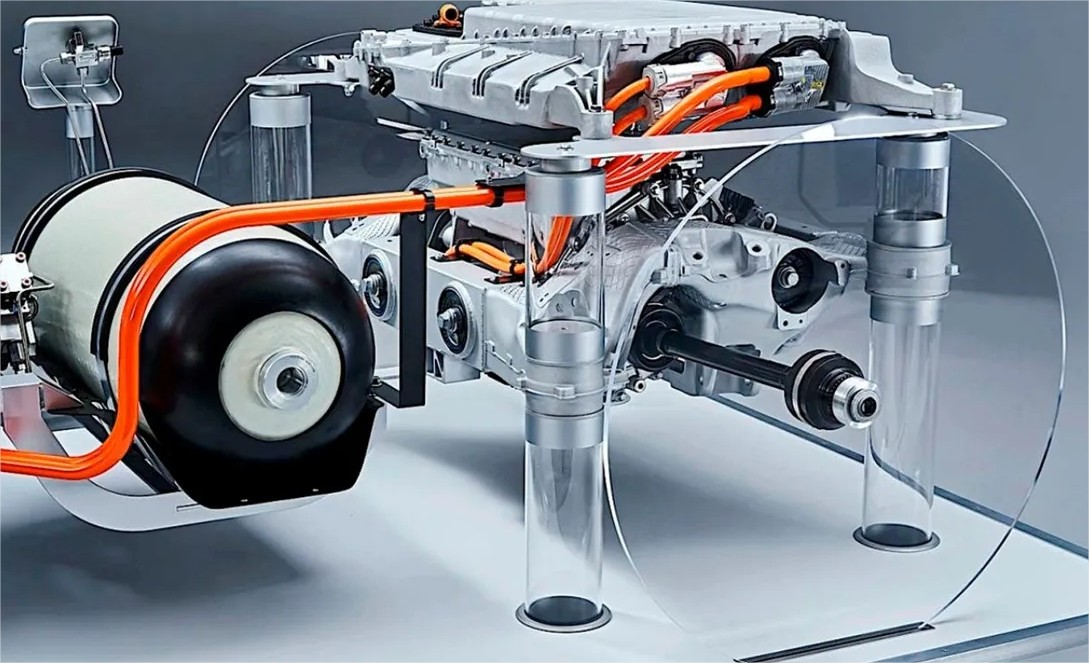
What Is a Closed-Cycle Hydrogen Engine?.
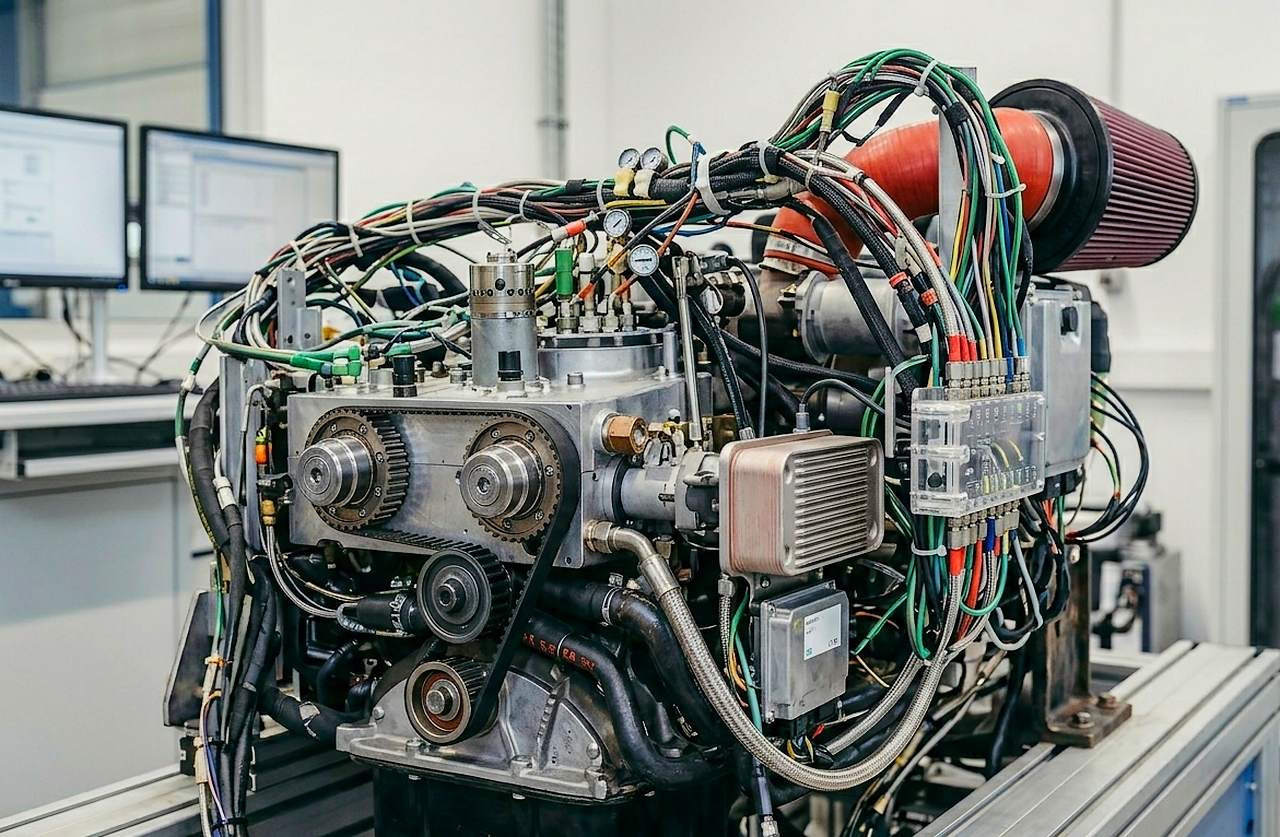
Otto-von-Guericke University Magdeburg, in collaboration with the WTZ Roßlau technology center, has developed a closed-cycle hydrogen engine with a thermal efficiency exceeding 60%. In theory, this figure far exceeds that of many current diesel engines.
Unlike a conventional engine, this system does not release exhaust gases directly into the atmosphere. The process takes place in a virtually closed loop, in which hydrogen is burned using pure oxygen and inert gases such as argon.
The result is a more controlled and efficient combustion process. Furthermore, since atmospheric nitrogen does not participate in the reaction, the formation of nitrogen oxides (NOx)—one of the main problems with traditional internal combustion engines—is prevented.
The main chemical reaction produces water vapor, which can then be condensed and reused within the system itself. For this reason, the term “closed cycle” is used.
The finding that has generated the most interest is the efficiency reported by the German researchers, which has reached over 60%. To put this in context, it is worth noting that a modern automotive diesel engine operates with a thermal efficiency ranging from 40% to 45%, while high-performance industrial engines can approach 50%. This breakthrough is particularly significant in sectors where current batteries have significant limitations in terms of weight, range, and recharge times. This is evident in long-distance heavy-duty transportation, construction machinery, agriculture, and marine propulsion. The researchers hypothesize that this area could represent the true niche for this technology.
The other major advantage: building on existing industry expertise.
One of the most notable aspects of the hydrogen combustion engine is its ability to leverage a significant portion of existing industrial knowledge.
European manufacturers have spent years of research and development adapting hydrogen engines from conventional diesel engine blocks. MAN, for example, is already developing hydrogen-powered trucks with ranges of nearly 600 kilometers.
Likewise, leading companies such as Porsche have conducted research on hydrogen combustion engines for high-performance applications. This approach reduces transition costs compared to entirely new technologies and eliminates the exclusive reliance on large batteries.
However, one fundamental factor will determine the viability of their commercialization: hydrogen. Currently, most of the world’s hydrogen is produced from natural gas through a steam reforming process, which generates carbon dioxide (CO₂) emissions. Green hydrogen, produced through electrolysis using renewable energy, still has high costs and limited availability. A este desafío se suma otro de gran importancia: el almacenamiento y el transporte. El hidrógeno requiere de altas presiones o temperaturas extremadamente bajas para su almacenamiento eficiente. Esta situación conlleva implicaciones en el ámbito de las infraestructuras, la logística y los costes operativos.
For this reason, many experts believe that hydrogen will not compete directly with battery-electric cars in the passenger car sector. However, it could prove viable in heavy-duty industrial applications where full electrification is less feasible.
Mass production.
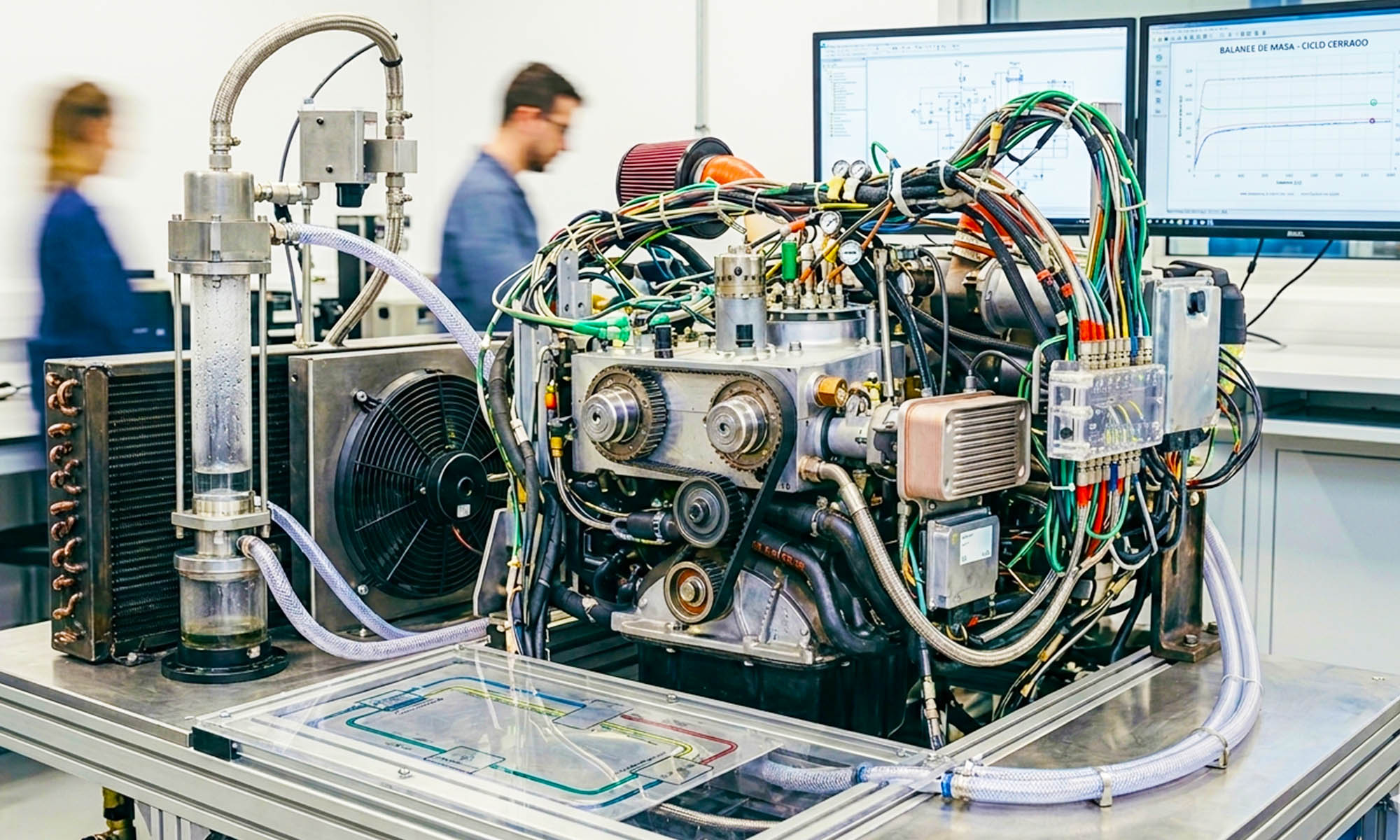
Despite the interest it has generated, the project remains in the experimental phase. The tests conducted to date have been carried out on a test bench and through computer simulations. Currently, there is no commercial timeline, nor has any specific production plan been announced. At this time, there is no public information available regarding costs, durability, or maintenance requirements under real-world conditions.
The current prototype is a single-cylinder engine and was designed as a technology demonstrator. However, the German research demonstrates that the internal combustion engine still has the potential to continue evolving. As Europe explores options to decarbonize sectors where batteries have not yet provided a viable solution, it is crucial to consider this alternative.