
The key to electric trucks lies in their massive batteries: Up to €6,100 in annual savings
The adoption of electric trucks by transport companies could lead to significant savings—and not just because they use electricity instead of diesel. Research led by the Technical University of Munich (TUM) has shown that these vehicles' batteries can function as large-scale energy storage systems, capable of supplying power to a company’s facilities or even feeding electricity back into the main power grid. According to their estimates, this technology could reduce operating costs by up to €6,100 per truck annually, based on an annual distance of 100,000 kilometers.
These findings are part of the SPIRIT-E project, developed in collaboration with companies such as MAN Truck & Bus and various experts from the energy sector. The researchers analyzed real-world data from six German heavy-duty vehicle fleets—covering a total of 2.15 million kilometers—to explore how to optimize charging processes and leverage truck batteries while the vehicles are parked.
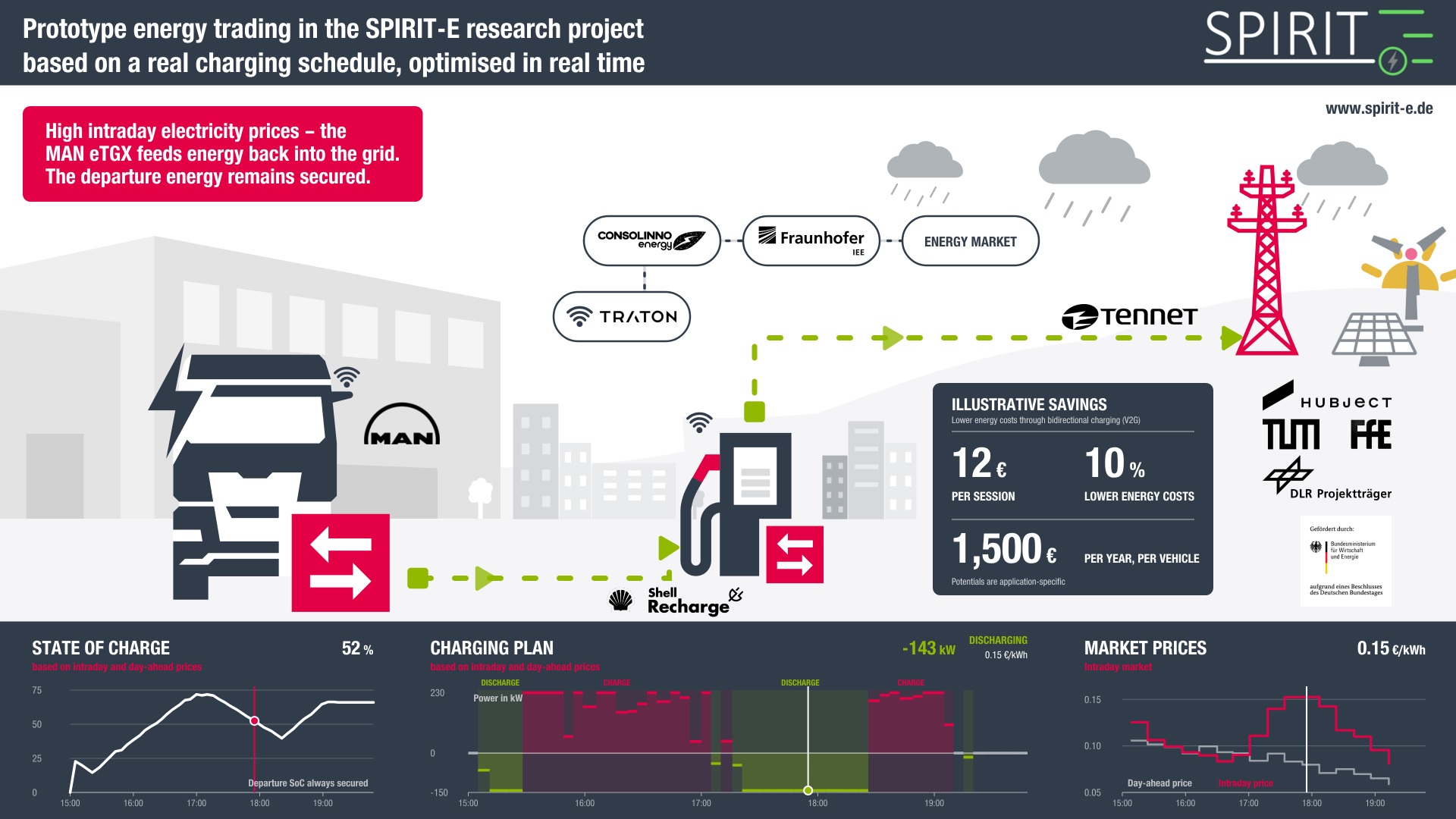
Up to €6,100 in annual savings and a 10% reduction in energy costs.
The financial results are particularly noteworthy. The research indicates that intelligent management of charging and the integration of these vehicles into the electricity market can reduce total fleet costs by an average of 1.7 euro cents per kilometer. This translates to €1,700 in annual savings for a truck covering 100,000 kilometers.
Furthermore, by incorporating bidirectional charging, the estimated savings increase to 6.1 euro cents per kilometer. At that same annual mileage, the cost reduction would reach €6,100 per vehicle. For a company with 10 electric trucks, this could mean potential annual savings of 61,000 euros, provided that the analyzed economic conditions are met.
According to the researchers' estimates, utilizing the batteries as storage systems would result in an approximately 10% reduction in energy costs. Furthermore, combining fleet electrification with photovoltaic installations and stationary batteries could generate savings 25% to 44% greater than those achieved by simply replacing diesel trucks with electric ones. While these percentages reflect an improvement in cost-saving efficiency, they do not imply an equivalent reduction in all business expenses.
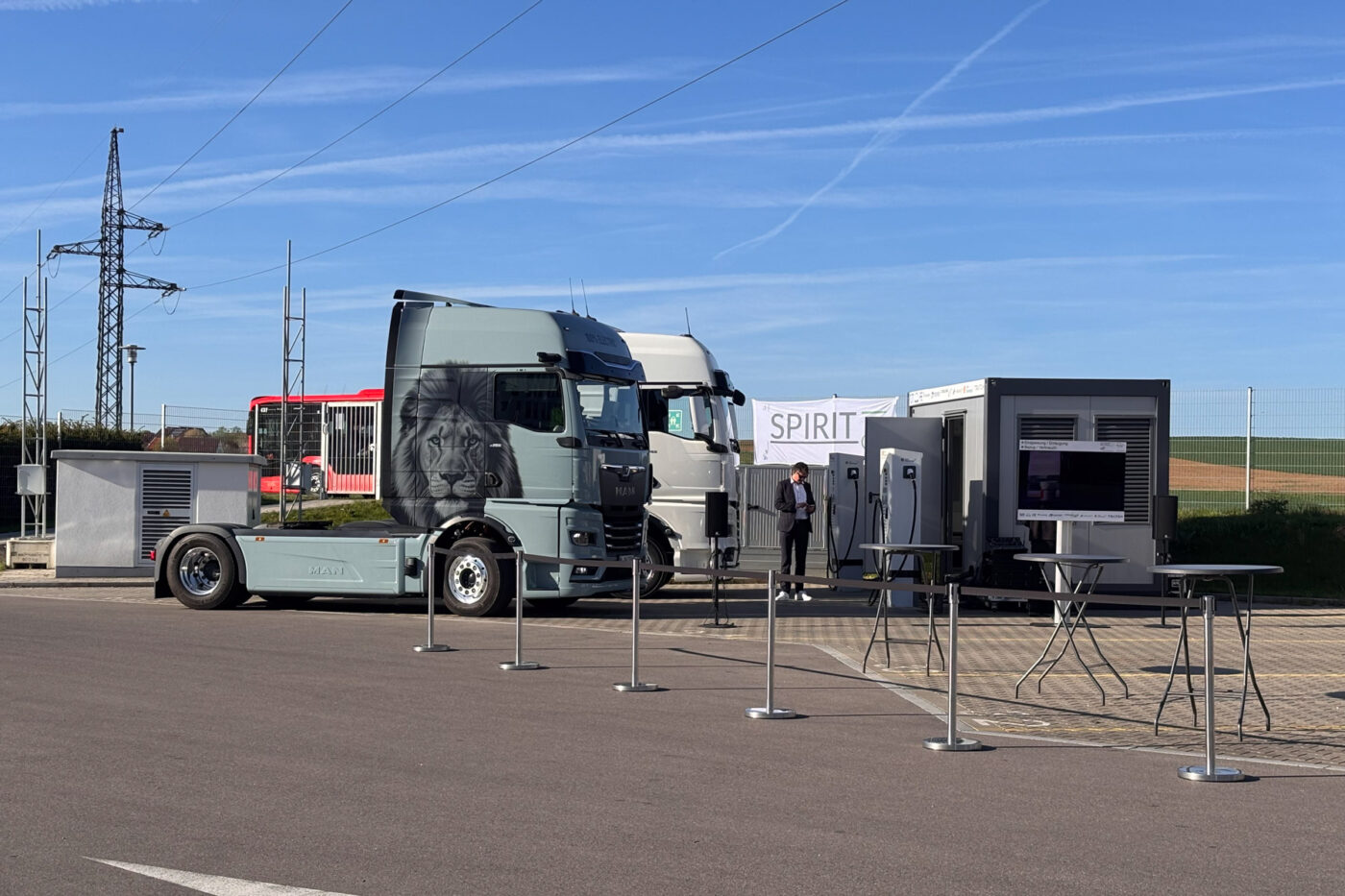
480 kWh batteries capable of discharging electricity at 350 kW.
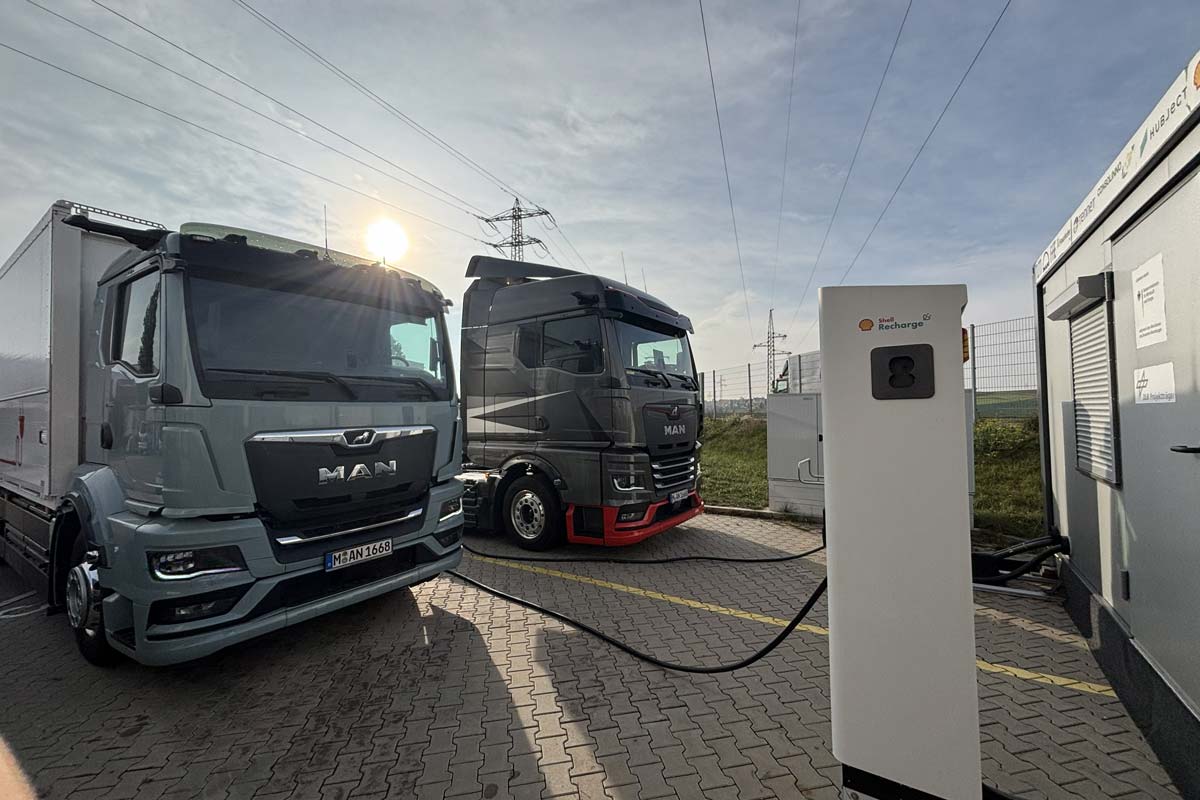
To evaluate the capabilities of this technology, the researchers conducted tests at a transport company in Regensburg, Germany. The setup involved an electric truck equipped with a 480 kWh usable battery, connected to a bidirectional charger with a capacity of up to 350 kW.
During the trials, the researchers verified the proper functioning of three applications: supplying energy to other electric vehicles; powering the company’s own facilities; and feeding electricity back into the public grid. This last option allows for the purchase of electricity when prices are low, which can then be used or sold when prices are higher.
Professor Markus Lienkamp, a lead researcher at TUM, highlighted that the project has demonstrated the potential for electric trucks to play a much more significant role, moving beyond their current function as mere energy consumers. Nevertheless, there is a recognized need to standardize these solutions and develop profitable business models. For the time being, the projected savings are derived from economic scenarios evaluated by the researchers, rather than from cost reductions verified through years of commercial operation. The implementation of this technology will depend on various factors, such as electricity prices, vehicle parking hours, and available infrastructure. Given this, the researchers consider electric trucks used for regional transport—which typically return to their home facilities—to be the most suitable candidates for the adoption of this technology.