

Download the audio
Slide 1. Introduction.
The class develops what the engine oil pan is, its functions, and why it is so important for the engine.
Slide 2. The Engine Oil Pan.
- What is a car oil pan?.
Maintaining a vehicle in good condition doesn't necessarily require specialized mechanical knowledge, but it's essential to understand basic concepts like the car oil pan and its importance for engine operation. Although from the outside it may appear to be a simple metal component located at the bottom of the engine, its function is intrinsically linked to lubrication, temperature, and the vehicle's durability.
The oil pan's function is to contain the engine oil. The lubricant accumulates in the oil pan when the vehicle is stopped or when the oil returns after circulating through the engine's internal passages.
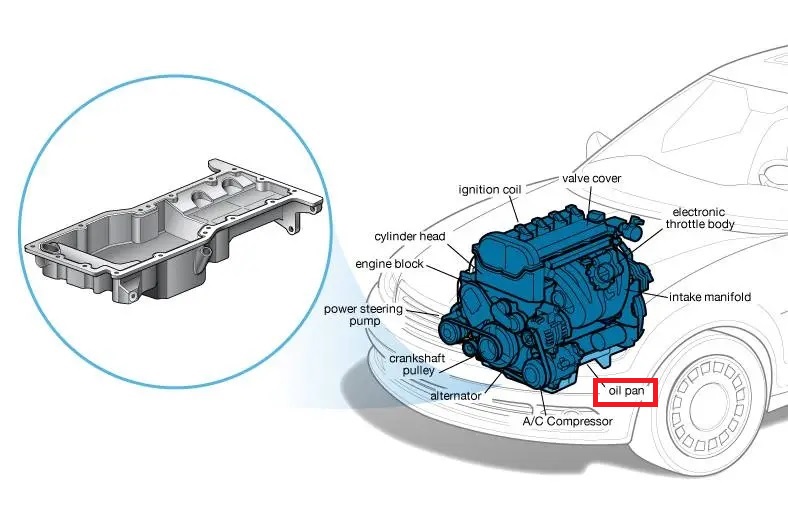
The oil pan is located at the bottom of the engine and its function is to collect and store the lubricating oil. Its design typically takes the form of a tray or concave container, allowing the oil to drain by gravity.
It can be made of stamped steel, aluminum, or light alloys, depending on the engine's requirements. To understand its function within the mechanical assembly, it is essential to understand the concept of a vehicle's engine block.
- What is the purpose of the engine oil pan?.
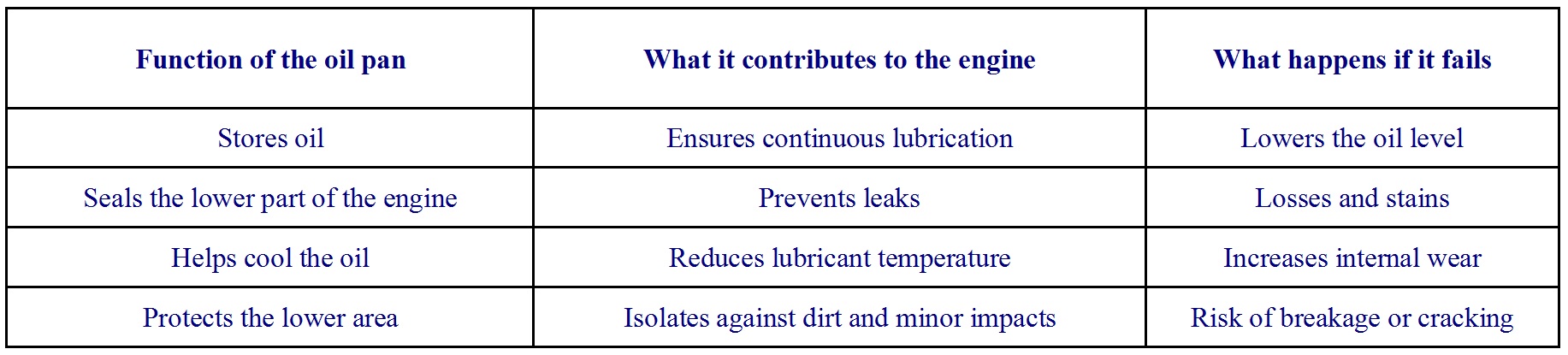
The main function of the oil pan is to store the lubricating oil for the engine. Without this oil, excessive wear on internal parts would occur due to excessive friction.
- Main components of the oil pan.
The oil pan gasket ensures a tight seal with the engine block. If the gasket loses elasticity or deteriorates, leaks may occur.
The drain plug allows for the removal of used oil during maintenance. The oil pickup tube, through which the pump draws oil, is also located here.
- Types of oil pans: wet and dry.
Most passenger cars are equipped with a wet oil pan. The oil is stored in the lower part of the engine and is drawn from there by the pump.
A dry oil pan is primarily used in sports cars, racing cars, and high-performance engines. The oil is sent to an external reservoir to ensure lubrication during fast cornering or heavy braking.
- The role of the oil baffle.
Internal baffles or baffles can be installed inside the oil pan. Its main function is to limit the movement of oil during braking, acceleration, and steering.
If the pump doesn't draw enough lubricant, the pressure drops, and the engine is less protected.
- Protection and maintenance: the oil pan cover.
The oil pan is located very close to the ground. Therefore, it is susceptible to being exposed to elements such as stones, curbs, speed bumps, or road debris.
A wheel hitting a curb may not cause immediate visible damage, but it can affect the underbody, steering, or suspension of the vehicle.
- Common oil pan failures.
Like the engine block, the oil pan doesn't tend to break or become clogged, but it can cause a series of problems with the car's operation and mechanics. These problems are as follows:
- Crack or break.
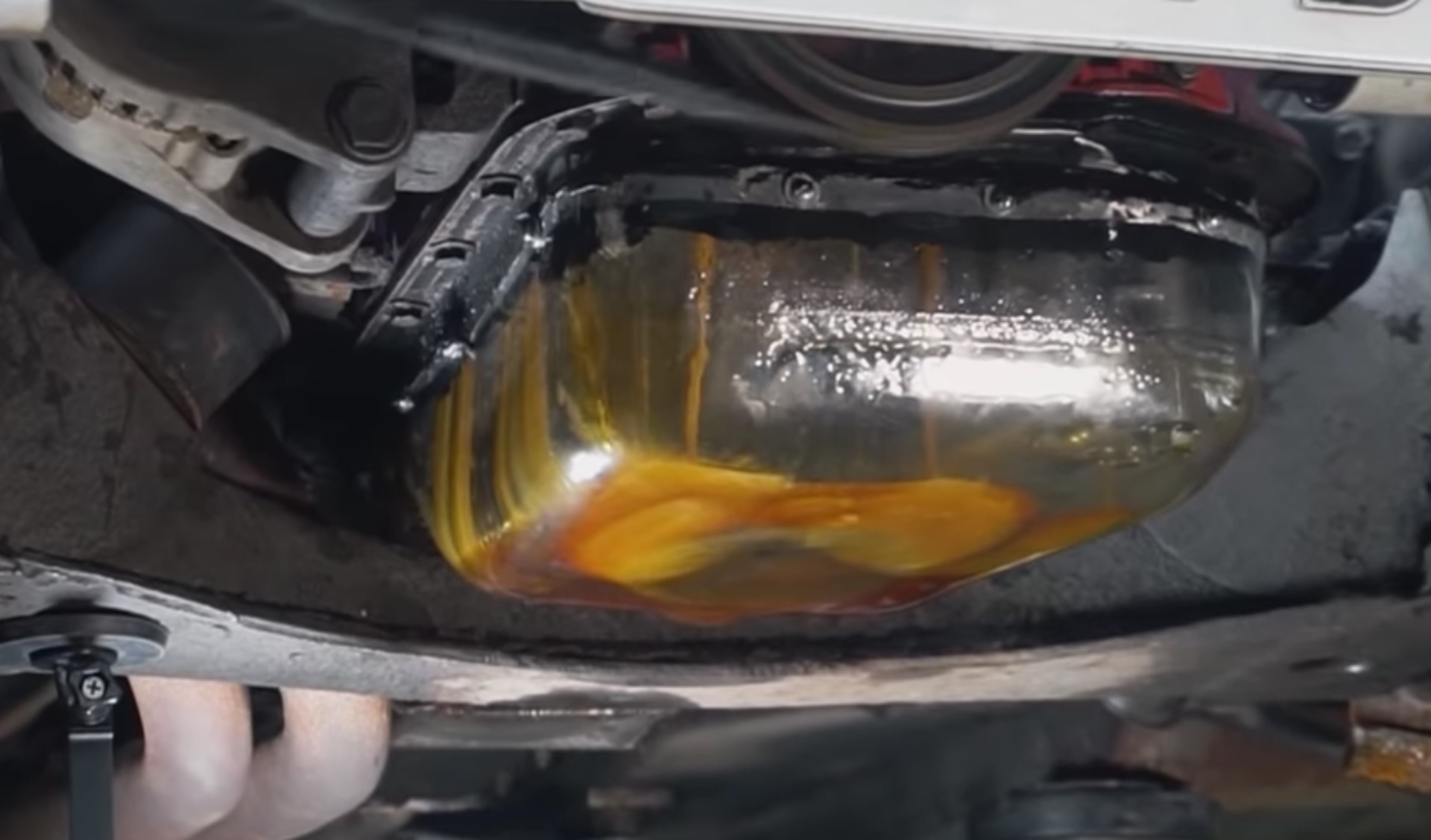
Due to its location, this part can be damaged and cause engine oil leaks. If the damage is severe, the engine could run out of lubricant and overheat, potentially seizing. In these cases, the oil pan cover is designed to prevent damage or cracking from impacts.
- Oil leaks.
These can occur at any time due to the loss of sealing properties of the gaskets. In this case, the best solution is to replace the damaged part with a new one.
- Pressure.
Increased oil temperature can generate gases in the system and, therefore, increase pressure inside the oil pan. If the pressure becomes excessive, it can cause leaks or serious ruptures.
As a solution, most modern cars incorporate a PCV valve or positive crankcase ventilation valve to release pressure.
- Drain plug.
Another common problem is a damaged drain plug. A damaged thread, a worn washer, or improper tightening can cause leaks.
- How to care for the oil pan and prevent breakdowns.
The best prevention is to respect oil change schedules and use the correct lubricant. Knowing what oil your car uses prevents errors in viscosity and specification.
After a hard impact to the undercarriage, don't continue driving without checking for oil leaks.
- Why should the engine oil pan be cleaned?.
Over time, the vehicle generates sludge in the engine oil, a problem that most drivers don't notice.
Sludge is the solidification or crystallization of engine oil, produced by the loss of additives and fluidity. After accumulating for a while, it can seize the engine and even clog lubrication channels, which is why cleaning it is so necessary.
- FAQs about the oil pan.
- Is it safe to drive with a leak in the oil pan?.
It is not recommended.
-
- Is the oil pan replaced with every service?.
No. Only if it is damaged.
-
- What happens if the oil pan breaks?.
The engine can run out of oil and suffer serious damage.
-
- What is the price of replacing the oil pan?.
Around 150-400 euros for standard models, with the total cost increasing for sports or premium models.
-
- Why don't two-stroke engines have an oil pan?.
The engine oil is supplied with the fuel and air mixture.
Slide 3. Thank you for your time.
The class has developed what the engine oil pan is, its functions, and why it is so important for the engine, see you soon.