

Download the audio
- Slide 1. Introduction.
The class develops the symptoms, causes, solutions, and implications for fleet management related to oil burning in a vehicle.
Slide 2. Oil burning in a vehicle’s engine.
- What does it mean when a car burns oil?.
The detection of oil burning in a vehicle is usually accompanied by a clear sign, such as bluish smoke coming from the exhaust system, a strong smell of oil, or an unusual drop in the oil level between scheduled maintenance visits. This is not an issue to be taken lightly. When the engine burns oil, the oil enters the combustion chamber, where it shouldn’t be.
The problem may have a simple solution, such as replacing the PCV-Positive Crankcase Ventilation valve or using the correct oil. However, it may also mask a costly failure involving piston rings, valve seals, the turbocharger, or the cylinder head gasket. Therefore, it is recommended to take prompt action and avoid simply topping off the oil periodically.
An engine requires oil to reduce friction, cool internal components, remove debris, and protect parts subjected to high mechanical stress. It is crucial that the oil circulate through its designated circuit, preventing it from entering the combustion chamber, where the air-fuel mixture is burned.
If the system fails, the lubricant finds a way into the cylinders. There, it burns during combustion and produces the characteristic blue or bluish-gray smoke from the exhaust. It can also cause an odor of oil or soot, a loss of power, high fuel consumption, and malfunctions in emission control systems.
It is important not to confuse this with an external leak. If you notice stains on the floor, wet residue on the engine block, or oil on the oil pan, there may be an external leak. In that case, the required diagnosis will be different, as is the case when an engine oil leak is identified.
- What is a normal rate of oil consumption?.
It is important to note that all engines may consume a small amount of oil, especially under demanding driving conditions, such as on mountain roads, in high temperatures, in turbocharged engines, or in cars with high mileage.
The problem arises when the oil level drops noticeably between oil changes, you need to top it off frequently, or you notice blue smoke coming from the exhaust. Some manufacturers allow for oil consumption within certain technical limits, but if your vehicle requires one liter every 1,000 or 2,000 kilometers, it’s recommended that you have it checked at a repair shop.
It is also worth noting that certain new vehicles may experience slightly higher oil consumption during the first few kilometers due to internal adjustments in the engine. However, high and sustained oil consumption should not be considered normal.
The most effective method is to always check the oil level while the vehicle is in normal operating condition, after a period of rest, and following the manufacturer’s instructions.
- Symptoms of oil burning in a car.
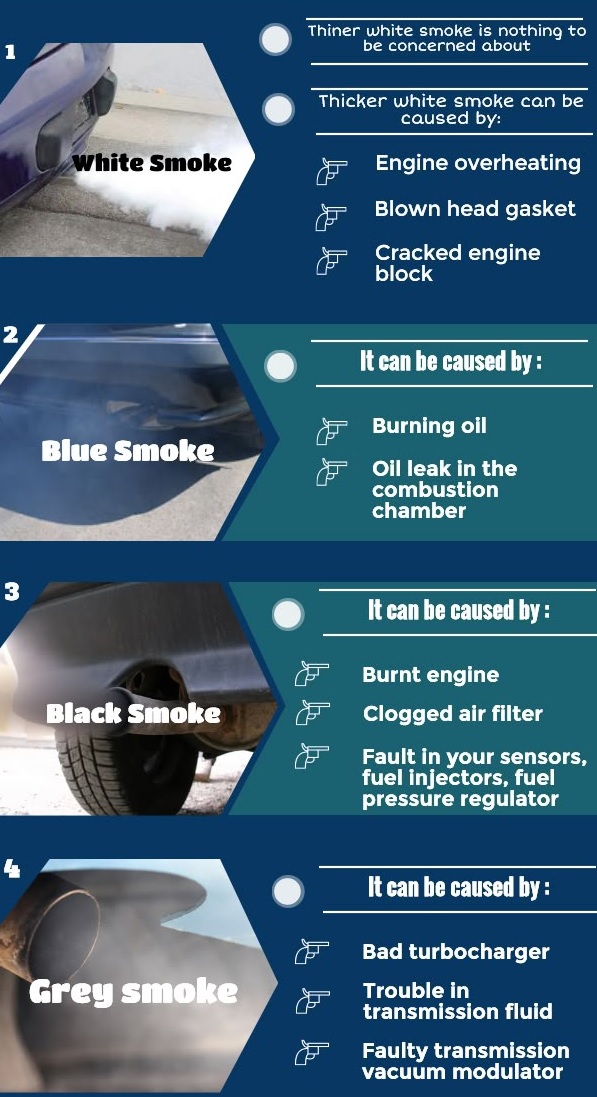
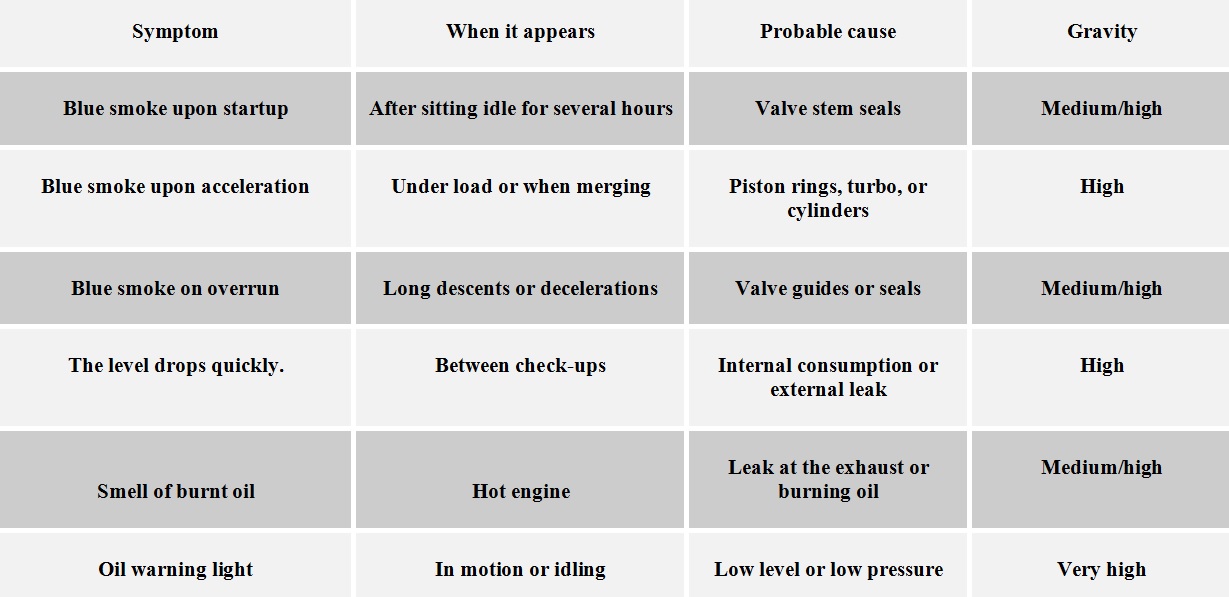
Blue smoke is the most noticeable symptom, though not the only one. Sometimes, the problem only becomes apparent during a cold start, when accelerating hard, when coasting downhill, or after letting the car idle.
You may also notice a smell of burnt oil, dirty spark plugs, a loss of performance, high oil consumption, or a low oil pressure warning. In modern diesel engines, excessive oil burning can compromise the operation of the particulate filter and lead to more frequent regenerations.
If the red oil warning light comes on, it is recommended that you stop driving immediately. It is important to distinguish between oil consumption and operation with insufficient oil pressure, which poses a significantly greater risk. In such a scenario, it is imperative to investigate the causes of low oil pressure in the engine.
- Worn piston rings.
The piston rings seal the gap between the piston and the cylinder wall. Their function is to maintain compression, prevent gases from escaping into the crankcase, and control the oil film on the cylinder walls.
Due to high mileage, poor lubrication, overheating, or inadequate maintenance, the piston rings may lose their tension.
This problem typically manifests as blue smoke when accelerating, loss of compression, increased oil consumption, and, in some cases, elevated crankcase pressure. The repair is costly because the engine must be disassembled.
In very old cars or those with high mileage, the repair shop may perform a compression test or a leak test to confirm the diagnosis before proceeding with a major repair.
- Worn valve seals and guides.
Valve seals prevent oil from the cylinder head from flowing down into the combustion chamber. When they harden, friction or a loss of fit occurs, resulting in oil leakage.
This problem typically manifests as blue smoke when starting the vehicle after it has been parked for several hours or when accelerating after a period of idling. The oil gradually accumulates and burns instantly when the engine resumes operation.
Repair may be more cost-effective than replacing damaged piston rings, although this depends on the type of engine and the level of access required. In some cases, it may be necessary to remove part of the cylinder head; in others, the repair shop can replace the seals using specialized tools without having to open up the engine as much.
- Clogged PCV valve.
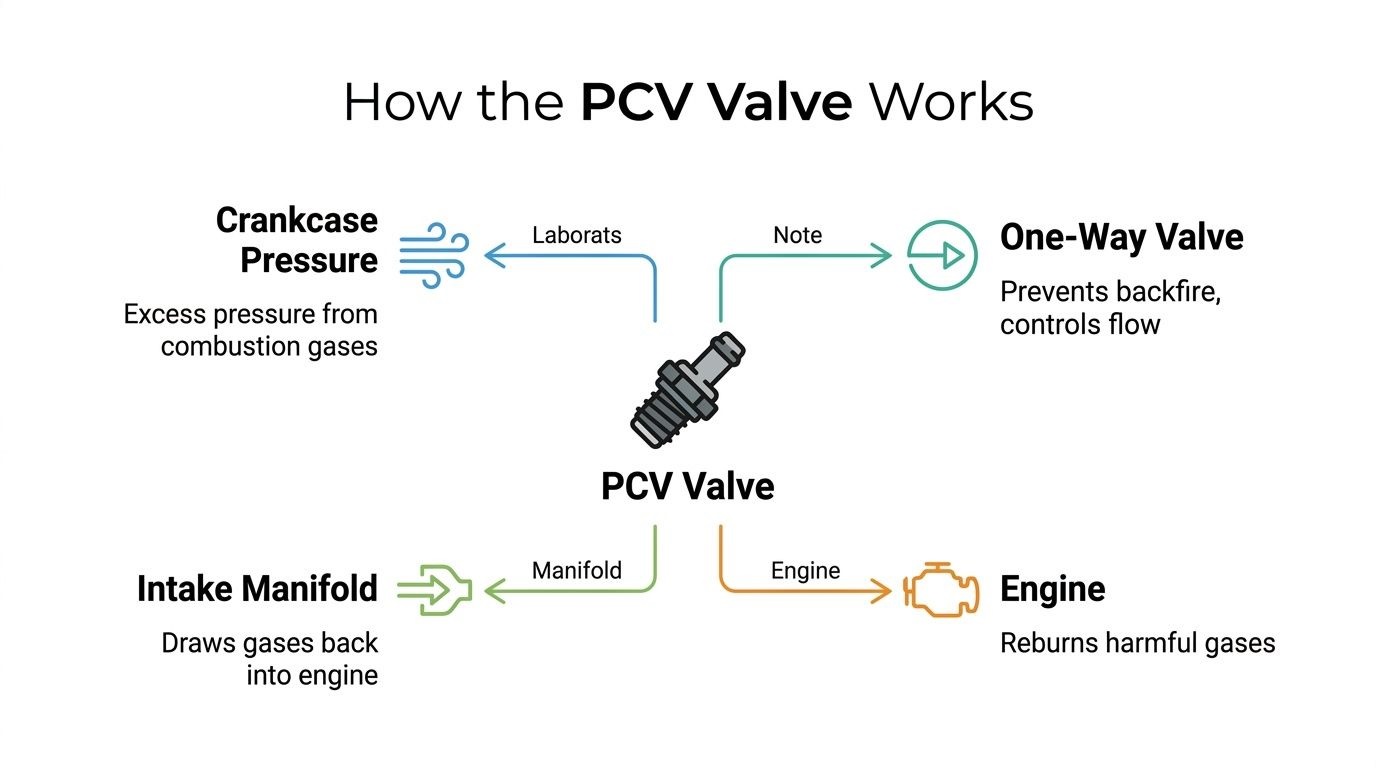
The PCV valve is responsible for managing crankcase ventilation. Its function is to channel internal vapors and pressures toward the intake, ensuring proper engine operation.
If a blockage occurs due to sludge, carbon deposits, or lack of maintenance, the pressure in the crankcase will increase. This pressure can cause oil to accumulate in the oil seals, intake, or cylinders, which can result in excessive oil consumption, smoke emissions, rough idling, and oil stains.
In most cases, this is one of the most affordable solutions. In many vehicles, simply replacing the PCV valve or cleaning the ventilation system is sufficient.
- Turbocharger with internal leaks.
In turbocharged engines, the internal seals of the turbocharger may allow oil to enter the intake or exhaust systems. Under such circumstances, the vehicle may exhibit symptoms such as blue smoke, a loss of power, and increased oil consumption.
A faulty turbocharger may manifest as excessive whistling, shaft play, or oil buildup in the intake ducts. If the problem worsens, the risk increases, especially in diesel engines.
For an accurate diagnosis, it is essential that a repair shop perform the evaluation, since the presence of oil in the intake does not necessarily indicate a turbo failure. However, if blue smoke, high fuel consumption, and a loss of power are observed, it is recommended to check the condition of the vehicle’s turbo.
- Oil with the wrong viscosity.
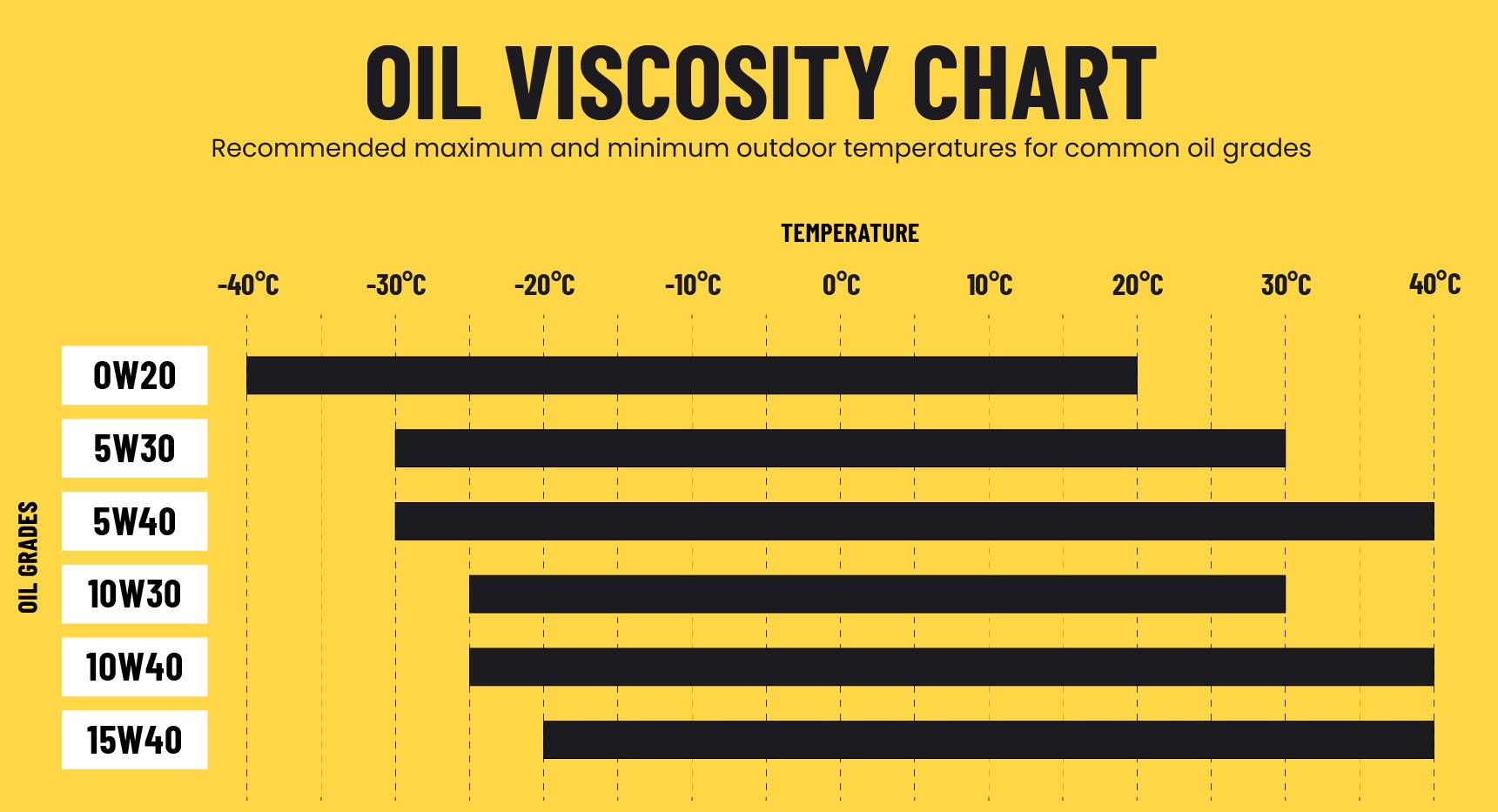
It is important to note that using oil that does not meet the manufacturer’s specifications can increase fuel consumption and accelerate wear. A lubricant with a viscosity index that is too low can seep through internal clearances more easily.
It is important to note that the choice of oil should not be based solely on factors such as price or habit. It is imperative to adhere to the viscosity, manufacturer’s specifications, and approvals indicated in the manual.
For some older cars, the repair shop may recommend a slightly higher viscosity at high temperatures, provided it remains within the ranges accepted by the vehicle manufacturer. For example, switching from 5W30 to 5W40 is only advisable if the manufacturer allows it and the usage justifies it.
- Damaged cylinder head gasket.
A damaged cylinder head gasket can cause oil, coolant, and exhaust gases to mix. It is important to note that the smoke emitted is not always blue; sometimes, it can be white or resemble a creamy substance, similar to mayonnaise, on the cap.
However, if the gasket allows oil to enter the combustion chamber, oil consumption may occur. This is a serious malfunction, so it is not recommended to continue driving if the engine is overheating or if a mixture of fluids is present.
Signs of a head gasket failure tend to become more evident as the problem progresses. However, in the early stages, they can be mistaken for cooling system failures or external leaks.
- Table of causes, solutions, and approximate prices.
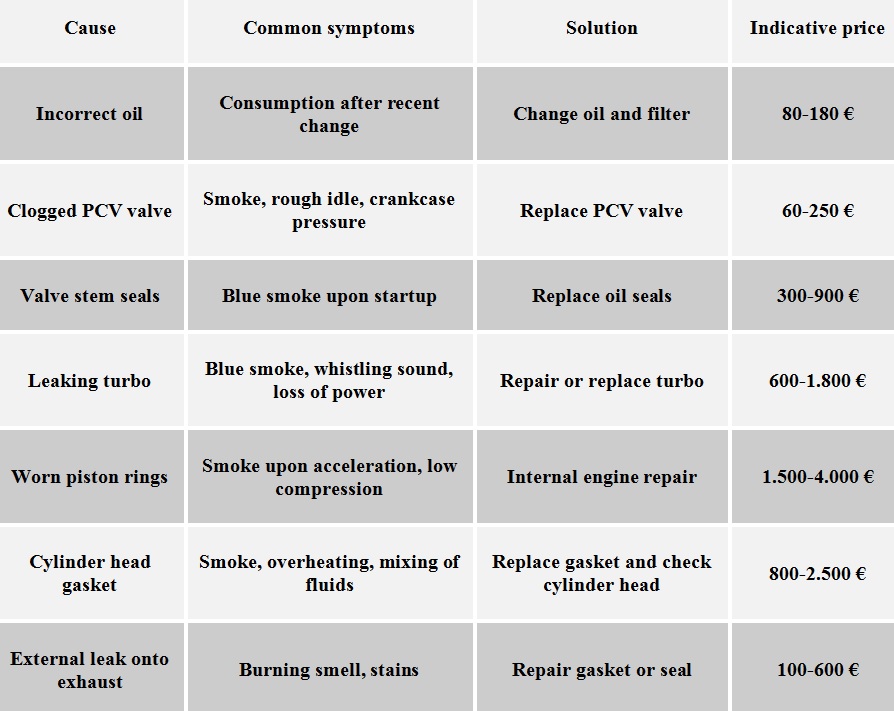
Prices depend heavily on the model, access to the engine, and labor costs. In the case of an older vehicle, an internal repair may not be cost-effective if the repair cost exceeds the vehicle’s current value.
- What to do if your car is burning oil.
First, it is essential to check the oil level and avoid driving with the engine at critically low levels. If the level is below the minimum, top it off with the appropriate lubricant, taking care not to exceed the recommended amount.
Next, check for smoke. When starting the vehicle, a pressure leak may occur, which could indicate a problem with the valve seals. If the problem occurs when accelerating hard, it is likely related to the piston rings or the turbocharger. If you detect white smoke, coolant loss, or high temperatures, it is imperative to inspect the cylinder head and the cooling system.
It is also advisable to conduct a thorough inspection to rule out possible external leaks. Indeed, oil dripping onto the exhaust can cause a burning smell, even if the engine is not burning inside the cylinders.
If your vehicle is experiencing recurring oil consumption, it is recommended that you take it to a repair shop for a thorough evaluation. This evaluation should include a diagnostic check, a compression test, an inspection of the PCV system, an inspection of the turbocharger, and a leak check.
- FAQs about oil consumption.
- Is it dangerous to drive if the car is burning oil?.
Yes, it can be. In the case of minor oil consumption, it is possible to drive to a repair shop while monitoring the oil level. However, if you notice heavy blue smoke, an oil warning light, a loss of power, or high engine temperature, it is recommended that you stop the vehicle and seek immediate assistance.
-
- Why does my car emit blue smoke only when starting up?.
This usually indicates that oil is leaking into the combustion chamber while the vehicle is stationary. Possible causes of this problem include aged valve seals, valve guides, or internal wear.
-
- Could it be the turbo’s fault?.
Yes, in turbocharged engines, an internal leak can cause oil to enter the intake or exhaust systems. If you notice whistling noises, a loss of power, and high oil consumption, the turbocharger will need to be inspected.
-
- Will switching to a thicker oil solve the problem?.
In exceptional circumstances and only in minor cases, provided the manufacturer’s guidelines are followed. A higher-viscosity oil may reduce oil consumption in engines with wear, but it is not designed to repair piston rings, seals, the turbocharger, or the head gasket.
-
- How much does it cost to repair a car that’s burning oil?.
The answer to this question depends on the specific cause of the problem. The cost of a PCV valve can be less than 250 euros, while a repair involving piston rings, the turbocharger, or the head gasket can easily exceed 1,000 euros.
- Implications for fleet management.
The main consequences of an engine burning oil are all negative; it indicates an engine malfunction that can range from minor to very serious, with high costs, in addition to the time the vehicle is out of service.
A vehicle exhibiting excessive oil consumption should not be treated as a minor malfunction. Blueish smoke, the smell of lubricant, and a rapid drop in oil level indicate a system failure, in addition to increased pollutant emissions.
The solution to this problem can be simple if the cause is identified as a faulty PCV valve, an external leak, or the use of unsuitable oil. However, if ignored for weeks, oil consumption can damage the catalytic converter, the particulate filter, the turbocharger, or the engine block itself. It is essential to check the oil level regularly, identify the root cause, and carry out repairs in a timely manner to avoid incurring higher repair costs.
We recommend implementing the following measures.
1. Engine and turbo maintenance.
Perform engine and turbo maintenance according to the vehicle manufacturer’s instructions and within the specified time frame.
Use the oil recommended by the vehicle manufacturer, as well as premium oil brands.
2. Driver training.
Drivers must be trained on oil burning in the engine, the different types of smoke that may be produced, how to top off the engine with oil, etc.
This training can be in-person, online, etc. It is also recommended to have a printed or PDF manual available for reference at any time.
3. Vehicle Inspection.
Before using the vehicle, the driver must check certain mechanical components such as the tires, seat belts, bodywork, etc. This checklist can be printed or accessed via a mobile app or tablet.
A very important step before using the vehicle is to check the engine oil level. If the level is below the recommended level, the driver must top off the oil until the level is correct.
It is recommended that the vehicle carry a one-liter bottle of oil for topping off in such cases. If it does not, the driver must notify the head of our repair shop or the fleet manager that the oil level is below the recommended level.
4. Old cars.
In a older car, internal engine repairs, such as replacing piston rings, pistons, etc., may not be worth the cost if they exceed the vehicle’s value.
In these cases, it is recommended to deregister the vehicle and purchase a new one.
Slide 3. Thank you for your time.
The class has developed the symptoms, causes, solutions, and implications for fleet management related to oil burning in a vehicle, see you soon.