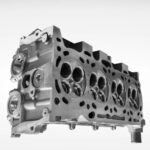

Slide 1. Introduction.
The class discusses the possible symptoms or problems that indicate a head gasket failure.
Slide 2. Symptoms of a head gasket failure.
- The head gasket.
There are many elements inside an engine that play a vital role, such as the head gasket. Although it is invisible to the naked eye due to its location, its function is crucial to the proper functioning of an internal combustion engine.
The quality of the engine's performance depends on the condition of the gasket, which is responsible for keeping the engine block and cylinder head isolated to prevent fluids from altering the combustion process.
It is a sheet that acts as a seal between the cylinder head, the upper part of the engine, and the engine block, where the cylinders are located.
Its functions are:
- Seal the combustion chamber.
Maintains compression pressure for the engine to run.
- Prevent mixing.
Prevents oil and coolant from mixing or leaking into the cylinders.
- Allow fluids to pass through.
Allows coolant and oil to pass through to lubricate and cool the engine.
- Types of cylinder head gaskets.
There are several types of gaskets on the market, manufactured with the flexibility required for the function they must perform. The variety is mainly due to the materials used in their manufacture, which must be highly resistant to high engine temperatures.
There are one-piece metal-coated gaskets. Most are manufactured according to the manufacturers' specifications in terms of measurements; you just have to choose the best quality one.
Assessing the characteristics of each variant is vital to understanding its durability and resistance to extreme temperature and pressure conditions.
- Causes of a broken cylinder head gasket.
Over time, it is natural for the gasket to lose its original configuration, deteriorate, and become unusable.
It can be damaged by excessive overheating, which reduces the quality of the gasket; by a defective or inappropriate cooling system; by a lack of coolant in the system; or because the cylinder head was not properly adjusted in the right place with the correct pressure.
The cylinder head gasket is an important element for protecting the engine and its performance. Therefore, it is very important to be able to identify any failure caused by a gasket in poor condition at an early stage.
- What happens if the cylinder head gasket is damaged.
If the gasket is no longer working, it must be replaced with a new one. In this extreme case, the car has lost power and the compression generated by the engine is no longer sufficient to move. The engine cannot function properly, so the cylinder head gasket must be replaced.
- Symptoms of a problematic cylinder head gasket.
Certain signs and behaviors of the vehicle will provide clues about the condition of the gasket. It is essential to pay attention to these signs, as they warn us of what may happen if we do not take action in a timely manner.
- If the coolant level is low, there may be a leak in the gasket.
- Engine overheating: this problem is related to the previous one. If there is a lack of coolant, the engine will overheat because it is not cooling properly, which will eventually lead to serious engine damage.
- A broken hose in the cooling system can cause the engine temperature to rise and damage the gasket.
- If oil appears in the coolant circuit through the gasket channels, the coolant will turn black and oily, and will not cool the engine properly as it clogs the radiator.
- If coolant appears in the oil, the temperature and oil level will rise.
- Water droplets may also appear through the exhaust valve or white smoke, because antifreeze enters one of the cylinders, although this should not be confused with the catalytic converter of a car, which generates water vapor.
- If the car is very old, the gasket may become deformed, although this is not common.
- Loss of power in the car.
- How to replace the cylinder head gasket.
To perform this task, you must carefully follow a few instructions:
- First, disconnect the battery.
- Next, drain the oil and coolant from the engine in order to remove the damaged gasket.
- Before installing the new gasket, it is important to clean the surface of the cylinder head to ensure a good seal.
- Finally, replace all the parts that were disconnected by reversing the process, then fill the tank with antifreeze and lubricant.
Although it may seem like a simple process, it is not, so it is best to take the car to a repair shop and let professional mechanics take care of this type of work.
Slide 3. Thank you for your time.
The class has developed the possible symptoms or problems that indicate a cylinder head gasket failure, see you soon.