
Download the audio
Slide 1. Introduction.
The class develops effective methods and practices to avoid for restoring headlight transparency for safe driving, passing vehicle inspections, and the implications for fleet management.
Slide 2. How to clean car headlights.
- Why headlights yellow and lose transparency.
Most headlights incorporate a polycarbonate lens, which is factory-protected against ultraviolet rays. Various factors, such as sun exposure, harsh washing, and road debris, can compromise its integrity. When headlights show signs of deterioration, a change in the finish is observed, acquiring a yellowish and opaque tone, which affects the headlight's ability to project light properly.
The effect is not limited to aesthetic considerations. A weaker or more diffused beam of light can reduce contrast in low-light conditions, which can cause glare if the optics or bulb adjustment are faulty. This review on how headlight wear affects visibility and vehicle inspections explains why it's advisable to take action before the deterioration becomes severe.
- How to know if cleaning is enough or if polishing is necessary.
First, wash the headlight with water and a neutral automotive soap, using a clean microfiber cloth. If it regains its transparency when dry, the problem was caused by dirt. If the color remains yellowed and the surface is still rough to the touch, the outer protective layer is likely oxidized and requires polishing.
- Condensation, cracks, or lighting failure.
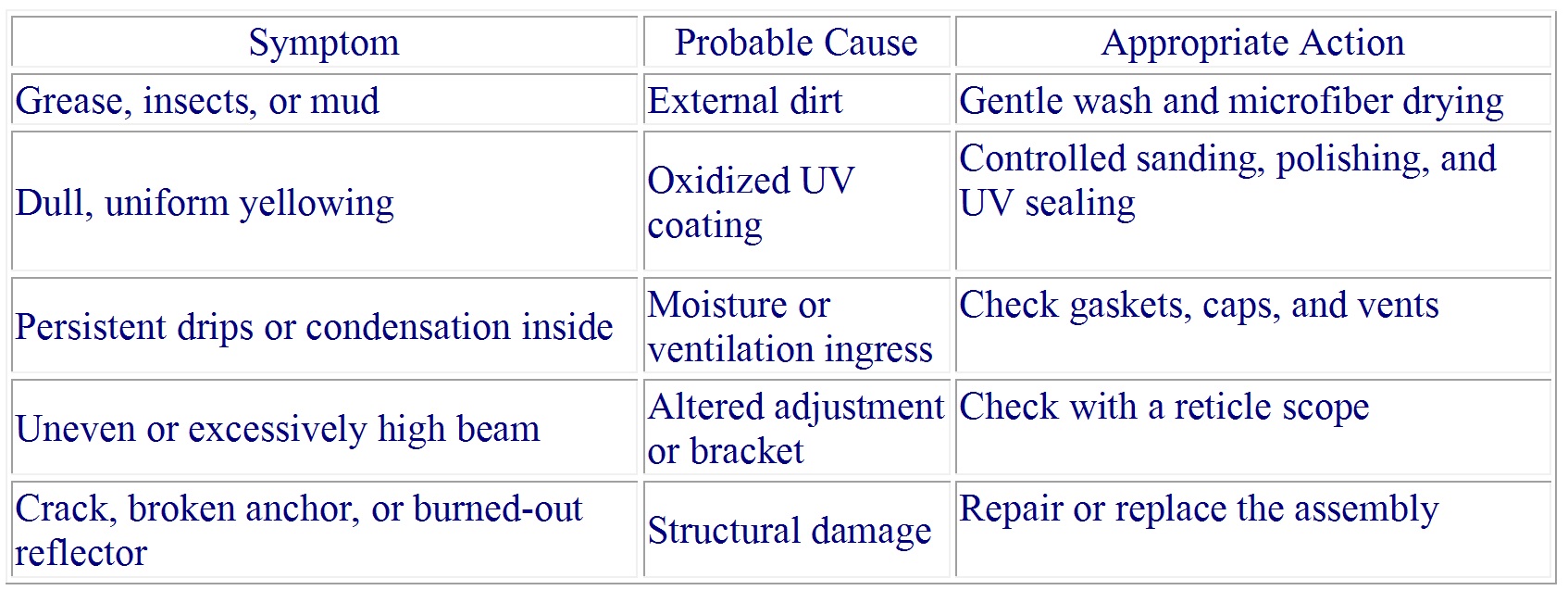
It's important to note that imperfections on the inner surface cannot be removed by polishing. Persistent condensation may indicate a problem with the gasket, cover, vent, or housing. The guide to removing moisture from the headlight and locating its source helps distinguish condensation from external cloudiness. In case of structural damage, it is recommended to visit a specialist workshop for a detailed evaluation. The following comparison avoids applying an inappropriate solution.
- How to clean car headlights.
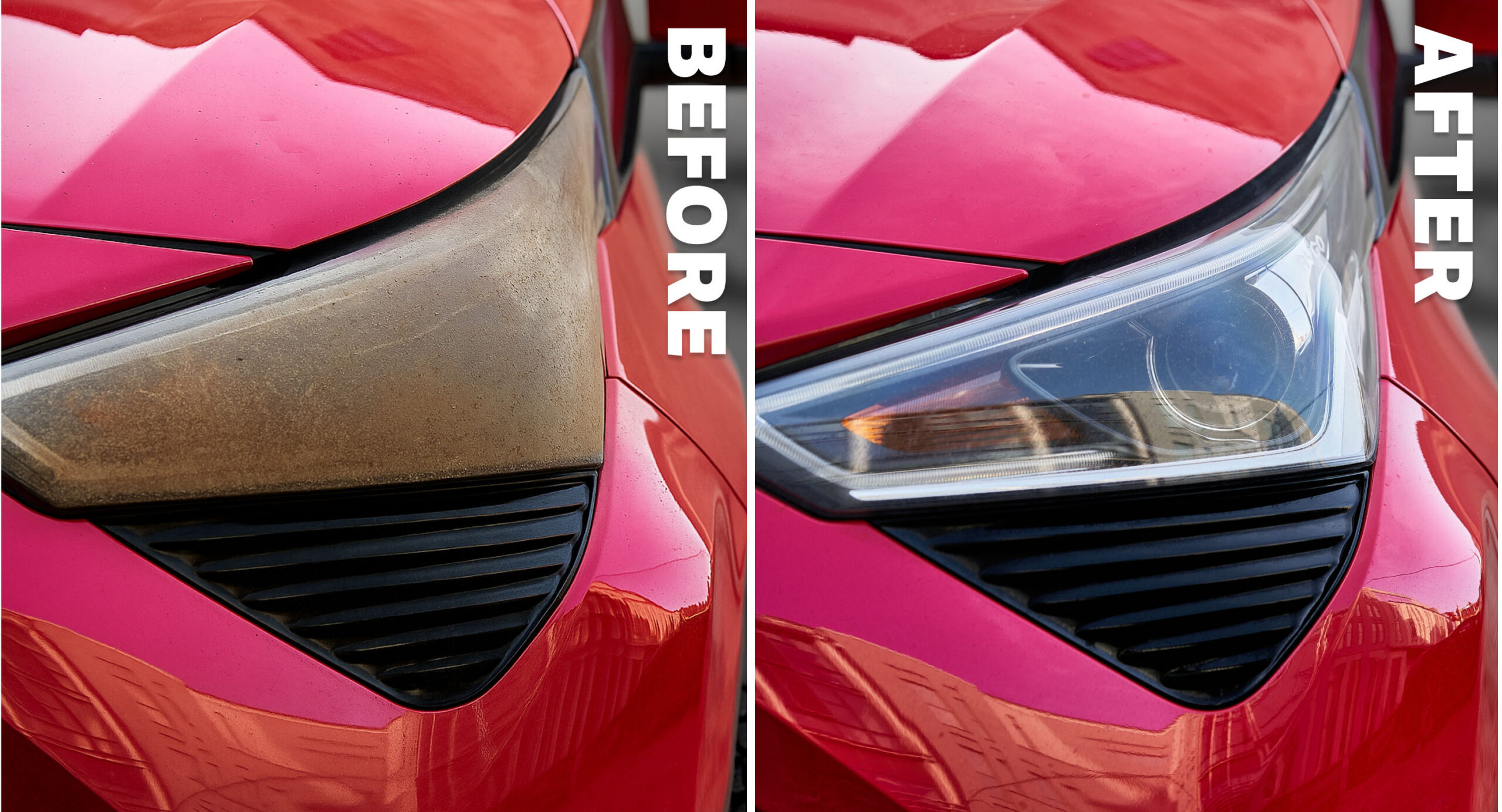
Knowing the proper procedure for cleaning cloudy headlights is crucial, as it improves nighttime visibility and prevents deterioration of the lighting system from affecting vehicle inspections. Surface dirt can be removed with a gentle wash; however, yellowing of the polycarbonate requires restoring the outer layer and then protecting it from ultraviolet radiation.
It is essential to identify the cause of the problem before proceeding with sanding. A headlight may have poor exterior cleanliness, oxidation in its structure, internal fogging, cracks, malfunctions, or burned-out bulbs. Each case requires a specific solution, as polishing does not repair a crack, dry internal condensation, or correct a misaligned beam.
- How to restore cloudy headlights step by step.
- Materials and preparation.
Work in the shade, with the headlight cool and the car body dry. To carry out this work, you will need masking tape, wet/dry sandpaper, and a specific polish. It is crucial to protect the paint, rubber seals, and moldings surrounding the headlight, as improper use of tools such as sanders or drills can compromise the coating or damage the plastic.
-
- Wet/Dry sanding, polishing, and ultraviolet protection.
Begin with the least aggressive grit to remove the deterioration. It is crucial to keep the surface wet during the sanding process, apply even pressure, and completely remove any marks left by the previous step before moving on to the finer grit.
Once it is completely dry, apply the polish to small areas, using smooth and precise movements until you achieve a uniform transparency. It is crucial to remember that finishing any project with a sealant or ultraviolet coating is essential to guarantee the protection of the polycarbonate.
- Home remedies that clean, but don't restore.
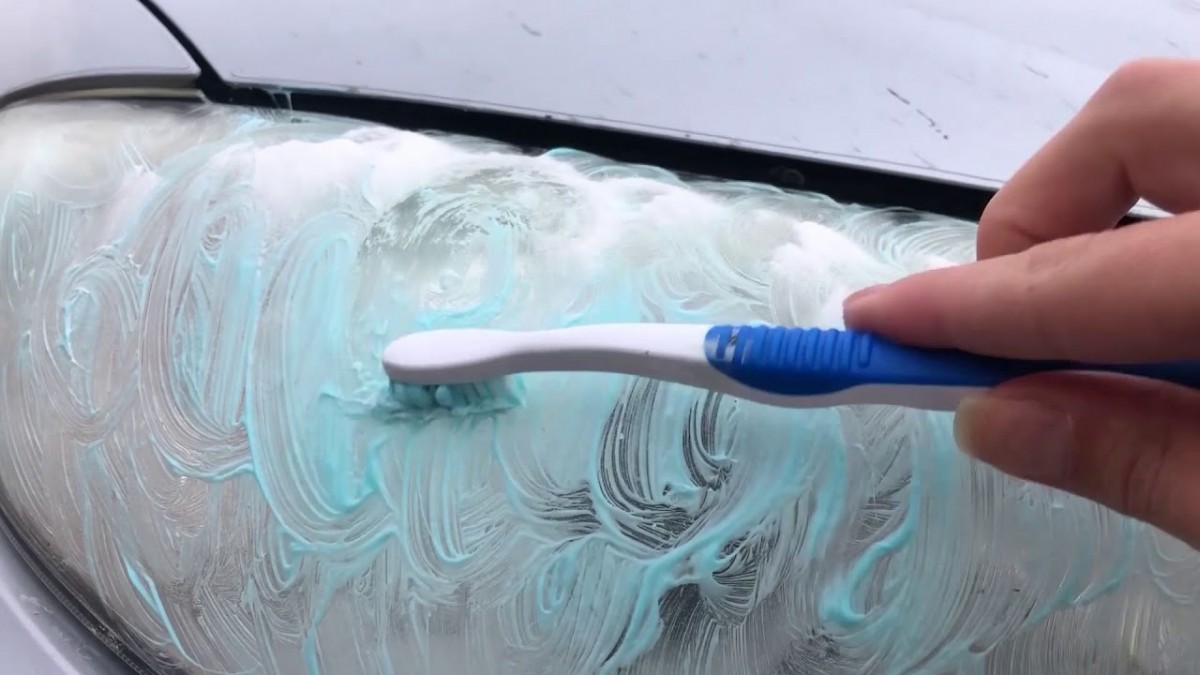
Toothpaste can act as a mild abrasive, but baking soda, vinegar, or household degreasers offer unpredictable results. It's important to note that these products can stain or damage rubber without creating a ultraviolet barrier.
Using automotive products and a clean microfiber cloth reduces potential risks. Therefore, using a dishwasher to wash your car is discouraged, as although it may remove grease, it doesn't guarantee compatibility with plastics and seals.
- What the MOT test checks on headlights.
The MOT Station Inspection Procedure Manual establishes the requirements and guidelines for headlight inspection. The assessment of opacity is based on its impact on the lighting function and the presence of any other serious defects.
Before going to the MOT test, it's crucial to verify that both beams are symmetrical. If the light is positioned too close, it is recommended to check the headlight height adjustment. It is important to note that final adjustment requires the use of a professional headlight alignment tool.
Installing LED technology in a headlight designed for halogen is only permitted under specific regulations. See what to check when replacing halogens with LEDs to avoid problems during inspection.
- When is it worthwhile to go to a professional workshop?.
It is recommended to go to a professional if the damage is extensive or the headlight has advanced technology, such as matrix LEDs. A professional guarantees a durable ultraviolet finish under controlled conditions.
A trained professional can integrate the work into a specialized detailing service. Replacing the entire assembly is only justified if the electronic or structural damage is irreparable.
- FAQs about cleaning cloudy headlights.
- Can toothpaste be used to clean cloudy headlights?.
This product is designed to remove dirt and provide temporary improvement in cases of light cloudiness, thanks to its mild abrasive action. It does not offer lasting protection, nor does it correct a deeply oxidized ultraviolet layer, cracks, or internal moisture.
-
- What type of sandpaper should be used to polish headlights?.
It is important to note that there is no single grit suitable for all headlights. It is recommended to start with the least aggressive abrasive to remove the damage and then move to finer grits, such as 1,000, 1,500, and 2,000 or higher, for moderate oxidation. Using 500 or 800 grit is effective at quickly removing material, although it can leave grooves that are difficult to remove. Therefore, its use is only recommended in cases of severe damage.
-
- Can a cloudy headlight cause a failed vehicle inspection (MOT)?.
Yes, if the damage prevents the headlight from functioning correctly, or if it is accompanied by other lighting problems, the established procedures must be followed. The inspection includes a thorough check of the headlight's operation, color, alignment, type approval, and mounting.
-
- How long does headlight polishing last?.
The durability of the polishing depends on several factors, such as the amount of material removed, the quality of the ultraviolet coating, exposure to sunlight, and subsequent washing. Polishing without sealing can cause a loss of clarity in a short period of time, as it leaves the polycarbonate unprotected.
- Implications for fleet management.
The main consequence of a headlight becoming cloudy is a loss of luminosity, increasing the risk of accidents at night.
The following measures are recommended:
- Headlight maintenance.
Headlight maintenance is not usually included in the vehicle manufacturer's scheduled maintenance. Deterioration occurs gradually over time or with vehicle use.
It is important to include a headlight inspection in the scheduled maintenance to check for cloudiness.
- Training for our mechanics.
Given the specialized nature of this maintenance, if we have our own workshop, we must provide training to our mechanics on how to perform headlight maintenance and prevent cloudiness.
The workshop manager, mechanics, or fleet manager are responsible for headlight maintenance. Drivers should not be left to decide when maintenance is needed, as they lack the necessary knowledge to make this decision.
- External workshop.
If you don't have your own workshop, it's recommended to hire a workshop specializing in headlight maintenance to perform headlight inspection and maintenance.
- Driver training.
Before driving, the driver must check various vehicle components, including the headlights.
If you find that the headlights have yellowed, are dirty, etc., you must inform the workshop manager or fleet manager so they can clean them.
- Vehicle inspection (MOT).
If headlight deterioration prevents them from functioning correctly, or if it coincides with other lighting issues, it can result in a failed vehicle inspection (MOT).
Slide 3. Thank you for your time.
The class has developed effective methods and practices to avoid for restoring headlight transparency for safe driving, passing vehicle inspections, and the implications for fleet management, see you soon.