
What are understeer and oversteer, and how to correct them for greater safety.
If you love driving, you have probably felt that the vehicle is not traveling precisely along the desired route. This phenomenon, recognized in the technical field as understeer and oversteer, requires careful attention to ensure safety. They constitute two methods by which the vehicle notifies that the tires have reached their grip limit.
The key to success lies in the effective implementation of traction. When the wheels lose grip on the rolling surface, the path marked with the steering wheel and the path followed by the vehicle no longer coincide. While both problems arise from a lack of adherence, their solutions are notably different.
What are understeer and oversteer.
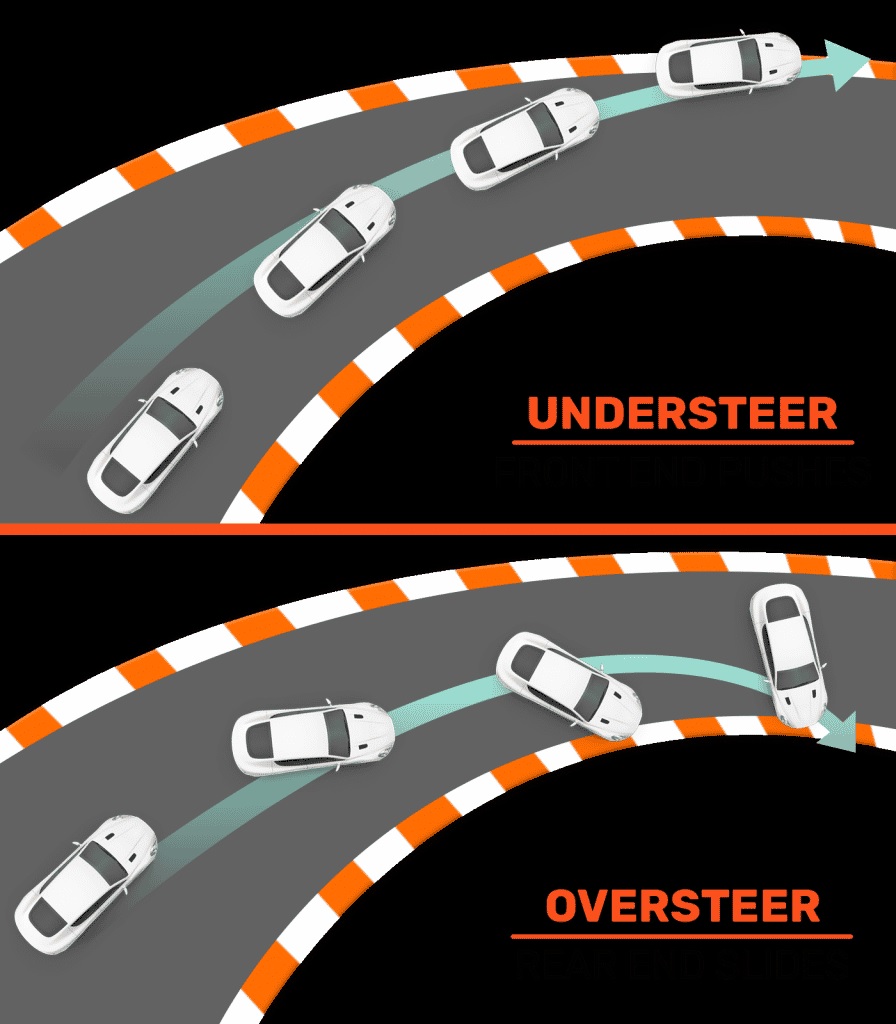
Understeer appears when the car turns less than what the driver requests with the steering wheel. The feeling is unmistakable: when cornering, the vehicle turns, but tends to continue in a straight line.
Oversteer occurs in the opposite way. The rear axle experiences a loss of grip, resulting in rear end slippage.
A tire with excessive wear, inadequate pressure or damage significantly reduces the safety margin. For this reason, it is recommended to carry out a thorough inspection of the tire.
Why do you lose control on a curve?.
The movement of a vehicle is achieved through a meticulous balance between inertia, weight, direction and friction. During a turn, lateral forces exert pressure on the vehicle, deflecting it toward the outside of the curve.
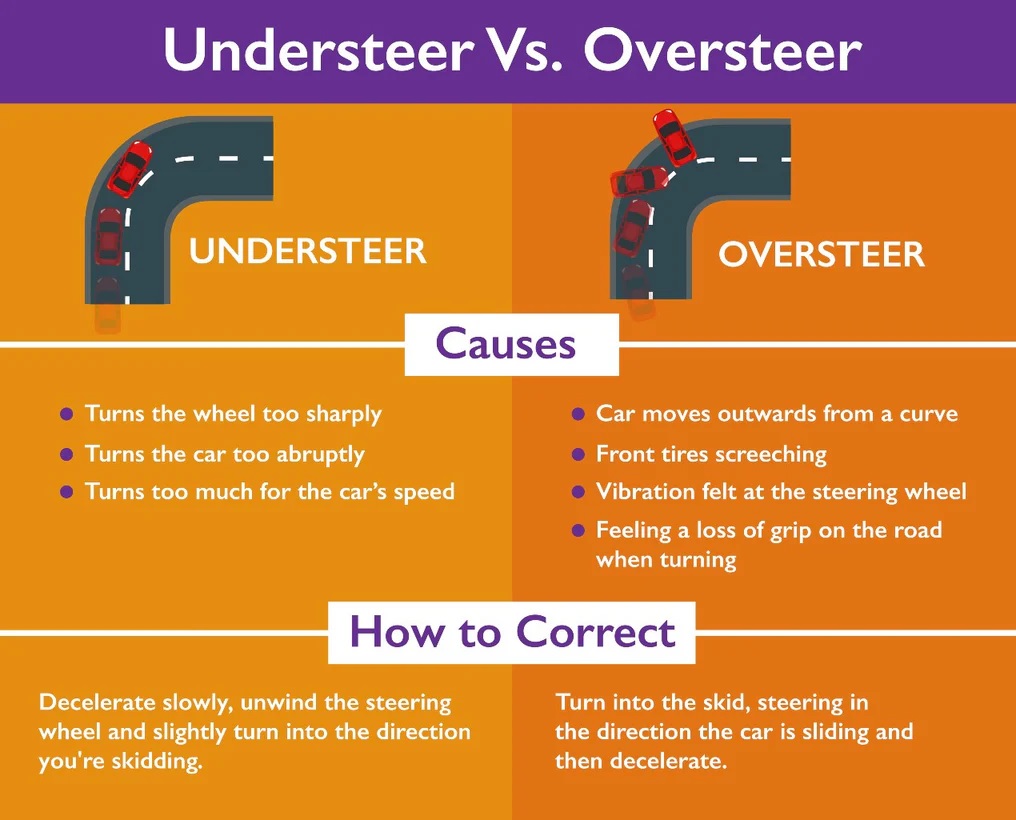
If the front wheels do not work properly, what is known as understeer occurs. In the event of a failure in the rear axle, oversteer occurs.
Understeer: when the car refuses to turn.
Understeer is a more common condition in front-wheel drive vehicles, although it can occur in any type of vehicle. The front wheels must be able to turn, brake and, in many cases, transmit engine power.
The appropriate response does not involve continuing the turn. It is recommended to gently lift your foot off the accelerator, reduce speed progressively and, if necessary, open the steering a little.
Inadequate tire pressure can compromise grip and contact tread.
Oversteer: when the rear slides.
Oversteer occurs when the rear axle loses grip. This condition tends to occur more frequently in rear-wheel drive vehicles, although it can also arise in front-wheel drive vehicles if the accelerator is applied abruptly during cornering.
If the rear moves to the right, a gentle turn will be made in the same direction. When moving to the left, a correction is made in the same direction.
It is important to note that a brake system in poor condition can significantly aggravate the situation. It is imperative to check any symptoms related to brake fluid in a timely manner.
Factors that favor loss of adhesion.
Various factors, such as rain, ice, gravel, wet leaves or poor asphalt, can significantly reduce the friction between the tire and the road.
A curb on the wheel can cause alterations in the steering, suspension or alignment of the vehicle.
The role of ESP and active safety.
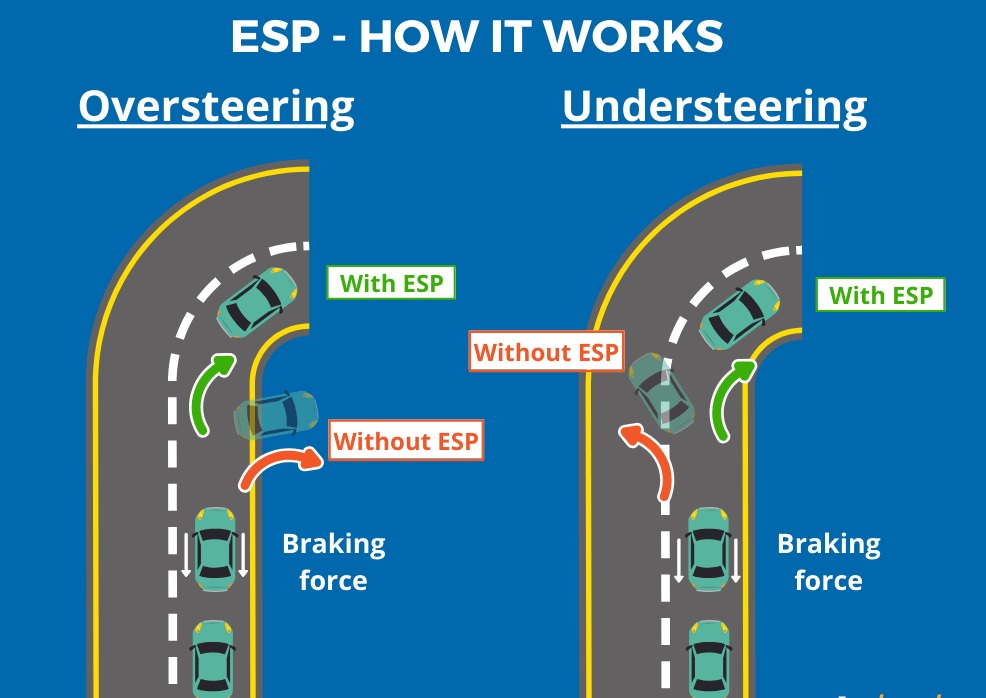
The electronic stability control system contributes to the correction of deviations in the trajectory. It detects if the car turns less or more than expected and brakes the specific wheels to recover the line.
ESP mitigates risk, but cannot override physical laws. It is crucial to note that if you enter a corner too quickly, the margin dissipates.
FAQs on understeer and oversteer.
- What is more dangerous?.
Oversteer usually requires a more precise reaction.
- Does understeer only happen in front-wheel drive cars?.
No. It can happen in any car.
- Does ESP always prevent a spin?.
Not always. It helps, but it doesn't work miracles.