

Download the audio
Slide 1. Introduction.
The class develops the reasons why diesel vehicles vibrate upon startup, the appropriate actions to take, and the implications for fleet management.
Slide 2. Increased vibration in diesel vehicles upon startup.
- Is it normal for a vehicle to vibrate when starting?.
A slight vibration during the first few seconds can be normal, especially in diesel engines or in very cold weather.
This occurs because:
- The engine has not yet reached its optimal operating temperature.
- The oil is more viscous (thicker) and takes a few moments to provide proper lubrication.
- Combustion is less efficient when the engine is cold.
However, if the vibrations are intense, last for several minutes, or worsen over time, this is no longer considered normal.
The following are signs that the situation is not normal:
- The vibrations are intense.
- The vehicle shakes noticeably.
- The vibrations increase over time.
- The vehicle jerks or experiences a loss of power.
- Warning lights appear on the dashboard.
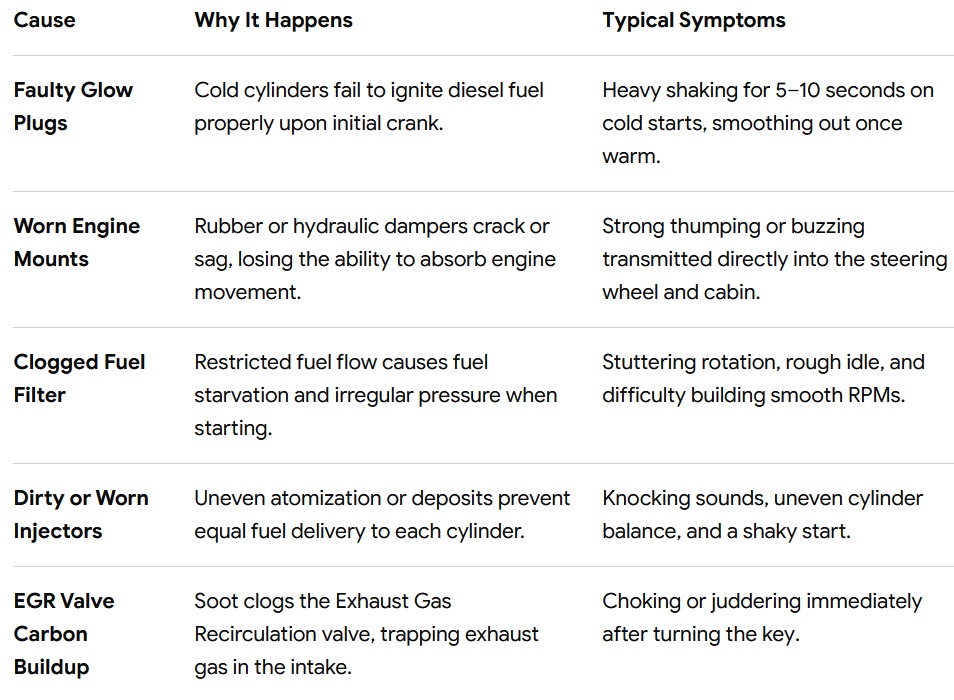
- Common causes of vibrations upon startup.
While it is normal to experience mild vibrations when starting any engine, if a diesel vehicle vibrates during a cold start, it may indicate issues that require immediate attention. Beyond being uncomfortable, this phenomenon could point to underlying problems that, if left unaddressed, may lead to costly repairs.
Let us examine the potential causes of vibrations experienced by a vehicle during a cold start, specifically in diesel models. Some of the factors that can trigger this issue include:
- Crankshaft pulley.
In diesel engines, the crankshaft pulley plays a crucial role in reducing vibrations. If the part shows signs of wear or damage, its ability to dampen vibrations will be compromised, resulting in a greater perception of vibrations when starting the engine.
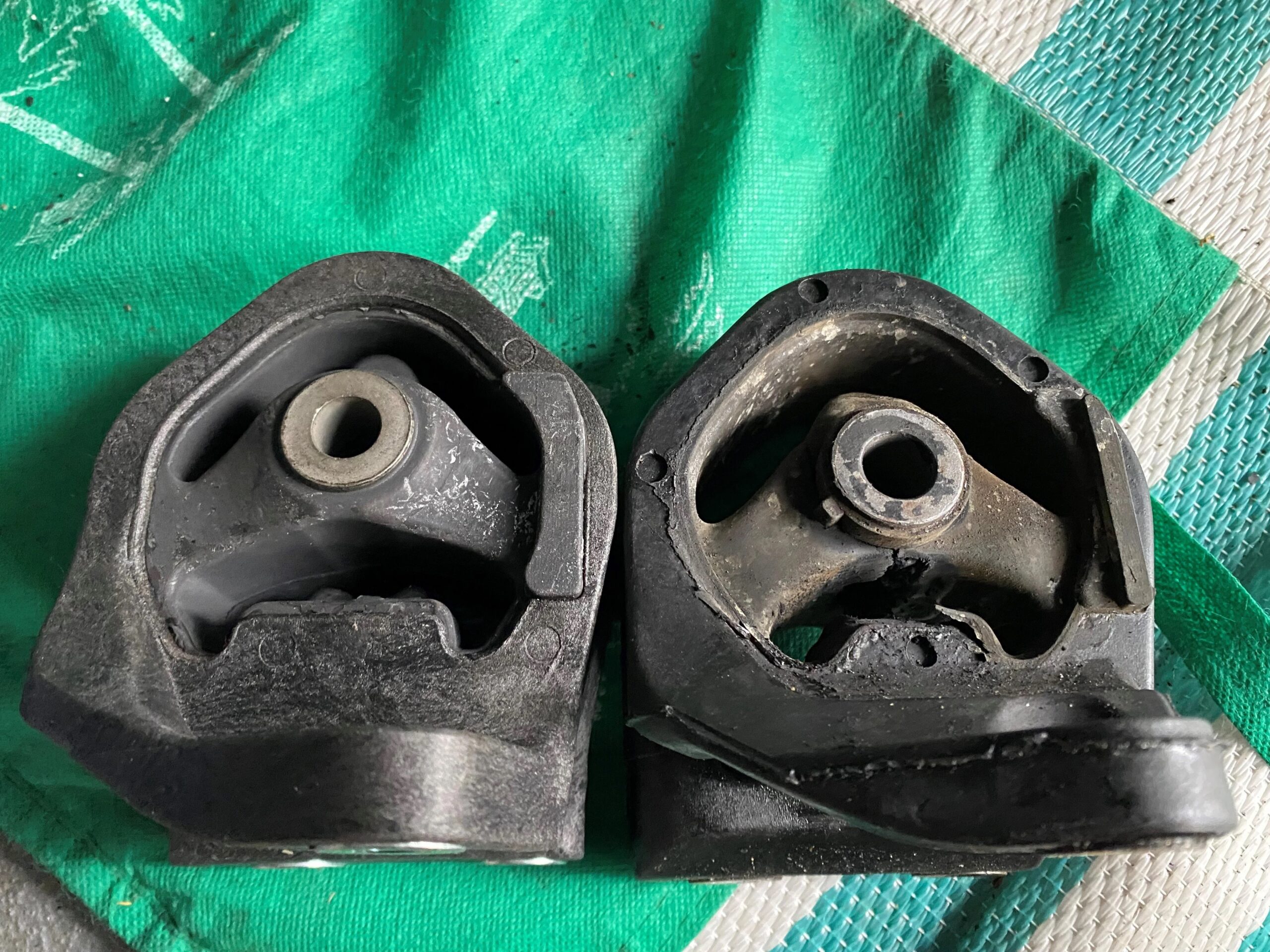
- Damaged engine mount.
Engine mounts serve to connect the engine to the vehicle's chassis and dampen the vibrations generated during operation. A damaged or worn engine mount can lead to increased vibrations and may cause further damage to the engine and other components due to a lack of proper support.
- Engine silent blocks (vibration-dampening mounts).
Similar to engine mounts, silent blocks function to reduce vibrations between the chassis and the engine. It is important to note that a damaged or worn silent block can lead to increased vibrations and, if not replaced in a timely manner, may cause more serious engine damage.
Over time and due to cold temperatures:
Ø They harden.
Ø They lose elasticity.
Ø They transmit more vibration into the vehicle's cabin.
This is a very common issue in cars that are more than 8–10 years old.
- Low temperatures.
In cold climates, it is common for diesel engines to experience more pronounced vibrations during startup, due to higher oil viscosity and lower initial combustion efficiency. These vibrations typically decrease as the engine reaches higher operating temperatures.
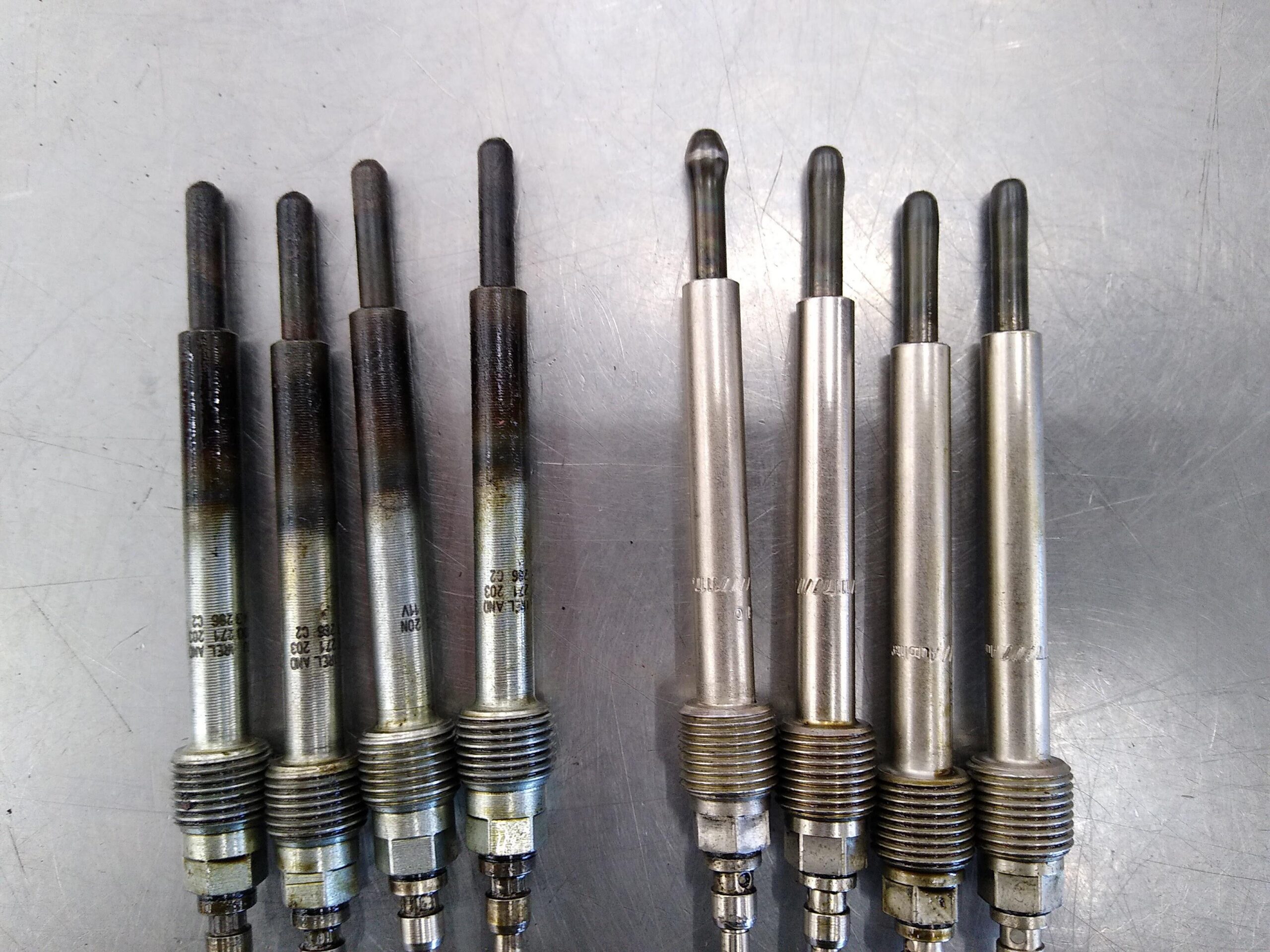
- Issues with glow plugs.
In diesel engines, glow plugs play a crucial role in the startup process during cold weather. Faulty or worn glow plugs may fail to heat the engine efficiently, which can result in excessive vibrations when attempting to start the vehicle.
- Worn dual-mass flywheel.
This is a relatively frequent issue in diesel vehicles with significant mileage. When the dual-mass flywheel loses its dampening capacity, it causes strong shaking or tremors when the vehicle is started or turned off.
Common symptoms include:
Ø Shaking or tremors during startup.
Ø Metallic knocking sounds.
Ø Vibrations when turning off the engine.
Ø Noises originating from the transmission.
7. Dirty or faulty injectors.
Injectors must atomize fuel correctly.
When they become dirty, combustion is no longer uniform, leading to vibrations—especially during startup and at idle.
When injectors fail to atomize fuel properly:
Ø The mixture is not homogeneous.
Ø Some cylinders perform worse than others.
Ø The engine vibrates, particularly when cold.
This issue is often accompanied by increased fuel consumption and a loss of smooth operation.
8. Dirty intake system or EGR valve.
The buildup of carbon deposits can disrupt engine performance when cold.
This results in:
Ø Irregular startup.
Ø Vibrations.
Ø Unstable idle.
Ø Loss of performance.
9. Clogged fuel filter.
If the fuel filter is clogged, an insufficient amount of fuel may reach the injectors, causing a loss of power, jerking, or difficulty starting the engine.
10. Unstable idle when cold.
An idle speed that is too low or irregular upon startup can cause noticeable vibrations. Common causes include:
Ø A dirty EGR valve.
Ø Carbon deposits on the throttle body.
Ø Faulty temperature sensors.
11. Unsuitable or degraded engine oil.
Old oil, or oil with an incorrect viscosity for winter conditions:
Ø Provides poor lubrication when cold.
Ø Increases internal friction.
Ø Causes vibrations and noise during the first few minutes of operation.
12. Cold-start combustion issues.
Sensors such as:
Ø Temperature sensor.
Ø Mass airflow sensor.
Ø Idle control sensor.
If these send incorrect data, the engine fails to properly adjust the fuel-air mixture, causing vibrations until it warms up.
13. 12-volt battery.
A weak battery can lead to slow cranking and cause vibrations during the first few seconds of operation.
- Implications for fleet management.
The primary consequence is a minor vehicle fault, which can lead to difficulty starting the engine, increased vibration, potential loss of power, and engine jerking. Over time, this may escalate into a more serious and costly mechanical failure.
It is recommended that the following measures be implemented:
- Take prompt action.
At the first sign of increased vibration—especially during a cold start—it is imperative to act immediately. Delaying repairs can lead to more severe and expensive mechanical issues.
The following components and systems should be inspected:
Ø Engine mounts.
Ø Engine pulleys.
Ø Glow plugs.
Ø Electronic diagnostics.
Ø Idle speed and air intake system.
Ø Oil and fuel injection system.
- Preventive maintenance.
Engine maintenance must be performed in accordance with the vehicle manufacturer’s instructions and within the specified time intervals.
To avoid recurring issues, it is essential to follow a regular maintenance schedule that includes checking the condition of pulleys, engine mounts, glow plugs, and other critical components. This helps keep vibrations to a minimum and extends the engine's service life.
- Driver Training.
Drivers must be trained to recognize when an engine exhibits excessive vibration during startup, as well as the potential causes for this issue.
Drivers should know how to:
Ø Observe whether the engine vibrates only when cold or also when at operating temperature.
Ø Check for strong vibrations transmitted to the steering wheel or dashboard.
Ø Check for jerking or shuddering during startup or when beginning to drive.
Ø Check for any loss of engine power.
Ø Listen for any metallic noises accompanying the vibration.
Ø Monitor the warning lights on the dashboard.
Drivers should avoid:
Ø Accelerating hard in an attempt to "eliminate the vibration."
Ø Ignoring the problem—assuming it is normal—even if it worsens.
If a driver identifies symptoms of excessive vibration during startup, they must report this to the fleet manager or the workshop supervisor so that the fault can be repaired.
If an in-house workshop is not available, it is recommended to take the vehicle to a professional mechanic for a comprehensive diagnostic. A qualified technician will be able to identify the specific issue and recommend the necessary repairs.
Slide 3. Thank you for your time.
The class has developed the causes of vibrations in diesel vehicles during startup, the appropriate actions to take, and the implications for fleet management, see you soon.