

Download the audio
Slide 1. Introduction.
The class develops which option offers superior range, durability, safety, and long-term cost-effectiveness, as well as the implications for fleet management.
Slide 2. Comparison between LFP and NCM.
- What LFP stands for.
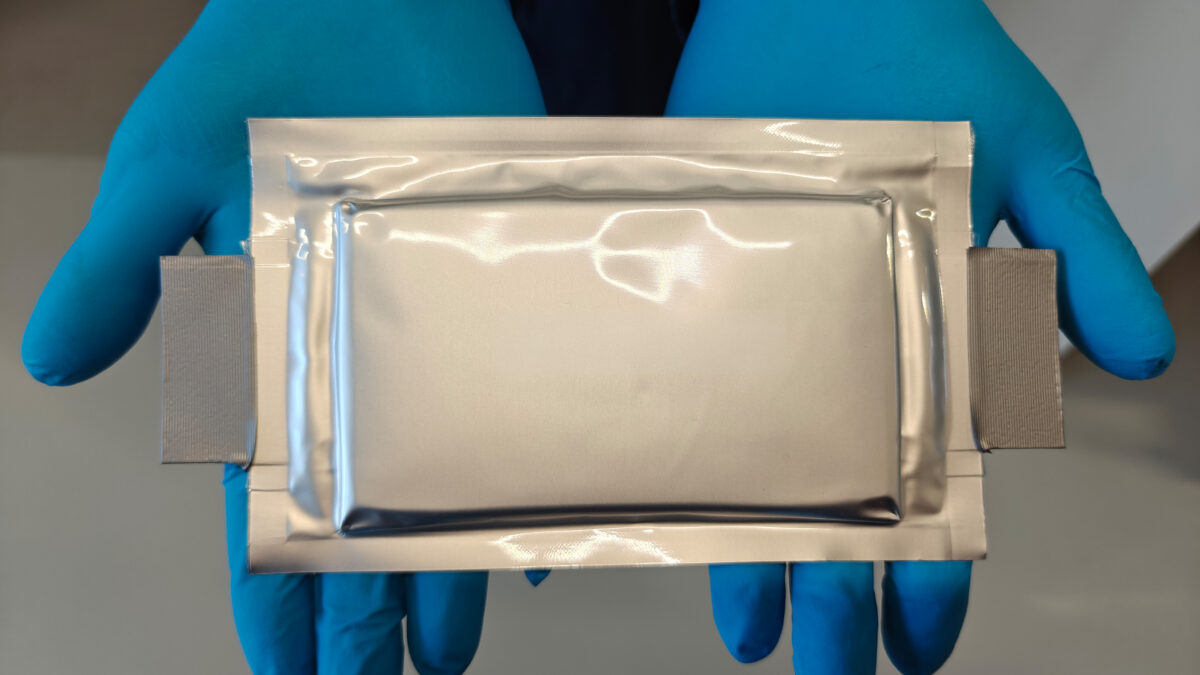
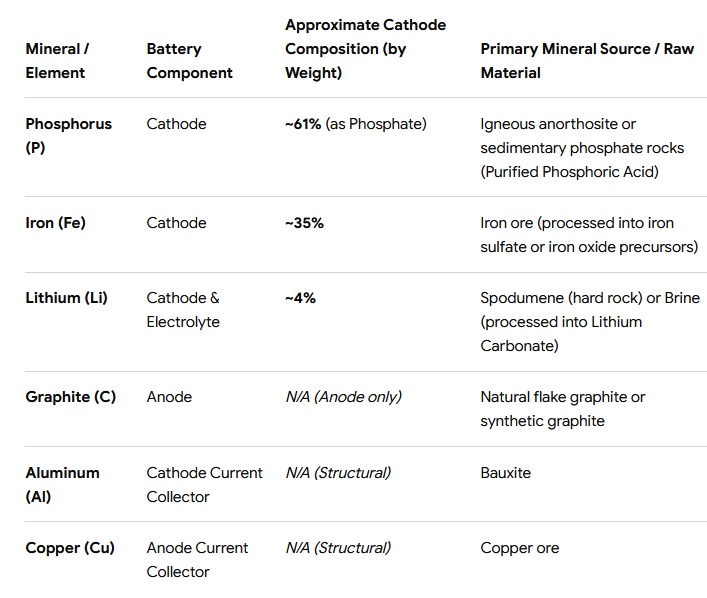
LFP stands for Lithium Iron Phosphate (LiFePO4). Its cathode is composed of iron and phosphate—materials that are more abundant and less dependent on critical supply chains than nickel or cobalt. This explains their lower relative cost and good thermal stability.
ü LFP battery minerals.
-
- Lithium (Li).
The energy carrier. It is responsible for moving between poles to store or release electricity. During charging, lithium ions travel toward the anode; during discharge (when using the car or device), they return to the cathode, generating an electric current.
-
- Iron (Fe).
Iron is the chemically active material that interacts with lithium. Its major advantage is that it is an extremely cheap and abundant mineral in the Earth's crust. By replacing nickel and cobalt, iron is directly responsible for the drastic reduction in electric vehicle prices made possible by LFP batteries.
-
- Phosphorus and Oxygen (Forming Phosphate, PO4).
The safety shield. Phosphorus bonds strongly to oxygen via very rigid covalent bonds. This molecular structure prevents oxygen from being released at high temperatures. Because the oxygen remains "trapped," the battery does not easily catch fire or undergo thermal runaway, making it the safest lithium chemistry on the market.
-
- Graphite (Carbon).
Storage via insertion. Although it is not part of the "LFP" acronym, the anode is typically made of graphite. Its layered structure acts as a secure "parking area" where lithium ions are stored when the battery is fully charged.
ü Advantages of LFP batteries.
1. Greater safety and thermal stability.
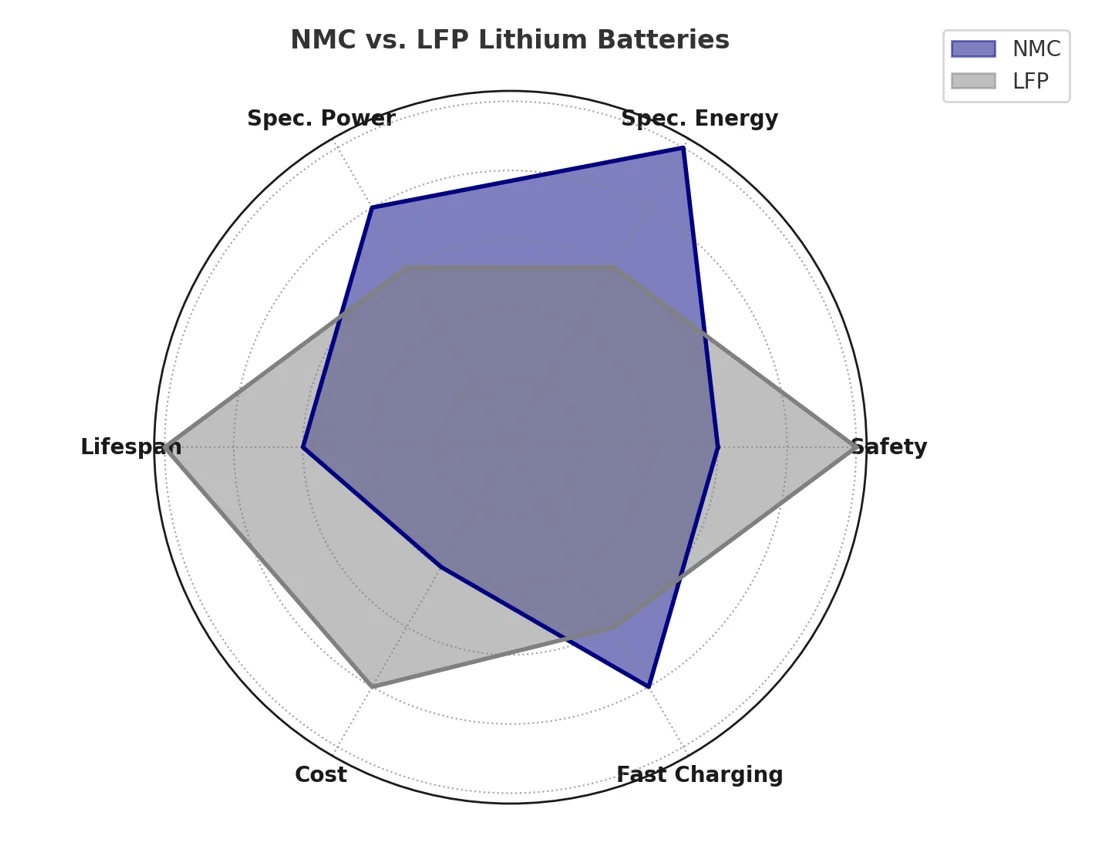
They withstand higher thermal runaway temperatures (around 270°C, compared to 150–210°C for NMC or NCA batteries), which drastically reduces the risk of fire.
2. Long service life.
They support many more charge and discharge cycles—generally between 2,000 and over 6,000—and can last 10 to 15 years with very low degradation.
3. Charging to 100% without damage.
They allow—and in many cases, it is recommended—regular charging to 100% capacity to calibrate the system and range indicator, without suffering the wear and tear associated with other chemistries.
4. Lower manufacturing cost.
Since they do not use scarce or expensive materials like cobalt or nickel (relying instead on iron and phosphorus), they are more economical to produce.
5. Lower ethical and environmental impact.
They avoid the problematic mining of cobalt and nickel and generate fewer carbon emissions during production.
ü Disadvantages of LFP batteries.
1. Lower energy density.
They store less energy per unit of volume and weight—approximately 30% less than NMC batteries—requiring larger, heavier packs to achieve a similar range.
2. Greater weight.
The extra size and mass impact the total weight of the vehicle or system in which they are installed.
3. Poorer performance in extreme cold.
Very cold weather significantly reduces their performance, charging speed, and power output.
4. Very flat voltage curve.
Battery voltage barely changes between 40% and 90% charge, making it difficult for electronic systems to accurately calculate the remaining energy percentage unless the battery is calibrated by periodically charging it to 100%.
- What NCM stands for.
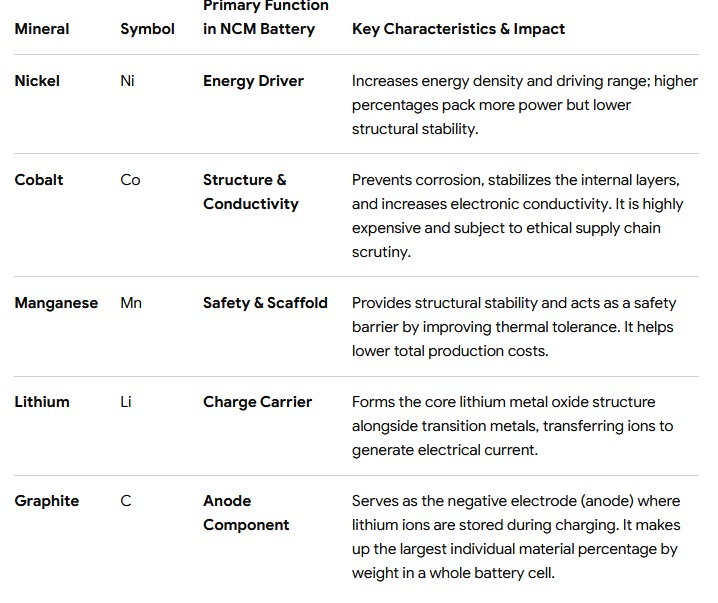
NCM refers to nickel, cobalt, and manganese. This chemical composition allows for storing more energy in less space, which is crucial for increasing range without enlarging the battery pack.
ü Minerals in the NCM battery.
1. Nickel.
Provides high energy density and greater storage capacity in a smaller footprint. The higher the nickel content, the more energy the battery stores, although adjustments are required to maintain stability.
2. Cobalt.
Stabilizes the chemical structure and cathode bonds, though it is an expensive material that is difficult to extract.
3. Manganese.
Contributes to structural robustness and reduces manufacturing costs.
ü Advantages of NCM chemistry.
1. Higher energy density.
They store more energy with less weight and volume, allowing for greater range within the same footprint.
2. Better cold-weather performance.
They withstand and perform better in low temperatures than LFP batteries.
3. Higher power output.
They offer superior power delivery for acceleration and demanding vehicle applications.
4. Charging speed.
They support high fast-charging power levels.
ü Disadvantages of NCM batteries.
1. Lower durability.
They have a shorter lifecycle—between 1,500 and 2,500 charge-discharge cycles—compared to LFP batteries.
2. Higher cost.
They are more expensive to manufacture due to the use of valuable metals such as cobalt and nickel.
3. Lower thermal and charging stability.
They are more sensitive to full charges; daily use between 20% and 80% is recommended, and there is a higher risk of accelerated degradation or thermal runaway if fast charging is overused.
4. Environmental impact.
The use of cobalt raises significant ethical and ecological concerns regarding its extraction.
- Comparison table: LFP vs. NCM in electric cars.
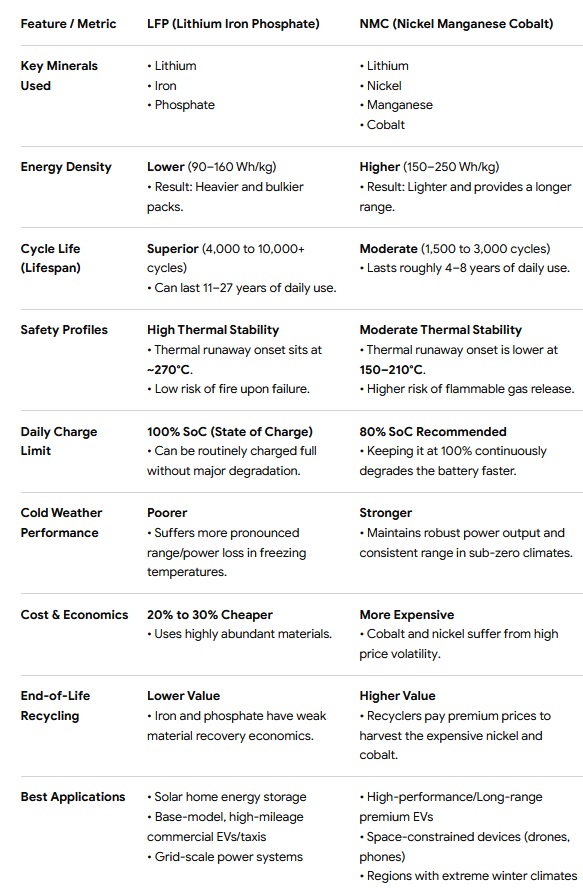
- LFP and NCM do not compete for the same use case.
Choosing between LFP and NCM batteries depends less on a single "right" answer and more on how the electric car is actually used: city driving, highway travel, climate, annual mileage, budget, and range expectations. Both chemistries belong to the lithium battery family, yet they behave differently and serve slightly different purposes.
LFP has gained popularity in entry-level, city, and high-volume electric car models because it helps keep costs down, eliminates the need for nickel and cobalt, and offers good durability. NCM, on the other hand, remains prevalent in versions offering longer range or higher performance, where energy density and overall weight are critical factors. The key lies in understanding which trade-offs you are willing to accept and which advantages you will truly utilize.
An LFP battery can be an excellent choice for those who charge at home or at fleet facilities, drive predictable routes, and want a robust electric car built to last for years. An NCM battery may be better suited for frequent travelers, those needing greater real-world highway range, or drivers seeking a higher-performance version.
- Range, weight, and price.
If you are comparing new electric cars and have general questions about formats, charging, or daily use, it is helpful to start with a comprehensive guide on electric car batteries and lithium-ion technologies before diving into the specifics of LFP versus NCM.
All else being equal, an NCM battery typically offers greater usable capacity and, consequently, a higher certified range. For this reason, many manufacturers reserve NCM batteries for long-range versions or premium trim levels.
LFP compensates for its lower energy density with a lower cost and greater tolerance for full charge cycles. In contrast, with NCM batteries, it is generally recommended to keep the charge level between 20% and 80% for daily driving and reserve a 100% charge for long trips.
- Which battery is best if you drive high mileage?.
The LFP battery allows you to use the car without obsessing over the 80% charge limit; it handles frequent charging routines well and lowers the entry price. For a secondary family car, an urban EV, or a compact car for commuting, it may be a more rational choice than paying for an NCM battery that will barely be utilized.
1. If you do a lot of highway driving.
On long trips, NCM retains the advantage of offering greater range relative to weight. However, battery chemistry isn't everything: aerodynamics, charging power, the available network, and usage habits play just as big a role as the cell type. That is why, when calculating the real medium-term costs of an electric car, it is also worth considering degradation, hidden expenses, and usage patterns over several years.
2. If you almost always charge at fleet facilities or at home.
Having your own charging point allows you to get more out of an LFP battery, as daily range ceases to be an issue.
- Degradation and lifespan: where each chemistry excels.
Degradation depends on more than just whether the battery is LFP or NCM; factors such as temperature, charging power, software, cooling systems, charge cycles, and time also play a part.
1. Fast charging and temperature.
Fast charging raises temperatures and places more stress on the battery than slow charging. LFP batteries generally tolerate repeated cycles well, whereas NCM batteries require careful thermal management to maintain their capacity over the long term.
2. Why "100%" doesn't mean the same thing.
With many LFP batteries, charging to 100% relatively often helps the management system recalibrate the state of charge. With NCM batteries, keeping the car at 100% for extended periods can accelerate degradation, especially in hot weather. That is why the manufacturer's recommendations matter just as much as the chemistry: each brand defines different operating margins, buffers, and protection strategies.
- Safety: thermal stability versus energy density.
One of the major advantages of LFP is its thermal stability. Its chemical composition is less prone to thermal runaway, which reduces risk in extreme situations.
It comes down to balance. LFP prioritizes cost, durability, and stability, whereas NCM prioritizes energy density and performance. For an affordably priced city car, the former makes a lot of sense. For a large electric SUV requiring a certified range of 600 kilometers, the latter may be hard to replace without increasing weight or size.
- Which battery is better: LFP or NCM?.
LFP is the better choice if you are looking for a more affordable electric car that is reliable for daily use, withstands heavy usage well, and does not require maximum range. It is the most logical option for city driving, commuting, drivers who charge at fleet depots or at home, and those who prefer a lower purchase price.
NCM is the better choice if you frequently take long trips, live in cold climates, need more range, or are considering higher-performance versions.
Before deciding, you shouldn't look only at the technical specifications. You should also consider the warranty, usable capacity, charging power, real-world consumption, the charging network, and long-term replacement or repair costs. As a helpful point of comparison, it is useful to look at the costs of replacing the batteries in these electrified vehicles.
- FAQs about LFP and NCM batteries.
1. Does an LFP battery last longer than an NCM one?.
Generally speaking, LFP batteries handle repeated cycles and full charges very well, offering a very long lifespan for daily use. However, chemistry isn't the only factor; cooling systems, software, ambient temperature, and charging habits also play a crucial role. A well-managed NCM battery that is routinely charged between 20% and 80% can retain its capacity for many years.
2. Is an LFP battery worse because it offers less range?.
Not necessarily. The fact that LFP batteries have lower energy density doesn't mean they are inferior for every user. If the car provides enough range for your daily trips and is easy to charge, its lower cost and excellent durability can easily make up for the difference. It only becomes a clear limitation when you need to cover long distances on a single charge—especially on highways or in cold weather.
3. Can I charge an LFP battery to 100% every day?.
Many manufacturers allow LFP batteries to be charged to 100% more frequently than NCM batteries; in fact, they often recommend doing so periodically to improve system calibration. In any case, you should always follow the vehicle owner's manual and avoid overusing fast charging.
4. Which battery type should I choose when buying a used electric car?.
When buying a used electric car, battery chemistry matters, but its actual condition is even more important. It is advisable to check the maintenance history, mileage, remaining warranty, battery health percentage (if available), and previous usage patterns. An LFP battery is an attractive option due to its durability, but a well-maintained NCM battery might be a better choice if you need greater range.
- Will solid-state batteries change this comparison?.
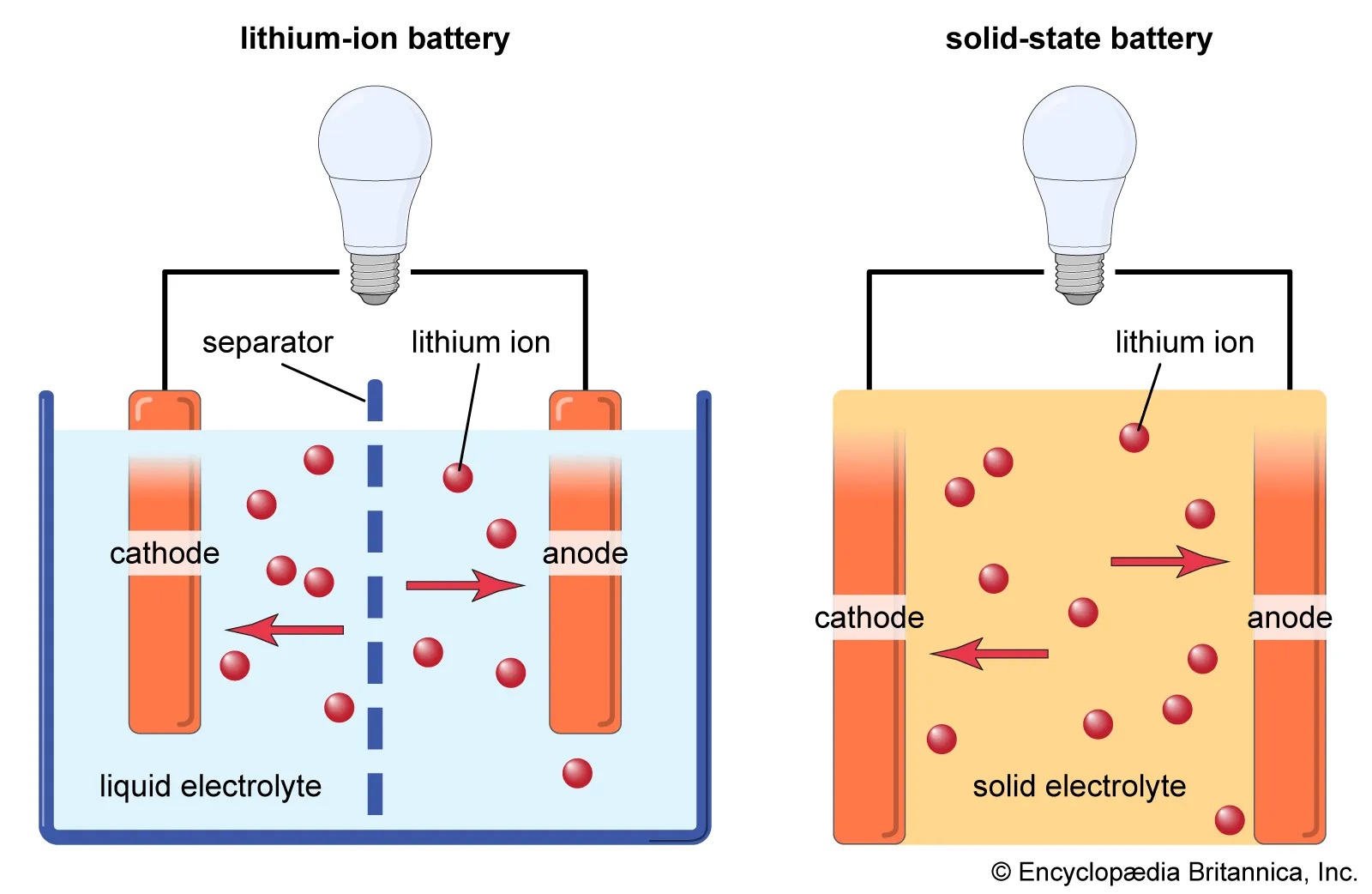
The industry is already working on alternatives that could shift the current balance, yet the comparison between LFP and NCM will remain relevant for years to come. Solid-state batteries promise higher energy density, greater safety, and faster charging times, though they have yet to prove their viability regarding cost, mass production, and real-world durability in high-volume vehicles. Therefore, while it is worth monitoring the evolution of solid-state batteries, current purchasing decisions should be based on technologies already available on the market.
Intermediate chemistries—such as LMFP, which adds manganese to the LFP base to boost performance without driving up costs—are also gaining traction. Even so, for the average buyer, the practical choice remains the same: an LFP battery if economic rationality is the priority, or an NCM battery if greater range or performance is required.
- Will solid-state batteries change this comparison?.
The industry is already working on alternatives that could shift the current balance, yet the comparison between LFP and NCM will remain relevant for years to come. Solid-state batteries promise higher energy density, greater safety, and faster charging times, though they have yet to prove their viability regarding cost, mass production, and real-world durability in high-volume vehicles. Therefore, while it is worth monitoring the evolution of solid-state batteries, current purchasing decisions should be based on technologies already available on the market.
Intermediate chemistries—such as LMFP, which adds manganese to the LFP base to boost performance without driving up costs—are also gaining traction. Even so, for the average buyer, the practical choice remains the same: an LFP battery if economic rationality is the priority, or an NCM battery if greater range or performance is required.
- Implications for fleet management.
The main consequence of not acquiring a vehicle with the appropriate battery type—whether LFP or NMC—is the risk of insufficient range to provide the service, poor battery performance in cold temperatures, higher costs, or a shorter lifespan.
The following measures are recommended.
1. LFP or NMC.
All else being equal, LFP is the best option for a vehicle fleet due to its lower cost and the advantages it offers over NMC; however, there are specific cases where it is necessary to evaluate whether LFP or NMC is preferable.
2. Charging at our facilities.
Fleet vehicles must be charged at our facilities; we should not rely on public or third-party chargers, as they may be occupied or out of order, and the cost of charging is a factor.
Charging should be carried out using the most economical rate (typically at night) and at the slowest possible speed to avoid battery degradation.
For fleets that charge at their own facilities—using slow, overnight charging—LFP is superior to NMC.
For high-power, rapid charging, NMC is superior to LFP.
3. Durability.
LFP batteries withstand a greater number of charge-discharge cycles than NMC batteries and, consequently, have a longer lifespan.
4. Range.
NMC batteries offer greater range than LFP batteries; however, if a vehicle equipped with an LFP battery provides the range needed for our service operations, LFP remains the best choice.
5. Fire risk.
LFP batteries offer greater thermal stability and a lower risk of fire compared to NMC batteries.
6. Low temperatures.
NMC batteries perform better than LFP batteries in cold temperatures; this factor must be considered if our vehicles operate in cold environments.
7. Environment.
LFP batteries are more environmentally friendly and cause less pollution than NMC batteries; therefore, their purchase is recommended.
Slide 3. Thank you for your time.
The class has which option offers superior range, durability, safety, and long-term cost-effectiveness, as well as the implications for fleet management, see you soon.