
The amount of lithium in an electric vehicle battery
The battery is a major factor determining the price, range, and weight of an electric vehicle, as well as a significant part of its industrial impact. However, analyzing the materials required for manufacturing reveals figures that can be confusing—such as the tons of lithium needed to produce vehicles, the tens of kilograms of lithium carbonate per battery, or generic references to metals like nickel, cobalt, manganese, or iron.
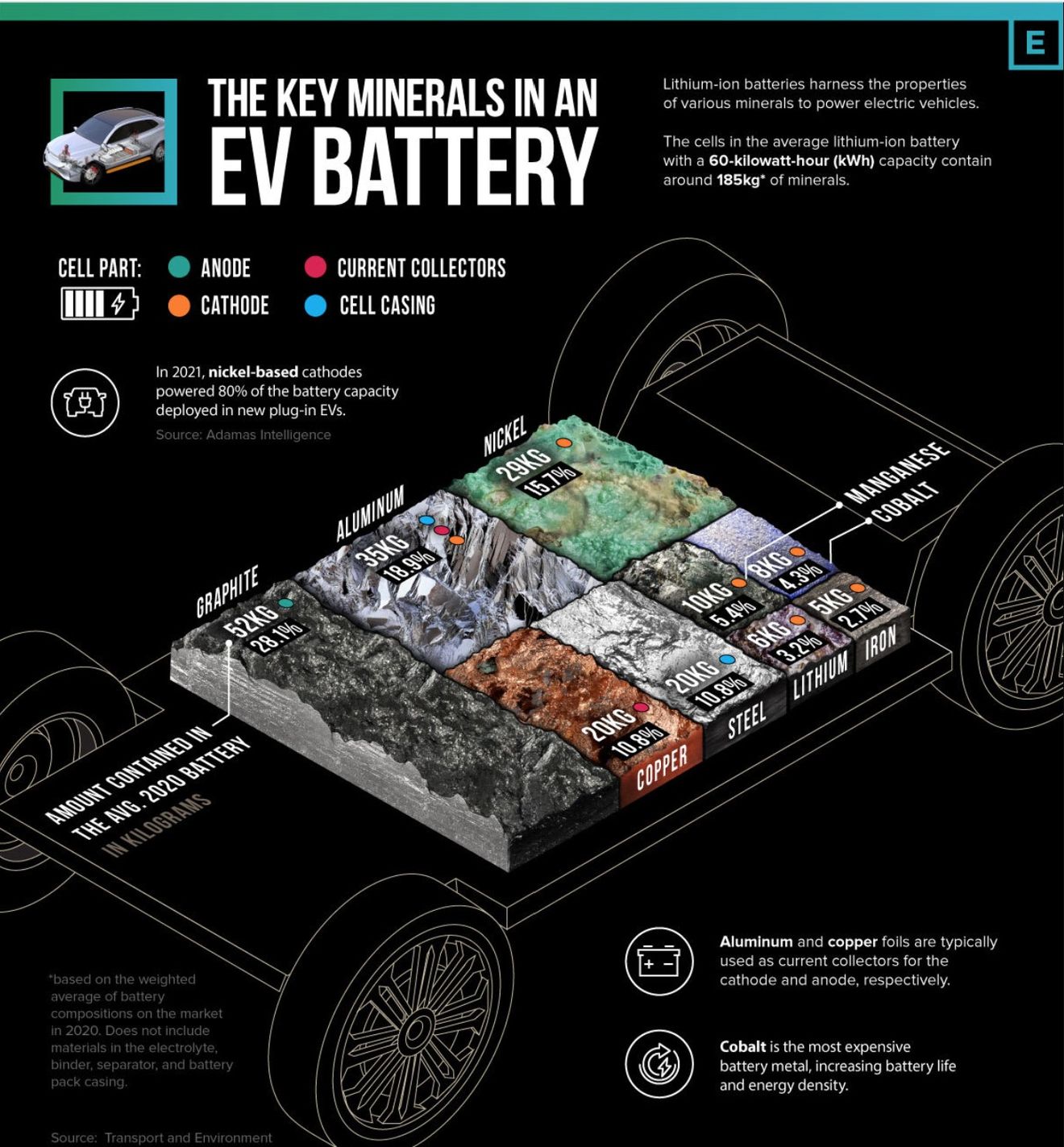
It is important to note that a conventional electric vehicle does not carry tens of kilograms of pure lithium. A battery with a capacity of approximately 60 kWh may contain between 5 and 6 kilograms of elemental lithium, although this amount can vary depending on the chemistry used, the battery capacity, and technological advancements in the cells.
To understand the origin of this figure, one must know the types of batteries currently used in electric vehicles, as the generic term "lithium-ion battery" encompasses a wide variety of chemical compositions.
Almost all of them use lithium, but not all use the same materials.
The vast majority of electric cars today use lithium-ion batteries. However, it is important to note that not all companies in this sector are the same. The main difference lies in the materials used—specifically in the cell cathodes—a component that significantly influences the battery's energy storage capacity, production cost, and raw material requirements.
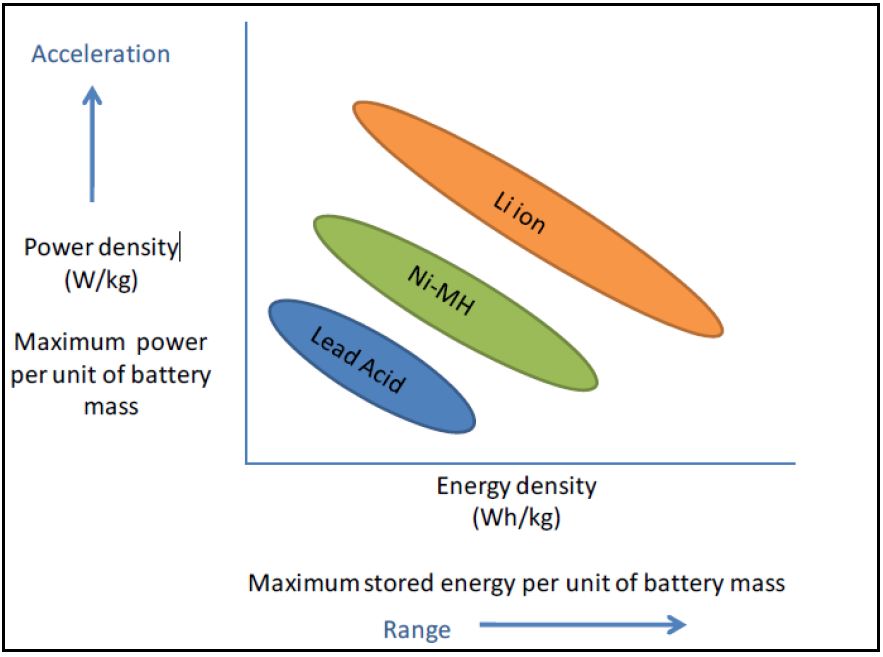
For years, nickel-manganese-cobalt (NMC) batteries—named after the elements making up their cathodes (lithium and others)—have held a prominent place in the market. It is also worth mentioning NCA batteries, which rely on nickel, cobalt, and aluminum; these were notably used by some manufacturers during the early years of the electric car's expansion. These chemical batteries offer a clear competitive advantage: they allow for the storage of a large amount of energy within a relatively small footprint and low weight. This technology has proven particularly attractive for vehicles requiring long ranges without the need for excessively large and heavy batteries.
The evolution of this family has focused on progressively reducing cobalt content. Successive generations of NMC batteries have increased the proportion of nickel while reducing the use of other materials—primarily because cobalt has historically been one of the most expensive and problematic components in the supply chain.
However, a significant shift has occurred in recent years.
LFP batteries have shifted the market balance.
Lithium iron phosphate batteries—commonly known as LFP—fall under the category of lithium-ion batteries. Unlike other lithium batteries, they contain neither nickel nor cobalt. Instead, they primarily use iron and phosphate, two abundant and comparatively inexpensive materials.
Traditionally, their main drawback has been lower energy density, meaning that storing the same amount of energy requires more weight or volume than an NMC battery. However, this gap has steadily narrowed thanks to cell optimization and, in particular, new designs that make more efficient use of the space available within the battery pack.
At the same time, LFP batteries offer significant benefits in terms of cost, lifespan, and thermal stability. The combination of these factors explains how this technology has moved beyond being a solution reserved mainly for budget vehicles to being adopted by an ever-growing number of models.
This shift has been particularly rapid in China. According to the International Energy Agency (IEA), LFP batteries accounted for over 55% of the total battery capacity installed in electric vehicles worldwide in 2025—a significant increase from less than half the year before. In Europe, however, their adoption remains much lower, representing just over 10% of demand in 2025.
The economic rationale behind this expansion must also be considered. IEA estimates indicate that in 2025, LFP packs offered average cost savings of over 40% compared to NMC packs (based on 1 kWh of energy capacity). It is important to note, however, that this difference can vary depending on the application and the specific market where each technology is used. Therefore, one of the major shifts currently underway in the battery industry is not the abandonment of lithium, but rather a reduction in the use of nickel and—especially—cobalt, substituting them with iron and phosphate whenever vehicle specifications allow.
How much lithium does a battery actually need?.
This raises one of the most pertinent questions. Although LFP batteries completely eliminate nickel and cobalt from their composition, they still require lithium, and the difference compared to some contemporary NMC chemistries is not as significant as it might initially appear.
According to calculations by the International Council on Clean Transportation (ICCT), the lithium content in LFP batteries is estimated at approximately 0.08 kg per kWh of capacity, whereas modern NMC batteries fall within the 0.09 to 0.10 kg/kWh range, depending on their specific composition.
Applying these figures to standard electric vehicle batteries yields a rough estimate.
It is important to note that these figures do not apply to every model, as the specific cell composition and energy density can vary between manufacturers and generations. Nevertheless, they are essential for accurately determining the amount of lithium involved.
An electric vehicle equipped with a 60 kWh battery does not require 20 or 30 kilograms of elemental lithium; the typical weight of the lithium content is approximately five or six kilograms.
Why, then, do much higher figures appear when discussing lithium?.
It is important to avoid confusion caused by using terms interchangeably. It is worth noting that lithium is not put into a battery as several kilograms of pure metal extracted directly from a mine; instead, it is used as part of various chemical compounds during the manufacturing of the battery's active materials.
Consequently, the mining industry frequently uses units such as lithium carbonate equivalent (LCE), which allow for comparisons between different compounds and production methods. It should be noted that the amount of lithium carbonate required to obtain a specific quantity of elemental lithium is considerably greater than the weight of the lithium itself.
Therefore, when making estimates involving the inclusion of multiple kilograms of lithium in an electric vehicle, it is crucial to meticulously verify the measurements. The figures cited might refer to lithium carbonate equivalent, another compound, or processed raw material, rather than the actual amount of elemental lithium contained in the finished battery.
This discrepancy explains many of the seemingly contradictory figures found when comparing different studies.
Switching from NMC to LFP barely reduces the need for lithium.
Comparing these two technologies sheds light on another relevant aspect of the industry's transition. Replacing NMC batteries with LFP batteries has the potential to significantly reduce nickel and cobalt consumption, yet the impact on lithium demand is relatively limited.
The ICCT estimates that a scenario with much higher LFP battery adoption would reduce global lithium demand by only 2% in 2030 and 1% in 2040 compared to its baseline scenario. The reason for this lies in the fact that an LFP battery requires approximately 0.08 kg of lithium per kWh, compared to the approximately 0.09–0.10 kg required by the NMC batteries analyzed. This difference would be significantly greater with other materials. This same scenario would substantially reduce the need for nickel and cobalt, as neither element is part of the cathode in an LFP battery.
This provides a clearer understanding of the industry's current direction: while the materials used in batteries are changing, lithium remains the common element across the technologies currently dominating the electric vehicle sector.
The next step could be a battery that does not require lithium at all.
To effectively eliminate lithium, the chemical structure of the battery chemistry must be modified. One technology making significant strides in this area is the sodium-ion battery; it operates similarly to lithium batteries but substitutes sodium for lithium.
Its appeal goes beyond mere economic considerations. Sodium is an abundant chemical element that would allow for the diversification of a supply chain currently heavily concentrated around lithium. Furthermore, it offers certain performance advantages in low-temperature conditions.
The technology has evolved significantly, moving beyond the experimental phase into a realm of more practical and efficient application. Manufacturers such as CATL and BYD are ramping up production capacity, and the first cars equipped with sodium batteries have already begun to reach the market. However, it is important to note that there remains a significant gap in energy density compared to the most advanced lithium technologies.
This means that, even when storing the same amount of energy, a larger or heavier battery might be required—a significant disadvantage for cars that need greater driving range.
For this reason, initial applications are best focused on small cars, urban commercial vehicles, two- and three-wheeled vehicles, or stationary storage systems, where weight and volume are less critical. Likewise, batteries combining sodium and lithium cells are being explored to leverage the advantages of both technologies.
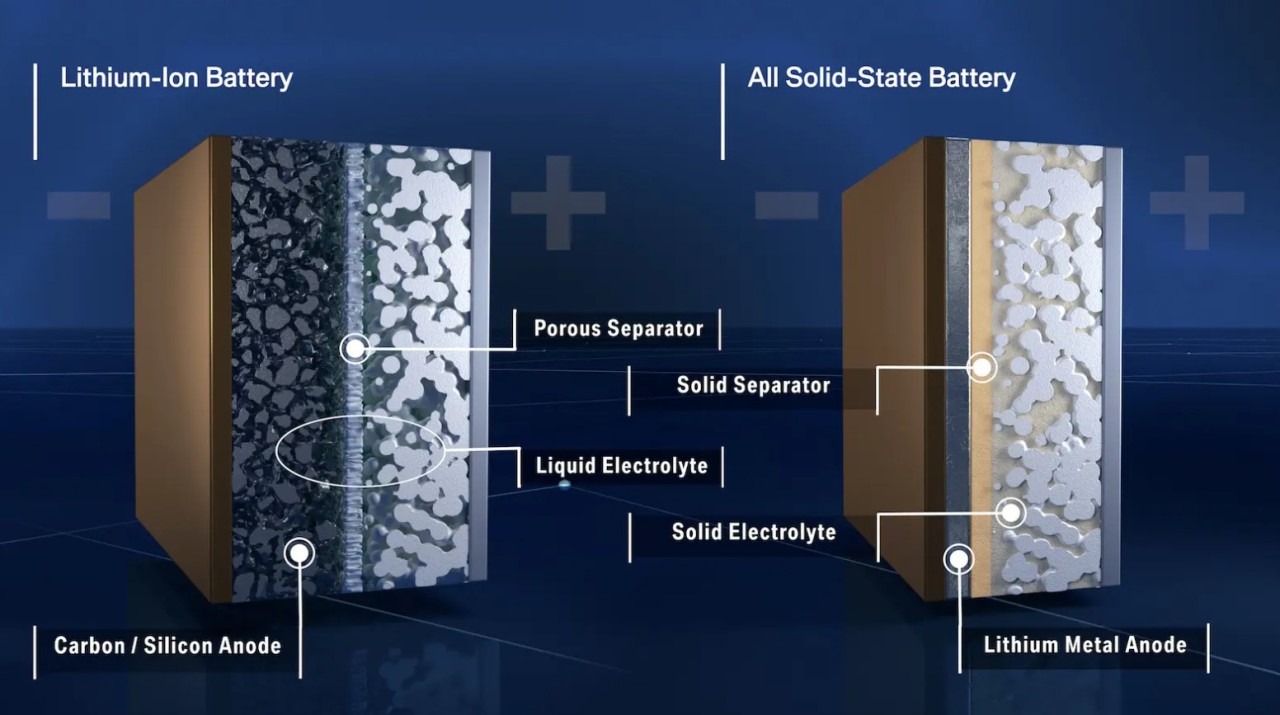
Solid-state batteries do not necessarily mean abandoning lithium.
When discussing the batteries of the future, the topic of solid-state batteries frequently arises—a technology that has gained prominence in the field of energy innovation. It is important to note that this transition differs from the shift toward sodium, as it addresses different issues.
A solid-state battery can still utilize lithium. The main difference between this type of battery and conventional ones lies in the electrolyte, the medium through which ions move between the electrodes. Currently, conventional batteries commonly use a liquid electrolyte. Solid-state technologies, however, aim to replace this—either wholly or partially—with solid materials.
The primary goal is to develop batteries with higher energy density, better performance, and potentially greater safety. Nevertheless, significant industrial challenges remain to be overcome to achieve this. Although test cells are already being manufactured and semi-solid solutions are commercially available, all-solid-state batteries have yet to prove they can be produced competitively and at scale.
Therefore, it is important to emphasize that the term "solid-state" does not necessarily refer to a lithium-free battery. These two developments differ in their approach. One focuses on a fundamental transformation of the cell's structure and operation, while the other—like the shift to sodium—involves replacing one of the core components.
Lithium will remain essential, even as batteries continue to evolve.
The evolution of electric vehicle batteries is not proceeding in a single direction. During the market's early expansion, priority was given to maximizing driving range through chemistries with high energy density, such as NMC or NCA. Today, as production volumes rise, the need to place greater emphasis on factors like cost, raw material availability, and supply security is becoming increasingly apparent. This phenomenon explains the remarkable growth of LFP batteries. Their expansion eliminates the need for nickel and cobalt, allowing for the use of more abundant materials such as iron and phosphorus, although lithium remains an essential component.
Sodium batteries represent a significant alternative by eliminating reliance on lithium. However, they still face the challenge of overcoming lower energy density and developing an industrial infrastructure comparable to that of lithium-ion batteries, which have been developed and refined over decades.
Meanwhile, the actual amount of lithium contained in an electric vehicle remains significantly lower than some commonly cited figures suggest. A battery with a capacity of 60 to 80 kWh uses approximately five to eight kilograms of elemental lithium—enough to store the energy required to drive a car for hundreds of kilometers and to be used repeatedly over thousands of charge-discharge cycles.