Vilnius Airport replaces diesel buses with electric ones
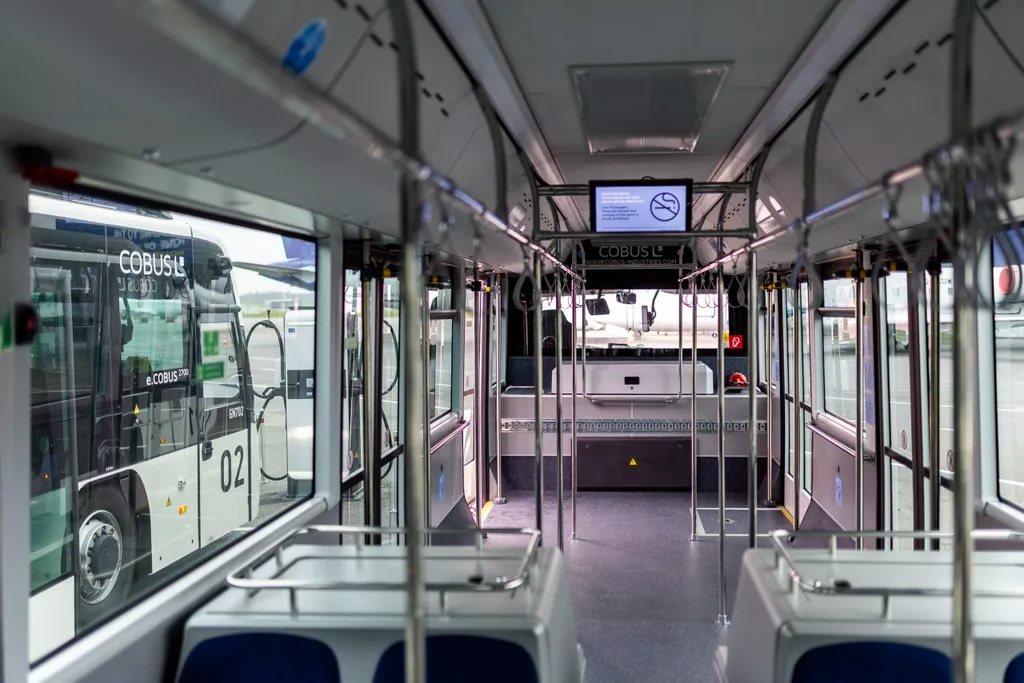
Lithuanian Airports (LTOU) has introduced twelve new battery-electric buses at Vilnius Airport to transport passengers between the terminal and aircraft. These vehicles completely replace the diesel buses previously in operation at the airport. Through this transition, the airport aims to reduce both local emissions and noise on the apron. According to LTOU estimates, replacing the diesel buses will prevent approximately 58 tonnes of CO2 emissions per year.
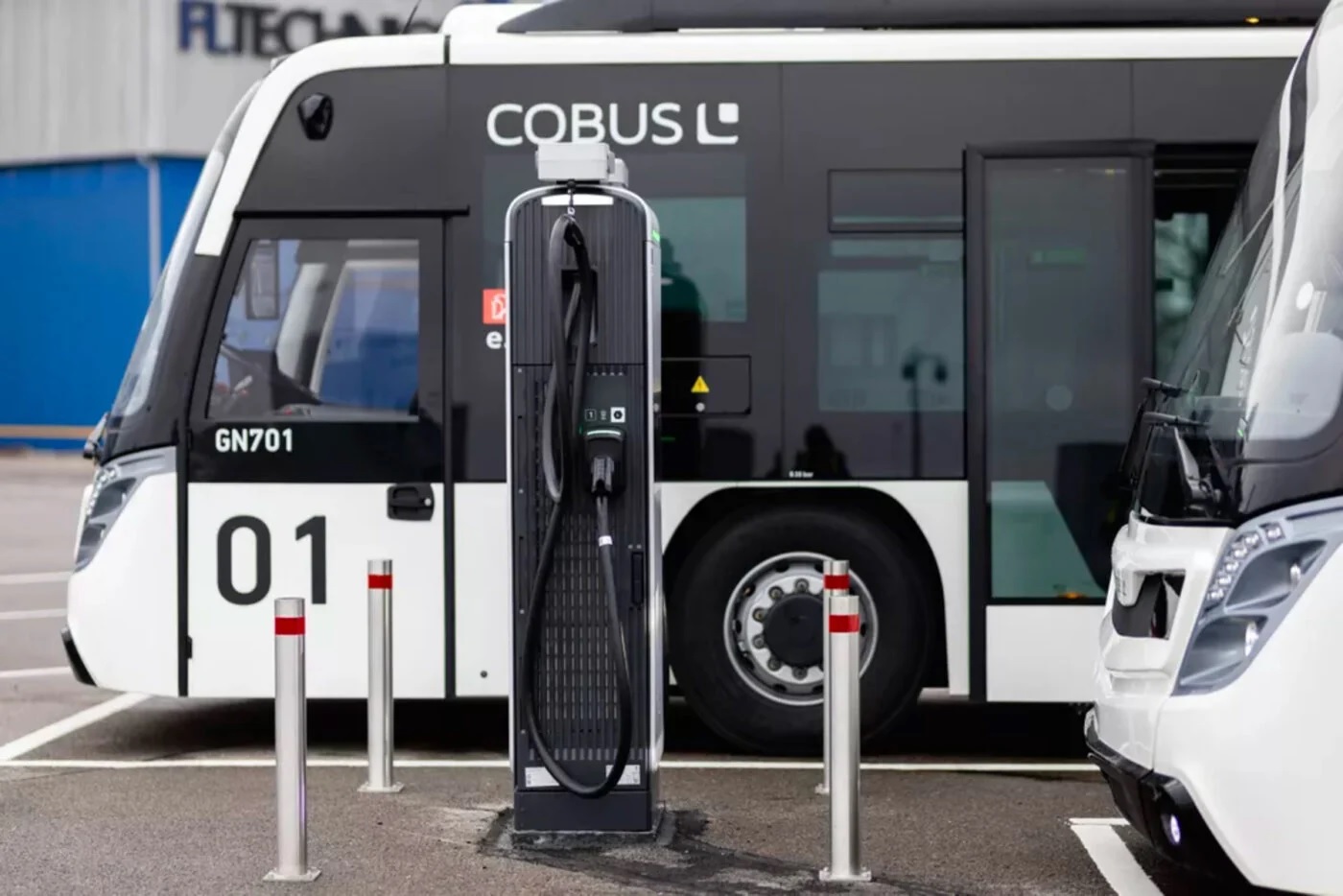
Three dual-charging stations have been installed at the airport for the new fleet, allowing up to six buses to be charged simultaneously. The electricity used will be from renewable sources. Depending on operating conditions, the new buses are expected to be able to run for up to three days on a single charge. For comparison, the previous diesel buses had an operating range of about twelve hours on a full tank, according to LTOU.
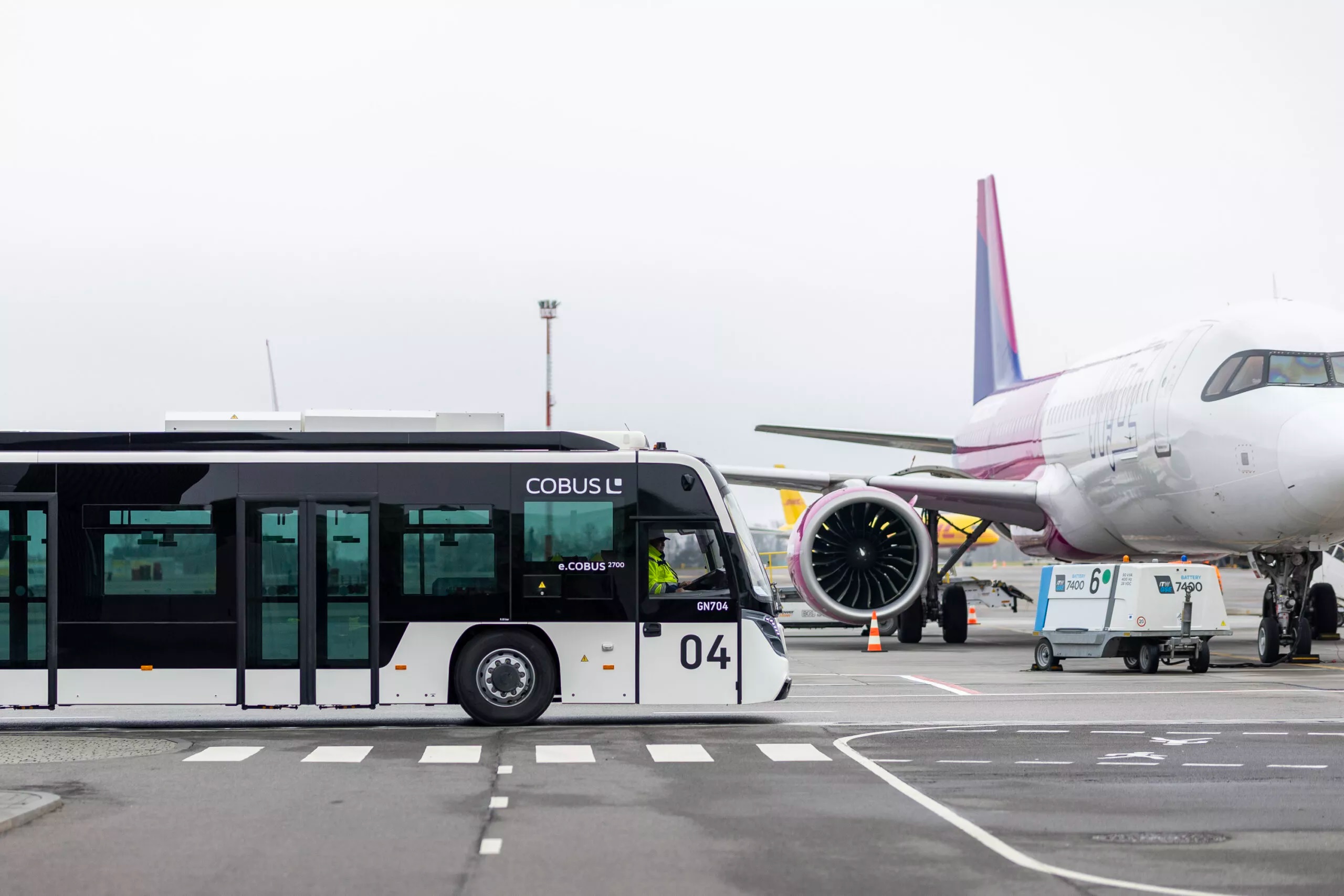
The greater range of the system will allow the airport to plan vehicle rotations and charging schedules more efficiently, resulting in increased operational flexibility. The primary goal of this project is to streamline the organization of passenger transfers during ongoing airport operations. The electric buses, manufactured by Cobus, have been specifically designed for use in airport environments. Each bus has a maximum capacity of 100 passengers. The doors—designed to optimize the passenger boarding and disembarking process—are wide and positioned on the side, while the low-floor entry facilitates access for travelers with luggage, strollers, or reduced mobility.
The buses are also equipped with an automatic climate control system. Thanks to their electric powertrains, these vehicles are significantly quieter than the previous diesel models. Cobus will handle maintenance for five years.
Once the vehicles enter service, Cobus will remain responsible for them.
Under a five-year contract, the manufacturer commits to handling maintenance, repairs, and the supply of spare parts. The agreement also includes remote monitoring of the vehicles' condition and technical support available 24 hours a day, 7 days a week.
The electrification of its passenger buses is part of LTOU’s strategy to reduce net emissions. The company aims to achieve climate neutrality by 2030 and to reach zero carbon dioxide (CO2) emissions from airport-controlled operations by 2040.
Electrification in Vilnius extends beyond the airport. In May, the municipal transport company VVT placed an order for 112 fully electric MAN Lion's City E buses, consisting of 84 standard (rigid) buses and 28 articulated buses. Lithuania is supporting the expansion of electric bus fleets by allocating funds from the European Union. Starting in 2026, transport companies in the country will be required to purchase only buses equipped with alternative propulsion systems.
As of November 16, Lithuanian Airports will also take on responsibility for passenger transport at Vilnius Airport itself. To address this requirement, a specialized unit has been established, staffed by 35 drivers.