
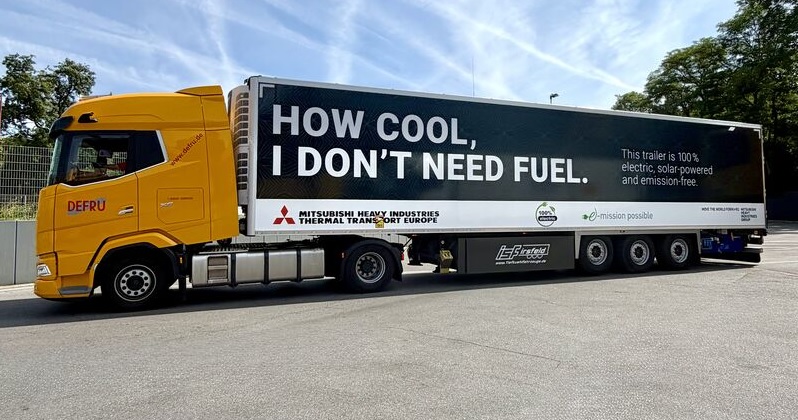
A Real-World Case of Cost Reduction Through Electrification: DEFRU Logistik
The acquisition of electric trucks remains a source of uncertainty for many transport companies, primarily due to concerns regarding range, charging times, and profitability compared to diesel vehicles. However, a German company has recently demonstrated that electrification can be effective even in operations with particularly demanding conditions. Two of its electric trucks have been covering exactly 1,000 kilometers every single day—seven days a week—with virtually no downtime.
The company in question is DEFRU Logistik GmbH, a transport firm based in Duisburg, Germany, which is undergoing a rapid transformation of its fleet. According to information shared on the LinkedIn profile of Benjamin Budick, a sales executive at Mercedes-Benz Trucks, the company has integrated more than 30 electric eActros 600 trucks over the past 12 months. Furthermore, it recently took delivery of another 21 units at the Mercedes-Benz plant in Wörth am Rhein, reaffirming its commitment to a progressive transition away from diesel.
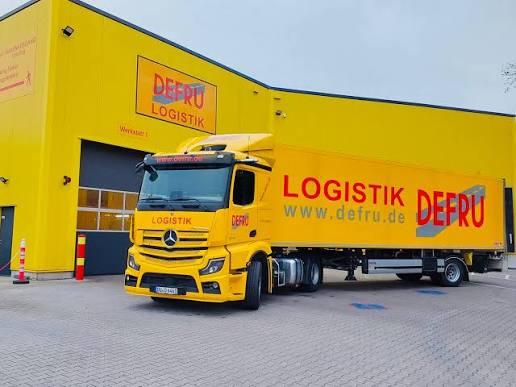
Two electric trucks covering 1,000 kilometers daily, year-round.
The most notable example involves two Mercedes-Benz eActros 600 trucks that have been operating as part of a milk collection fleet for the past 12 months. Both vehicles cover 1,000 kilometers a day, seven days a week, thanks to a three-shift work schedule that keeps them in constant operation.
As noted in Budick’s LinkedIn post, periods of downtime—including unplanned stoppages—are virtually non-existent. This is particularly significant in the professional transport sector, where any unscheduled stop can impact both costs and delivery scheduling. To achieve this goal, DEFRU has implemented a charging strategy that integrates the company’s own facilities, photovoltaic energy, and public charging stations. This setup allows vehicles to remain in operation for extended periods without relying solely on the range provided by a single charge.
The Mercedes-Benz eActros 600 model is equipped with three LFP battery packs, offering a combined installed capacity of 621 kWh. The vehicle has an advertised range of approximately 500 kilometers at a total gross weight of 40 tons, meaning that covering 1,000 kilometers per day requires intermediate charging stops. Its electric powertrain has been meticulously designed to meet the specific demands of long-haul heavy-duty transport.
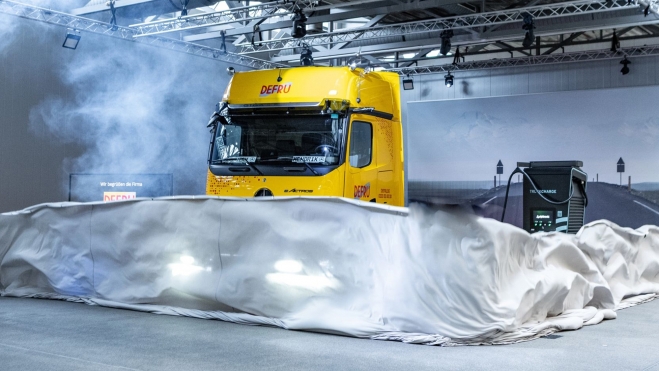
They are already more profitable than diesel trucks, and the company has no intention of turning back.
However, the most significant aspect is not just the distance traveled, but the economic outcome. According to Benjamin Budick, the implementation of a carefully planned charging strategy has resulted in greater profitability for the eActros 600 compared to its diesel counterparts, based on DEFRU Logistik’s internal profitability rankings.
The use of photovoltaic energy, on-site charging at company facilities, and access to public charging points allow for efficient control of energy costs. That said, the report does not provide specific savings figures per kilometer, nor does it detail the acquisition, maintenance, or depreciation costs of the vehicles. The manager highlights a shift in the company’s mindset; according to Hendrik Müller, managing partner at DEFRU Logistik, it is now very difficult to imagine purchasing new diesel trucks under current conditions.
This case is particularly noteworthy, as it is neither a one-off test nor a journey staged specifically to set a range record. These vehicles operate daily in a real-world commercial environment and, according to the account provided, have maintained this pace over the past year. The key to success lies in tailoring charging infrastructure to the specific needs of each company—an area in which DEFRU Logistik has demonstrated remarkable capability.