A real-world case study of an electric truck in a transport company
The price of an electric tractor unit is approximately €250,000, whereas a diesel model costs around €125,000. Given this significant price difference, it is logical to assume that the former option is not yet considered financially viable. However, this is not an absolute rule.
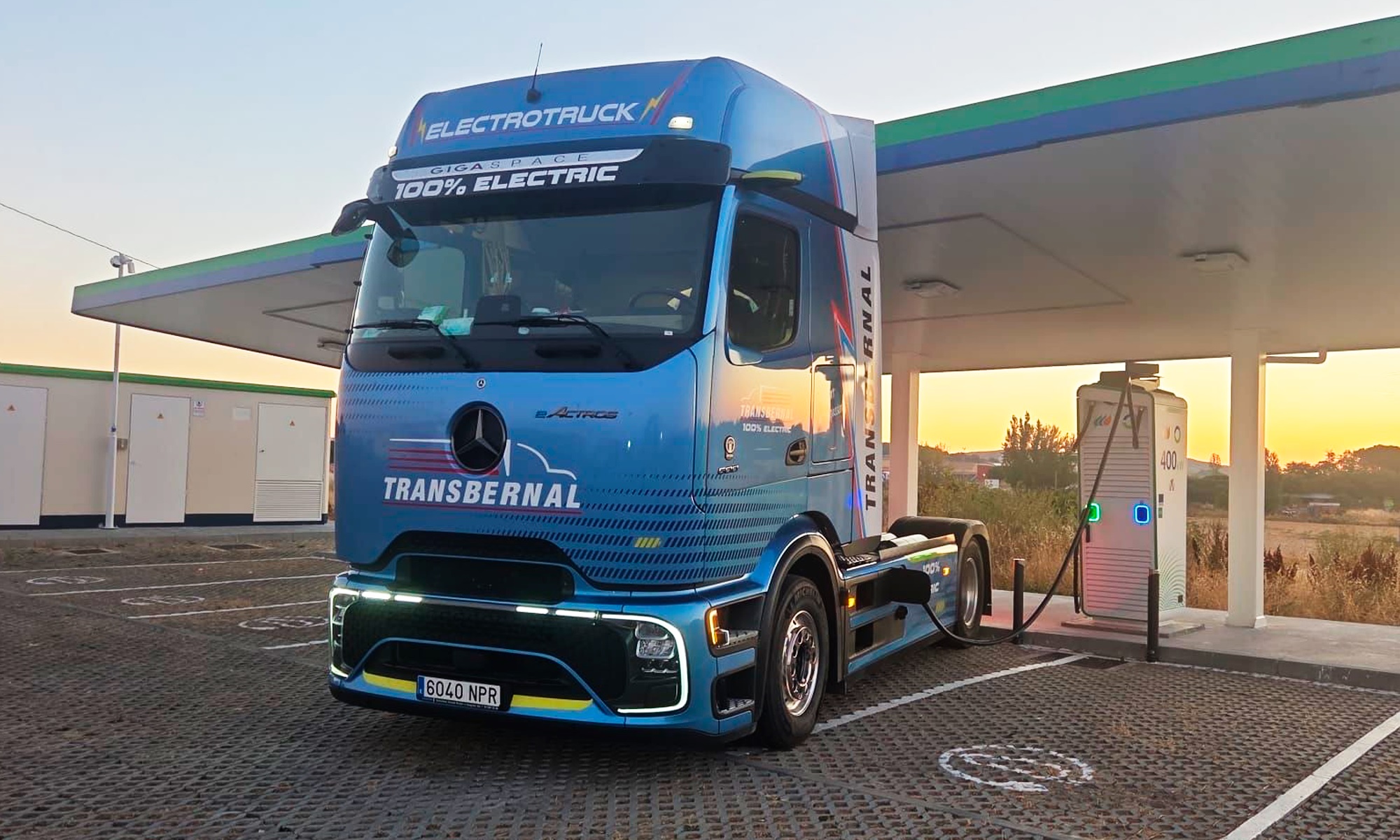
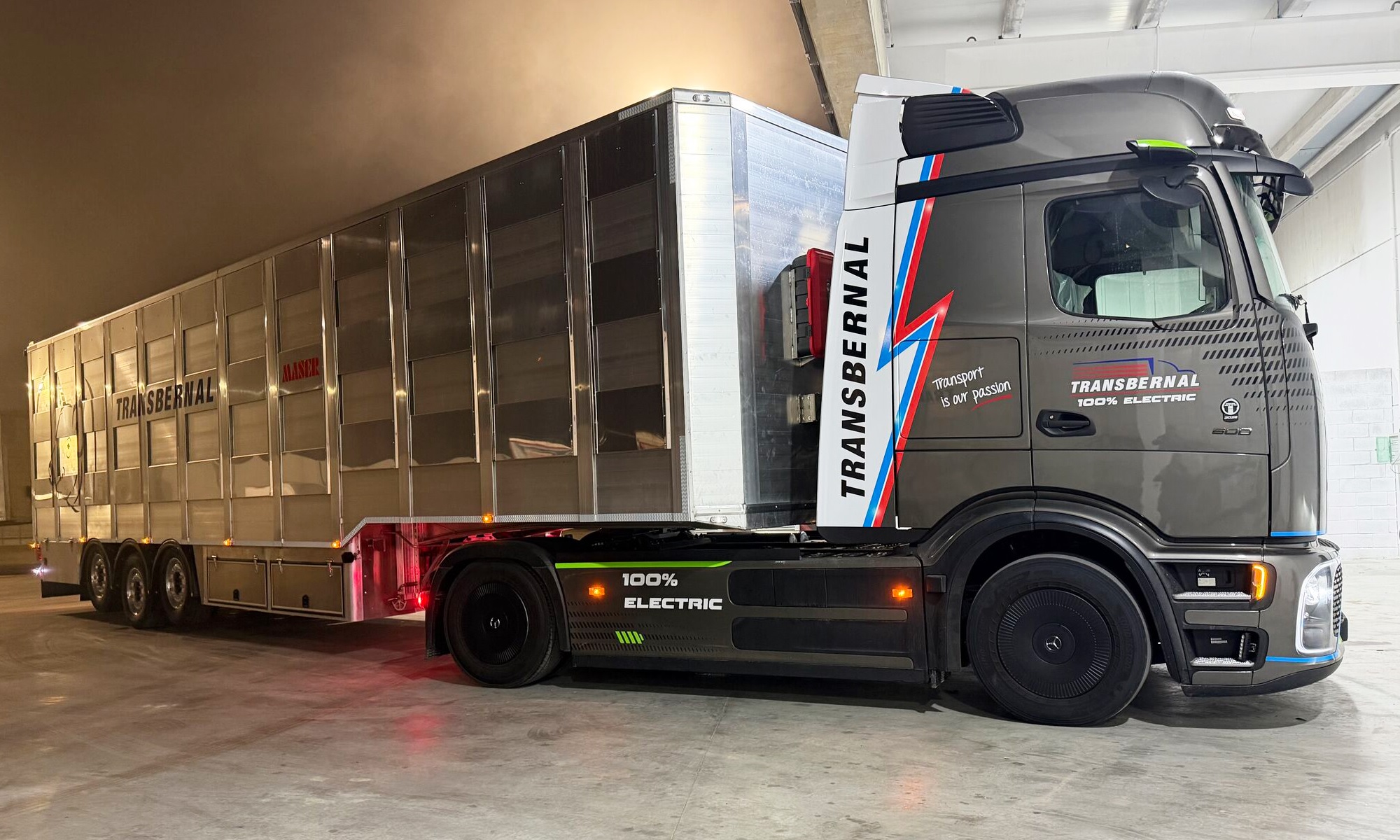
Transbernal has accumulated over 500,000 kilometers of operation with electric trucks and has regularly published its operational figures. Their experience shows that the cost per kilometer for an electric tractor unit can be lower than that of a diesel unit, even starting from a purchase price roughly twice as high. This is not a typical scenario.
The outcome depends primarily on the volume of work performed by the truck, the location of the cargo, and the electricity costs incurred by the company.
€250,000 versus €125,000.
According to Transbernal's calculations, the approximate cost of the electric tractor unit is €250,000—double the €125,000 cost of the diesel unit used for comparison.
In both cases, the acquisition was structured as a six-year leasing contract, including a final purchase option and an interest rate of approximately 4%.
Additionally, a residual value is assigned for the end of the term—once the vehicle has covered approximately one million kilometers: €40,000 for the electric model and €20,000 for the diesel model.
This latter figure should be viewed as an estimate used to calculate the total cost. Currently, it is impossible to precisely determine the future value of an electric tractor unit with one million kilometers on the clock, just as it is impossible to predict the future value of the diesel model. It is important to note that the analysis focuses not only on the acquisition cost of both trucks but also considers the cost of their operation over their service life.
The electric model costs twice as much, but energy costs change the math.
This is where the fundamental discrepancy becomes apparent.
Transbernal operates with an average of 16,000 kilometers per month per vehicle and records an electricity consumption of approximately 115 kWh per 100 kilometers for its electric vehicles.
In one of the scenarios published by the company, around 90% of the electricity is obtained at its base for approximately €0.11/kWh, while the remainder comes from more expensive external charging.
Monthly electricity expenditure is estimated at approximately €2,373.
Using a monthly vehicle financing cost of around €4,000 as a reference, the result would be approximately:
- The monthly cost of the electric vehicle is €6,373.
Regarding diesel consumption, the estimated usage is approximately 31 liters per 100 kilometers. Factoring in a fuel cost of €1.40 per liter, covering the same 16,000 kilometers results in a monthly fuel expenditure of approximately €6,944.
An additional monthly cost of approximately €2,000 associated with the vehicle must be considered.
- The monthly cost for the diesel vehicle comes to €8,944.
In this scenario, the monthly savings for the electric vehicle user would be approximately €2,571.
This explains the apparent contradiction: the vehicle may have an initial cost that is twice as high, yet its operation can prove more economical.
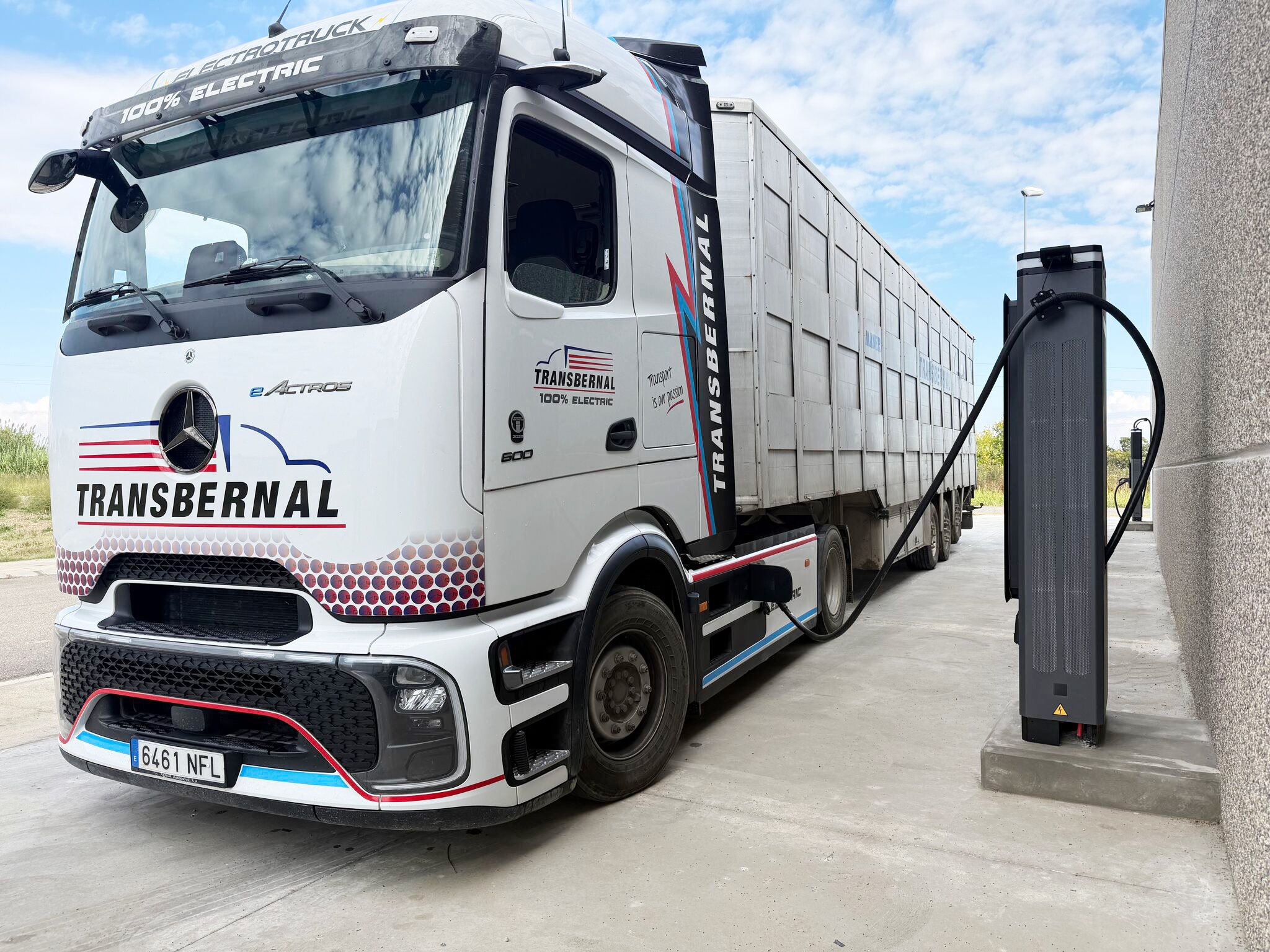
But there is a condition: low-cost charging.
It is important to note that the figures change significantly when the price of electricity rises.
In the more comprehensive calculations subsequently released by Transbernal—factoring in financing, maintenance, insurance, energy, infrastructure, and residual value—the electric vehicle comes in at approximately:
- A cost of €0.416 per kilometer, provided that the majority of the electricity is obtained at a low price at the depot.
The diesel vehicle used as a benchmark comes in at:
- A cost per kilometer of €0.571.
The percentage difference between the two options is approximately 27% in favor of the electric vehicle.
At an electricity cost of €0.21 per kWh, the cost for the electric vehicle rises to approximately €0.489 per km, though it remains the more economical choice.
However, when all electricity is purchased from external chargers at around €0.30/kWh, the result changes:
- The cost of electric transport is €0.588 per kilometer.
- The cost of diesel is €0.571 per kilometer.
The electric vehicle is no longer the most economical option.
Therefore, the price of energy can be just as significant as the price of the truck itself.
Transbernal does not pay €0.11/kWh by coincidence.
There is another relevant aspect to consider regarding the figures mentioned.
Transbernal does not rely solely on the public charging network. It has implemented a proprietary system at its facilities that integrates charging points, photovoltaic generation, stationary batteries, and energy management.
During the day, it is possible to utilize solar power directly and store a portion of that electricity for later use during periods of higher prices. According to Gabriel Bernal, Executive Director of Transbernal, this combination allows them to keep their average energy cost below approximately €0.11/kWh.
It is important to note, however, that not all companies can simply apply Transbernal’s figures to their own fleets.
A company lacking its own depot, photovoltaic generation, or the ability to secure electricity at competitive rates might face significantly different cost figures.
What about time lost to charging?.
This is another crucial issue.
Affordable electricity is of little use if the truck has to remain parked for long periods during the workday.
As Bernal explains, long-distance routes utilize public chargers with capacities ranging from 350 to 400 kW. Efforts are also made to coordinate charging with the driver's mandatory 45-minute break.
During this time, the vehicle recovers enough range to cover an additional distance of over 250 kilometers.
Therefore, on a well-planned route, charging does not necessarily entail an extra 45 minutes of downtime, as it can be done while the driver is already required to be stopped. This distinction is vital.
If a company is forced to stop the vehicle for charging outside of scheduled intervals, the financial results may change.
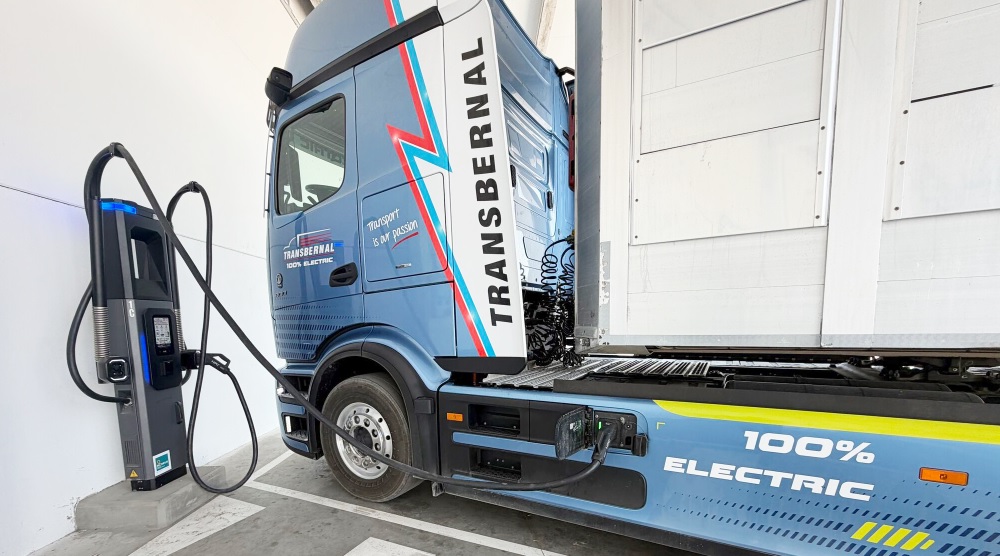
Can the weight of the batteries reduce the amount of cargo that can be transported?.
This is certainly a variable that must be taken into account.
It is important to note that an electric tractor unit tends to be heavier than its diesel counterpart, which can affect available payload.
Current regulations partially offset this disadvantage. Heavy-duty zero-emission vehicles may be granted an increase in their maximum authorized mass—up to a limit of two tonnes—to account for the weight of this technology.
Bernal acknowledges that, generally speaking, there may still be a payload discrepancy of approximately one tonne even after applying this allowance.
In Transbernal’s specific case, however, this impact is minimal.
The company provides live animal transport services and explains that, due to the nature of the cargo and animal welfare requirements, they rarely reach the maximum weight limit. Based on its operational specifications, this vehicle can transport approximately 23,500 kilograms, in addition to the weight of the electric tractor unit itself.
Consequently, this limitation has virtually no impact on their revenue.
For a company that regularly transports dense goods and consistently operates at the maximum authorized weight limit, the situation could be different.
This is an additional factor to consider during the vehicle evaluation and acquisition process.
Not all transport companies will see the same results.
Transbernal’s case clearly illustrates the operational potential of an electric truck.
The company has demonstrated an exemplary commitment to logistics, evidenced by its extensive geographic coverage, proprietary infrastructure, competitive electricity procurement, efficient integration of charging during driver breaks, and optimal load management—which minimizes revenue impact by keeping the vehicle's total weight within established parameters.
These conditions are particularly advantageous.
They also make it possible to identify scenarios where the opposite might occur. If a company covers low mileage, relies permanently on public chargers, faces inflated electricity bills, loses working hours waiting to charge, or needs to maximize payload capacity, the economic advantage may diminish or even vanish.
Bernal himself acknowledges that purchasing an electric truck can prove to be an unfavorable investment if the operation is not profitable.
A distance of one million kilometers magnifies even the slightest difference.
Given these figures, it is worth noting that even a small amount—just a few cents per kilometer—can add up to a significant sum over the total period.
In the most favorable scenario calculated by Transbernal:
- The cost of electric transport is €0.416 per kilometer.
- The cost of diesel is €0.571 per kilometer.
The cost difference per kilometer stands at 15.5 cents.
Based on the financial analysis conducted, this amounts to a total of €155,000 over one million kilometers.
However, if the electric vehicle relies exclusively on external energy sources, the cost rises to €0.588/km, thereby negating the initial advantage.
This leads to the key conclusion drawn from the company's experience.
The cost of the electric truck is no exception.
Every operation entails a specific cost.
European calculations point in the same direction.
The latest analysis by Transport & Environment concludes that similar results are obtained on a larger scale.
According to the organization's calculations, the total cost of ownership for electric trucks is lower than that of diesel trucks in six of the nine major European markets studied.
In the Netherlands, savings are estimated to reach €100,000 over a five-year period, while in Germany, projected savings are approximately €85,000.
T&E also maintains that by 2030, electric vehicles could offer lower operating costs across all nine countries analyzed, even with a gradual reduction in purchase subsidies.
However, the Transbernal case highlights an aspect that large-scale studies inevitably simplify.
It is important to note that a company can purchase the same truck and achieve markedly different results.
The question is no longer how much the truck costs.
The cost of Transbernal's electric vehicle is estimated at approximately €250,000.
The diesel truck used for comparison—valued at around €125,000—illustrates the scale of the analysis.
Yet, when comparing the two figures, the choice seems clear.
After covering hundreds of thousands of kilometers, the need for a new perspective on investment becomes evident.
For a transport company, the key issue is not merely the purchase price of the tractor unit.
The cost per kilometer for this vehicle is determined as follows.
This analysis takes into account various determining factors, such as electricity prices, annual mileage, infrastructure, payload, routes, and vehicle downtime. Transbernal's experience demonstrates that, at times, investing in a more expensive truck can prove more profitable in the long run.
However, it is crucial to highlight that purchasing an electric truck does not, in itself, guarantee business profitability.