
Silicon-based batteries: greater range for the same weight
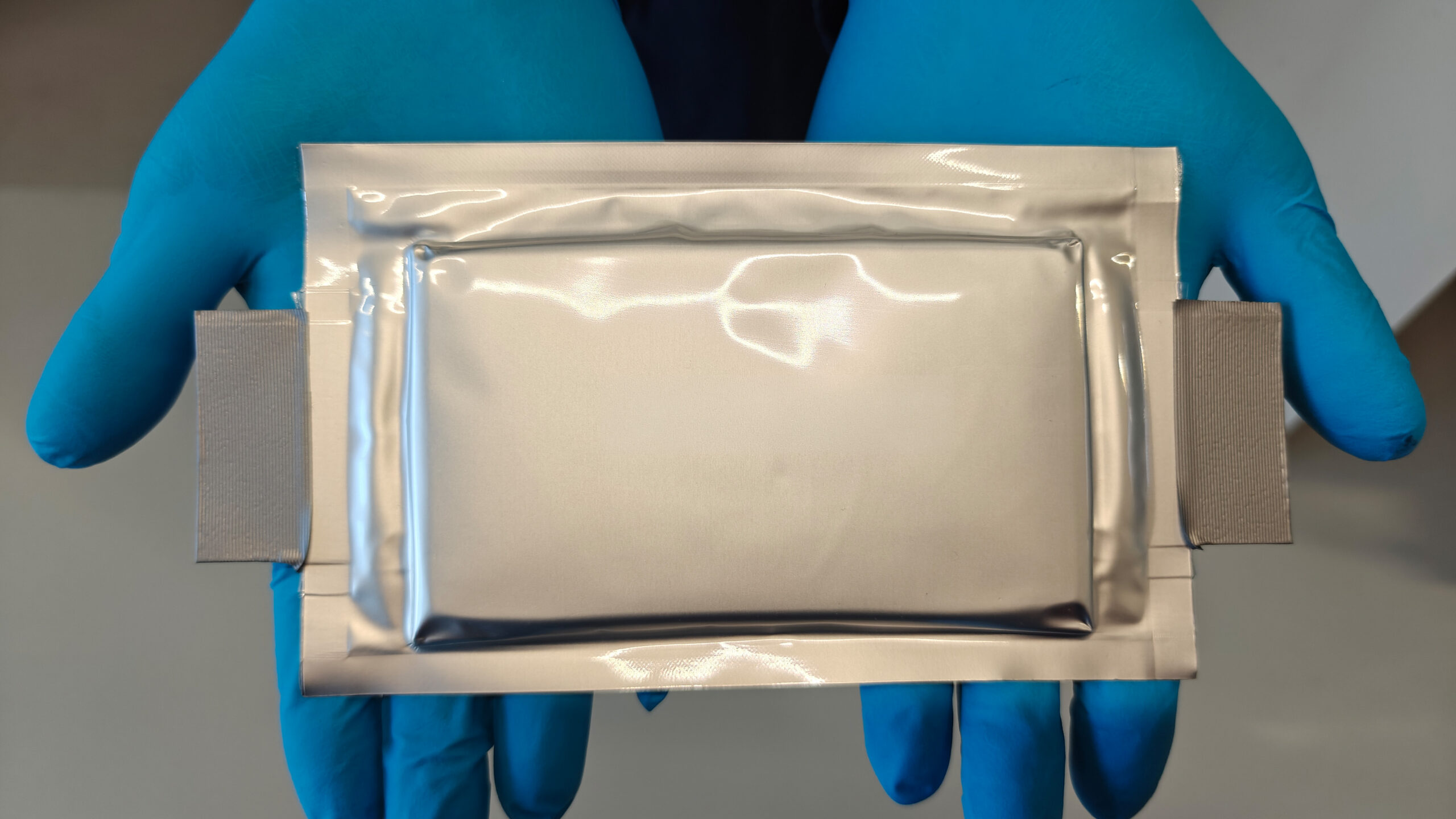
Researchers at the Fraunhofer Institute for Solar Energy Systems (ISE) have reached a significant milestone in energy technology. As part of the "StrOboBatt" project, they successfully operated a 25 Ah pouch-type cell—which they manufactured themselves and equipped with silicon-rich anodes—for over 1,000 complete cycles. Following the tests, the cell retained more than 83% of its capacity. This achievement marks a major step forward in battery development, as it meets the threshold of 1,000 complete cycles with at least 80% capacity retention—a standard requirement for commercial use.
Silicon: high energy density, but extreme expansion
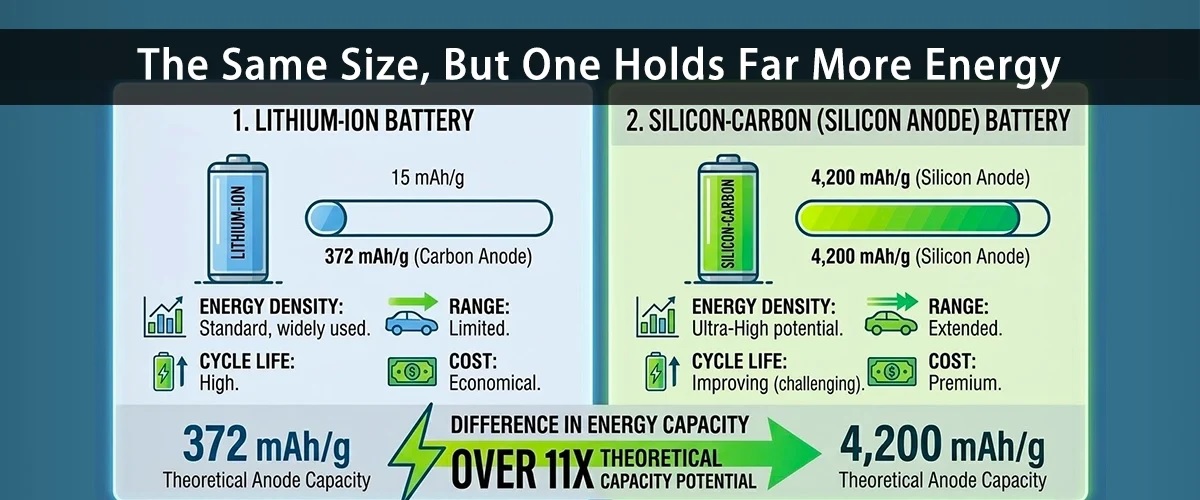
The pouch-type cell features a silicon anode, which provides higher energy density compared to conventional graphite anodes. However, silicon has yet to be widely adopted as an anode material because its volume expands by up to 300% (increasing fourfold) during charging as it absorbs lithium ions, only to contract again during discharge. This significant movement leads to a loss of electrical contact within the electrode and accelerates the decomposition of the electrolyte. Consequently, the cell degrades too rapidly for practical application. By comparison, graphite only experiences an expansion of 10% to 12%.
To mitigate the mechanical stress caused by this extreme expansion, the researchers at Fraunhofer ISE utilized a silicon-carbon composite, which makes up 51% of the anode's active material. Combined with a nickel-rich cathode, the pouch-type cell was produced on an industrial-scale pilot line. Pressure and charging dynamics are key factors.
In the laboratory, battery cell prototypes were subjected to an axial pressure of 1,000 kilopascals (equivalent to approximately 10 bar) during charging and discharging processes. Despite the material’s movement, the contact between the electrodes remained stable. However, at a lower pressure of 300 kilopascals (equivalent to approximately 3 bar), the usable capacity was significantly and more rapidly affected. It can therefore be concluded that external mechanical pressure is a decisive parameter.
Tests conducted under real-world operating conditions have shown that usable capacity declines more rapidly at high power levels than during moderate test cycles. This information is of great importance for potential applications in electric vehicles. Consequently, battery management systems must account for this factor to ensure optimal and efficient operation.
Following the testing of these cells, it was determined that they achieve a gravimetric energy density of 280 Wh/kg. However, the Fraunhofer ISE suggests that optimized, industrial-scale mass production could reach approximately 330 Wh/kg. A 330 Wh/kg battery would represent an increase of approximately 20% to 35% compared to current NMC and NCA cells, and nearly double the energy density of LFP cells.
European raw materials for a broader range.
In practical terms, this means an electric vehicle could feature a storage capacity of nearly 100 kWh—up from the current ~75 kWh—while maintaining the same battery weight. This development would significantly increase the realistic range of a mid-sized vehicle, extending it from approximately 450 km to over 600 km.
In addition to increasing range, this technology offers a clear strategic advantage for the industrial sector. Currently, graphite is primarily imported from outside Europe. Consequently, a greater use of silicon-based compounds allows for the partial shift of value creation—from raw materials—to Europe. This is because silicon can be sourced and produced synthetically on a regional level.