
Waymo to Begin Operations in Madrid in 2027
If you are a technology enthusiast, you are likely already aware of Waymo—a company under Alphabet (Google’s parent company) that provides driverless taxi services. Since 2016, it has operated in several U.S. cities, collaborating with well-known brands such as Toyota and Hyundai. Having completed over 20 million paid trips, the company has demonstrated its reliability and robustness within the mobility sector. Notably, a study by the U.S. safety organization IIHS has shown that this service results in a 68% reduction in accident rates compared to the average human driver.
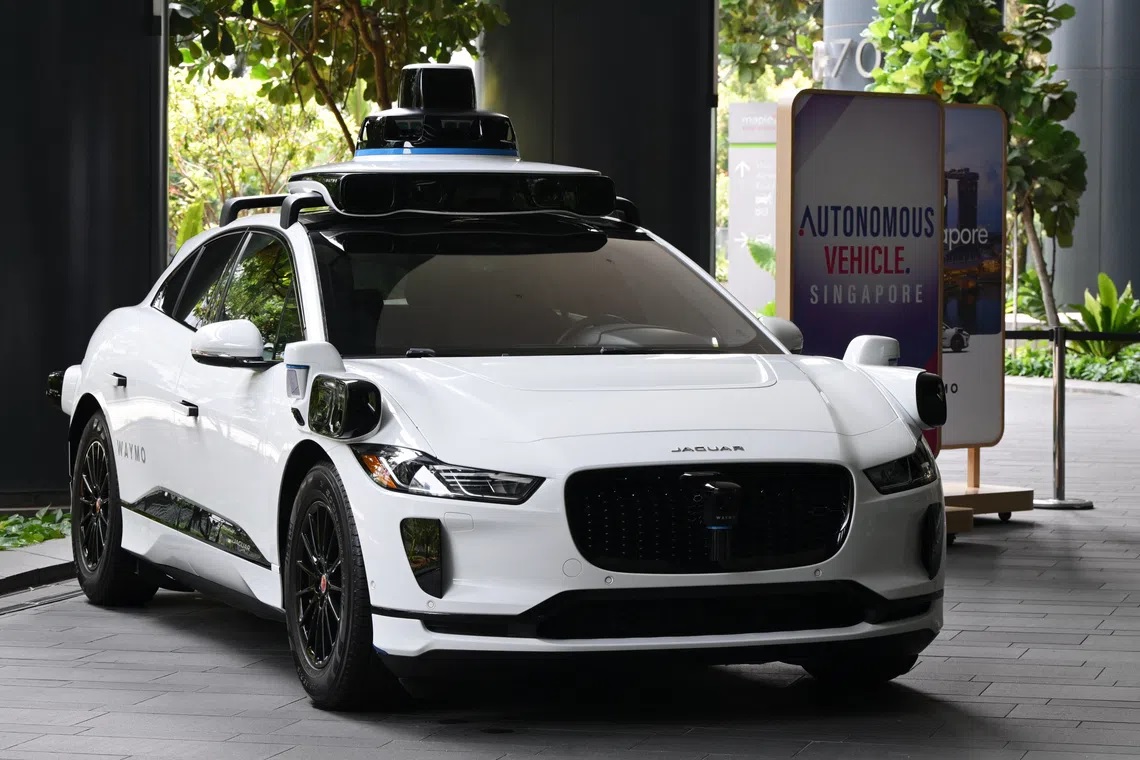
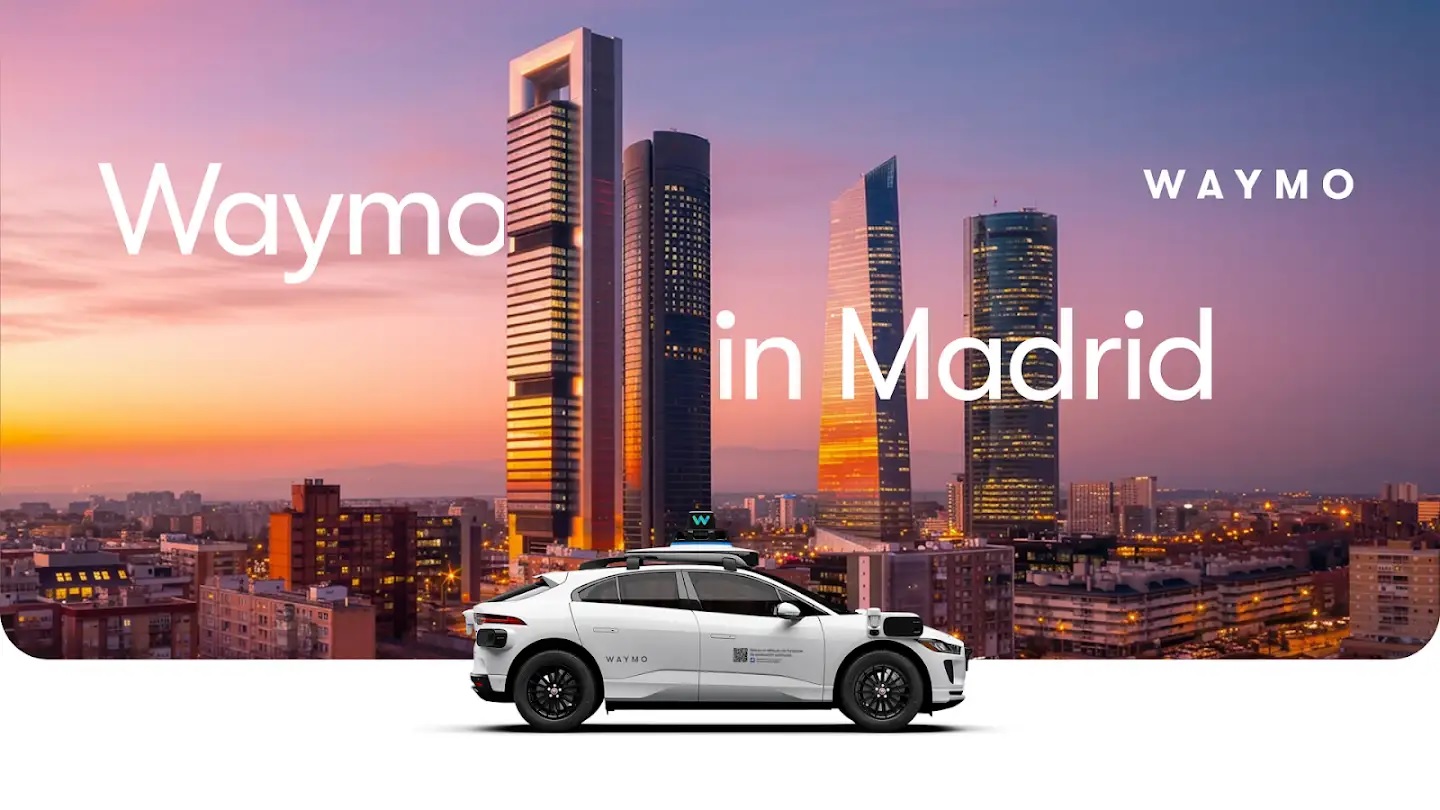
While the project is currently in the testing phase in European countries—specifically in London (United Kingdom) and Munich (Germany)—it is worth noting that, in just a few days, these distinctive driverless taxis will be seen on the streets of Madrid, utilizing Jaguar I-PACE vehicles. These tests have been duly authorized by the Spanish Directorate-General for Traffic (DGT), ensuring compliance with all required safety and quality standards.
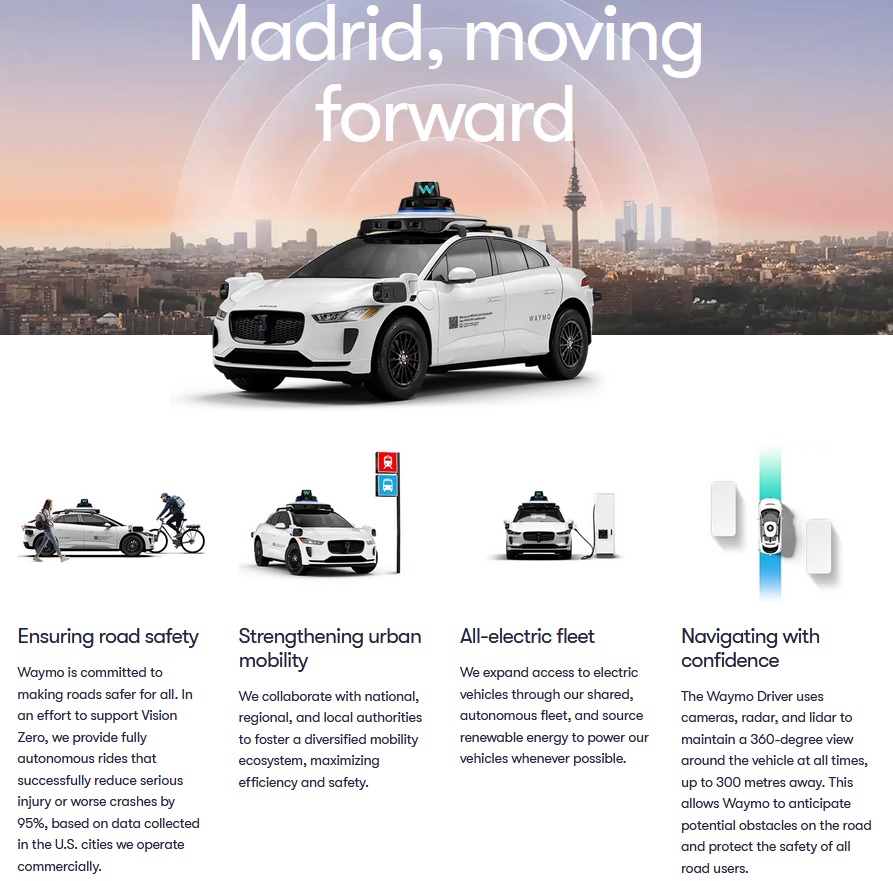
Waymo is the latest driverless taxi service to arrive in Madrid.
The Google-affiliated company, which boasts a 68% lower accident rate, will begin operating its driverless taxis in the coming days—though, for now, a human driver will remain on board. The primary objective of this project is to map the streets of the Spanish capital, validate potential routes, and conduct operational testing across various areas of Madrid. The goal is to tailor the taxi service to the capital’s specific traffic conditions, terrain, and signage.
In short, this initiative mirrors the operations that Uber has been carrying out in Madrid over the last few months. However, there is a key distinction to be noted regarding Google’s driverless taxi service. Uber aims to launch autonomous, driverless ride services by the end of 2026.
In accordance with the testing framework established by the Directorate-General for Traffic (DGT) in Instruction VEH 2025/07, both initiatives will be carried out on public roads. Both companies are already in communication with the organization led by Pere Navarro—who has issued a very serious warning to Spanish drivers—in order to secure the necessary authorizations to operate their driverless taxi services.
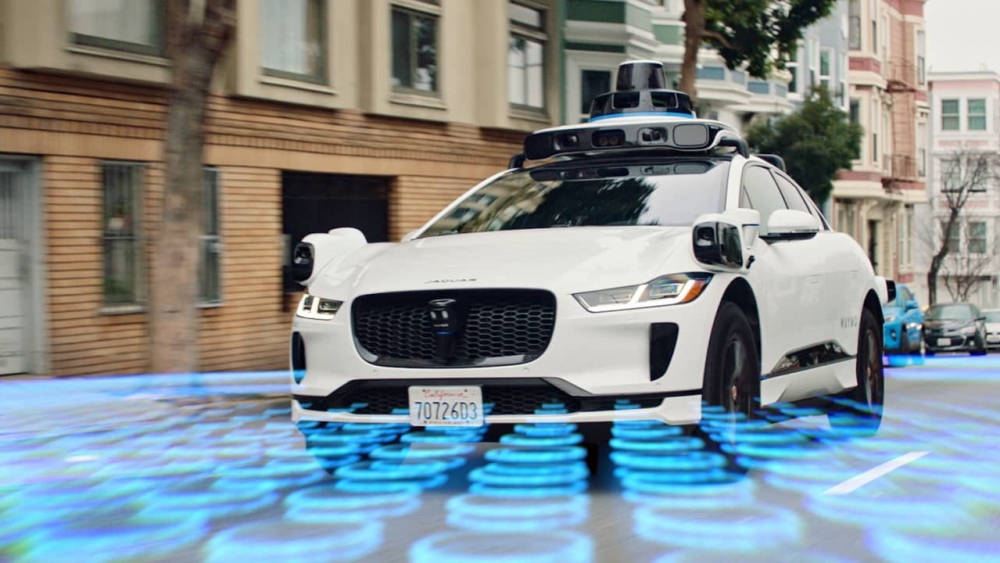
Google’s subsidiary, however, is taking a more cautious approach. It notes that in deploying its technology—which has already facilitated over 20 million paid trips and covered more than 483 million kilometers without a driver—it is "adopting a methodical, gradual approach that prioritizes safety."
Consequently, in the coming days, vehicles from this Google-affiliated company may be seen on the roads, operated by data analysts—a necessary prerequisite for achieving its goal of "welcoming our first users in 2027," as stated by the company in an official announcement.
The company has issued a statement acknowledging its collaboration with the Directorate-General for Traffic (DGT), noting: "We are actively collaborating with national, regional, and local authorities throughout our operations, and we will assist emergency services in becoming familiar with our technology..."
"Madrid stands out as a premier hub for innovation and is an essential component of our growing global footprint. We are thrilled to have the opportunity to provide our services to the people of Madrid," said Tekedra Mawakana, co-CEO of Waymo.