
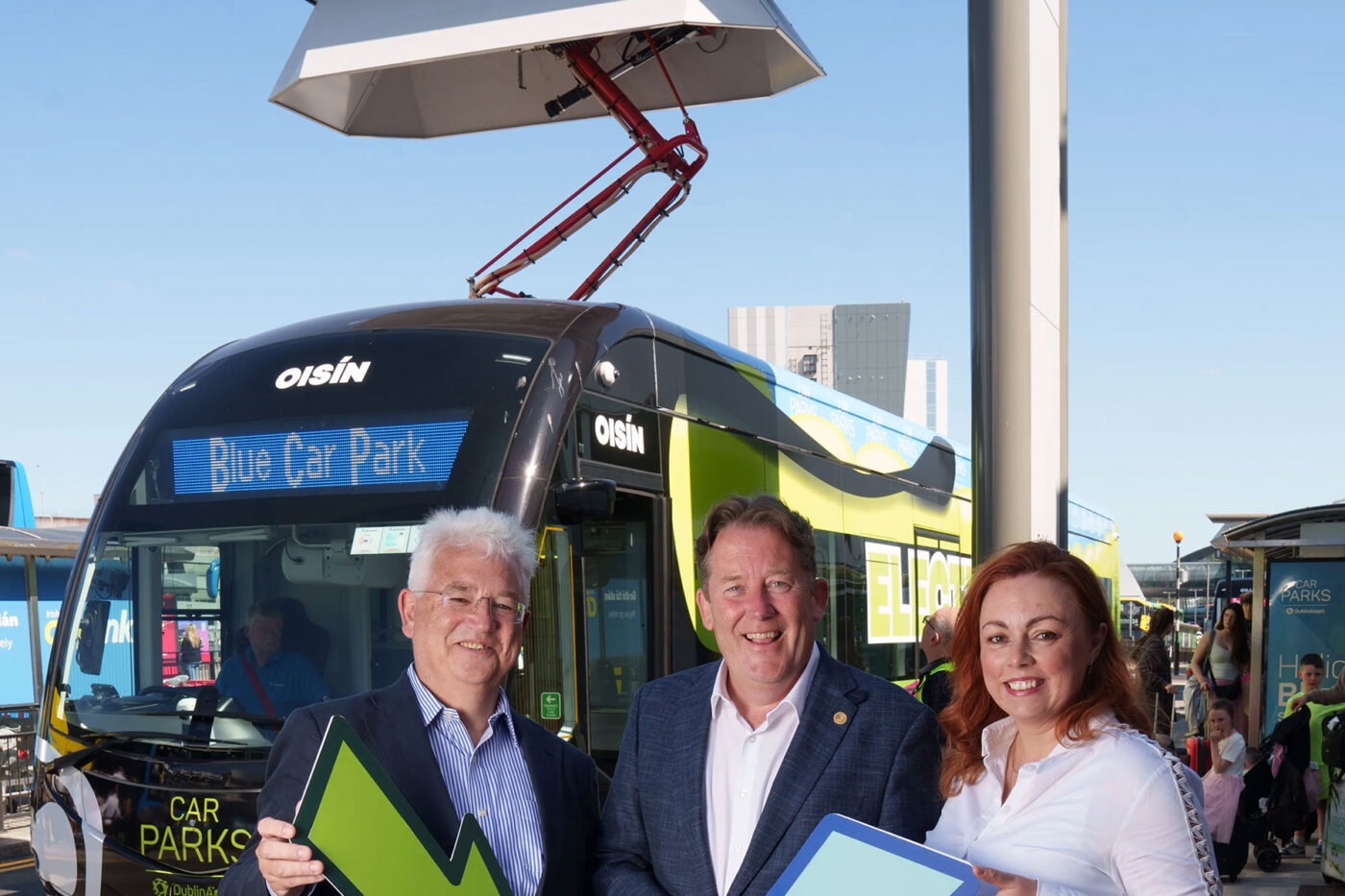
The pantograph for ultra-fast charging of electric buses at Dublin Airport.
It may seem like a contradiction, but one of the most promising technologies for accelerating the electrification of public transport has its origins more than a century ago. The pantograph, a device conceived in 1923 to connect trains and trams to overhead power lines, has evolved into an application that also allows for the charging of electric buses. The latest example of this trend comes from Ireland, where Dublin Airport has recently implemented the country's first pantograph chargers.
This project will form part of an infrastructure designed to power the new fleet of electric buses that will connect the terminals with the parking areas and other facilities at the airport. The project has involved an investment of €17 million and demonstrates a new way to help decarbonize ground transportation.
More than a century old.
Although the name may sound futuristic, the operating principle of the pantograph has a centuries-old history. The ingenious device, conceived by the eminent German mathematician Christoph Scheiner in 1603, represented a significant innovation in the field of graphic representation. This articulated system, using a set of interconnected arms, allowed for the reproduction of drawings at different scales, marking a milestone in the precision and adaptability of representation tools. Over time, the concept has evolved, adapting to other uses, which has led to the pantograph currently used on trains to collect electrical energy from overhead lines.
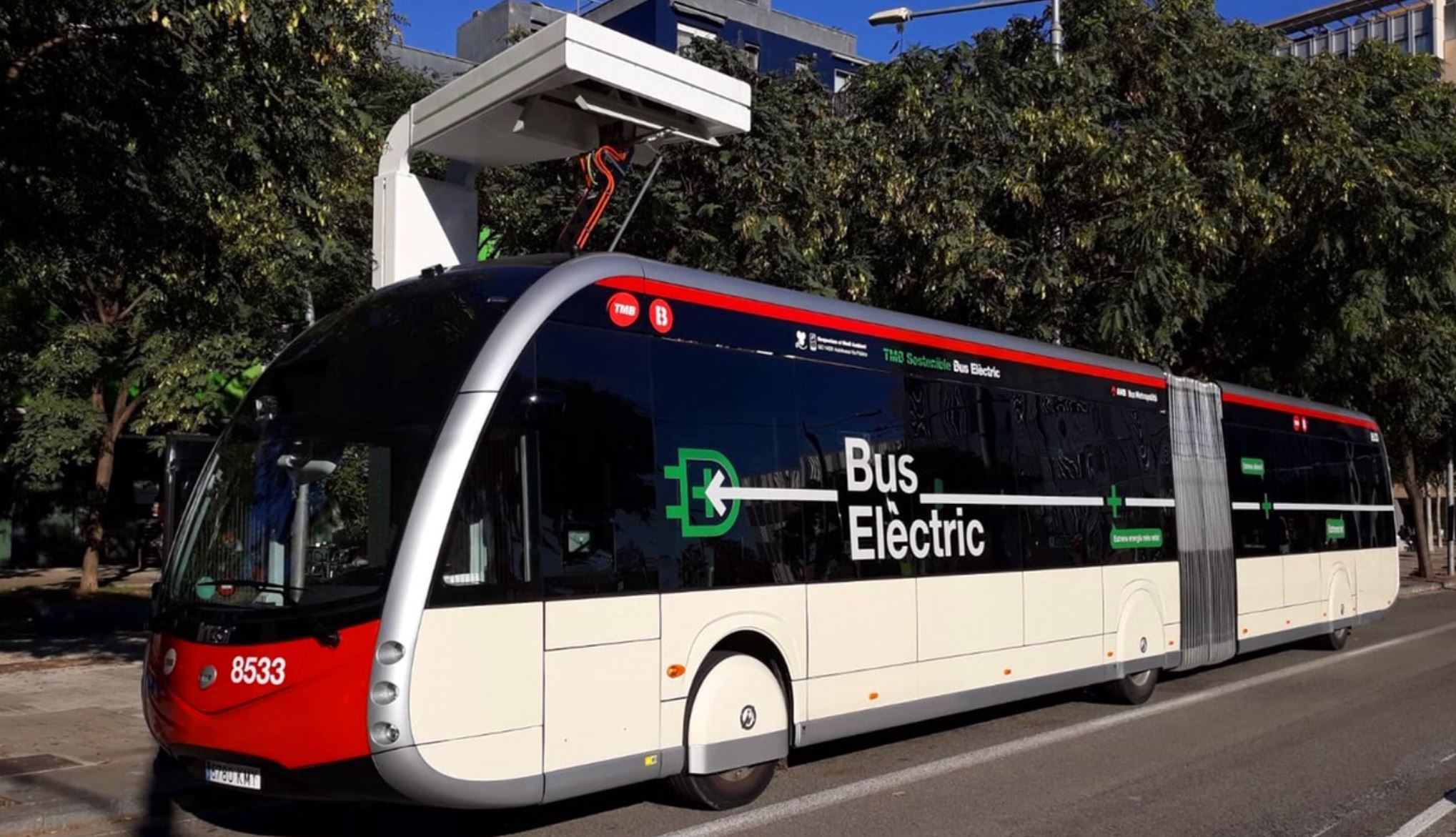
In the case of electric buses, the operation is different, but the mechanism retains the same basic idea: an articulated arm moves automatically to establish contact between the charging point and the vehicle. Upon reaching the designated stop, the system descends from a structure located above the roadway to connect with rails installed on the roof of the vehicle, initiating a high-power recharge without the driver having to leave their seat.
The main advantage of this system lies in its speed, since, unlike conventional cable chargers, pantographs are designed for ultra-fast charging during operational breaks. Instead of returning to our facilities several times a day to regain the necessary range, the buses take advantage of the few minutes they are stopped at the end of each route to receive the energy needed to continue providing service.
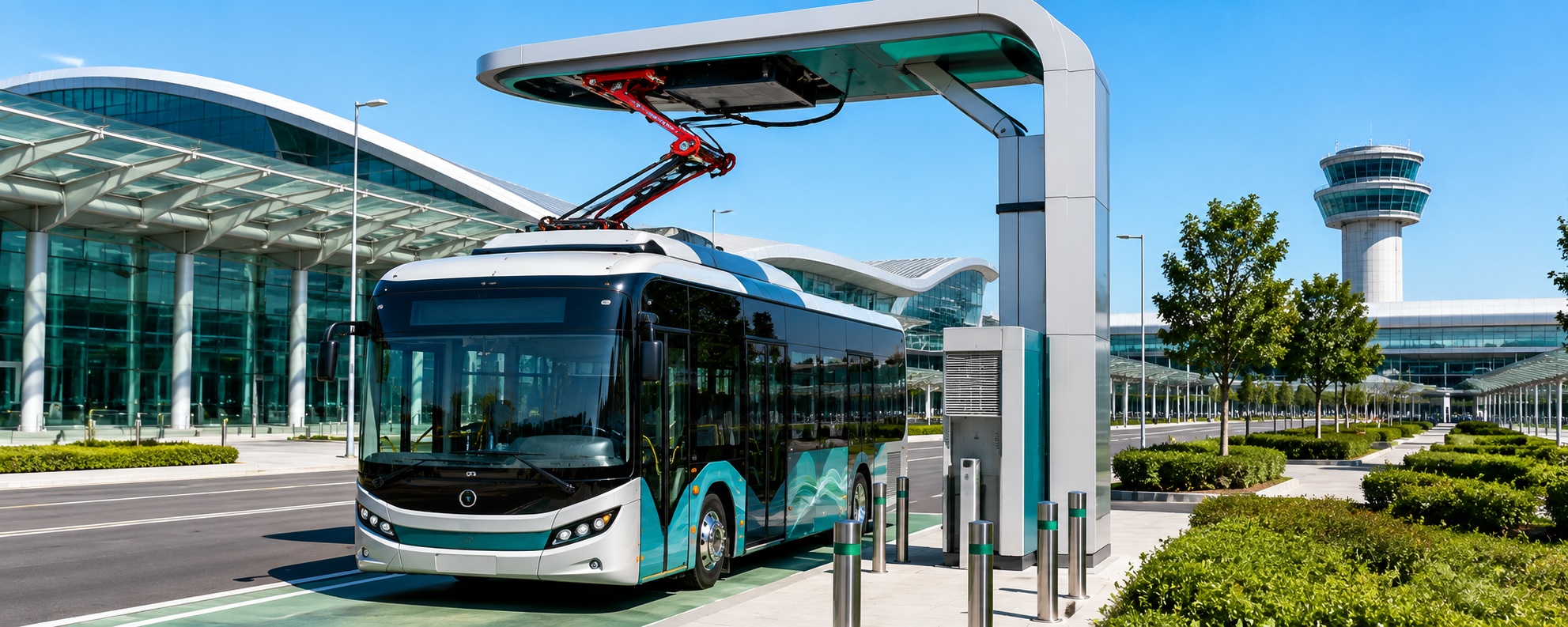
Debut at Dublin Airport.
Dublin Airport has implemented an infrastructure that will supply a new fleet of 14 electric buses operated by Aircoach. Each bus will have a transport capacity of up to 120 passengers. The airport operator, Dassa, has financed the installation of the chargers and the adaptation of the electrical network with an investment of €17 million. Aircoach, for its part, has allocated €11 million to the acquisition of the new zero-emission vehicles.
New at Dublin Airport. The shuttle buses transport approximately 2.5 million passengers annually between the terminals and parking areas, making highly repetitive journeys with short waiting times. Under these conditions, stopping the buses for hours for conventional charging would pose a significant operational problem, whereas the pantograph allows the vehicles to remain virtually in continuous operation.
In addition to improving fleet availability, electrification will significantly reduce the service's environmental impact. According to airport estimates, replacing the old diesel buses will prevent the emission of more than 1,470 tons of carbon dioxide each year, while also reducing noise in one of the busiest areas of the airport.
Vincent Harrison, Commercial and Development Director at DAA, issued the following statement: “Dublin Airport is delighted to be the first location in Ireland to take advantage of pantograph fast charging for our electric shuttle buses.” This charging system is ideal for fixed high-frequency routes, as it allows the use of smaller batteries and the performance of "opportunity" fast charges instead of long charges in garages.