

Ultra-fast 3,000 kW charging for electric trucks.
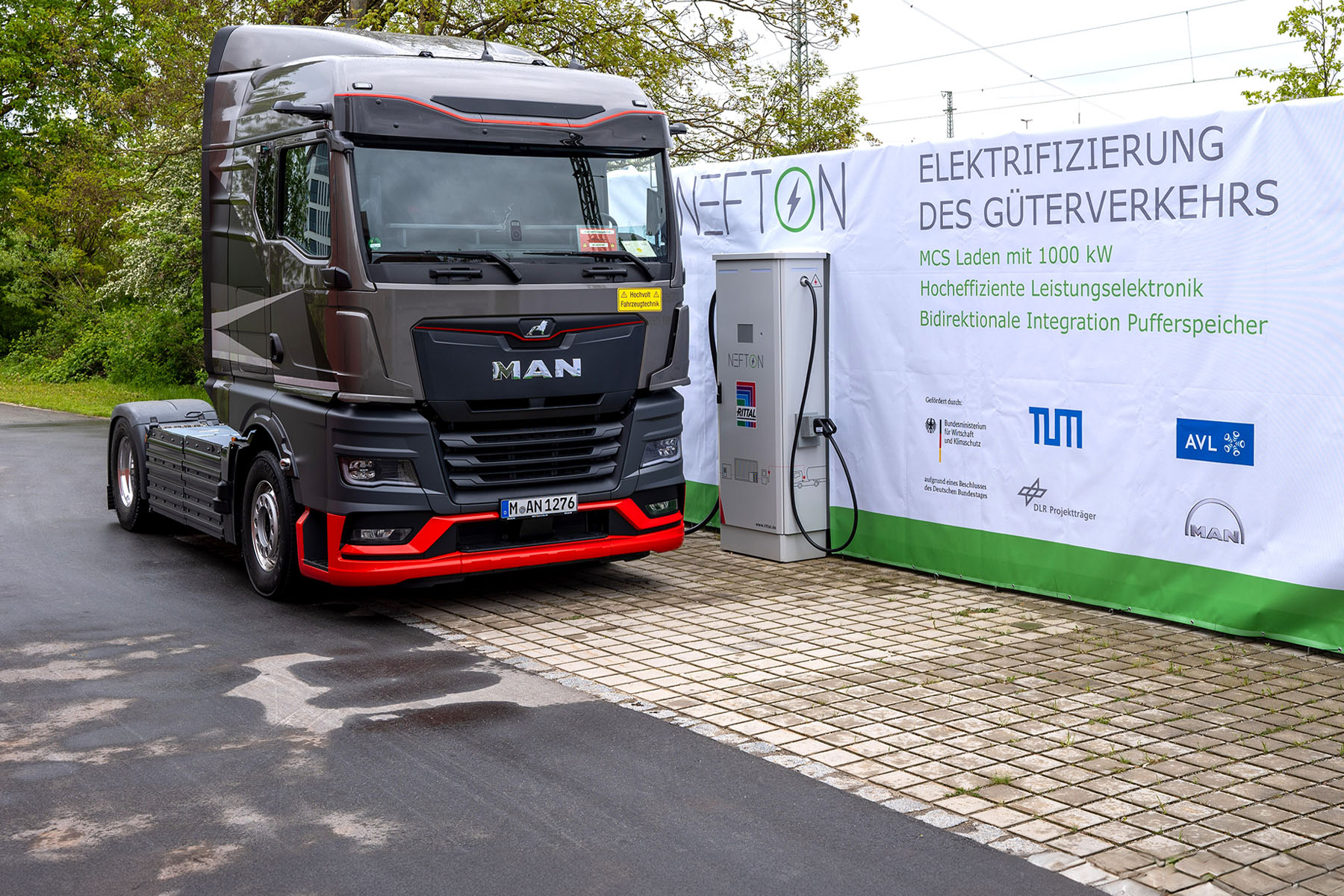
Ultra-fast charging technology for electric vehicles has the potential to transform the current landscape of the industry, but it is in the field of electric trucks where it can play a crucial role in promoting zero-emission vehicles. MAN Truck & Bus recently announced a significant breakthrough in energy research. As part of the NEFTON project, the company has successfully operated a charging system with a stable current of 3,000 A for the first time, laying the groundwork for the development of charging stations capable of delivering up to 3 MW of power.
The NEFTON project is a strategic partnership between MAN Truck & Bus and other renowned institutions, such as the Technical University of Munich (TUM), the Fraunhofer ISE Institute, AVL, Prettl Electronics Automotive, the Research Center for Energy Economics, and the Deggendorf Institute of Technology. Its goal is to develop the next generation of charging systems for electric commercial vehicles, with the aim of overcoming the current limitations of high-power charging infrastructure.
400 kilometers in 10 or 15 minutes.
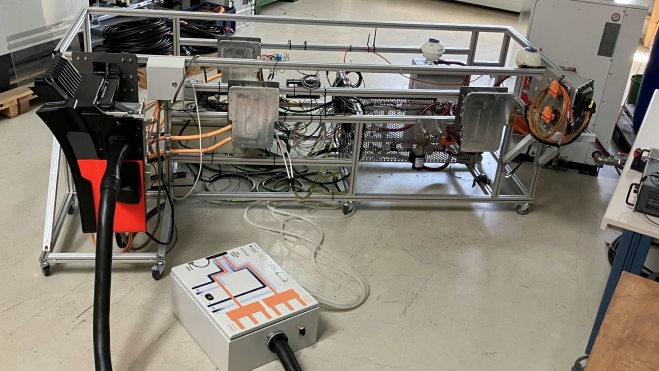
The tests were conducted on test benches at the Technical University of Munich and the Fraunhofer ISE Institute, where researchers were able to maintain a stable, high-current charging circuit between the vehicle and the test infrastructure. During the experiments, aspects such as the system’s thermal behavior, the operation of electrical components, the efficiency of cooling systems, and the safety measures required to work with such high currents were examined.
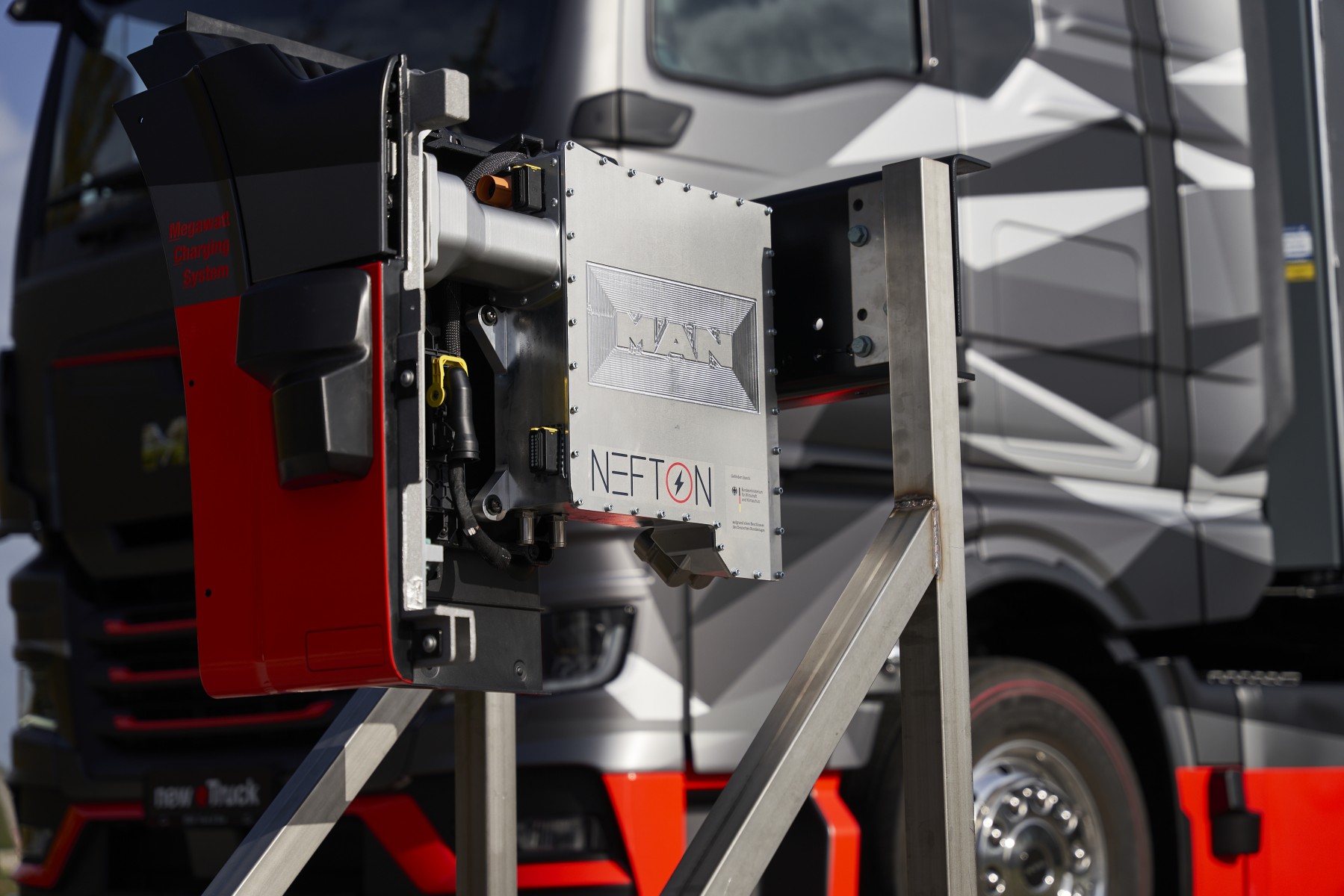
One of the main objectives of the research is to tailor charging times to the actual needs of freight transport, since, if this technology becomes a commercial solution, an electric truck could recover enough energy to travel about 400 kilometers in just 10 to 15 minutes. This would bring it closer to the charging times of passenger cars, such as those at BYD’s FLASH stations, and would minimize stops on long-distance routes—especially in two-driver operations, where any reduction in downtime is beneficial.
Cooling is essential.
Achieving these power levels involves considerable complexity. To do so, it was imperative to carry out a thorough restructuring of the load system. The engineers optimized the current path with the goal of minimizing electrical resistance, since, at such high currents, energy losses in the form of heat increase significantly. In addition, the cables, connectors, and distribution units incorporate liquid cooling systems that ensure all components remain within safe temperature ranges. Furthermore, new contactors and disconnect devices have been developed to withstand high electrical loads without compromising safety or the system’s integration into the vehicle itself.
Despite the positive results, project leaders acknowledge that significant challenges still lie ahead before charging at rates exceeding one megawatt can become an everyday reality. One of the main obstacles they face is the limited capacity of current truck batteries to handle high power levels. Consequently, it is imperative to develop a new generation of batteries with improved characteristics in terms of chemistry, design, and connections, among other factors, in order to handle currents of up to 3,000 amps. At the same time, the charging infrastructure will need to evolve to support this level of power safely and reliably.