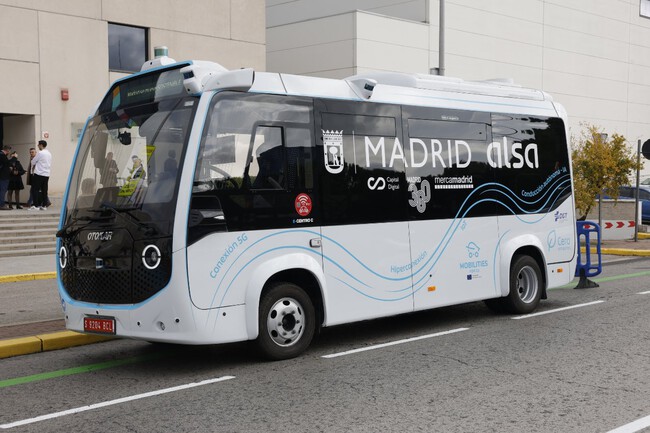
Mercamadrid is launching an electric, autonomous bus to transport up to 30 people through Spain’s largest market.
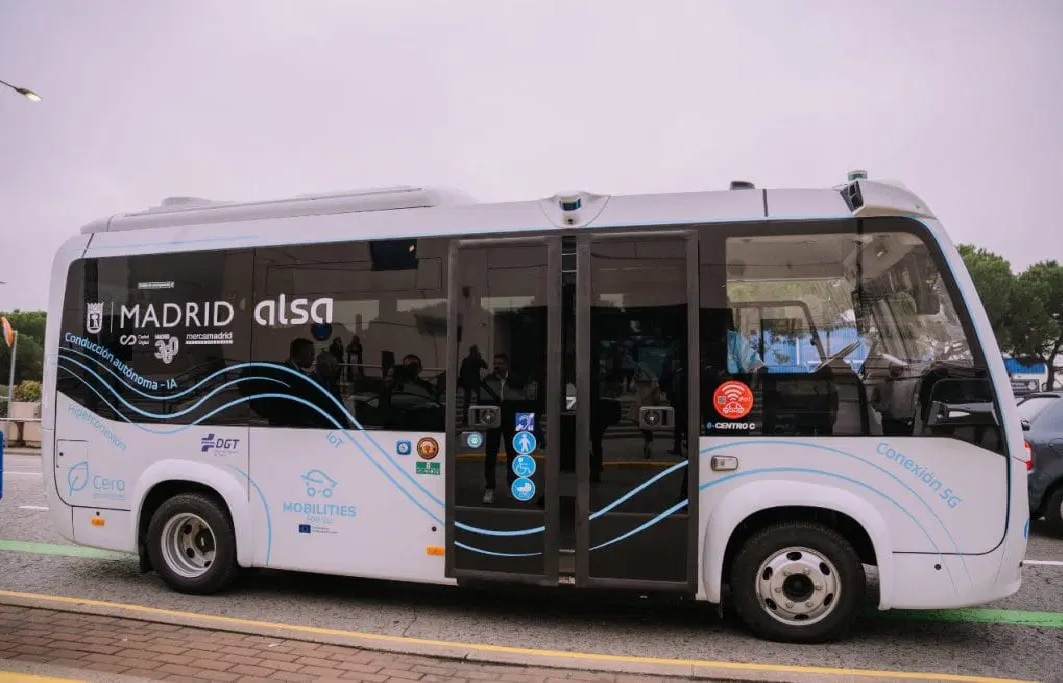
Autonomous vehicles are gradually gaining ground in Europe, and Spain has reached a new milestone in this field. Mercamadrid has launched the country’s first autonomous, on-demand bus—a project that will allow for the evaluation of this technology in a real-world setting before its implementation in more complex traffic scenarios, such as city streets.
The new service was launched by the Madrid City Council, Mercamadrid, and the company Alsa, along with other technology partners. During this initial phase, the vehicle will operate within the grounds of Spain’s largest wholesale market, transporting both workers and visitors via an on-demand booking system. It is important to note that this entire process is fully automated, requiring no human intervention during operation.
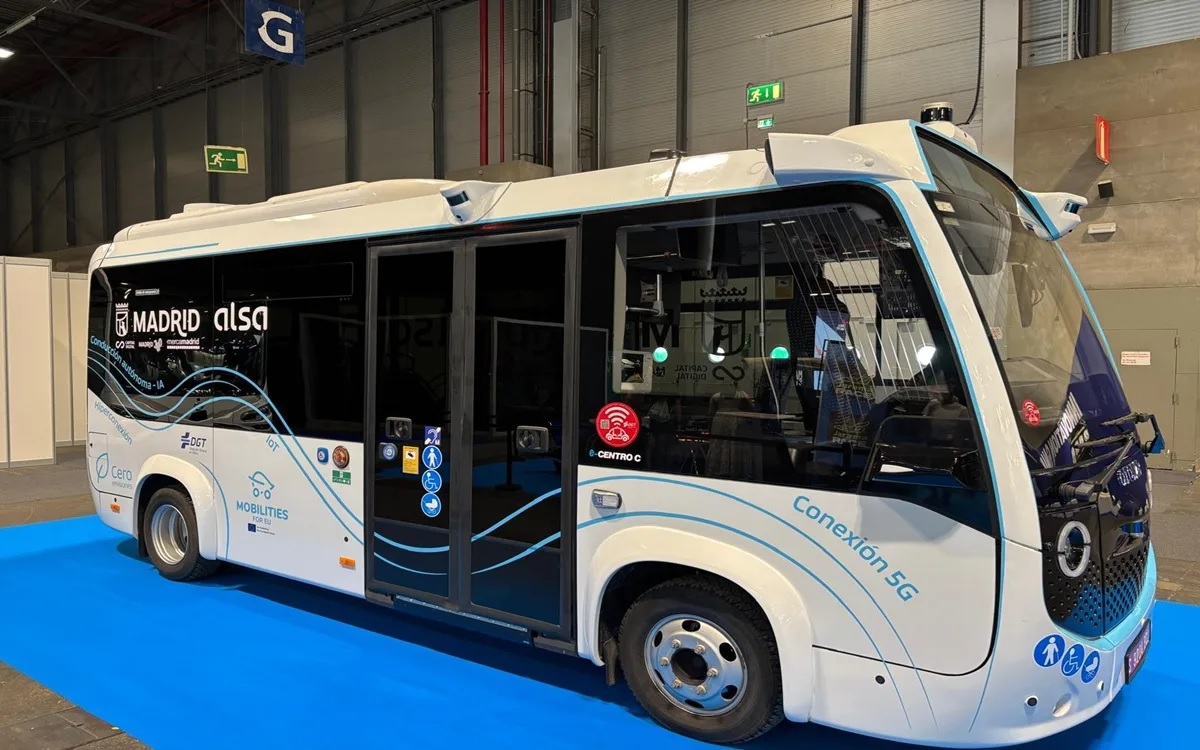
An autonomous bus that can be requested via a smartphone.
The project in question focuses on an electric bus equipped with Level 4+ autonomous driving technology. This means that the system is capable of operating autonomously in a pre-mapped and monitored environment, independently managing acceleration, braking, and steering without requiring human intervention during service. According to the press release issued by the city council, this initiative is part of a strategy designed to position Madrid as a leader in smart and sustainable mobility.
Another innovation being introduced is the implementation of an on-demand transportation system. Users will not be bound by a fixed schedule but will be able to request a vehicle whenever they need one via a mobile app. Upon receiving the request, the bus will travel to the designated pickup point to complete the requested trip within the Mercamadrid complex.
The initial route, which has been meticulously planned, includes multiple stops strategically located throughout the facility, with the aim of facilitating the daily commutes of thousands of employees who work at this vast logistics center. In addition, the project will allow for the collection of data on vehicle performance, response times, and user acceptance.
The goal is to fully automate the service.
This project is not intended to be merely a technological demonstration, but rather a large-scale initiative. Those leading the initiative view this as a preliminary step toward the full automation of transportation in enclosed environments, where traffic is easier to control than on roads open to general traffic.
The experience gained over the coming months will be essential for evaluating the system’s reliability, identifying opportunities for improvement, and determining the feasibility of its implementation in other similar settings. The fact that the bus is fully electric also aligns with the emissions reduction and decarbonization goals pursued by both the Madrid City Council and Mercamadrid.
A project with the potential for growth in the medium term.
Although there is still a long way to go before we see driverless buses regularly operating on city streets, projects like this demonstrate the rapid advancement of technology. Private or controlled-access environments are emerging as the optimal setting for validating these systems before they face the challenge of coexisting with conventional traffic.
The implementation of this bus positions Mercamadrid as a cutting-edge hub for future mobility. If the results meet expectations, Spain could consider implementing this type of solution at other logistics, university, airport, or industrial facilities, where autonomous driving has a greater chance of being adopted in the short term compared to conventional urban transportation.
Escrito por José Miguel Fernández Gómez.