


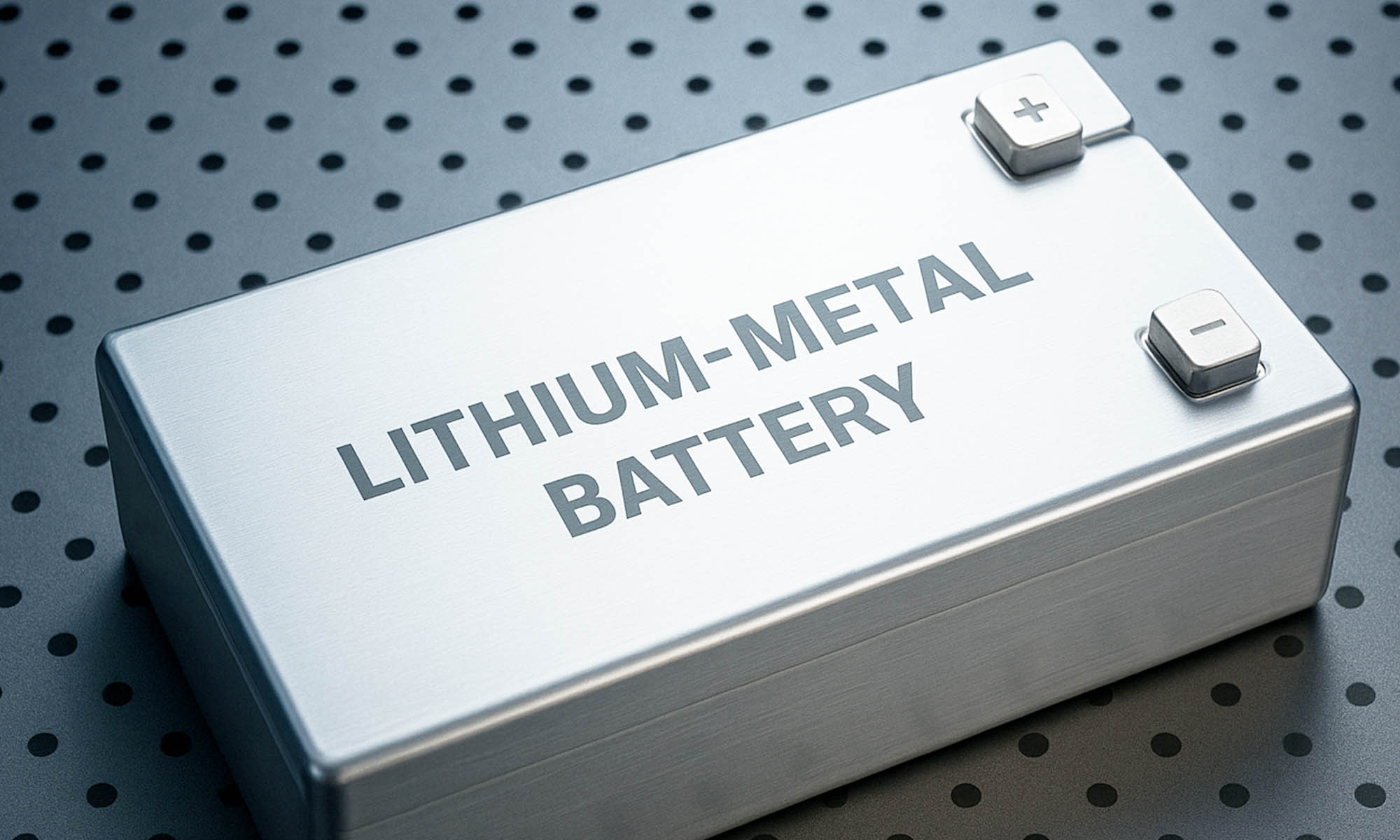
A highly stable lithium-metal battery with an energy density exceeding 600 Wh/kg
Developing batteries that offer an outstanding weight-to-energy capacity ratio is a major challenge facing the automotive and industrial sectors. In this field, a joint research team from the Tianmushan Laboratory and Tsinghua University has announced a significant breakthrough in electrolyte regulation for lithium-metal batteries. The project culminated in the creation of a pouch-format cell achieving 600 Wh/kg while offering high operational stability.
This leap in gravimetric density doubles the figures seen with conventional chemistries used in electric passenger vehicles. The study focused on addressing the key durability and safety shortcomings that have previously limited the potential of pure metal anodes. This approach enabled the development of a lighter, more compact battery capable of storing significantly more energy within a smaller volume. In other words, energy capacity was increased within the same package size, translating to greater driving range.
Ternary cathodes and manganese-rich batteries.
In tests conducted on 10 Ah pouch cells, researchers evaluated various cathode combinations. When pairing the lithium-metal anode with a high-nickel ternary cathode, the cell achieved an energy density of 550.7 Wh/kg. During cycling tests, the cell retained 80% of its initial capacity after 180 charge-discharge cycles, making it a reliable and efficient option for energy storage applications.
Energy performance improved markedly when the cathode was replaced with a manganese- and lithium-rich material. Under this new configuration, the battery's reversible specific energy surpassed the benchmark, reaching 602.5 Wh/kg and thereby setting a new standard for this type of structure.
Dendrite suppression and high-voltage protection.
The core of this breakthrough lies in the development of an electrolyte additive that acts directly on the interfaces of both electrodes. At the cathode, this component creates a protective surface layer designed to mitigate the damage and degradation caused by continuous high-voltage cycling.
Simultaneously, the chemical formulation establishes a stable interfacial layer on the lithium-metal anode. This physical and chemical barrier effectively suppresses the growth of lithium dendrites—microscopic structures that typically cause internal short circuits and premature failure in cells of this type. Currently, commercial lithium batteries using graphite anodes are approaching their theoretical energy density limit, estimated at approximately 350 Wh/kg.
Project status and path to production.
Despite promising results achieved with pouch cells, the research team clarifies that the technology currently remains in the research and development phase within the laboratory. The system has not yet reached the industrialization stage and is not being produced on a commercial scale. However, data regarding performance and interfacial stability provide a solid foundation for future manufacturing processes aimed at vehicles and mobility systems that require a drastic reduction in battery pack weight. CATL had previously conducted similar work, although—like the researchers at the Tianmushan Laboratory—they have not yet succeeded in developing the definitive formula that would enable commercial rollout.