

Download the audio
- Introduction.
The class develops the current challenges facing solid-state batteries and the transition from research to their use in electric vehicles.
- Solid-state battery technology.
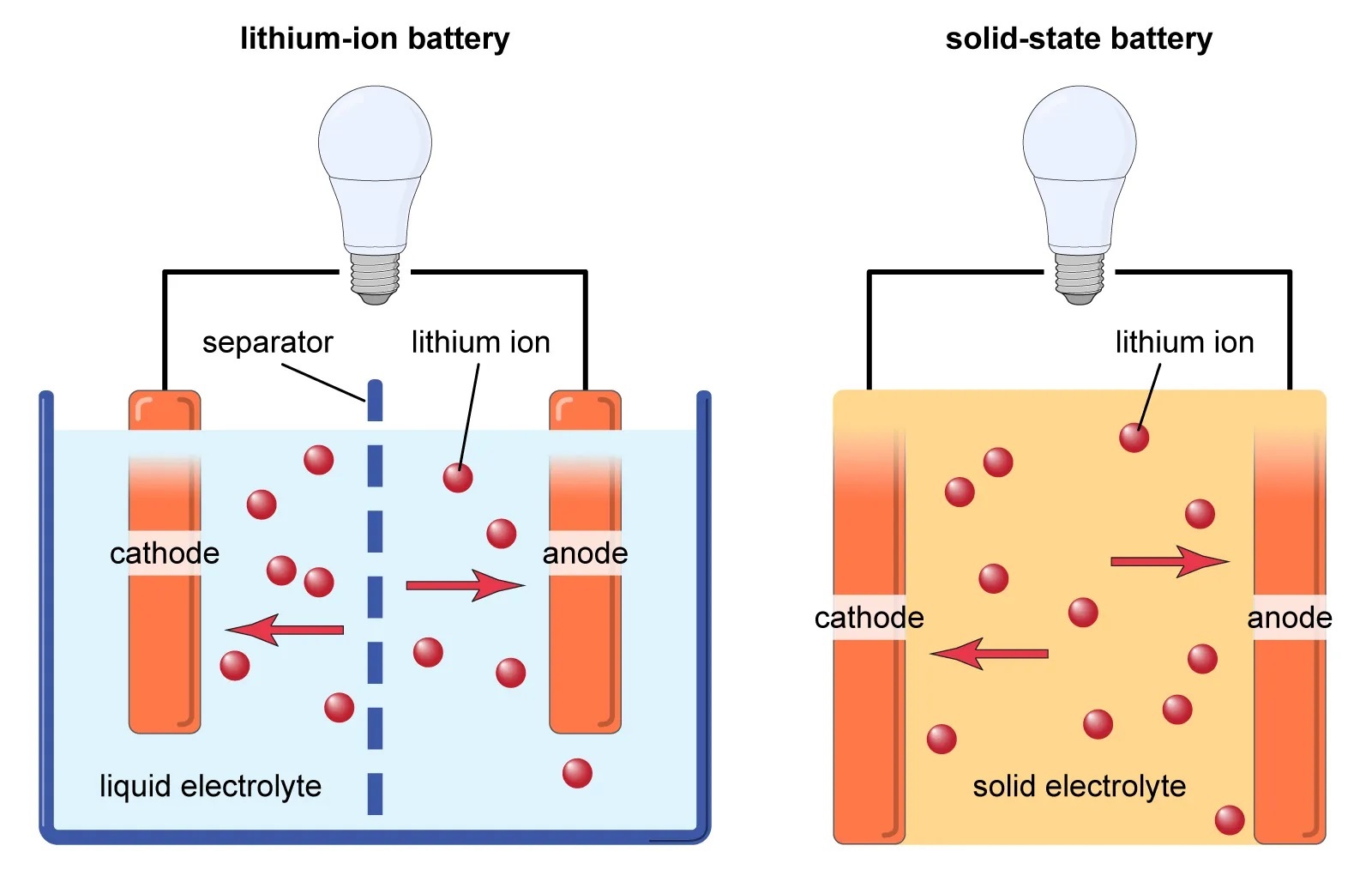
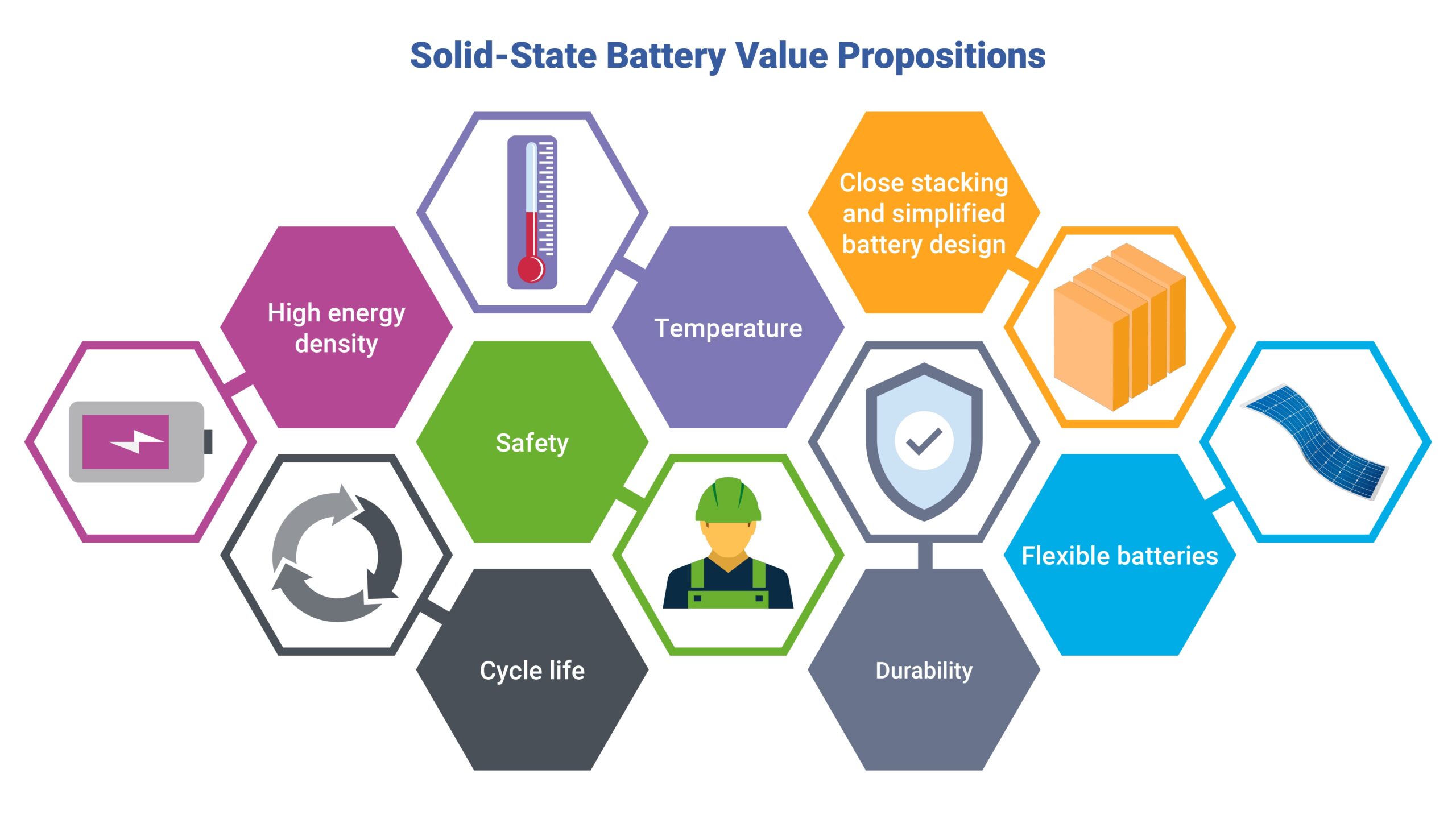
Solid-state batteries have long been recognized as a significant innovation in the field of electrochemical storage. Replacing the liquid electrolyte with a solid one offers a combination of features that promises to be hard to match in the industry: greater safety, higher energy density, and new cell architectures that could redefine the current limits of electric vehicles and stationary storage.
However, in 2026, the technology finds itself at a delicate balancing point. We must bear in mind that, while it is not merely a laboratory hypothesis, it is also not a fully industrialized solution. It is, above all, a technology that has demonstrated scientific viability and is currently in the most complex phase: converting that viability into reliable and competitive production.
- The scientific basis: real progress and unresolved issues.
From a strictly scientific perspective, the appeal of solid-state batteries is clear. The use of a solid electrolyte eliminates the need for flammable solvents and, at the same time, enables the use of lithium metal anodes, which is one of the main strategies for significantly increasing energy density. In principle, this translates to lighter, more compact batteries with longer runtimes, while improving safety against fires or thermal runaways.
However, practical implementation continues to impose clear limitations. The main challenge remains the behavior of the interfaces between solid materials. Unlike liquid systems, where the electrolyte easily adapts to the surface of the electrodes, in the solid state any imperfection creates resistance that compromises power, efficiency, and lifespan.
Added to this is the challenge of managing metallic lithium, which can grow erratically and form dendrites capable of penetrating the electrolyte, even when it is in a solid state. Research has shown that certain materials, particularly sulfide electrolytes and certain ceramic oxides, exhibit remarkable ionic conductivities and greater resistance to such phenomena. However, the final outcome depends on multiple factors, such as the applied pressure, the chemical stability of the interfaces, and the mechanical evolution of the cell over the course of cycles.
It should be noted that the concept of “solid-state” encompasses a wide range of materials. Some systems based on sulfides exhibit excellent electrochemical properties, although they are highly sensitive to moisture. Others are based on more stable oxides, although their processing is more complex. Finally, we will address polymeric or hybrid approaches, which, while they may sacrifice some performance, offer greater ease of manufacturing. Therefore, it is important to note that a significant portion of the solutions currently being introduced to the market do not possess the strict robustness required to be considered complete systems. Instead, these are intermediate architectures that seek to strike a balance between performance, stability, and industrial viability.
- From science to industry: who is making progress and why it matters.
The real turning point for solid-state batteries no longer lies in proving that they work, but in demonstrating their ability to be produced at scale and at reasonable costs. The gap between a laboratory cell and a cell suitable for the automotive sector is significant, and this gap is shaping the current pace of development. In recent years, various industry players have made significant progress, evolving from experimental prototypes to samples validated by vehicle manufacturers and toward pilot lines that are approaching standard industrial processes.
At this stage, major automakers have taken a leading role. Toyota, for example, has established a clear roadmap to introduce solid-state batteries by the second half of the decade and is supporting this strategy with investments in critical materials and its supply chain.
At the same time, specialized startups have gained prominence by partnering with these manufacturers and demonstrating tangible progress. The case of Factorial Energy, in collaboration with Stellantis and Mercedes-Benz, illustrates this transition: the validation of automotive-sized cells with high energy densities and fast-charging capabilities indicates that the technology is beginning to meet the real demands of vehicle integration, beyond the controlled laboratory environment.
This shift in focus is significant. The current debate centers on the viability of architectures, materials, and processes for the transition to mass production. In this regard, solid-state technology competes not only against its own challenges but also against conventional lithium-ion technology, which is seeing continuous improvements in cost, durability, and performance year after year.
- Technological competition and the current state of the ecosystem.
As solid-state battery technology matures, the battery market is undergoing a process of diversification. More established lithium battery technologies, such as lithium iron phosphate (LFP) or variants with silicon-enriched anodes, offer increasingly optimized and economically attractive solutions. Likewise, there are intermediate technologies, such as semi-solid batteries or advanced gel electrolytes, which promise gradual improvements in safety and energy density without significantly altering existing industrial processes. Added to this are alternatives like sodium-ion, which do not seek to compete on maximum performance but rather on cost and availability of raw materials for specific applications.
In this context, solid-state technology is emerging more as a strategic technology than as an immediate and universal replacement. Its first commercial applications are likely to be concentrated in segments where its advantages justify a higher initial cost, while the industry learns to scale up and optimize processes. In this regard, initiatives that not only conduct research but also aim to develop their own industrial capacity are particularly relevant.
In the case of Spain, Basquevolt occupies a unique position. It is currently the only initiative focused specifically on solid-state batteries and, at the same time, one of the few of its kind in Europe. Its approach is not limited to isolated technological development; rather, it aims to bridge the gap between research and manufacturing, with the goal of moving toward the implementation of pilot lines and production in the coming years. In a context where Asian and North American players dominate, this type of project stands as a fundamental element in preventing Europe from being confined solely to the role of a technology consumer.
Generally speaking, solid-state technology is at a crucial stage. The scientific community has demonstrated the concept’s viability, as well as the reality of its advantages. However, the outcome will depend on the ability to transform these advances into robust and competitive industrial processes. If successful, this will mark a milestone in the field of energy storage. Otherwise, it will establish itself as a high-value-added technology within an increasingly diverse ecosystem, where various chemistries will coexist according to the needs of each application.
- Thank you for your time.
The class has developed the current challenges facing solid-state batteries and the transition from research to their use in electric vehicles, see you soon.