

Download the audio
Slide 1. Introduction.
The class develops the high-voltage architecture, ultra-fast charging, and a comparison between using 400 and 800 volts, and the implications for fleet management.
Slide 2. Comparison between using 400 and 800 volts.
- What does voltage mean in an electric car?.
The question of what voltage electric cars operate at is more important than it seems. Most current electric cars use high-voltage architectures of around 400 volts, while more advanced, expensive models, or those focused on ultra-fast charging, already use 800-volt systems.
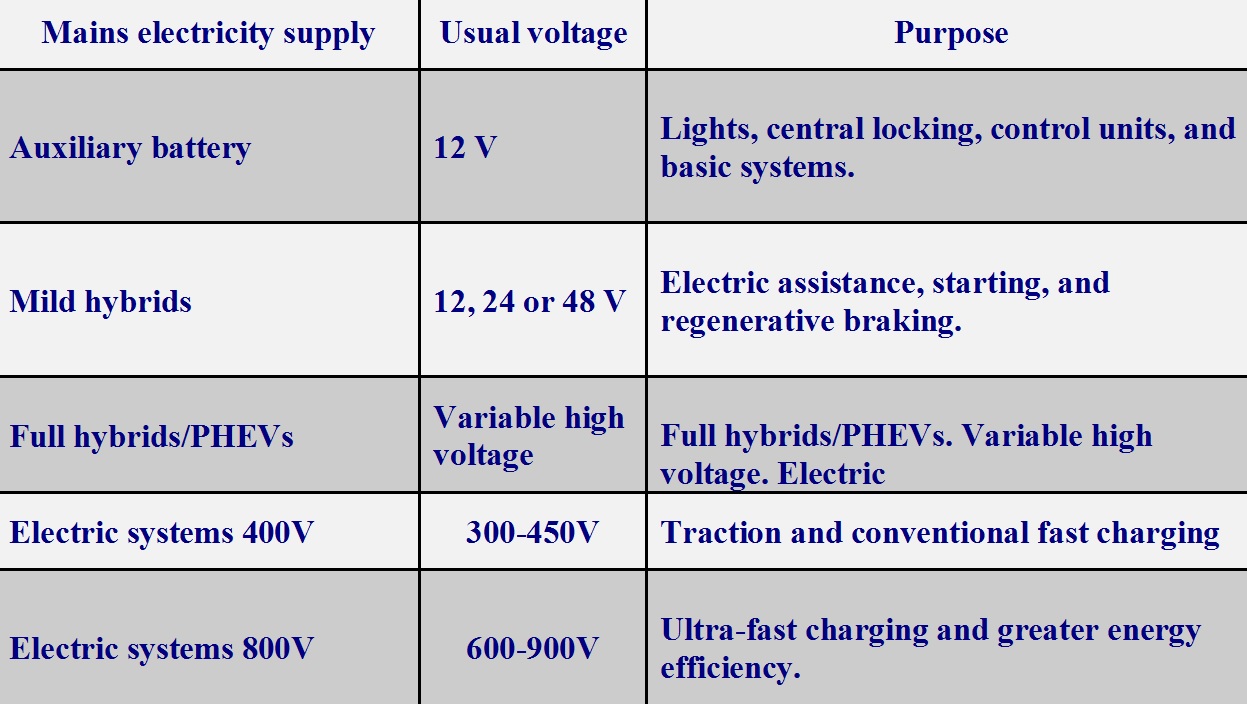
This factor influences charging speed, heat generation, cable thickness, efficiency, and the vehicle's cost. It's also important not to confuse it with the 12-volt auxiliary battery, which is still present in electric cars to power the lights, central locking, and low-voltage systems. To better understand the system, it's helpful to review how an electric car battery works.
Voltage, or electrical potential, indicates the "pressure" with which electricity flows through the system. In an electric car, there isn't just one electrical network, but several.
The most common is the 12-volt network, similar to that of gasoline or diesel cars. This network powers auxiliary components such as the lights, central locking, multimedia system, power windows, sensors, parking brake, alarms, and control units.
The second is the high-voltage network, which powers the electric motor, inverter, air conditioning compressor, high-voltage heating system, and the main drive system. This network operates at approximately 300 to 400 volts in most electric vehicles, or close to 800 volts in the latest models.
In everyday driving, the driver does not come into contact with this high voltage and should not handle it. The orange wires on an electric car specifically indicate high-voltage areas and should only be handled by qualified personnel.
- Why electric cars still use 12 volt batteries.
Even if an electric car has a 400 or 800 volt battery, it still needs a 12 volt auxiliary battery. It may seem contradictory, but it makes a lot of sense.
The 12 volt network keeps the basic systems active when the car is stationary. It also allows you to "wake up" the vehicle, close high-voltage contactors, power control units and manage security functions.
If the 12-volt battery fails, an electric vehicle may not start, even if the main battery is charged. This is a more common problem than many users imagine, so it is important to know what happens when a car does not start despite having a battery or when the auxiliary system fails.
- The 400 volt standard: the most common.
For years, the 400-volt architecture has been the most widespread standard in electric passenger cars. It is a balanced solution in terms of cost, security, component availability and compatibility with charging infrastructure.
Many popular models work with this technology, such as the Tesla Model 3 and Model Y, the Volkswagen ID.3 and ID.4, the Renault Mégane E-Tech, the Peugeot e-3008 in some versions, the Cupra Born, the MG4 and the Volvo EX30, among others.
A 400 volt system can charge quickly, but has more limitations when it comes to reaching very high powers. To increase the charging power without raising the voltage, it is necessary to increase the current intensity. And more current means more heat, thicker cables and higher thermal demands.
- When is a 400-volt car sufficient?.
For most users, a 400-volt electric vehicle is sufficient if:
- You usually charge at home.
- You make daily or urban commutes.
- You travel occasionally.
- You don't need to stop for more than 15 minutes on the road.
- You're looking for a more affordable option.
For home charging, the 400-volt or 800-volt architecture matters little. In this case, what makes the difference is the electric vehicle's onboard charger, which is usually between 7.4 and 11 kilowatts, although some models accept 22 kilowatts of alternating current. This difference is more noticeable when discussing the cost of charging an electric car than the battery voltage.
- Why does it charge faster using 800 volts?.
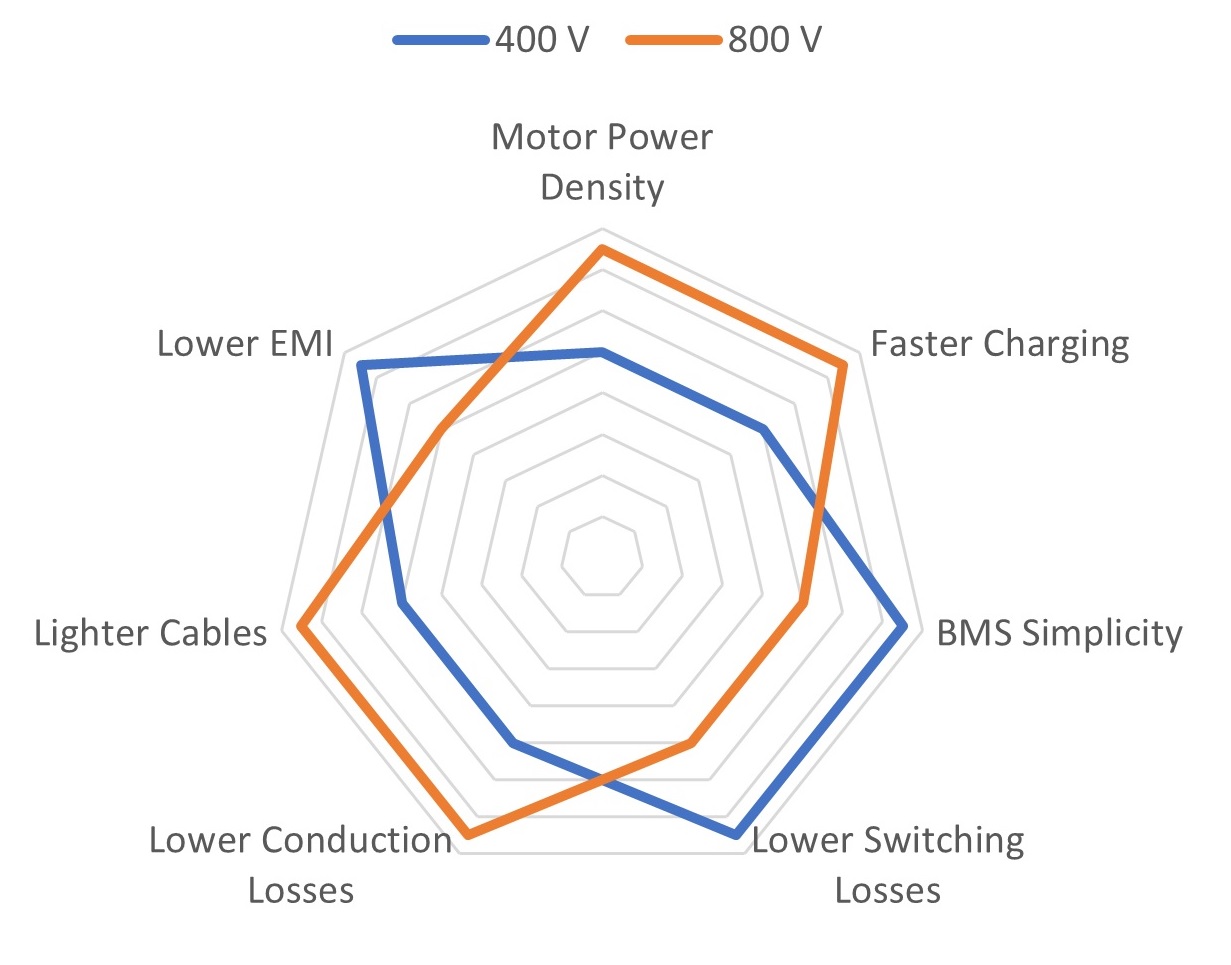
The 800-volt architecture allows for the transfer of a lot of power with less current. The physics is simple: electrical power is calculated by multiplying voltage by current. Thus, to deliver the same power, an 800-volt system needs approximately half the amperage of a 400-volt system.
To understand why peak power isn't everything, it's helpful to analyze how long it takes an electric car to charge quickly.
- 400 volts versus 800 volts: comparison table.
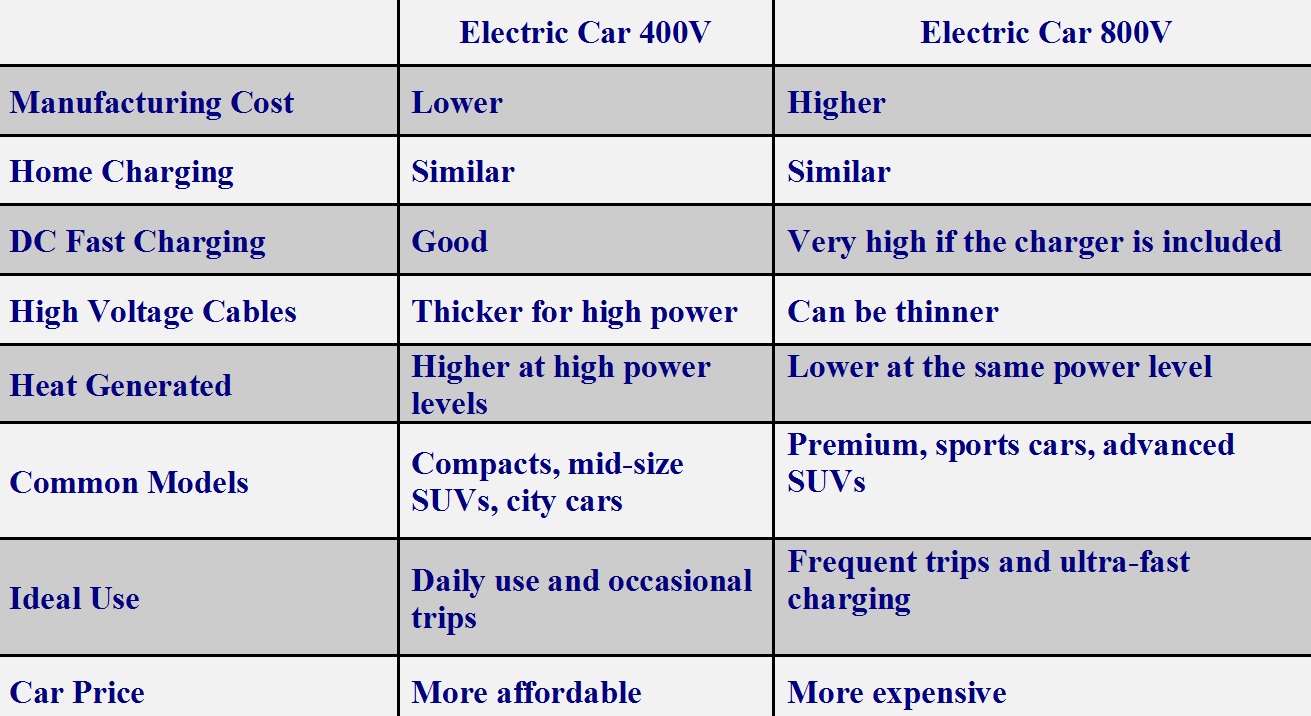
The difference is most noticeable on the road. If you mostly charge at home, 800 volts isn't necessary. However, if you take long trips and want to take advantage of high-power chargers, it can be a significant advantage.
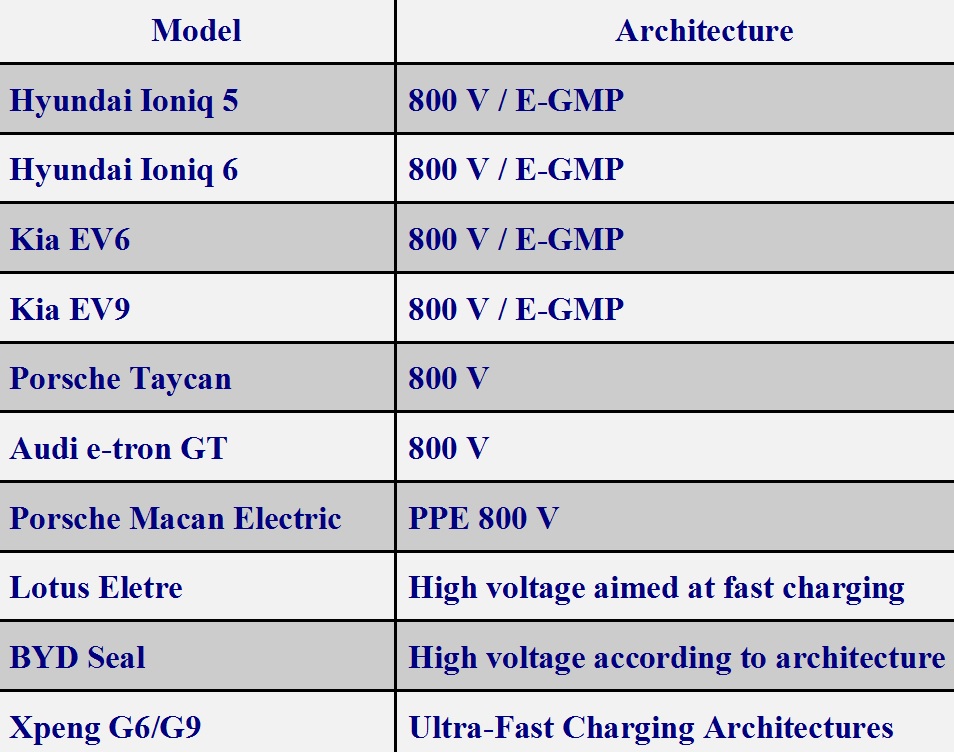
- Electric cars that operate at 800 volts.
- Alternating current, direct current, and voltage.
At home or with an AC charger, electricity arrives as alternating current. The car uses its onboard charger to convert it to direct current. With a DC fast charger, this conversion takes place outside the car.
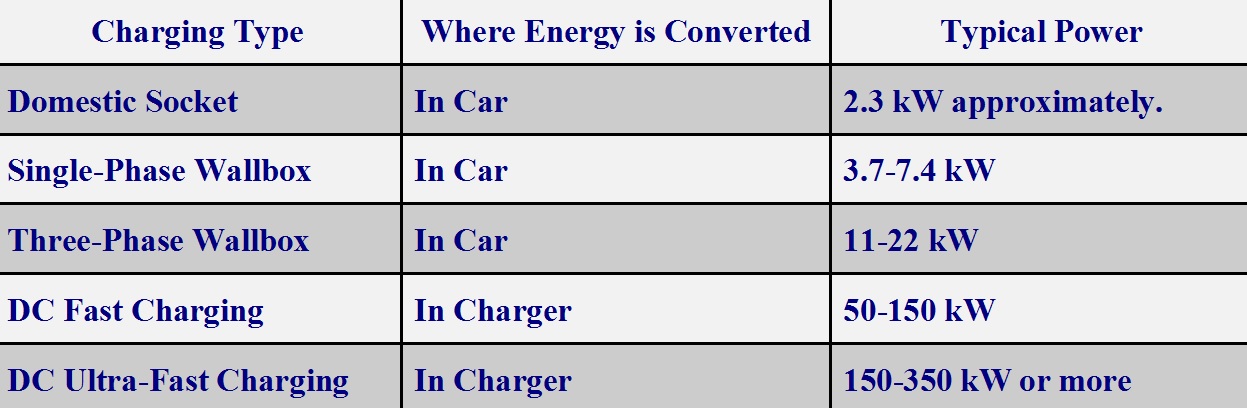
Therefore, even if a car has an 800-volt electrical system, it won't charge at 300 kilowatts at home. For that, it needs a compatible DC fast charger. In a home garage, the most important factors will be the contracted power capacity and the installed charger.
- Safety: Why you shouldn't handle high voltage.
An electric car operates at dangerous voltages. For this reason, repairs to the battery, inverter, motor, onboard charger, or orange cables must be carried out in specialized workshops. The same applies to expensive repairs, such as battery replacement, where not only the price of the cells matters, but also the safety of the process.
- Importance of voltage in an electric vehicle.
- When to choose 400 volts.
Ø Urban or suburban use.
Ø Overnight charging at home.
Ø More affordable price.
Ø Occasional trips.
-
- When to choose 800 volts.
Ø Frequent long trips.
Ø Intensive highway use.
Ø Need for fast charging on the road.
Ø Frequent access to 250-350 kilowatt chargers.
- FAQs about electric vehicle voltage.
- What voltage do current electric cars operate at?.
Most operate with high-voltage architectures, around 400 volts, although there are increasingly more 800-volt models. Almost all of them also maintain a 12-volt auxiliary battery for basic systems.
- Does an 800-volt car always charge faster?.
Not always. A compatible charger, the correct battery temperature, and an appropriate charging curve are required. If the charger cannot provide enough power, the advantage is reduced.
- Is there also a 12-volt battery in electric cars?.
Yes, it powers the lights, central locking, and auxiliary systems. If it fails, the car may not start, even if the main battery is charged.
- Is the voltage of an electric car dangerous?.
High voltage can be dangerous if you don't have the proper training. The system is isolated and protected for the user. Repairs should be carried out in qualified workshops.
- Which is better, 400 volts or 800 volts?.
For daily use and home charging, 400 volts is sufficient. For frequent trips and ultra-fast charging, 800 volts offers clear advantages, although it usually increases the vehicle's price.
- Implications for fleet management.
The main consequence of using 800 volts is numerous advantages, but electric vehicles are more expensive than those using 400 volts, and the appropriate charger is essential to reap all the benefits.
Understanding the voltage of electric cars helps explain why some charge faster, have lighter components, and take better advantage of ultra-fast charging.
The following measures are recommended.
- 400 or 800 Volts?.
For a fleet of vehicles, it is recommended to charge vehicles at our facilities using our chargers. Public or third-party chargers may be occupied or out of service, resulting in significant time losses and reduced productivity.
It is recommended to charge vehicles at the slowest possible rate to avoid battery degradation, and at night to take advantage of the lowest electricity rates. Therefore, 400 volts is the most advisable option.
If the fleet needs to recharge as quickly as possible, 800 volts is the best option.
- Charging Infrastructure.
To take advantage of 800 volts, chargers must be equipped to handle charging at this voltage.
- Electric Vehicle Purchase.
Choosing an electric car shouldn't be based solely on voltage. Factors such as real-world range, energy efficiency, battery size, charging curve, available network, and price must be considered. It's recommended to consider purchasing a 400-volt electric car, as it could be a more advantageous option compared to an 800-volt vehicle that isn't fully utilized.
- Vehicle Price.
If the vehicle costs the same with 400 or 800 volts, the 800-volt version is recommended due to its numerous advantages.
Slide 3. Thank you for your time.
The class has developed the high-voltage architecture, ultra-fast charging, and a comparison between using 400 and 800 volts, and the implications for fleet management, see you soon.