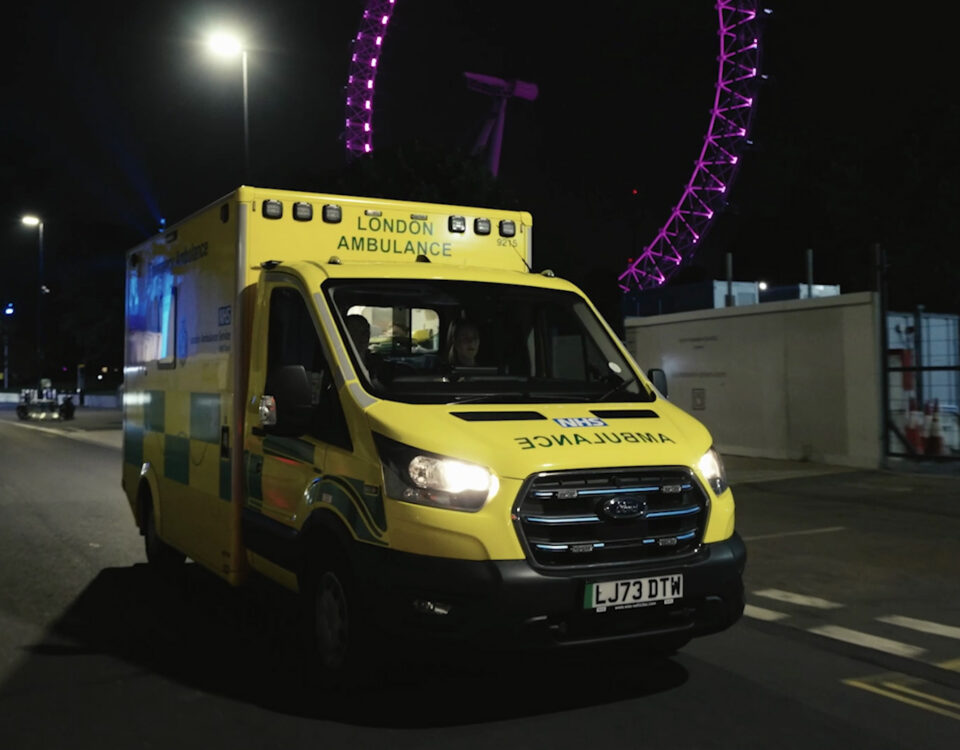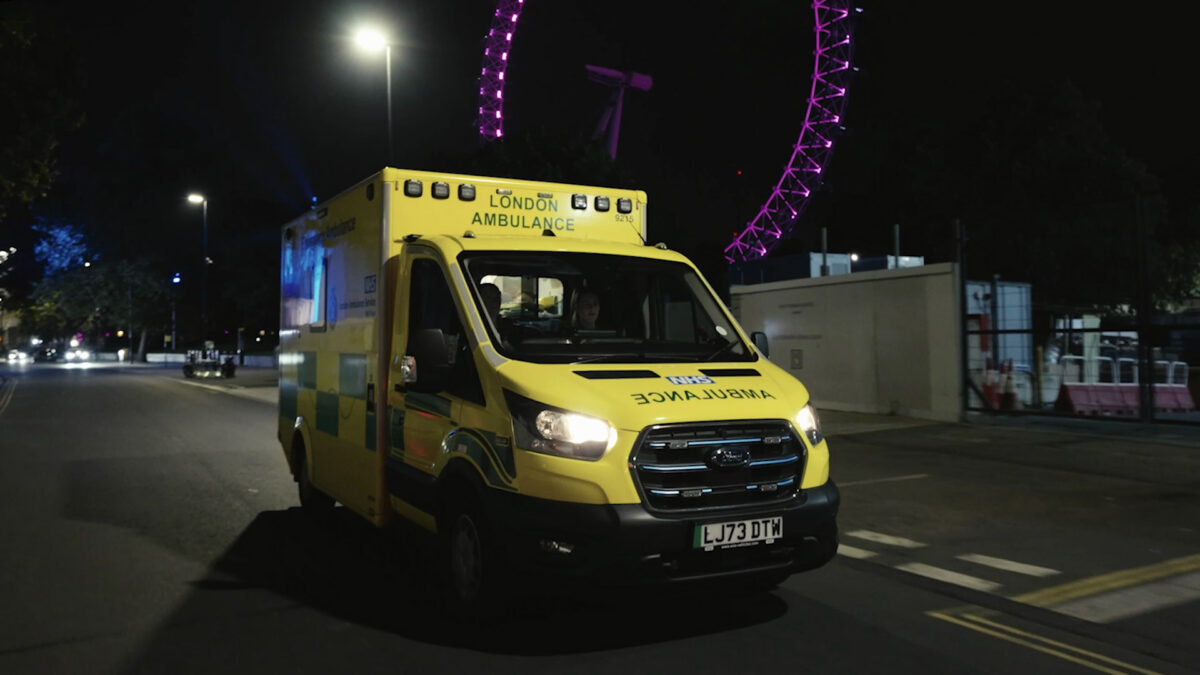

Slide 1. Introduction.
The class develops the energy reserve of electric vehicle batteries, what actually happens when the battery reaches 0%, and the implications for fleet management.
Slide 2. Battery energy reserve.
- Range anxiety.
No driver wants to be stranded on the road, which is why they try not to run out of fuel or battery power. In combustion cars, it is relatively easy to refuel if this happens, but with electric cars, things get complicated. To reassure electric vehicle drivers, it is important to note that even when the battery reads 0%, it is still possible to travel a little further.
Modern electric car systems have a hidden internal energy reserve designed for exceptional cases that allows you to keep driving even when, in theory, you have no more electricity.
Below are two studies to find out what happens when the battery reads 0%.
- Study conducted by ADAC.
The German organization ADAC, the German automobile club, has conducted a study with six electric cars: BYD Seal, KIA EV6, NIO EL6, Tesla Model Y, Volkswagen ID.3, and Volvo EX40. The aim of the study was to find out how cars warn of low battery power and whether they actually stop when the charge reaches 0%. As with combustion engine cars, these also have a yellow warning light that indicates that the battery is running low. Almost all of them include a text message to this effect, and in some, the battery warning light turns orange.
The experiment was carried out on a closed track at a former air base in Bavaria, where constant speeds were maintained to minimize variables. All cars started with 30% battery power and drove until they shut down. The aim was not only to observe how long they lasted, but also how they behaved before and after running out of battery power.
All models display an early warning between 15% and 20% battery life. This is a visual message, sometimes accompanied by an orange battery icon. As driving continues, the alerts become more intense and audible to remind the driver to find a charging point immediately. Some cars even suggest energy-saving measures, such as switching to Eco mode or reducing air conditioning.
The moment when this happens in each electric car in the test is different. In the Korean model, it is indicated when the battery capacity reaches 21%, but in the Swedish model, it warns you when you are in dire straits, with only 7% remaining. At least in the Korean model, that extra point above 20% tells you that you still have 70 kilometers to go before it stops completely. Logically, the closer you get to zero percent, the more insistent the warnings become, with audible alerts added to the visual ones.
In addition, electric cars are designed so that, from a very low charge level, performance decreases significantly: acceleration slows down so much that it can even feel like the car is broken down, but it is just a way to save as much energy as possible and prevent you from stepping on the accelerator to get to a plug as soon as possible.
During the drop from 30% to 20%, the cars continued to operate without limitations. The air remained cool, the throttle response did not change, and only a few warning lights came on. Everything was normal. But when the charge dropped to 10%, the picture began to change, as did the clues as to what was to come.
None of the six electric cars subjected to this range test by the German ADAC came to a complete stop, as their energy reserves allowed them to travel between 15 and 20 kilometers. This result was obtained under very favorable conditions, since if the test had been carried out in the middle of winter, with extremely low temperatures or with more worn-out batteries, the result would have been very different and not so positive. The study's conclusions also provide other important and interesting data.
The Tesla Model Y and Kia EV6 offered a smoother transition, while the BYD Seal and Volkswagen ID.3 showed more abrupt cuts.
The test showed that not all cars warn in the same way or react with the same smoothness. Some activate visual warnings or direct messages, while others reduce power without a clear explanation. The problem is that there is no universal standard to inform the driver of what to expect.
- Study conducted by the YouTube channel Out of Spec Testing.
In a test video produced by the Out Of Spec Testing channel, a 2026 Tesla Model 3 Premium was put to the test, with surprising results.
The test consisted of driving the car until the on-board computer showed 0% battery life and then continuing to drive to see how much further it could go. Even when the screen indicated 0% battery and 0 miles of range remaining, the test was conducted in the United States, and the Model 3 continued to travel an additional 31 miles, equivalent to approximately 50 kilometers, before stopping. This is not exactly a low figure, which offers users some assurance that even if the situation becomes complicated, they will have additional power to resolve the situation.
To put this into context, this version of the Model 3 has an official EPA-estimated range of about 363 miles, or about 584 kilometers on a fully charged battery, which already places it among the longest-range electric sedans on the market.
As can be seen in the demonstration, when the system detects that the battery is almost depleted, the vehicle itself warns the driver and can take control to maximize range, limiting certain functions or speed, for example, in order to preserve the little remaining energy and avoid stopping until it is unavoidable.
- What happens when the battery reaches 0% according to the tests.
- Hidden reserve.
Manufacturers include a small energy reserve (buffer) that is not shown on the indicator and allows you to keep moving.
This zone should only be used in an emergency and performance varies depending on external conditions.
-
- “Turtle” mode.
The car enters limited power mode, which drastically reduces speed and acceleration to conserve that extra energy.
-
- Warnings.
Warning symbols, such as the turtle, appear, along with clear messages indicating that power is limited, although in some models these messages are more ambiguous.
-
- It is not an instant shutdown.
The car does not stop suddenly, but that “extra” range is unreliable and is reduced in adverse conditions, such as cold weather, hills, or traffic jams.
-
- Not all battery management systems are equally accurate.
Some cars offer a very accurate estimate, while others may miscalculate if the battery is degraded or environmental conditions are unfavorable. In other words, what works one day may not work another. The most prudent thing to do is to anticipate and not stretch the range to the limit, but to charge before 0% appears on the screen. Even though the software is smarter than ever, it is no substitute for common sense.
- Implications for fleet management.
The main consequence when the battery reads 0% is that there are still a few miles of range left.
The following measures are recommended.
- Relying on 0% is risky.
If you use that reserve, you have no margin for reaction and may be unexpectedly stranded.
It is not an “extra” to get you home; that additional range is a safety cushion for very specific situations, not a guaranteed range.
Running down to 0% is bad practice that reduces performance and leaves you in a vulnerable situation.
- Driver training.
Drivers must be trained on what happens when the battery approaches 0%, such as how the vehicle reduces power and certain comfort features may stop working, because the driver may think there is a fault in the vehicle.
- It is not recommended as a regular practice.
This extra may be reassuring for drivers, but it should be clear that it should only be used in extreme cases, as manufacturers insist that this reserve should not be relied upon as a regular practice for managing range.
If you constantly push the range to its limits, you will end up damaging the cells, and calling a tow truck to rescue you will be a minor expense compared to the cost of replacing or repairing the battery.
- 20% battery charge.
To keep the battery in good health, it is best to keep the charge between 20% and 80%.
Completely discharging the battery accelerates its degradation, and the battery will lose range more quickly, which may lead to its replacement at a high cost.
In summary, most electric car manufacturers program a buffer zone into the battery that allows cars to continue running for a few miles after the indicator reaches zero, with the aim of preventing them from suddenly breaking down, in a similar way to what happens with a combustion engine vehicle.
The extra distance can vary depending on the model, driving conditions, and battery condition, but even in third-party tests, many electric vehicles have been found to offer between 15 and 30 additional kilometers after the gauge reaches 0% charge.
Slide 3. Thank you for your time.
The class has developed the energy reserve of an electric vehicle's battery, what actually happens when the battery reaches 0%, and the implications for fleet management, see you soon.