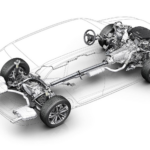

Slide 1. Introduction.
The class develops the second life that batteries used in electric vehicles could have when they exceed their useful life in electric mobility.
Slide 2. A second life for electric vehicle batteries.
- Electric mobility.
Stationary batteries might seem like a concept apart from electric cars, but in reality, they have an important role to play in the evolution and sustainability of this technology. Although they do not directly power vehicles, their integration with the charging infrastructure may be essential for the future of electric mobility.
- What are stationary batteries?.
Stationary batteries are energy storage units that are used outside the propulsion system of a vehicle. They are typically batteries that have exceeded their useful life in an electric car, whose capacity has diminished to a point where they are no longer effective for mobility, but are still useful for stationary energy storage.
- The role of stationary batteries in the electric car ecosystem.
- Recharging electric cars during peak demand.
Stationary batteries can store energy during off-peak hours and release it during peaks, which is important to avoid overloading the grid. This is especially useful in locations where charging infrastructure is still under development or in areas with a high density of electric vehicles.
- Grid support for more efficient charging.
Integrating stationary batteries into charging stations can improve grid efficiency by providing an immediate source of power for electric cars without the need to generate additional demand on the grid in real time, facilitating fast charging without compromising the stability of the local grid.
- Facilitating the use of renewable energy in vehicle charging.
Stationary batteries can be charged using solar or wind power, enabling charging stations to provide truly green energy for electric cars, reducing dependence on fossil fuels and improving the sustainability of the entire system.
- Improved logistics in electric vehicle charging.
Stationary batteries enable more flexible power distribution, which may be essential for new forms of charging services such as mobile charging or battery swapping systems, where power needs to be available at different locations quickly and efficiently.
- Are stationary batteries the future of electric cars.
While stationary batteries themselves will not power the electric cars of the future, they play an important role in the evolution of electric vehicle technology and energy management. By enabling the reuse of batteries that are no longer viable for vehicular mobility, stationary batteries contribute to a more sustainable and efficient consumption model.
These batteries facilitate a smoother transition to renewable energy by providing affordable and efficient energy storage, which is essential to compensate for the intermittency of sources such as the sun and wind. In addition, by extending the life of electric car batteries and reducing the demand for production of new ones, stationary batteries help reduce the environmental impact associated with battery manufacturing and recycling.
In the context of the industry, while stationary batteries may not be the driving force behind new electric car models, they are a critical piece in ensuring that the transition to electrification is more sustainable and less damaging to the planet. Therefore, as electric vehicles continue to evolve, stationary batteries offer an indispensable bridge to a more sustainable future, supporting the development of a more robust and environmentally friendly energy infrastructure.
With these uses and benefits, it is clear that stationary batteries have an important role to play in the future of electric transportation and in the efficient management of renewable energy resources, marking a path towards a circular economy in the automotive and energy industry.
Slide 3. Thank you for your time.
The class has developed the second life that batteries used in electric vehicles could have when they exceed their useful life in electric mobility, see you soon.