
A study shows that electric trucks are more cost-effective than diesel ones in 90% of cases
Purchase price is a major barrier to replacing diesel trucks with electric ones. However, focusing solely on this aspect can provide a distorted picture of the vehicle's true costs. A recent study concludes that, by 2030, adopting battery-electric trucks in Europe could lead to significant savings in total cost of ownership compared to diesel trucks. The analysis projects that the cost of ownership for battery-electric trucks could be up to 70% lower for 90% of heavy-duty road transport operations across the continent.
The research was conducted using a massive dataset. The authors utilized real-world profiles derived from microdata on over 4 million European trucks, accounting for variations in countries, vehicle types, annual mileage, and usage patterns. They also incorporated forecasts regarding vehicle and energy prices, technological advancements, regulations, and charging infrastructure to assess the economic viability of switching from diesel to electric power in specific operations.
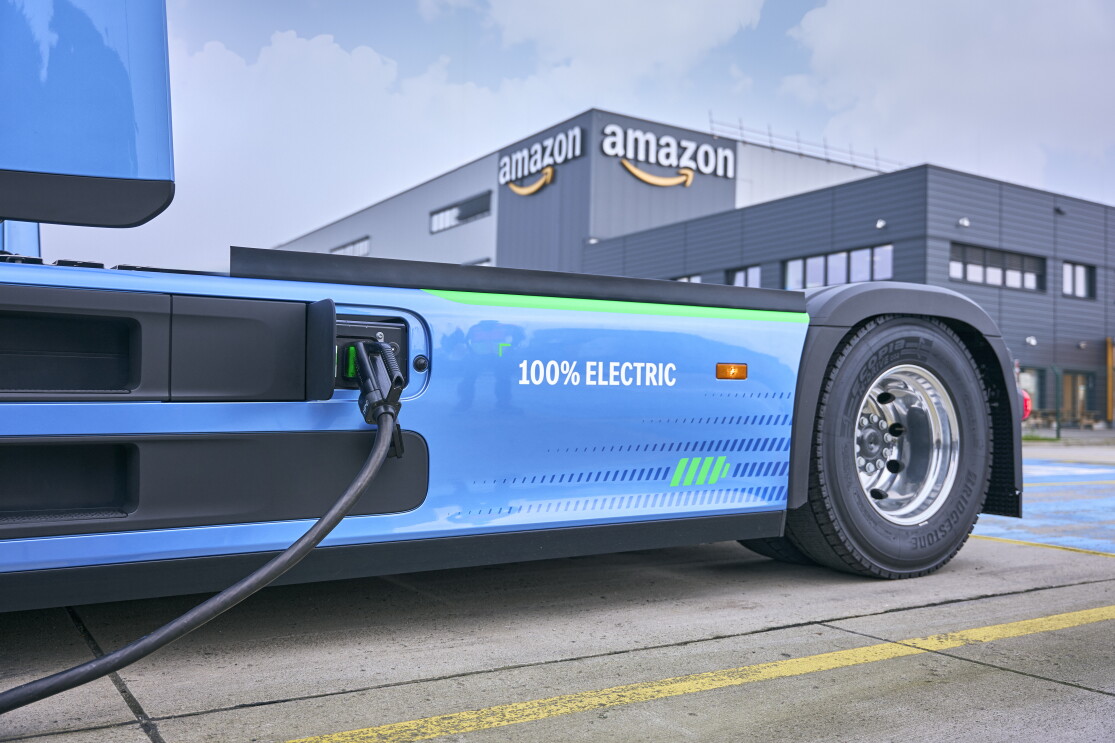
Up to 91% of operations could be cheaper with an electric truck.
The study’s primary scenario highlights a significant advantage for electric trucks equipped with smaller batteries. By 2030, these vehicles will be cost-competitive with diesel trucks for 91% of the kilometers driven in the heavy-duty transport sector analyzed. Electric vehicles with larger-capacity batteries—despite higher purchase prices and energy consumption—would achieve economic competitiveness in approximately 69% of cases. This situation is largely explained by operating costs. Researchers estimate that electric trucks will remain more expensive than diesel models for the foreseeable future, primarily due to battery costs. However, their superior efficiency and lower energy costs can offset the initial investment as mileage increases. For reference, the study projects an approximate consumption of 110 kWh/100 km by 2030 for a large-battery electric articulated truck, compared to the 227 kWh/100 km required by a hydrogen fuel cell-powered electric alternative.
Consequently, the longer a truck operates, the greater the advantage offered by the electric truck. In the most favorable scenario, virtually all analyzed profiles would be economically competitive by 2030, with savings compared to diesel potentially reaching 0.50 euros per kilometer. However, the study also considers a scenario unfavorable to electrification, in which only 14% of kilometers would be competitive using a small battery, and a mere 3% with a large one. Therefore, this is not a single prediction, but rather a range of possibilities contingent upon the evolution of costs, technology, and energy.
The challenge lies in charging all those trucks.
An operation's economic viability does not guarantee its immediate feasibility using an electric vehicle. In this context, researchers have identified a significant constraint: driving range and charging infrastructure. Factoring in maximum daily travel distances and the planned rollout of fast chargers through 2030, the conclusion is that only 21% to 25% of transport activity would be simultaneously viable from both economic and operational standpoints.
Even under this scenario, the proportion of electric vehicles would significantly exceed the expectations set by current European targets. Researchers estimate that by 2030, it will be feasible to cost-effectively and efficiently replace approximately 25% of current diesel trucks with models featuring small batteries, while another 18% could be replaced by models with large batteries. For comparison, current European CO2 emission reduction targets imply that, by that date, electric trucks would account for a mere 5% to 9% of the total fleet.
The situation is evolving progressively and continuously as infrastructure improvements are implemented. By 2035, it is estimated that 63% to 77% of the kilometers traveled by heavy-duty vehicles could be covered in a technically and economically viable manner using electric trucks. By 2040, this figure would rise to 77–90%. The strategic deployment of fast chargers—particularly along the Trans-European network—is therefore crucial. It is imperative to have more high-power charging points available; this would also enable the use of smaller batteries, thereby lowering the cost of the vehicles themselves.
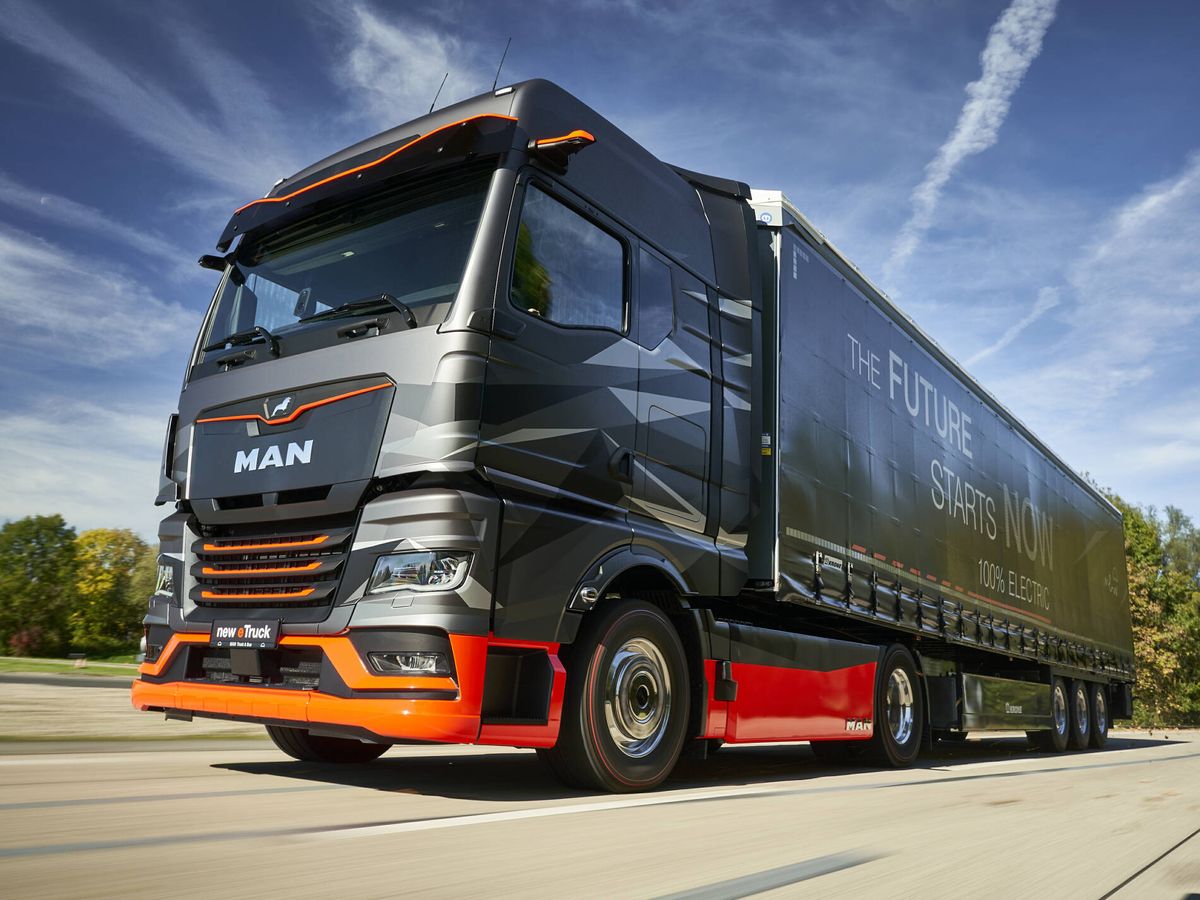
Hydrogen faces a much tougher road ahead.
The *Nature Communications* study also analyzes fuel-cell electric trucks, and its conclusions are less favorable. Hydrogen offers operational advantages due to its greater range and rapid refueling capabilities. However, its lower efficiency and the cost of the fuel itself make it difficult to compete economically in the market. By 2030, natural gas would only outperform diesel under the most favorable assumptions, and even then, the resulting savings would be less than half of those projected for battery electric vehicles.
When directly comparing battery electric and hydrogen vehicles, the latter proves more competitive only under a very specific set of conditions: battery technology underperforms expectations, electricity remains expensive, and—simultaneously—fuel cell technology advances favorably while green hydrogen prices drop to exceptionally low levels. In 2025, the total number of N2 and N3 hydrogen trucks across the European Union stood at just 335, compared to over 35,000 battery electric vehicles.
Therefore, the study’s conclusion does not suggest that all transport operators should immediately replace their diesel trucks. It is possible that economic factors will overcome the current barriers to implementation—and do so sooner than anticipated. Under the baseline scenario, electric vehicles are expected to become the more affordable option for most operations by 2030. However, the primary challenge lies in ensuring sufficient range and, crucially, a fast-charging network that allows this economic advantage to be fully realized on the road.