

How to Avoid High Temperatures in a Car During a Heat Wave.
With the arrival of summer, protecting your vehicle from the heat is no longer just a matter of comfort—it becomes a matter of survival. A vehicle parked in direct sunlight can reach extreme temperatures in a short period of time, negatively affecting both the well-being of the occupants and the materials inside the cabin. To verify the effectiveness of available solutions for preventing this problem, the German automobile club ADAC conducted a comparative study of various sun protection systems. The results of this study indicate that the effectiveness of these products varies significantly.
The experiment was carried out using seven identical vehicles exposed to solar radiation under similar conditions during the middle of the day. Each vehicle was equipped with a different protection system, while one was left completely unprotected to serve as a control. The main objective of the evaluation was to measure the air temperature inside the vehicle, as well as the temperature of the interior surfaces, paying special attention to the steering wheel, dashboard, and seats—the elements that reach the highest temperatures.
Very mixed results.
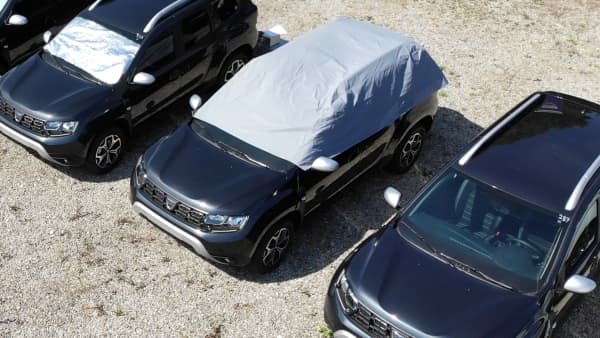
The main conclusion is that the most effective solution is not the traditional sunshade placed inside the windshield, but rather the so-called “half-cover” or partial car cover. This accessory, designed specifically to provide protection against solar radiation, offers complete coverage for the roof and all the vehicle’s glass surfaces, thereby preventing direct sunlight from entering. In tests conducted by the ADAC, it was observed that the vehicle without any protection reached an interior temperature of 53°C, while the one equipped with the protective cover remained at 43°C—a difference of 10°C.
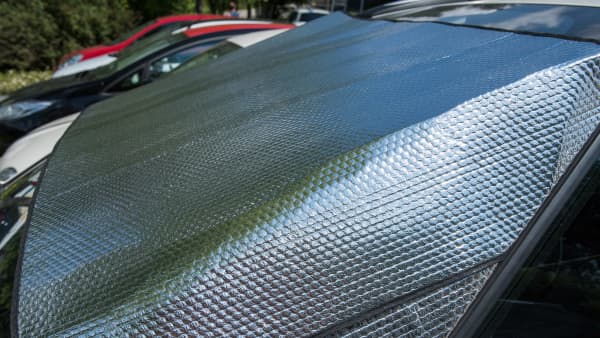
The second most effective option was the reflective film applied to the outside of the windshield. Unlike interior sunshades, this system reflects radiation before it passes through the glass, significantly reducing the heating of the passenger compartment. As a result, the interior temperature dropped to 45°C—8 degrees lower than in the unprotected vehicle.
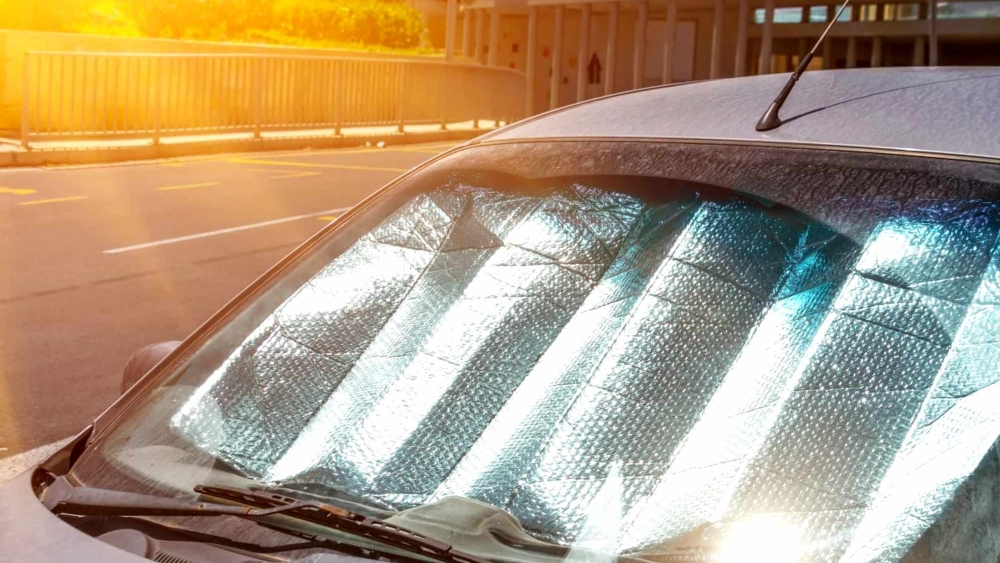
On the other hand, traditional sunshades installed on the inside of the windshield proved to be considerably less effective. Under optimal conditions, they reduced the temperature by just four degrees, bringing it down to 49 °C. The ADAC explains that their performance depends largely on whether they fit the windshield perfectly. If there are gaps on the sides, radiation can easily penetrate, and the protective effect is significantly reduced. In addition, a test was conducted in which a white cloth was placed on the dashboard—a simple measure that reduced the cabin temperature to 50°C, though it did protect that specific surface from extreme heat.
Tinted windows do not significantly reduce the air temperature, but they do offer important benefits for the surfaces. According to the study, the temperature variation inside the cabin was only two degrees, while the rear seats were up to nine degrees cooler than in a vehicle without tinted windows.
How quickly a car heats up.
Another aspect evaluated was how quickly a parked vehicle can reach excessive temperatures. According to tests conducted by the ADAC, the interior of a vehicle can reach temperatures above 50 °C after just thirty minutes of direct exposure to sunlight. After approximately one hour, the maximum temperature is reached. After about 90 minutes, the passenger compartment can reach 60 °C, even if the outside temperature is not excessively high.
The temperatures reached by certain surfaces are a major cause for concern. The steering wheel and dashboard can reach temperatures exceeding 70 ºC when the vehicle is parked in direct sunlight, which can cause skin burns upon contact with these surfaces. Therefore, the ADAC recommends always covering these components whenever possible, as any protective system significantly reduces their temperature. In its measurements, the steering wheel reached temperatures up to 26 degrees lower when a suitable sun protection system was used.
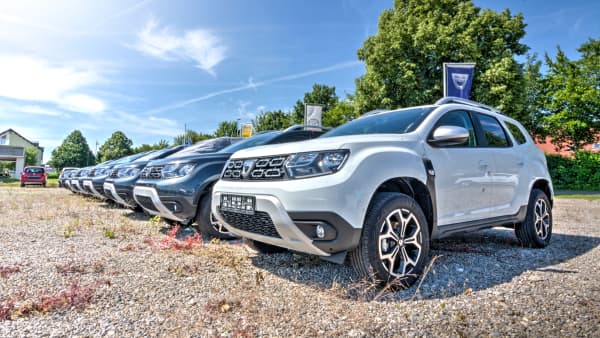
Finally, it is important to note that the color of the vehicle’s body significantly influences the temperature inside the vehicle. Although the difference in solar radiation absorption is not as significant as that observed between a cover or an exterior sunshade, light-colored vehicles absorb less solar radiation. In the tests, a white car recorded an interior temperature approximately five degrees lower than that of an identical car painted black, whose exterior surface reached up to 65 ºC compared to 44 ºC for the white car.