
Download the audio
Slide 1. Introduction.
The class develops how to detect whether an odometer has been tampered with, how to determine a car’s actual mileage, and the implications for fleet management.
Slide 2. How to detect whether an odometer has been tampered with.
- The main reasons for tampering with the odometer.
According to data from the European Parliament’s Committee on Transport and Tourism, 12% of odometers in the European Union may have been tampered with, although this percentage could reach 30% or even 50% in cross-border trade. The following are the reasons why odometers might be tampered with.
- To increase the selling price.
Vehicles with lower mileage tend to be sold at higher prices, since mileage is a key indicator of a vehicle’s overall wear and tear. By reducing the odometer reading, sellers aim to make a higher profit.
- To hide excessive use.
This practice is common with rental cars, as well as among professional drivers. Since some sellers may accumulate a significant number of miles in a short period of time, they may attempt to tamper with the mileage records.
- To avoid raising buyers’ suspicions.
It is understandable that vehicles with high mileage may be associated with greater wear and tear, costly repairs, and potential mechanical issues. By reducing the mileage, the seller aims to make the car appear more attractive and reliable at first glance.
- Effective methods for verifying mileage.
It is essential to know the vehicle’s actual mileage before purchasing it. Mileage has a direct impact on price, mechanical wear and tear, and short-term maintenance.
In Spain to detect possible tampering, it is necessary to perform a series of thorough checks, including reviewing the vehicle’s documentation, the report from the General Directorate of Traffic-DGT, the vehicle inspection history-MOT, associated invoices, electronic diagnostics, and the car’s physical condition. While no single method is foolproof, combining them significantly reduces the risk.
The first step is to request the full report from the DGT. This document may contain information relevant to the management of the vehicle, including the MOT history, recorded mileage, number of previous owners, loads, technical data, and administrative issues.
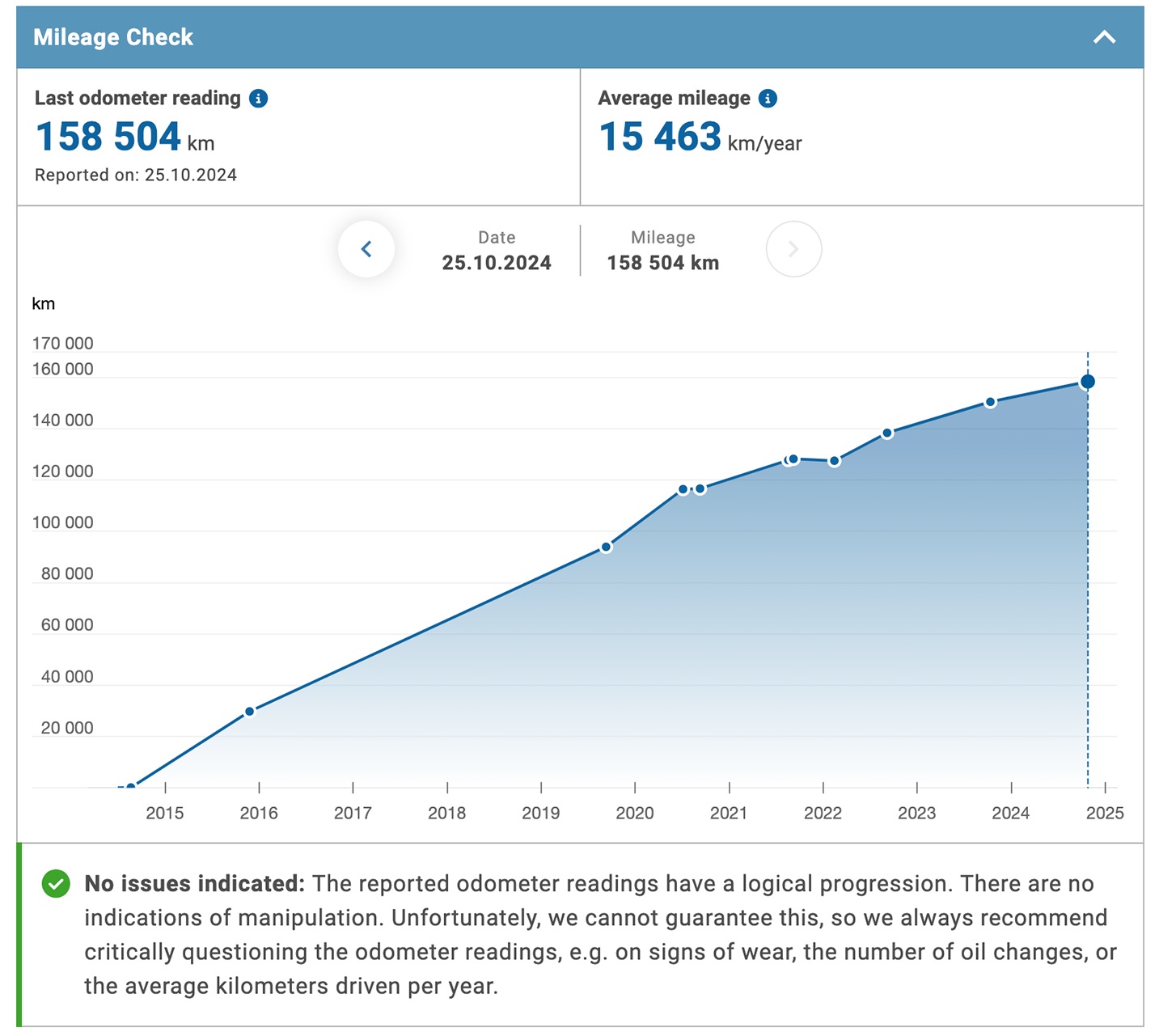
The mileage recorded during MOT inspections is extremely useful, as it allows you to track the vehicle’s evolution over time. If an inspection shows a higher mileage than the current reading, this could indicate tampering or a serious error.
Additionally, private reports such as Carfax or Carvertical can be helpful, especially for imported cars, leased vehicles, or vehicles with an international history. It is important to note that these assessments do not replace the official report, but they can provide supplementary data that is useful to the parties involved.
- Technical documentation and maintenance log.
The Technical Inspection Certificate must include the date of issuance, the designated inspection stations, and the recorded mileage. It is essential that the mileage figures show a logical and progressive increase over time.
The maintenance log is an essential element of fleet management. It is imperative that the document include the stamps, dates, mileage, and corresponding repair shops. It is highly recommended that the seller retain the invoices, as they are more difficult to forge than a standard stamp.
Request the invoices from the most recent repair shop and verify that the mileage is plausible.
Pay special attention to the absence of service records for several years, discrepancies in the mileage, or the appearance of recent duplicate documentation without a convincing explanation.
- The visual inspection: the car speaks volumes.
- The interior often reveals more than meets the eye.
A very shiny steering wheel, worn pedals, a polished gearshift knob, or a sagging seat can indicate heavy use.
It’s also a good idea to check the seat belts, buttons, floor mats, door handles, and climate control knobs. A car with 60,000 kilometers shouldn’t look like one with 200,000 kilometers.
- Steering wheel and gearshift knob.
If the seller claims the car has less than 80,000 kilometers, these parts should look almost new. Material that is excessively smooth, shiny, or worn indicates much heavier use.
- Brake and clutch pedals.
Check the rubber on the pedals. If the rubber is smooth or worn at the edges, the car has many more kilometers than the seller claims.
- Driver's seat.
Check for worn fabric, sagging foam, or loose seams.
- Exterior.
Check for cloudy headlights, repainted bumpers, loose parts, and wear on tires and brake rotors. No single sign confirms tampering, but several together warrant extreme caution.
- OBD electronic diagnostics: the hidden data.
In many modern cars, mileage is recorded in several control units. The dashboard may display one figure, but other modules may store different data.
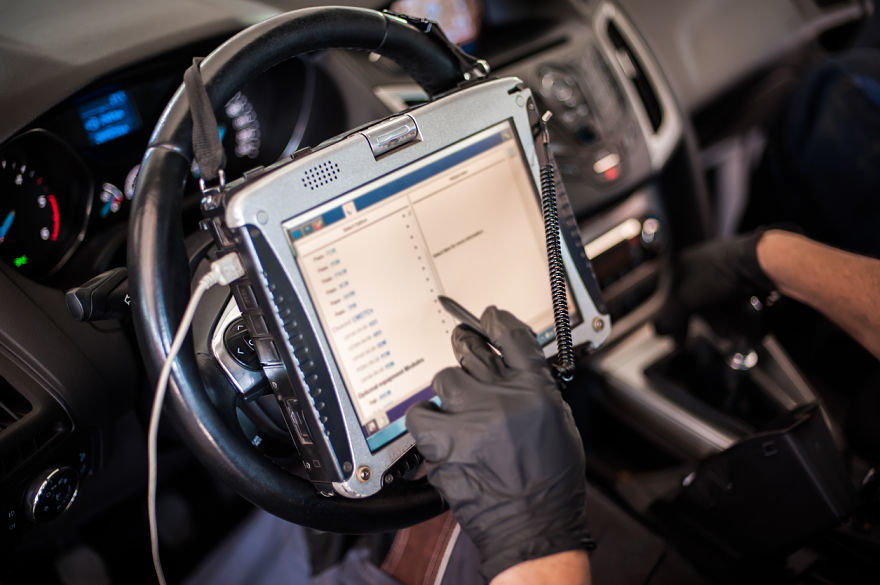
A specialized repair shop is equipped to perform an OBD diagnosis and conduct a thorough review of potential inconsistencies between the ECU, ABS, transmission, keys, or maintenance modules.
It is important to note that this review does not always reveal the exact mileage, but it can detect poorly executed tampering. It is especially recommended for high-end vehicles, imported cars, or those with an unusual mileage history.
- Mechanical condition and wear-and-tear components.
- Check the mechanical condition.
It is vitally important that the condition of mechanical components, such as the brakes, clutch, suspension, tires, and engine, is consistent with the advertised mileage. A vehicle with low mileage should not show visible signs of wear, such as heavily worn brake discs, worn-out silent blocks, or significant oil leaks.
- Listen to the engine when it’s cold.
Metallic noises, vibrations, smoke, or an irregular idle can indicate heavier use than stated.
- Check the frequency of oil changes.
Car manufacturers recommend changing the oil every 15,000 or 20,000 kilometers for today’s average cars.
Therefore, if the oil has been changed five times, the odometer should read approximately 100,000 kilometers.
- Check to see if the mechanical speedometer is damaged.
Some older cars that are still registered have mechanical speedometers. If this is the case, check the speedometer for scratches, as these could be a sign that the mileage has been tampered with.
- Before buying.
If you have any doubts, it’s worth paying for an independent inspection.
- Be wary of imported cars and deals that seem too good to be true.
While imported cars can be a good deal, it is advisable to conduct a thorough inspection before purchasing one. It is important to note that the vehicle’s foreign history is not always fully available in Spain.
If the seller does not provide the vehicle identification number (VIN), you should be wary. The same applies if the seller pressures you to close the deal quickly or avoids having the car inspected at a repair shop.
You should also check for any liens and verify the vehicle’s registration status.
- FAQs on how to determine a car’s actual mileage.
- Does the DGT report show the actual mileage?.
It shows the mileage recorded during the MOT inspection and other available data, but this alone does not guarantee that it is the actual mileage. You must cross-reference it with invoices, maintenance records, and mechanical inspection reports.
- Can tampering be detected through a diagnostic check?.
In many cases, the answer is yes, since mileage can be recorded in multiple control units. While not conclusive, it can help identify inconsistencies.
- What is the clearest sign that the odometer has been rolled back?.
That the DGT report or a previous MOT indicates a difference in mileage between the current odometer reading and the recorded one. Additionally, illogical gaps between inspections are observed, which raises doubts regarding the consistency and integrity of the process.
- Implications for fleet management.
The main consequence of buying a used vehicle with fewer miles than it actually has is that you end up paying a higher price and falling victim to a scam.
We recommend implementing the following measures.
- Conduct a background check on the vehicle.
Before purchasing the vehicle, request the DGT report, the vehicle’s documentation, the most recent MOT inspection, the last service or repair at the shop, and a report from a company such as Carfax, Carvertical, etc.
If the vehicle is part of a fleet, find out what service it has provided, how many drivers have used the vehicle, etc.
Do not make a down payment until you have verified the vehicle’s documentation and reports.
- Perform a visual and mechanical inspection of the vehicle.
Always inspect the vehicle: the steering wheel, seats, suspension, paint, etc. Do not purchase a vehicle without performing this inspection.
- Run a diagnostic check using the OBD port.
To verify that the mileage readings from the various control modules match and have not been tampered with.
- If you have already purchased the car and discover tampering.
Gather the necessary evidence, such as the report, the contract, the ads, the messages, the diagnostic results, and the invoices. Tampering with the odometer can lead to legal consequences and affects the vehicle’s actual value.
It is also recommended that you review the sales contract and file a complaint.
Commercial transactions with professionals or companies have stronger protective measures compared to transactions with private individuals.
- Imported vehicles.
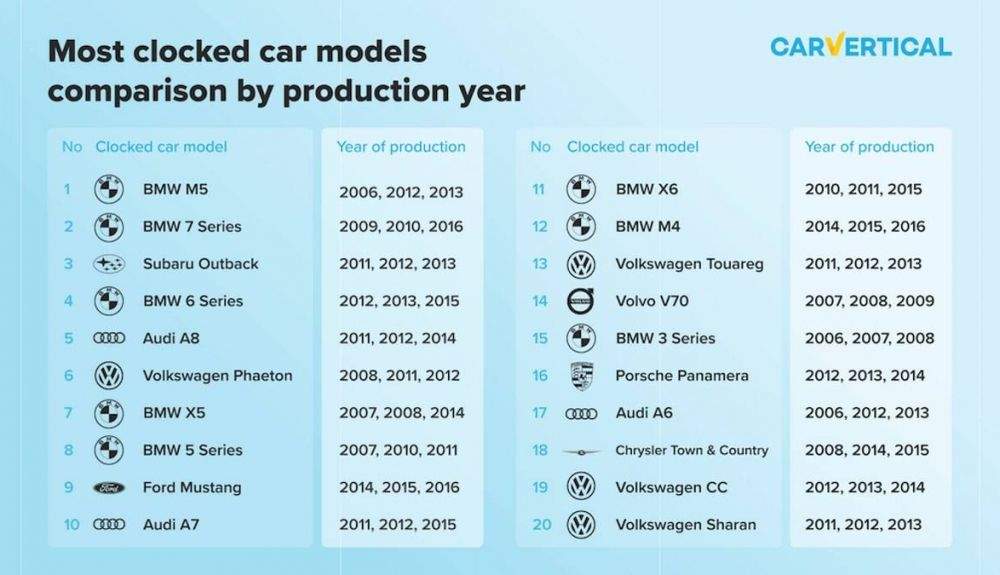
These are the vehicles most likely to have their odometer readings tampered with, so you need to be very cautious and careful with them.
- Request a vehicle condition report.
If you have any doubts, you can ask a company to perform a more thorough inspection of the vehicle; there are companies that specialize in fleet vehicles.
- Do not purchase the vehicle.
If you have doubts about purchasing the vehicle because you suspect the mileage has been tampered with, do not purchase the vehicle.
- Slide 3. Thank you for your time.
The class has developed how to detect whether an odometer has been tampered with, how to determine a car’s actual mileage, and the implications for fleet management, see you soon.