
Download the audio
Slide 1. Introduction.
The class develops the risks of removing the airbag, why it should not be tampered with, what risks are involved, when to visit a repair shop, how it affects the vehicle inspection-MOT, and the implications for fleet management.
Slide 2. The risks of removing the airbag.
- What the steering wheel airbag is and what it is used for.
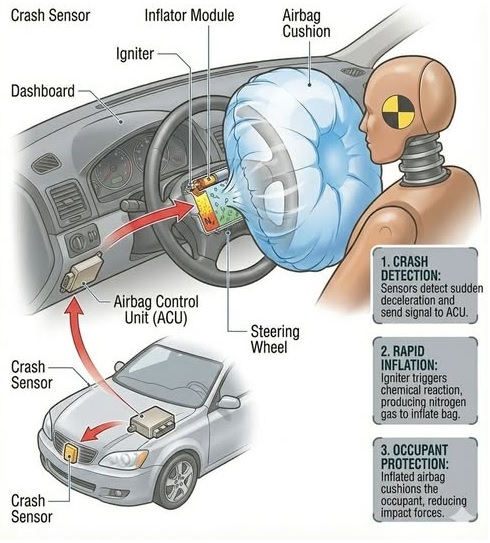
The steering wheel airbag safety system corresponds to the driver’s front airbag. Its function is to deploy in a fraction of a second when a collision occurs that is strong enough to reduce the impact of the head and torso against the steering wheel.
It does not replace the conventional seat belt. Both systems work together: the seat belt provides a restraining function for the occupant’s body, while the airbag system is designed to effectively absorb the impact. If either component fails, protection will be significantly reduced.
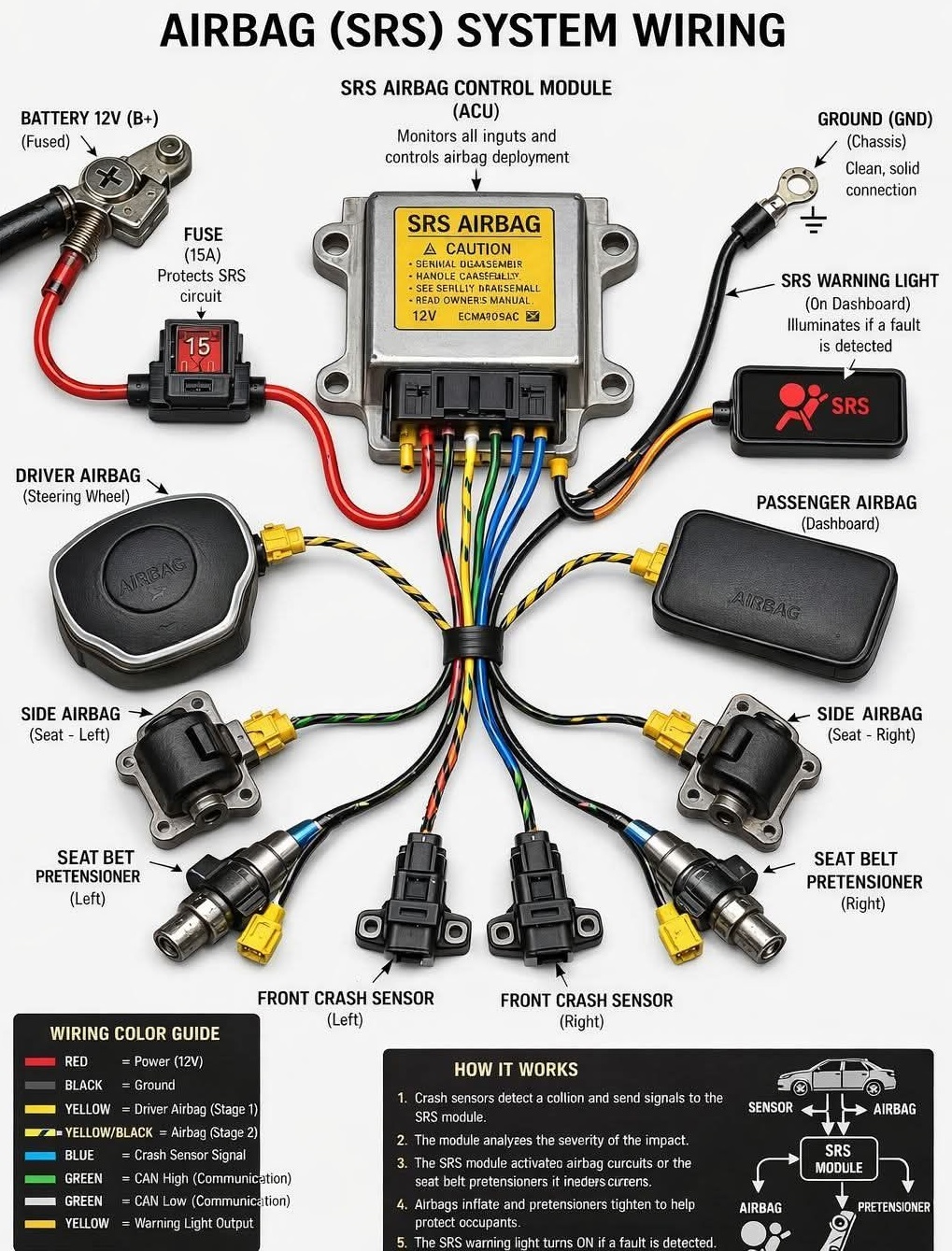
The module is strategically located in the center of the steering wheel, sharing space with the horn. Additionally, it is connected to the vehicle’s SRS system, which includes impact sensors, a control unit, seatbelt pretensioners, warning lights, and specific wiring. It is a safety component that can make all the difference in the event of an accident.
Although there are online tutorials promising a quick fix, it is important to note that the driver’s airbag system is equipped with a pyrotechnic module and is connected to sensors, a control unit, wiring, the steering wheel, the horn, and dashboard warning lights. Therefore, you should consult a qualified professional who follows the manufacturer’s procedure and uses the appropriate tools. Passive safety systems, such as airbags, are critical components of vehicle safety.
- Why you should not remove the steering wheel airbag on your own.
Improper handling of the airbag, especially without proper training, can result in serious injury. The primary risk identified is accidental deployment during removal. However, this is not the only potential risk.
Additionally, damage may occur to the connectors, the steering wheel reel, the horn wiring, or the SRS system control module. Any malfunction in these components can cause the airbag warning light to come on or, more seriously, compromise the system’s proper operation in the event of an accident.
Furthermore, it is important to note that a poorly installed airbag may not deploy correctly. It is important to note that, on occasion, the system may be misaligned or exhibit intermittent faults that may go unnoticed without a proper diagnostic evaluation.
In modern vehicles, the steering wheel incorporates a variety of functions, including cruise control, lane-keeping assist, phone controls, volume adjustment, paddle shifters, and digital instrument cluster functions. It is important to note that an error during disassembly can affect multiple systems simultaneously. Even seemingly simple components, such as the vehicle’s interior rearview mirror, play a crucial role in the safety of the driver and passengers.
- Major risks when handling an airbag.
- The most obvious risk is accidental deployment.
The passive safety system known as an “airbag” deploys with great speed and force. If the person is leaning over the steering wheel, there is a risk of injury to the face, neck, arms, or hands.
-
- Electrical hazard.
The system is capable of retaining residual energy even when the vehicle is stationary. For this reason, manufacturers establish specific procedures to be followed before performing any work on the vehicle.
-
- Improper airbag installation.
An incorrectly positioned connector, a pinched wire, or a poorly seated module can cause failures in the SRS system. Sometimes, the problem can be detected by checking the airbag warning light. In other cases, identifying the problem requires a professional evaluation.
-
- Legal and insurance risk.
In the unfortunate event that the vehicle has been improperly modified and is involved in an accident, complications may arise during the claims assessment process. The airbag system is an essential component of the vehicle’s certification and an integral part of its safety systems.
Recall campaigns related to defective airbags highlight the vulnerability of this component. In Spain, the Directorate General of Traffic (DGT) has issued a warning regarding more than 62,000 vehicles that require urgent inspection due to potential faults related to their airbag systems.
- When it may be necessary to remove the steering wheel airbag.
In certain circumstances, it may be necessary to remove the steering wheel airbag; this must be performed by a professional.
-
- During the steering wheel replacement process.
Repairing the horn, replacing the airbag reel or ring, working on the steering wheel controls, investigating an SRS system malfunction, or repairing damage sustained in an accident.
-
- If the vehicle is subject to an official recall.
In recent years, there have been reports of incidents related to airbags from various manufacturers, primarily due to issues associated with the airbag manufacturer Takata.
In such circumstances, it is advisable to contact the manufacturer or an authorized service center. If it is an official recall, the repair may be carried out at no cost to the owner, depending on the analysis of each case.
- What happens if the airbag warning light comes on?.
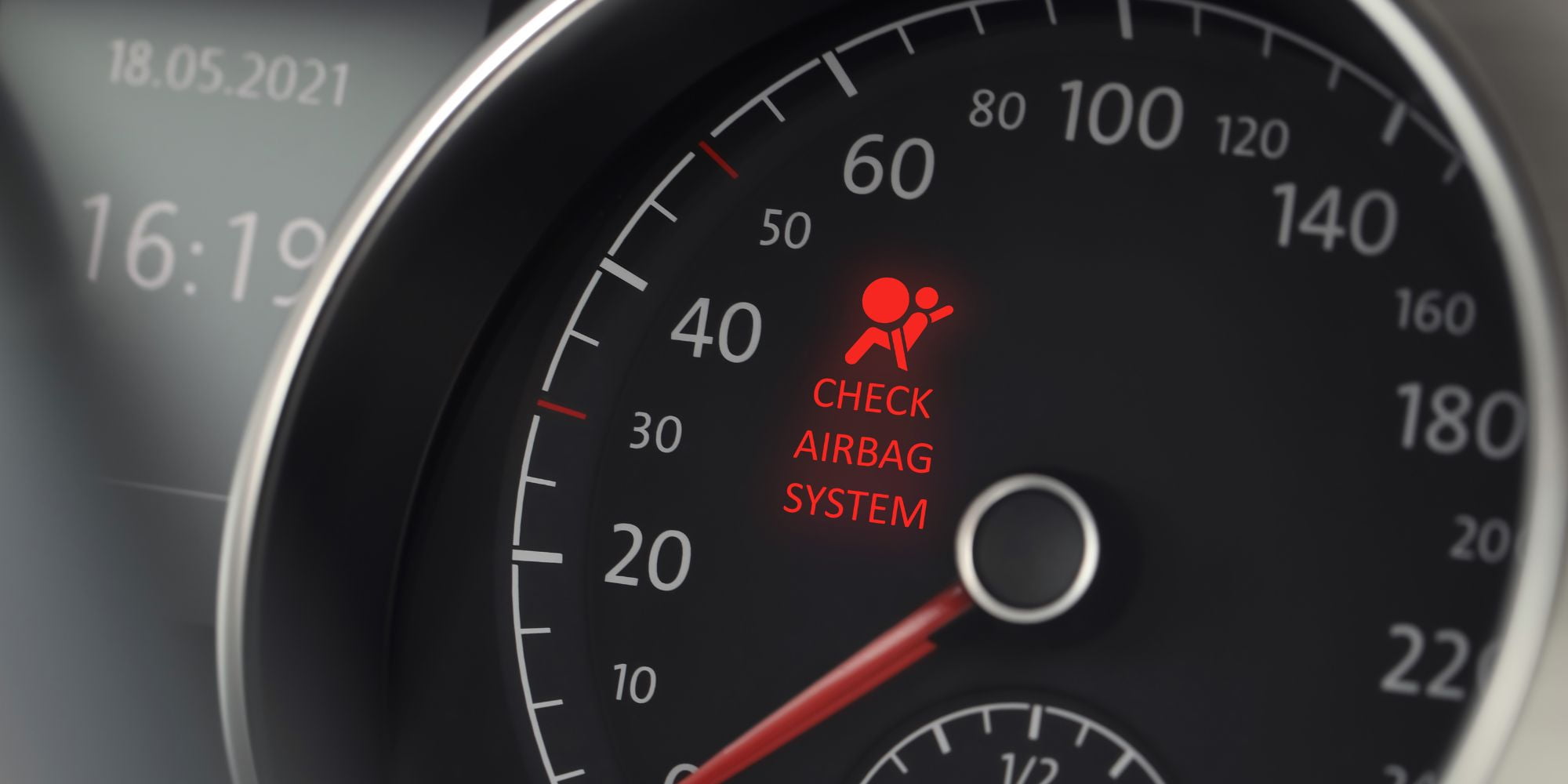
A lit airbag warning light indicates that the system has detected a malfunction. The cause of the problem may lie in a connector, the steering wheel reel, a sensor, the SRS control unit, a seatbelt pretensioner, or the airbag module itself.
Therefore, it is recommended that you refrain from clearing the warning without first addressing and resolving the root cause of the problem. Clearing the warning using a diagnostic scanner without resolving the underlying issue merely hides the problem temporarily. If the error persists, the system could become deactivated or malfunction.
It is important to note that the status of the airbag system has a direct impact on the MOT evaluation. If the warning light remains on continuously or does not illuminate upon startup as it should, this is considered a serious defect and the inspection will result in a failure.
It is important to note that the airbag system must not be tampered with in order to “fool” the inspection. If the warning light is on, it is imperative to perform an accurate diagnosis and proceed with the necessary repairs.
- Removing the steering wheel airbag and the vehicle inspection-MOT.
The MOT does not remove the airbag, but it does check the warning light and the system’s apparent operation. If a visible anomaly is detected, the result may be unfavorable.
Any replacement of the steering wheel with a non-approved model, deactivation of the airbag, tampering with the cover, or failure to follow the normal sequence of the warning light can cause problems. For vehicles equipped with standard airbags, the removal or replacement of this safety system with a steering wheel without an airbag should not be considered a minor modification.
It is also important to note that this issue may have implications for safety and insurance coverage. Indeed, if the vehicle is driven with a modified restraint system, not only is occupant protection compromised, but there may also be consequences in the event of an accident.
To prepare for the inspection, it is recommended to conduct a thorough check of the lighting systems, tires, brakes, seat belts, and dashboard warning lights.
- How much can an airbag-related repair cost?.
The cost of the repair can vary significantly depending on the type of malfunction. It is important to note that there are significant differences between replacing a connector, repairing wiring, replacing the steering wheel reel, or installing a new airbag module.
In some cases, a diagnosis and a simple repair can be relatively affordable. In others, if a module, control unit, or pretensioners need to be replaced, the cost of the repair can increase significantly.
Likewise, the vehicle model is a determining factor. In modern vehicles, steering wheels incorporate more electronics and controls, which can increase the cost of parts and labor.
If the problem stems from an official recall, it is recommended to consult the manufacturer. If a recall is issued, the repair will be carried out in accordance with the procedure established by the manufacturer. Before purchasing a used vehicle, it is strongly recommended to review the maintenance history and check for any pending recalls.
- Safe alternatives to Do It Yourself disassembly.
If the horn is malfunctioning, it is recommended that you visit a specialized repair shop to have a thorough inspection of the fuses, controls, wiring, and steering wheel housing.
If the issue is cosmetic, such as a scratched cover or a worn steering wheel, professional upholstery solutions are available that do not require unsupervised tampering with the airbag module.
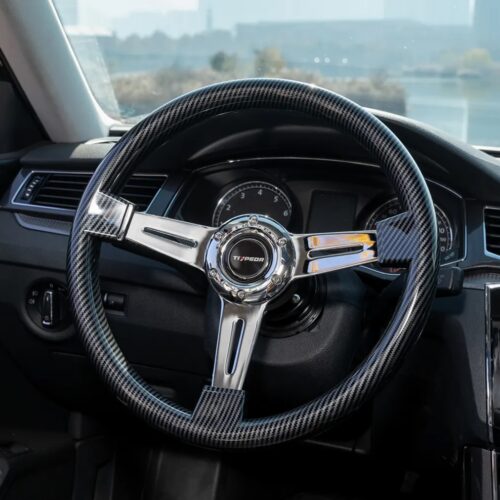
If the goal is to replace the steering wheel with a sport model, it is imperative to ensure the part’s compatibility, as well as its certification and suitability for maintaining safety systems. It is important to note that not all steering wheels available on the market comply with legal regulations for road use.
If the vehicle has been involved in a collision, it is imperative to refrain from reusing the airbag or installing parts of unknown origin. It is important to note that counterfeit or improperly repaired airbags may fail to deploy in the event of an accident.
- This must be inspected by a professional repair shop.
A specialized repair shop does not simply replace the airbag. To proceed properly, it is essential to perform a diagnosis of the SRS system. Subsequently, error codes must be checked, connectors inspected, the steering wheel reel verified, and the warning light confirmed to be functioning correctly.
Likewise, it is essential to follow the manufacturer’s procedure for disconnection, waiting times, handling, module storage, and final assembly. Once the repair is complete, the system is checked for errors and put back into operation.
If the repair is performed correctly, the driver should not notice anything out of the ordinary: the horn should work properly, the steering wheel controls should also function correctly, the airbag warning light should turn off after startup, and no warnings should appear on the instrument panel.
- Faqs about removing the steering wheel airbag.
- Can I remove the steering wheel airbag at home?.
This is not recommended. The airbag system includes a pyrotechnic mechanism and is a passive safety feature of the vehicle. Improper handling can cause injury or prevent the system from functioning properly.
-
- Can I pass the vehicle inspection-MOT with the airbag warning light on?.
No. If the airbag warning light remains on or does not follow its normal sequence when the engine is started, this will be considered a serious defect and the vehicle inspection-MOT will be failed.
-
- Why might the steering wheel airbag fail?.
Possible causes of this problem include a faulty connector, an issue with the steering wheel reel, a malfunctioning sensor, a faulty SRS control module, a damaged seatbelt pretensioner, or a previous improper modification.
-
- Is it legal to replace the steering wheel with one that does not have an airbag?.
In a car equipped with an airbag as standard, removing it can lead to issues with vehicle certification, safety, and the annual vehicle inspection-MOT. It is essential to consult a specialized repair shop before proceeding with any modifications to the steering wheel to verify their legal feasibility.
- Implications for fleet management.
The consequences of improper handling of the airbag are entirely negative, ranging from causing injury to the driver to rendering the system inoperable.
We recommend implementing the following measures.
-
- Qualified personnel.
Airbag repair and inspection must be performed by qualified personnel; this can be done at our workshop by our mechanics or at an external workshop, but it must never be performed by the driver or any other person.
-
- Driver training.
Drivers must be trained not to tamper with the airbag, and if they detect any problem with the airbag, they must report it to the workshop manager or fleet manager.
-
- Airbag Maintenance.
Airbag maintenance must be performed according to the vehicle manufacturer’s instructions and within the specified time frame.
-
- Premium replacement parts.
Always use premium-brand airbag replacement parts; safety comes first, do not use airbags of dubious origin or quality.
-
- Vehicle manufacturer recall campaigns.
If there is a vehicle manufacturer recall involving the airbag, you should always take the vehicle to an authorized service center for that make.
-
- Purchasing used vehicles.
Check the maintenance history and any pending airbag recalls.
-
- Insurance.
If the airbag has been tampered with and the vehicle is involved in an accident, issues may arise during an insurance claim assessment. The airbag is part of the vehicle’s certification and safety systems, and the insurance company may refuse to pay compensation.
Slide 3. Thank you for your time.
The class has developed the risks of removing the airbag, why it should not be tampered with, what risks are involved, when to visit a repair shop, how it affects the vehicle inspection-MOT, and the implications for fleet management, see you soon.