

China has built its first highway using a fleet of pavers and compactors guided by artificial intelligence
The process of building a highway begins with earthworks. To create the cuts and embankments necessary for a safe and uniform alignment, heavy machinery—such as excavators, bulldozers, and trucks—is used to shape the terrain. Simultaneously, drainage works are carried out to prevent water accumulation, and essential structures are built—including overpasses, viaducts, tunnels, and other engineering structures—to ensure the continuity of existing roads, rivers, and utility networks.
Once the roadbed is established, work focuses on the pavement structure, designed to withstand high traffic volumes for decades. Successive layers of granular materials and bituminous or concrete mixtures are spread over the compacted ground using specialized machinery, with quality strictly monitored through rigorous testing.
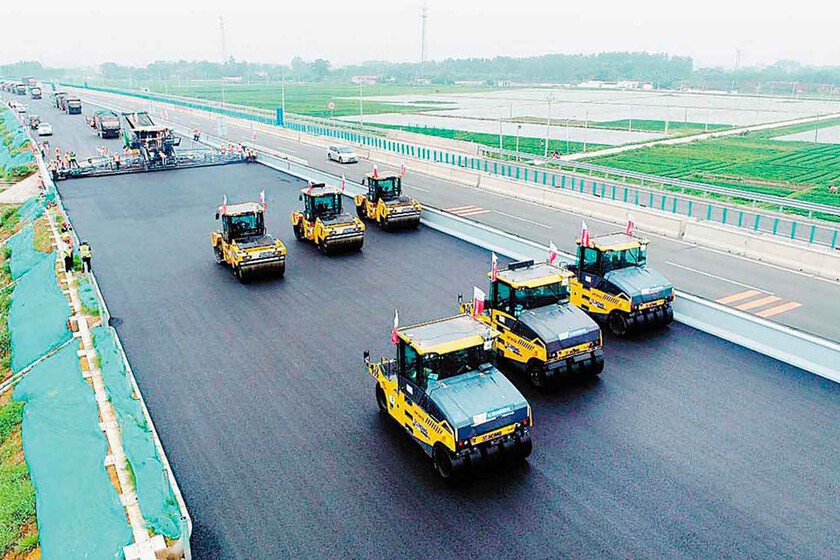
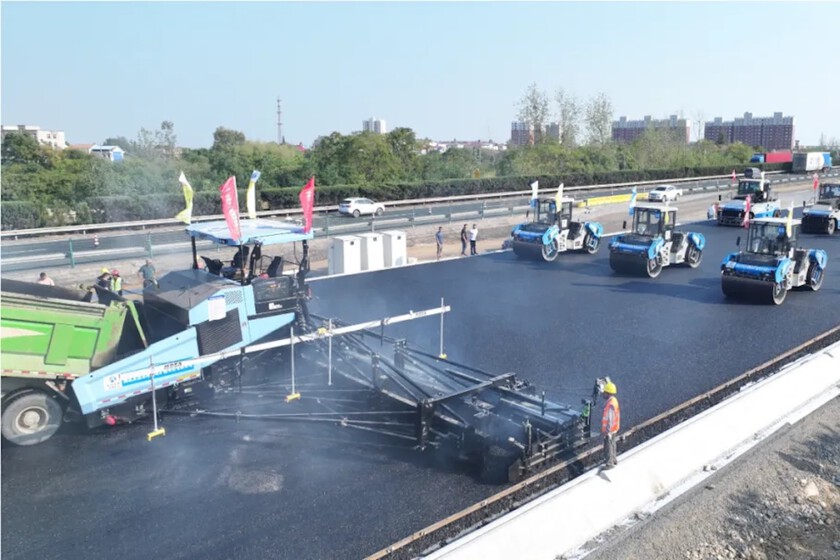
A fleet of autonomous road construction machines.
The road construction sector is undergoing a significant transformation driven by the adoption of advanced technologies such as automation, comprehensive data analysis, and the intelligent integration of machinery. The integration of advanced sensors, artificial intelligence, digital twins, 5G networks, and autonomous equipment forms the foundation of a technological ecosystem aiming to transform a sector that has traditionally been labor-intensive.
This shift is not merely theoretical; concrete projects implemented in various countries demonstrate the scope of automation in linear infrastructure works.
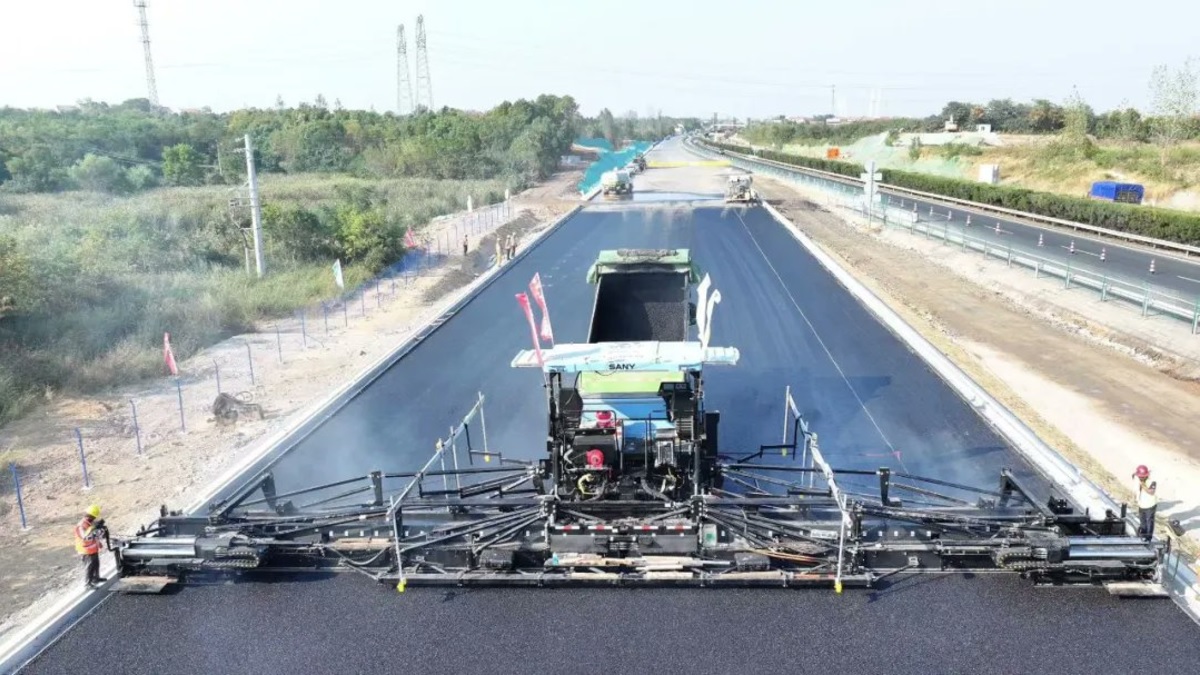
A notable example occurred in 2024, when China renovated approximately 160 kilometers of the highway connecting Beijing and Macau without any human operators present at the work site. A fleet of autonomous pavers and compactors—guided by satellite systems and supervised by drones—carried out paving tasks in a coordinated manner, marking what was presented as the first fully automated operation of its kind. In October, a significant breakthrough occurred in North America when a 10-kilometer stretch of the Trans-Canada Highway was repaved using an automated paver. This project represents an unprecedented innovation for the region.
Could Europe build—and maintain—its roads this way?.
These examples raise the question of whether a similar rollout is feasible in Spain. The industry’s answer is unequivocal: the technology is available. The country possesses smart machinery, advanced sensor technology, BIM and GIS systems, artificial intelligence, 5G connectivity, and digital models that enable real-time simulation and project management.
However, the main obstacle is not technical in nature. The European regulatory framework—which sets stricter safety and liability standards—restricts the use of fully autonomous machinery in open environments. Added to this are a lack of interoperability among manufacturers, construction firms, and public authorities (which do not always use common standards) and project fragmentation, which hinders the achievement of economies of scale.
Major construction companies share this assessment. From an operational standpoint, the level of automation is steadily increasing. The digitalization process begins with the implementation of an infrastructure comprising sensors and intensive data usage; this data feeds artificial intelligence models, enabling the creation of digital twins for both the infrastructure and traffic flows. The immediate goal is predictive maintenance, capable of anticipating deterioration and optimizing interventions.
The progress achieved is evident and measurable. Trials are currently underway with autonomous robots designed to repair potholes—such as the European Heron project implemented on the A-2 highway. Additionally, automation systems for earthmoving and assisted compaction are being developed. Drones have become a standard tool for monitoring construction sites, and some companies are testing autonomous electric trucks and machinery guided by 2D and 3D systems.
Furthermore, the use of ground-based robots for inspection and site layout is being evaluated; these have already been deployed at major facilities like Heathrow and Madrid-Barajas airports. However, the comprehensive coordination of fully autonomous fleets—such as the systems demonstrated in China—cannot yet be replicated due to the lack of common standards and specific regulations.
For the time being, the European approach is being implemented gradually. Rather than pursuing full autonomy, the primary objective is to improve specific outcomes—such as reducing workplace accidents, optimizing project timelines, and lowering emissions—without compromising operational reliability or safety.
In the medium term, experts anticipate a phased rollout across specific sectors and specialized tasks before moving toward continuous, large-scale operations. Research programs such as Beeyonders, funded by Horizon Europe, point in this direction and confirm that advanced automation is no longer merely an experimental scenario.
For this model to advance, the sector is calling for a framework that fosters trust among public authorities, companies, and research centers, with the aim of launching pilot projects and—based on the results—adapting relevant regulations. It will be necessary to revise technical specifications, quality control systems, health and safety protocols, and civil liability frameworks regarding potential autonomous system failures, as well as to regulate the coordinated use of drones and machinery in open spaces.
This transformation will also impact construction site supervision. Intensive on-site inspection will gradually give way to a system of continuous real-time monitoring, digital traceability of execution, and automated control of tolerances and compaction, all supported by digital twins.
In this context, the challenge lies not merely in integrating specific technologies, but in implementing digital logic across every stage of the infrastructure lifecycle. Partial automation is an undeniable reality. Progress toward building virtually autonomous roads will depend less on new technical breakthroughs and more on regulatory, organizational, and cultural changes that enable the sector to operate on a different scale.