Chery Group’s solid-state batteries promise 600 Wh/kg per cell and a 1,500 km range
The race to implement solid-state batteries in the electric vehicle sector has seen significant progress in China. Chery has announced that it will begin real-world testing of vehicles equipped with this technology in 2027. This information was provided by the company's chairman, Yin Tongyue, during the 2026 World Battery Conference held on September 3 in Yibin, Sichuan Province.
The Chinese manufacturer is not referring merely to laboratory prototypes. Chery has achieved an energy density of 400 Wh/kg and is currently developing cells reaching up to 600 Wh/kg, allowing it to claim that a future electric car could achieve a range of up to 1,500 kilometers. To carry out this project, the company has announced an investment of 10 billion yuan—equivalent to approximately 1.2 billion euros at current exchange rates. This budget will be allocated to the development of solid-state batteries.
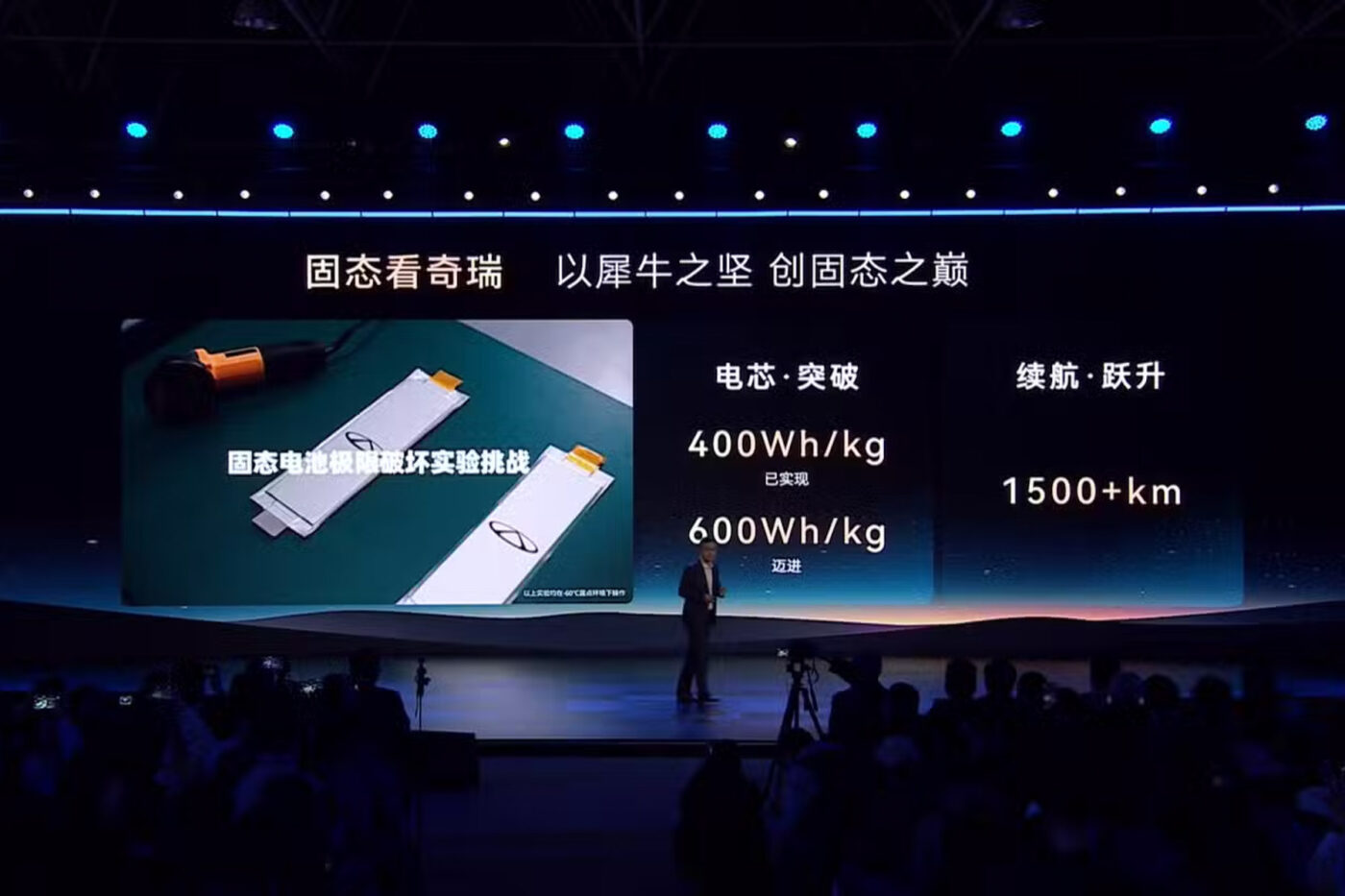
From 400 to 600 Wh/kg and up to 1,500 km of range.
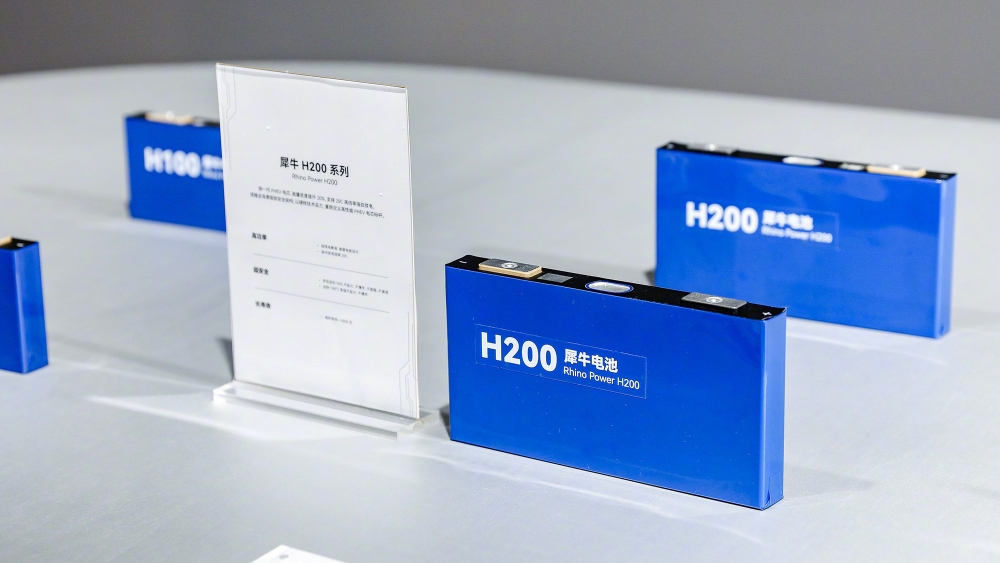
Last March, Chery unveiled its "Rhino S" family of solid-state batteries. This new generation comprises various cells with energy densities ranging from 400 to 600 Wh/kg—figures significantly higher than those found in the mass-produced batteries currently used in electric cars.
Chery has reached a significant milestone, with Yin Tongyue confirming the achievement of an impressive 400 Wh/kg performance level. The company maintains that the further development of this technology will enable the production of electric cars with a range of up to 1,500 kilometers per charge. However, it is crucial to interpret this figure accurately: it represents the target announced by Chery for vehicles equipped with its future batteries, not a certified range or one currently achieved by a production vehicle.
Safety stands out as a paramount consideration before these batteries are introduced to the market. Yin Tongyue has stated that Chery will not incorporate any technological solution into its vehicles unless it meets adequate safety standards—a criterion the company will also apply to this new generation of batteries.
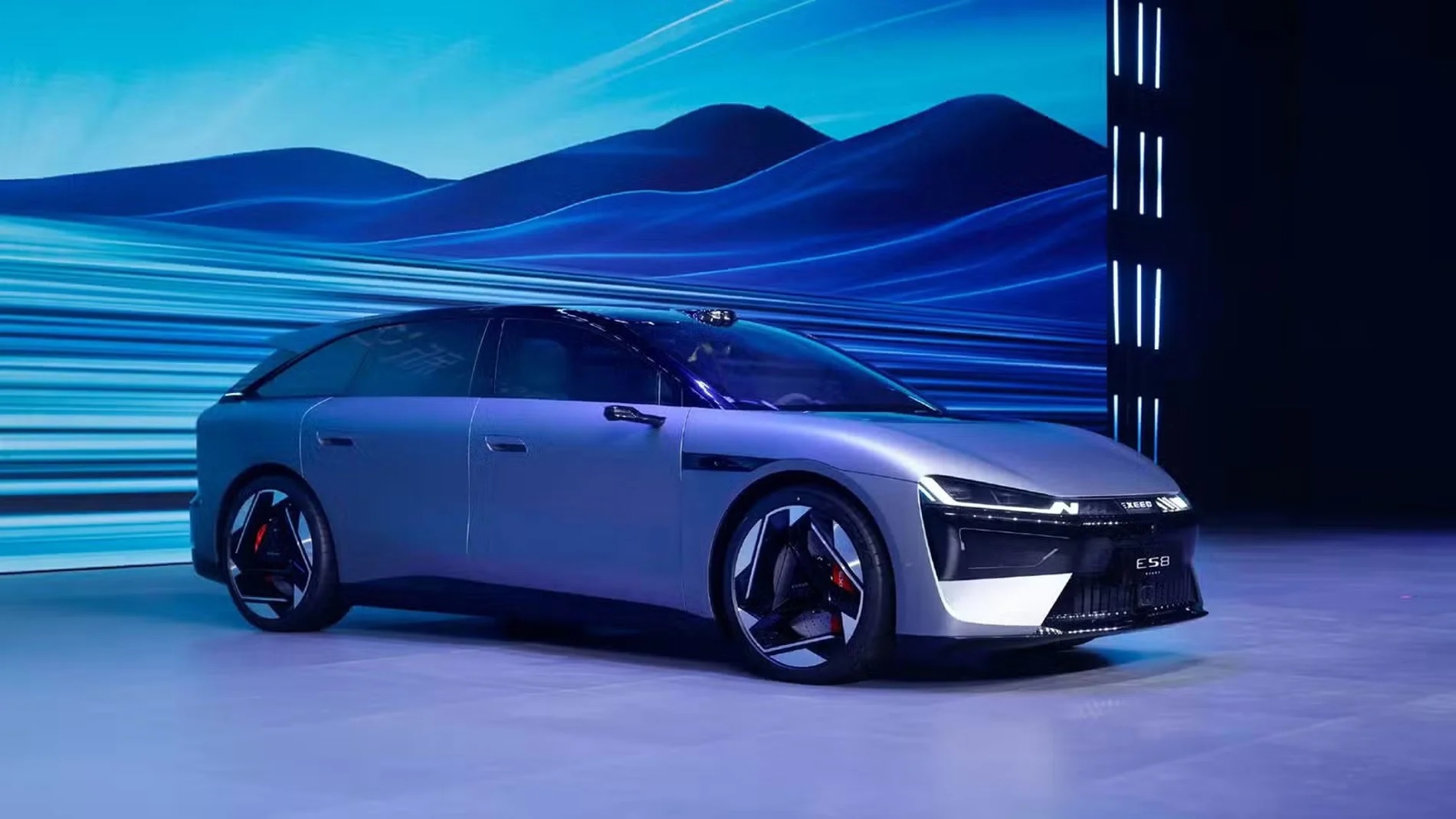
The Exeed ES8 will be the vehicle used to test them.
The first vehicle to feature these batteries will be the Exeed ES8, a new electric family vehicle from one of the brands represented by Chery. The vehicle was first unveiled in December 2025 and will be used to begin validating solid-state batteries under real-world conditions in 2027. However, an intermediate step will take place first. During the fourth quarter of 2026, Chery will begin implementing "Rhino" semi-solid (solid-liquid) batteries in vehicles, representing a technological evolution toward fully solid-state cells.
The group includes Anwa New Energy Technology, a company linked to Chery and also backed by Gotion High-Tech, a battery manufacturer closely associated with Volkswagen. Anwa has begun trial production of engineering samples of its own solid-state cells.
An investment of 1.2 billion euros.
Anwa’s facility is designed to reach an annual capacity of 1.25 GWh, and the company plans to start mass production of batteries with an energy density of 500 Wh/kg in 2027. Meanwhile, Chery has announced an investment of 10 billion yuan—equivalent to approximately 1.2 billion euros—in the development of this technology.
The year 2027 is shaping up to be a pivotal year for solid-state battery development in China. To provide a complete picture, it is worth noting that CATL, BYD, Geely, Gotion High-Tech, Farasis Energy, and CALB have also announced plans for pilot production or real-world testing of this technology during that year. The stature of some of these names highlights the significance of the race. CATL currently holds a 42.9% share of the Chinese electric vehicle battery market, while BYD ranks second with 19.5%. The remaining manufacturers each hold market shares of less than 10%.