
What the Twin Dosing emissions control system is and how it works.
Twin dosing is an emissions control system for diesel engines that uses two SCR catalysts and a dual AdBlue dosing system to more effectively reduce nitrogen oxide (NOx) emissions. This technology has gained popularity in Volkswagen Group models, with Audi leading the way in its implementation. The goal is clear: to maintain precise control of emissions under real-world driving conditions and across a wider range of temperatures.
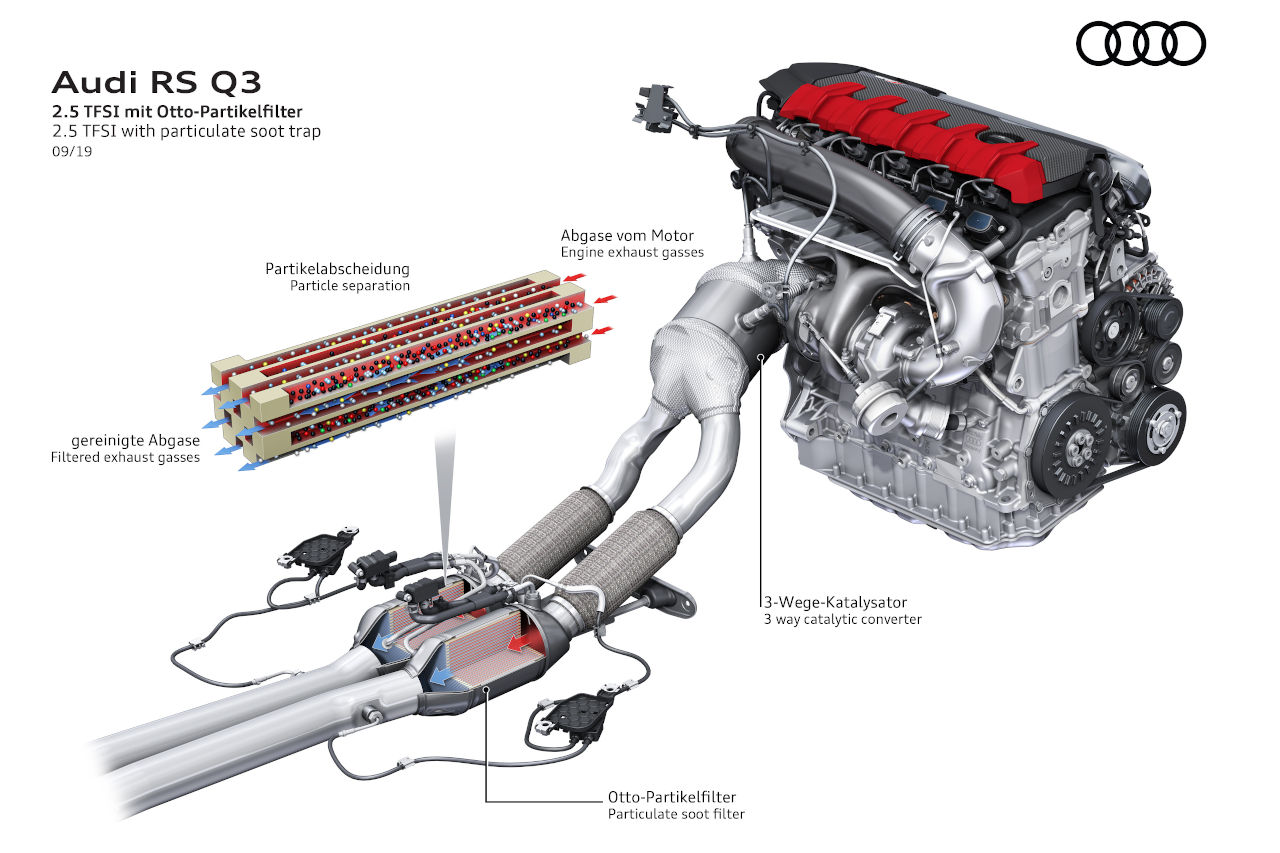
Although the term may sound technical, the underlying concept is quite straightforward. Today’s diesel vehicles require the installation of various components to comply with current regulations, with exhaust gas treatment being one of the most critical aspects. Twin dosing optimizes the process by not relying on a single operating point for NOx neutralization. If you’d like to learn more, below you can review how a vehicle’s exhaust system works and the reasons why it has become more complex in today’s diesel models.
What is twin dosing, and what is its purpose?
Twin dosing represents an evolution of the SCR system, which stands for selective catalytic reduction. In a conventional diesel vehicle with SCR, the vehicle injects AdBlue into the exhaust gases to convert some of the nitrogen oxides into nitrogen and water vapor. It is important to note that the effectiveness of this process is highly dependent on the temperature of the exhaust gases and the engine’s operating conditions.
The twin dosing system incorporates a second AdBlue injection point and a second SCR catalyst. This allows the vehicle to operate optimally in a variety of conditions: cold starts, city driving, slow-moving traffic, highway driving, or periods of higher engine load. The system expands the temperature range within which the emissions control treatment is effective, which represents a clear advantage.
Therefore, this is not merely a marketing gimmick, but a solution designed to meet the most stringent emissions regulations and to reduce NOx under real-world driving conditions. In fact, this technology is closely linked to the evolution of Euro 6d diesel engines. If you would like more information on the role of the additive used, below you will find a guide that addresses common issues associated with AdBlue, as well as preventive measures to address them.
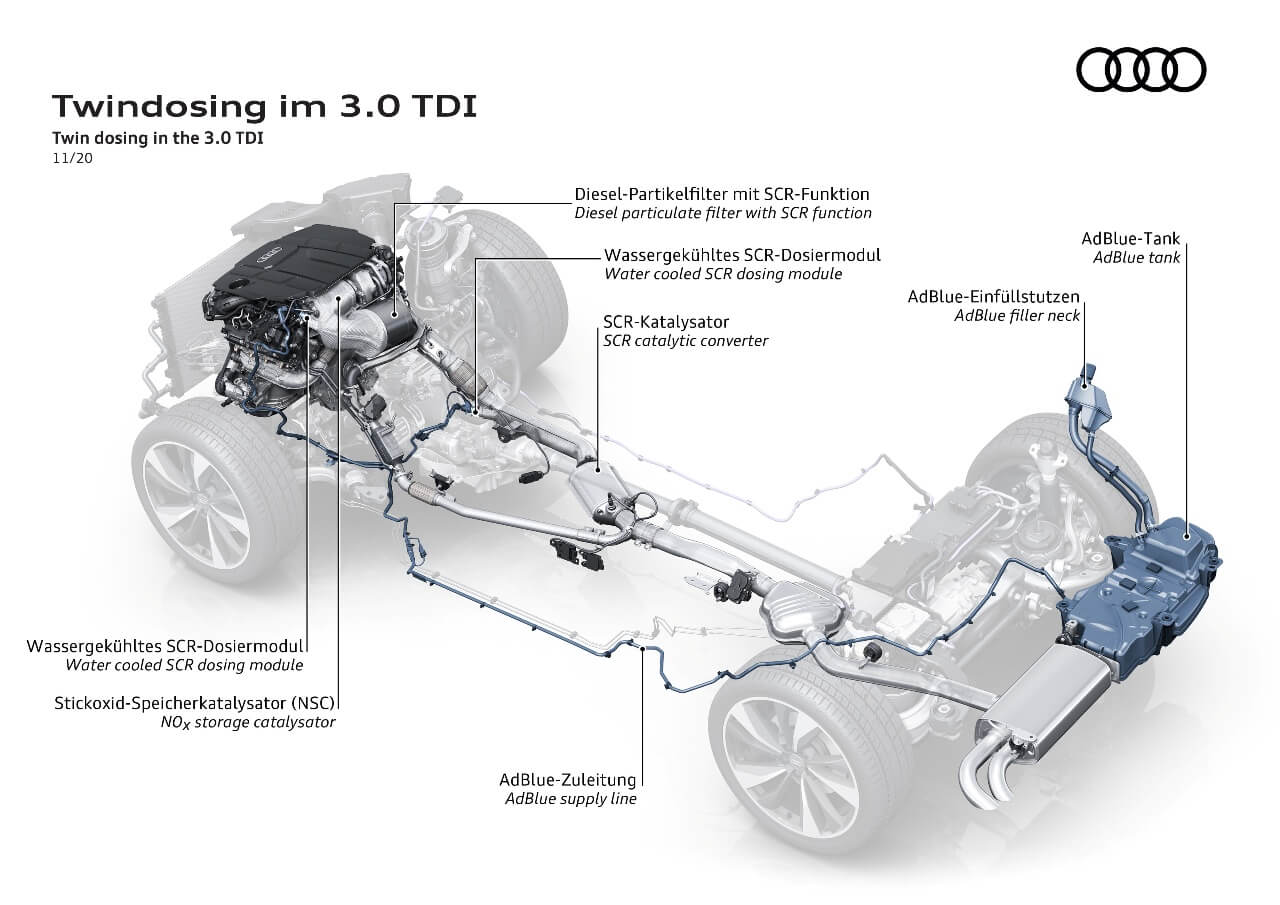
How Twin Dosing Works in a Diesel Vehicle.
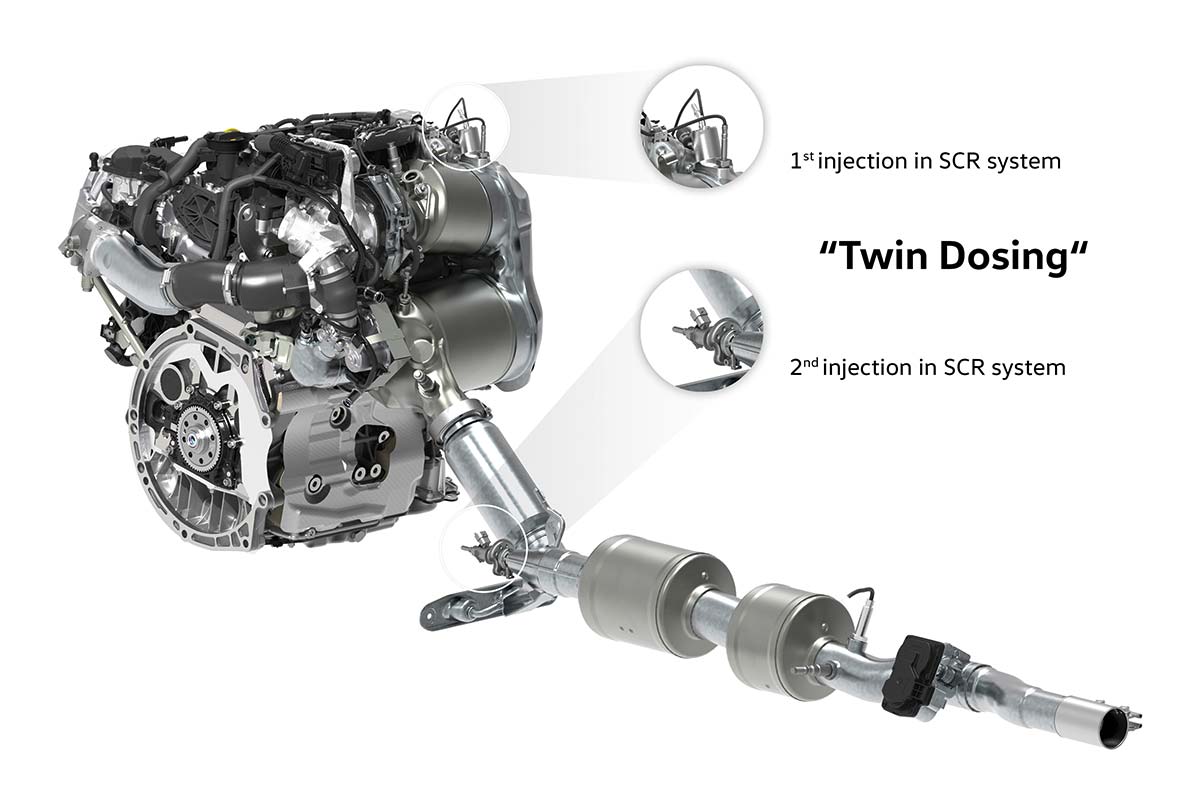
The system is based on distributing exhaust gas treatment across two distinct zones of the exhaust system. The first SCR catalyst is located near the engine, where the exhaust gas temperature is highest. This strategic positioning allows for rapid response in various urban driving situations or during start-up, when the system needs to engage immediately.
The second SCR catalyst is located at the bottom of the vehicle, a considerable distance from the engine. By operating in a different temperature zone, the system demonstrates greater adaptability to variations in load conditions and exhaust temperature. This second stage ensures the continuity and effectiveness of NOx treatment, even when the first stage is no longer operating at its optimal point.
In practice, the vehicle injects AdBlue at two different times and at two different points in the exhaust system. This optimizes resource use and maximizes efficiency in the distribution of work by taking advantage of the different operating temperatures. Audi explained that this solution can achieve over 90% conversion of nitrogen oxides across a wide range of operating conditions, which helps explain why twin dosing has been so important in the latest generation of TDI engines. To properly contextualize the topic, it is also essential to highlight the differences between HDi and TDI engines in terms of the technical evolution of diesel technology.
Twin dosing does not entirely alter the logic of the SCR system; rather, it enhances it by incorporating a second stage, designed to more precisely accommodate actual driving conditions. In everyday driving, this aspect is of utmost importance, as exhaust gases do not constantly operate at the same temperature or under the same load.
What are the advantages of twin dosing?.
The first advantage is a more consistent reduction in nitrogen oxides (NOx). This is the main reason why this system has gained prominence in modern diesel engines. By having two treatment zones, the vehicle can maintain more stable emissions control performance when driving conditions change.
The second advantage lies in meeting stricter emissions standards without sacrificing diesel as an efficient solution for long trips or extended distances. This is why many automakers chose not to abandon this fuel immediately, but rather to evolve it. If you’re evaluating the suitability of this type of engine, you can check here to determine whether it’s currently advisable to purchase a diesel vehicle.
It is also crucial to consider that the use of twin dosing does not guarantee that a diesel vehicle will instantly become affordable to maintain. The effectiveness of this system depends on the exhaust system being in good condition, the AdBlue level, and how the vehicle is used. If a sensor, the dosing unit, or any other component of the system fails, warnings and limitations typical of modern diesel vehicles may occur.
What problems can twin dosing cause?.
As is typical of any advanced emissions control system, twin dosing involves greater complexity. This means there is a higher likelihood of components prone to wear or failure, such as AdBlue injectors, NOx sensors, catalysts, pipes, or control modules. While this system is not inherently prone to problems, proper maintenance and attention to the vehicle’s warning indicators are essential to ensure optimal performance.
It is imperative not to ignore alerts related to AdBlue or the emissions control system. In the current context, it has been observed that in many recently manufactured diesel vehicles, a persistent malfunction can lead to starting difficulties or require visits to the repair shop. Certainly, the type of use is a determining factor in the system’s performance. Short trips, continuous urban driving, and insufficient operating temperature often compromise the performance of these systems.
FAQs About Twin Dosing.
- Is twin dosing the same as AdBlue?.
No, AdBlue is the additive injected into the exhaust system. Twin dosing is an emissions control system that uses two dosing points and two SCR catalysts to treat nitrogen oxides (NOx) more efficiently.
- Which brands use the twin dosing system?.
This technology is primarily associated with diesel models from the Volkswagen Group, particularly Audi, although the technical principle of dual NOx treatment may appear under different names across various manufacturers.
- Does twin dosing reduce fuel consumption?.
Its primary objective is not to reduce fuel consumption, but to lower nitrogen oxide (NOx) emissions. It can help optimize exhaust gas treatment, but it should not be interpreted as a system designed to reduce fuel consumption.
- Is it necessary to use AdBlue in a diesel engine with twin dosing?.
Yes, the system described relies on a dual injection of AdBlue in the SCR treatment of exhaust gases.