

Download the audio
- Introduction.
The class develops an alternative to the truck driver shortage in China: autonomous electric trucks operating in convoys, with a single driver controlling five vehicles.
- An autonomous convoy designed to operate in ports and on short routes.
The trucks are equipped with swappable batteries, which allows for increased speed and efficiency in performing tasks.
The development of autonomous driving is progressing at varying rates across different sectors and markets. While the development of driver-assistance systems for passenger vehicles remains an area of opportunity, heavy-duty transportation is identifying more viable strategies for automation. In the current context, China stands out as one of the markets where this transition is accelerating, with concrete industrial applications demonstrating its relevance and potential.
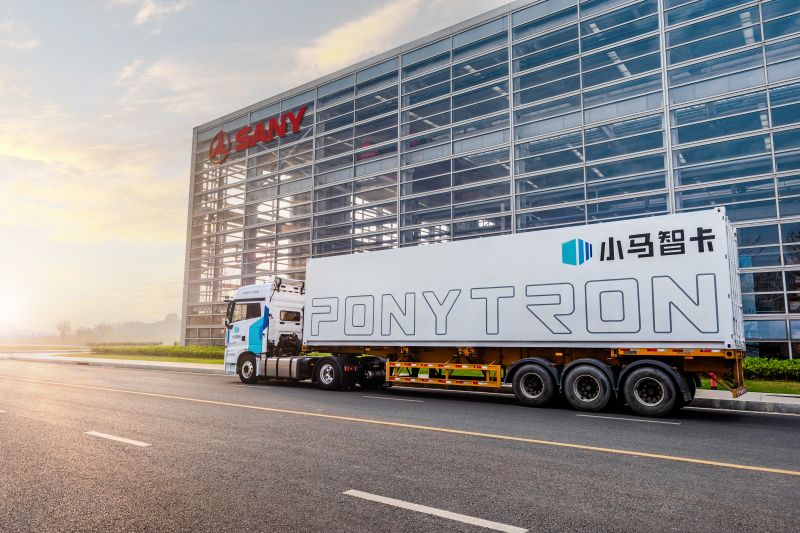
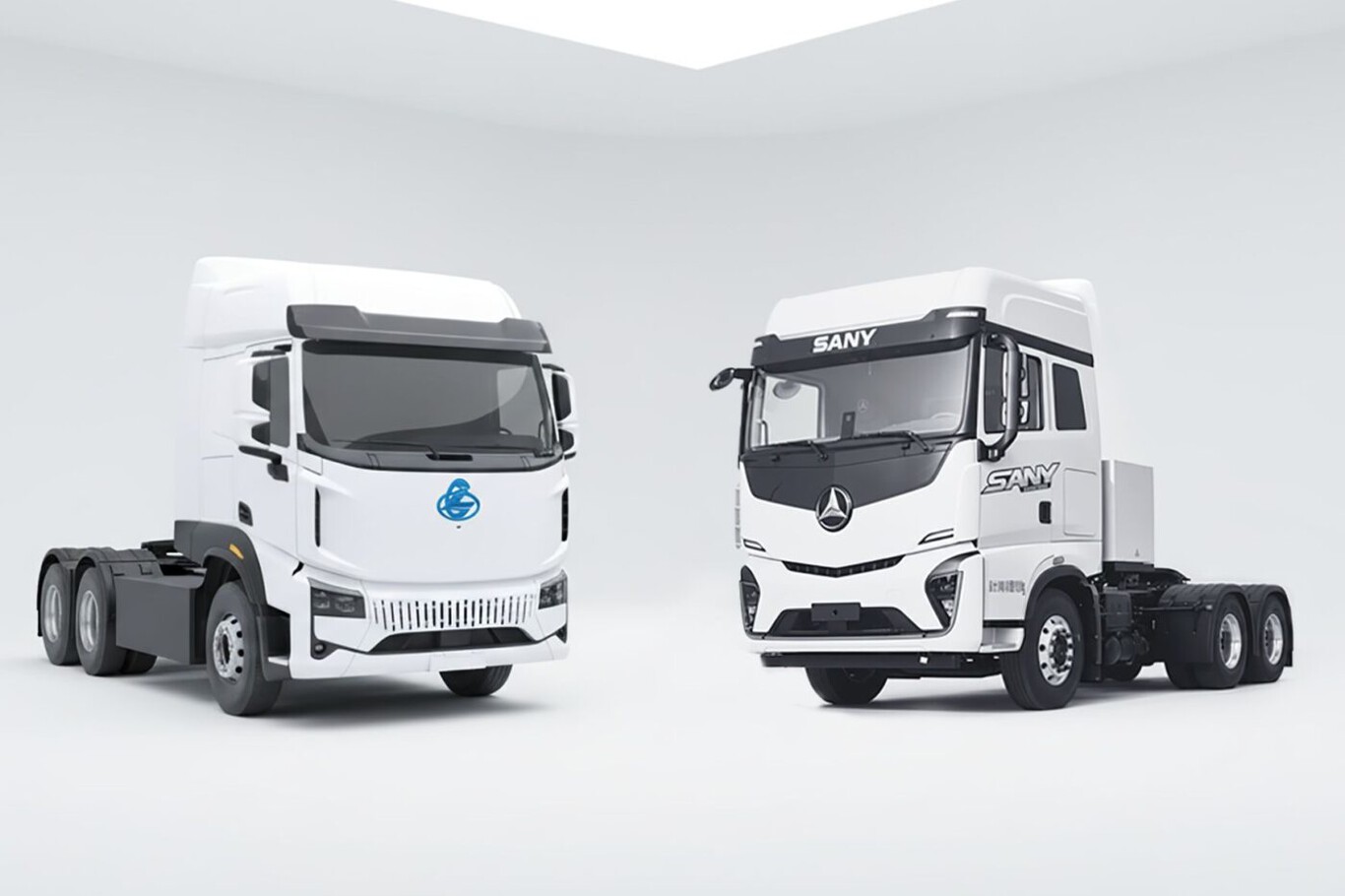
In this context, SANY and Pony.ai have unveiled a system of autonomous electric trucks operating in convoy, ready for mass production. The first batch of their fourth-generation tractor units is scheduled for this year, and they will not be put through closed-loop testing but rather deployed in real-world logistics operations.
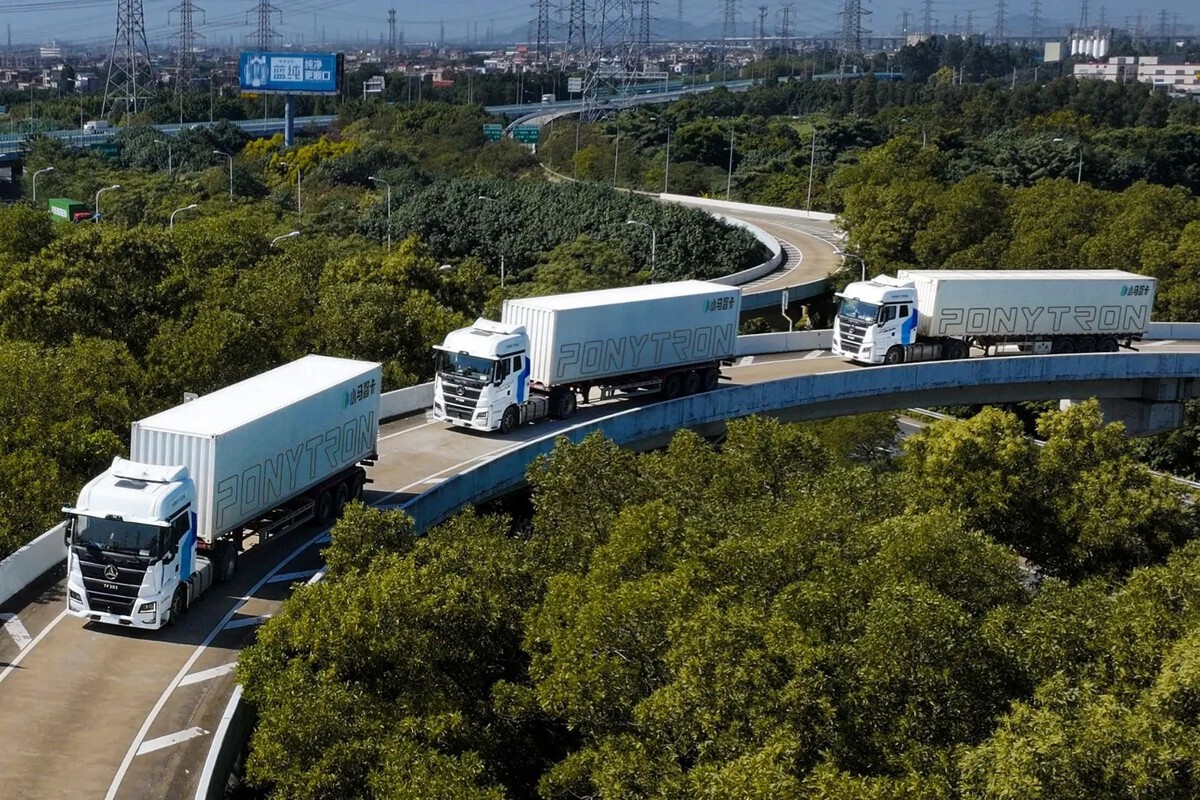
Essentially, the system consists of a convoy led by a truck with a driver, followed by up to four electric tractor units operating autonomously. It is designed for controlled and repetitive environments, such as smart ports and short-haul container transport services, where routes, schedules, and heavy traffic are predictable and automation efficiency can be maximized.
Technically, the system is based on a fully redundant drive-by-wire architecture. In practice, this means that critical functions—such as steering, braking, and power delivery—are not governed by direct mechanical connections. Instead, these functions are controlled electronically and backed by redundant safety systems. If one of the systems fails to operate properly, the other will automatically take over. This is the foundation of the autonomous driving system developed by Pony.ai, which uses radars and cameras to perceive the environment and make decisions continuously.
In addition, 5G connectivity allows the trucks in the convoy to share information in real time, maintain precise distances, and react in a coordinated manner to changes in traffic or the surrounding environment. As for the batteries, the tractor units used are equipped with swappable batteries with a capacity of between 400 and 437 kWh, along with regenerative braking systems. The rapid battery swap allows the vehicles to remain in continuous operation, which is a key factor in port logistics.
SANY guarantees that these trucks have successfully passed extreme temperature and electromagnetic compatibility tests, standard requirements for certification in industrial environments. According to data provided by the manufacturer, “pilot test results indicate a 29% reduction in cost per kilometer and a 195% increase in the fleet’s operating profit.” Regarding emissions, it is stated that “each electric truck in this type of operation can avoid up to 60 tons of CO2 per year” compared to an equivalent diesel truck.
The system implemented in this type of convoy is not a driver-assistance system like Tesla’s Full Self-Driving, nor is it a model of fully autonomous, unsupervised trucks. This system focuses on autonomy applied to specific logistics scenarios, with human oversight of the entire operation and clearly defined industrial objectives. This strategy, adopted by China in sectors such as mining, has proven effective and is now being implemented in the field of freight transport.
- Thank you for your time.
The class has developed an alternative to the truck driver shortage in China: autonomous electric trucks operating in convoys, with a single driver controlling five vehicles, see you soon.