
Download the audio
- Introduction.
The class develops a study conducted in Canada on fleets of electric and diesel trucks over 200,000 kilometers, revealing the reduction in energy/fuel costs of an electric truck compared to a diesel truck.
- Cost savings of electric trucks.
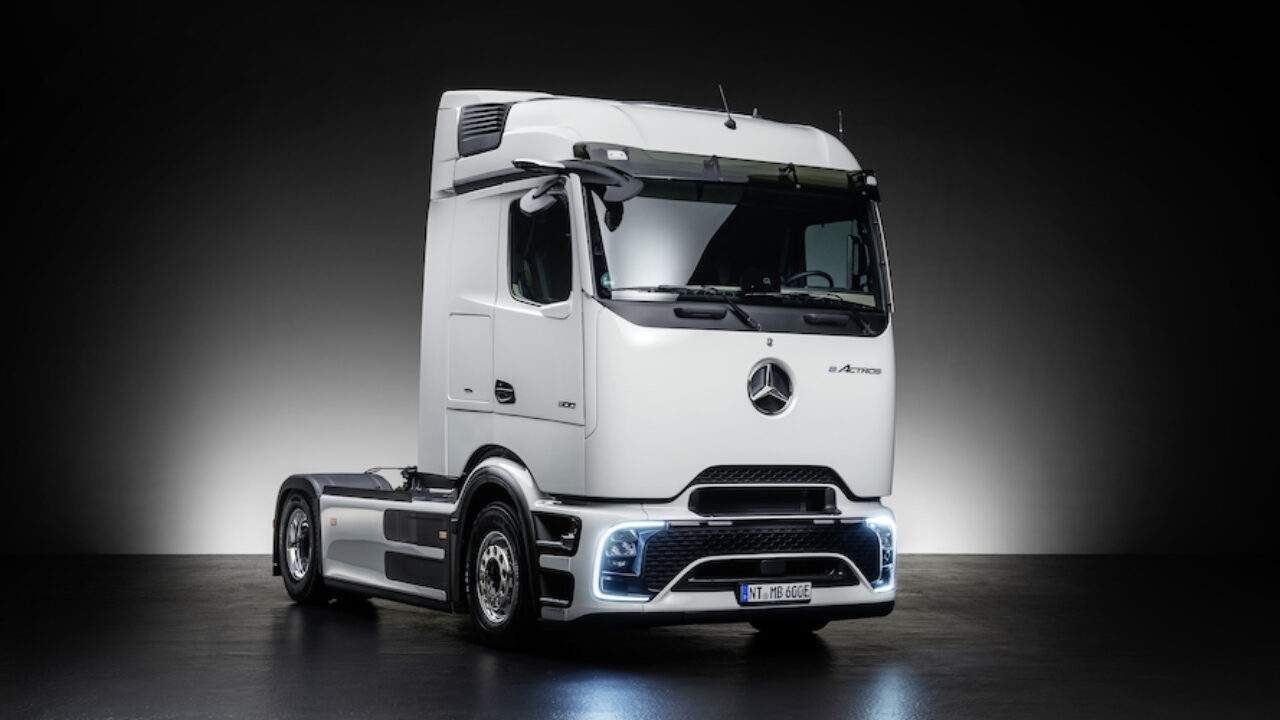
In the transportation sector, the importance of electrification in the heavy-duty truck industry has been demonstrated. This trend is marked by the introduction of innovative models, such as the Mercedes eAcross, awarded as the most outstanding electric truck to date, and the upcoming launch of the Tesla Semi, which outperforms the Mercedes in terms of fuel efficiency and range.
However, this is not merely a matter of theoretical data, but rather an actual cost reduction of 157,126 dollars, as will be demonstrated in the case study presented below. Transportation experts have precisely identified the time required for an electric truck to achieve profitability equivalent to that of a diesel truck. After a thorough analysis of data and projections, the heavy-duty truck industry has reached an irrefutable conclusion: electric trucks will replace diesel trucks in the coming years.
- When you do the math, the cost savings of electric trucks are unbeatable compared to diesel trucks.
As mentioned earlier, we will now discuss a real-world case: the study conducted jointly by the PIT Group and the Canadian government’s Zero-Emission Trucks program. A study was recently released showing substantial annual savings of 157,126 dollars when choosing an electric truck over a diesel one. This finding was reached after a meticulous comparison of the actual use of electric vehicle fleets versus diesel trucks over an extended period of more than one year and across approximately 200,000 kilometers on the roads of the Montreal area.
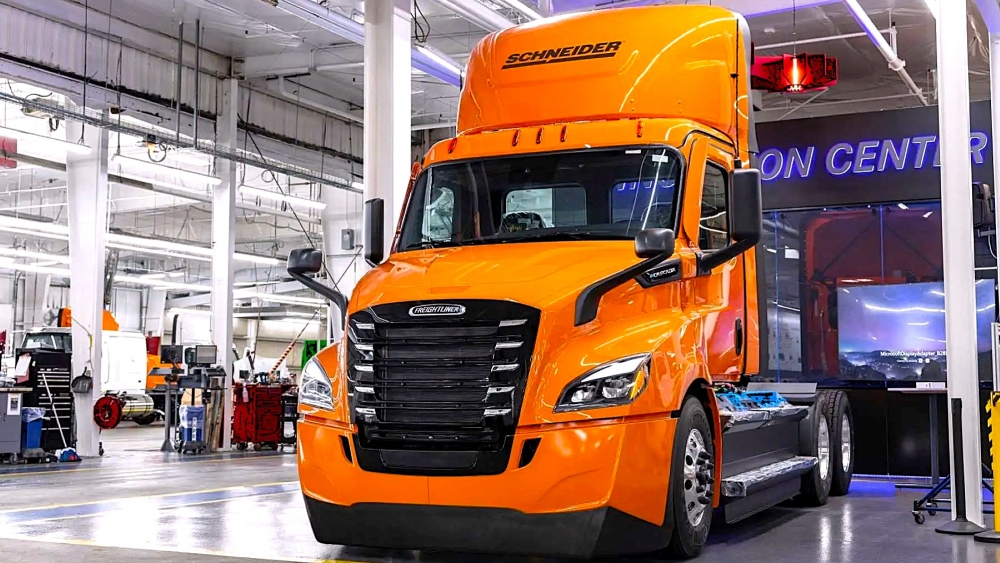
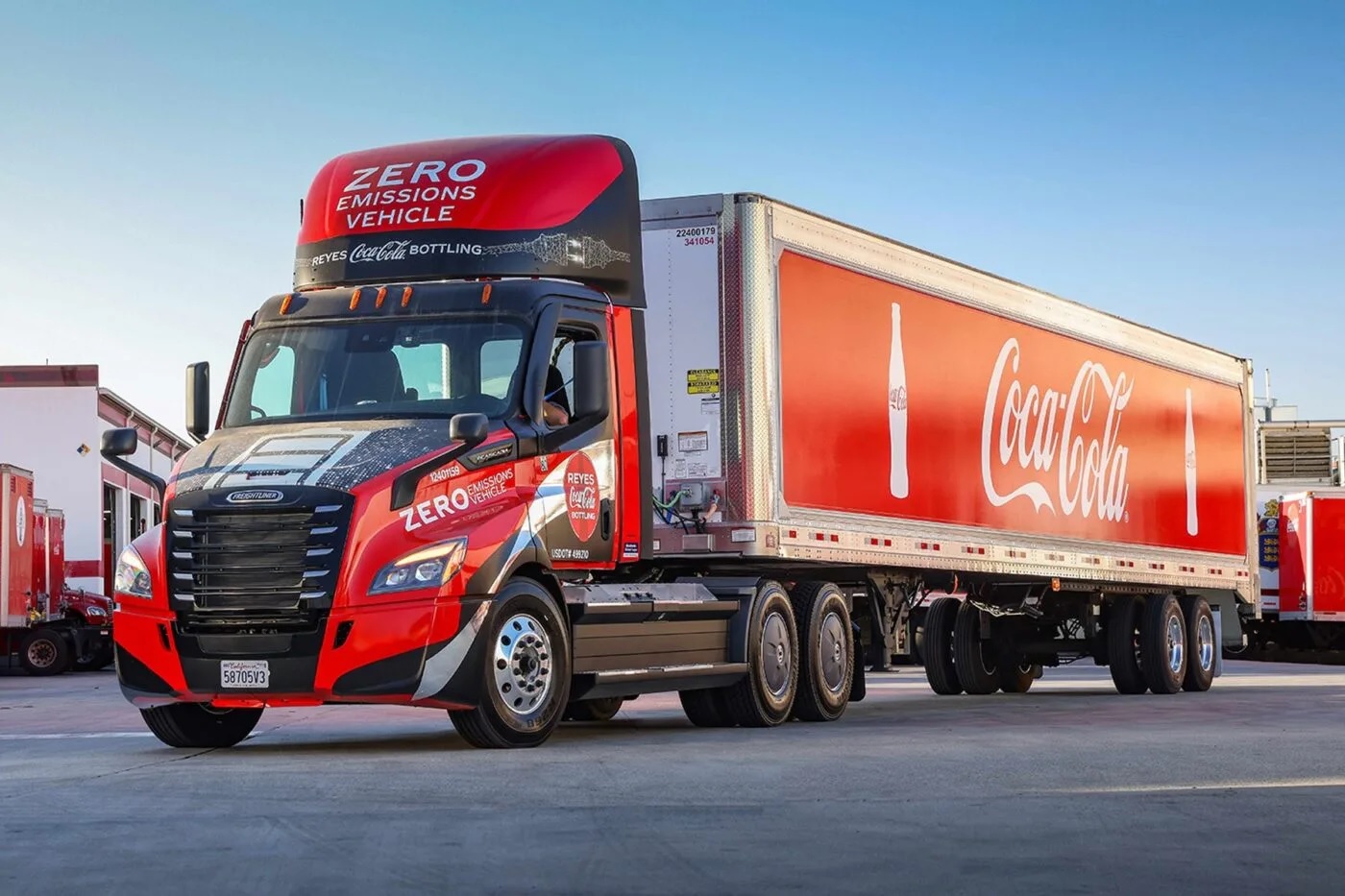
This study further demonstrates the actual savings derived from truck use by comparing two 100% equivalent truck models: the Freightliner Cascadia diesel and its electric counterpart, the Freightliner eCascadia. This model, manufactured by the Daimler Group, has been adopted by various companies, including the multinational Coca-Cola.
As shown in the table below, the full set of data from the study is available for review. However, it is worth highlighting the TCO-Total Cost of Ownership, which refers to the total cost of ownership. This figure not only takes into account the purchase price but also includes all vehicle expenses over its useful life, such as fuel or electricity, maintenance, repairs, tires, insurance, etc.
In the case of the diesel truck, it has been determined that fuel costs in Canada amount to 45,931 dollars for an annual mileage of 90,000 kilometers. Meanwhile, the cost of electricity is 14,337 dollars, which represents one-third of the fuel cost.
- Comparison of actual operating costs and savings between an electric truck and a diesel truck.
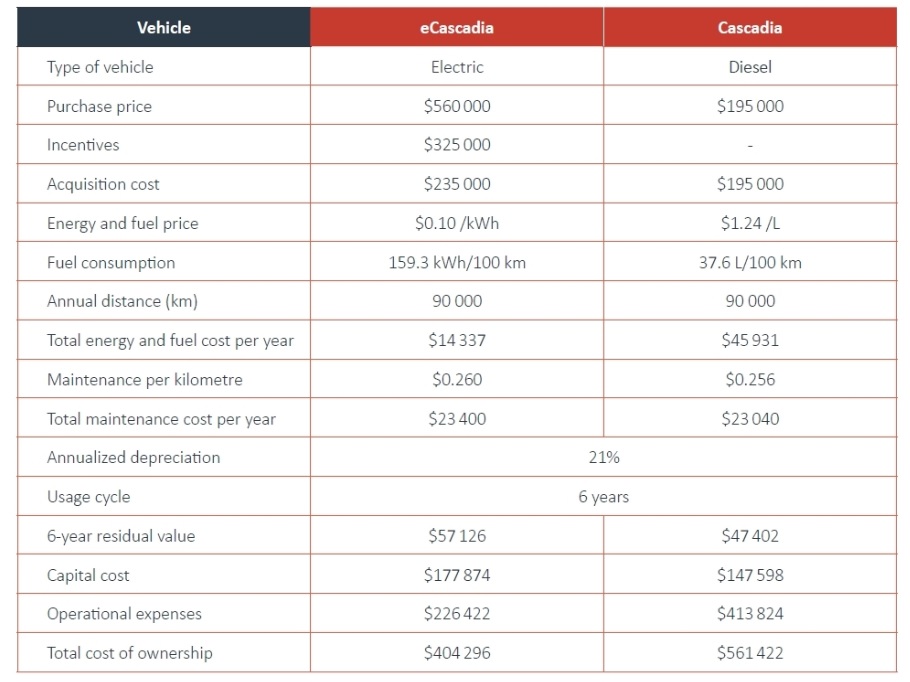
After a thorough cost analysis, it has been found that the expenses associated with operating an electric truck are virtually equivalent to those of a diesel truck. This includes factors such as maintenance costs per kilometer and annual maintenance costs. However, the primary savings come from fuel costs, closely followed by savings in operating costs, where the electric truck also offers a 50% reduction.
All these factors determine the aforementioned TCO, which, after six years, means that each electric truck in the fleet achieves a real savings of 157,126 dollars compared to an equivalent diesel unit.
- A study with a ‘catch,’ but the electric truck still outperforms the diesel.
If you’ve had the chance to analyze the data presented in the table, you’ve probably noticed this information. And please allow us to be completely transparent in pointing out that, in this study, the TCO for each option is significantly influenced by the substantial subsidy for purchasing an electric truck in Canada, which amounts to 325,000 dollars.
Indeed, this factor has a significant impact on the actual savings between each option. However, it is a real factor that must be taken into account when calculating the TCO.
Nevertheless, even without this incentive for purchasing the electric truck, the Freightliner eCascada or a similar vehicle continues to deliver significant operational savings.
According to the calculations, the initial cost of the electric truck, estimated at 560,000 dollars, is recouped over 1,051,200 kilometers. Based on the reference mileage, taking into account an average annual mileage of 125,000 kilometers in Europe, in markets such as Canada or the United States, it is estimated that the maximum mileage is reached in approximately eight and a half years.
From that point on, and as mentioned earlier, the electric truck represents a real cost savings during its use, without relying on any subsidies. This usage can easily exceed two million kilometers for diesel trucks.
- Thank you for your time.
The class has developed the study conducted in Canada on fleets of electric and diesel trucks over 200,000 kilometers, revealing the reduction in energy/fuel costs of an electric truck compared to a diesel truck.