

Download the audio
Slide 1. Introduction.
The class develops the AdBlue you should use to avoid repairs on a diesel vehicle, as well as the implications for fleet management.
Slide 2. The recommended AdBlue to use.
- The AdBlue system.
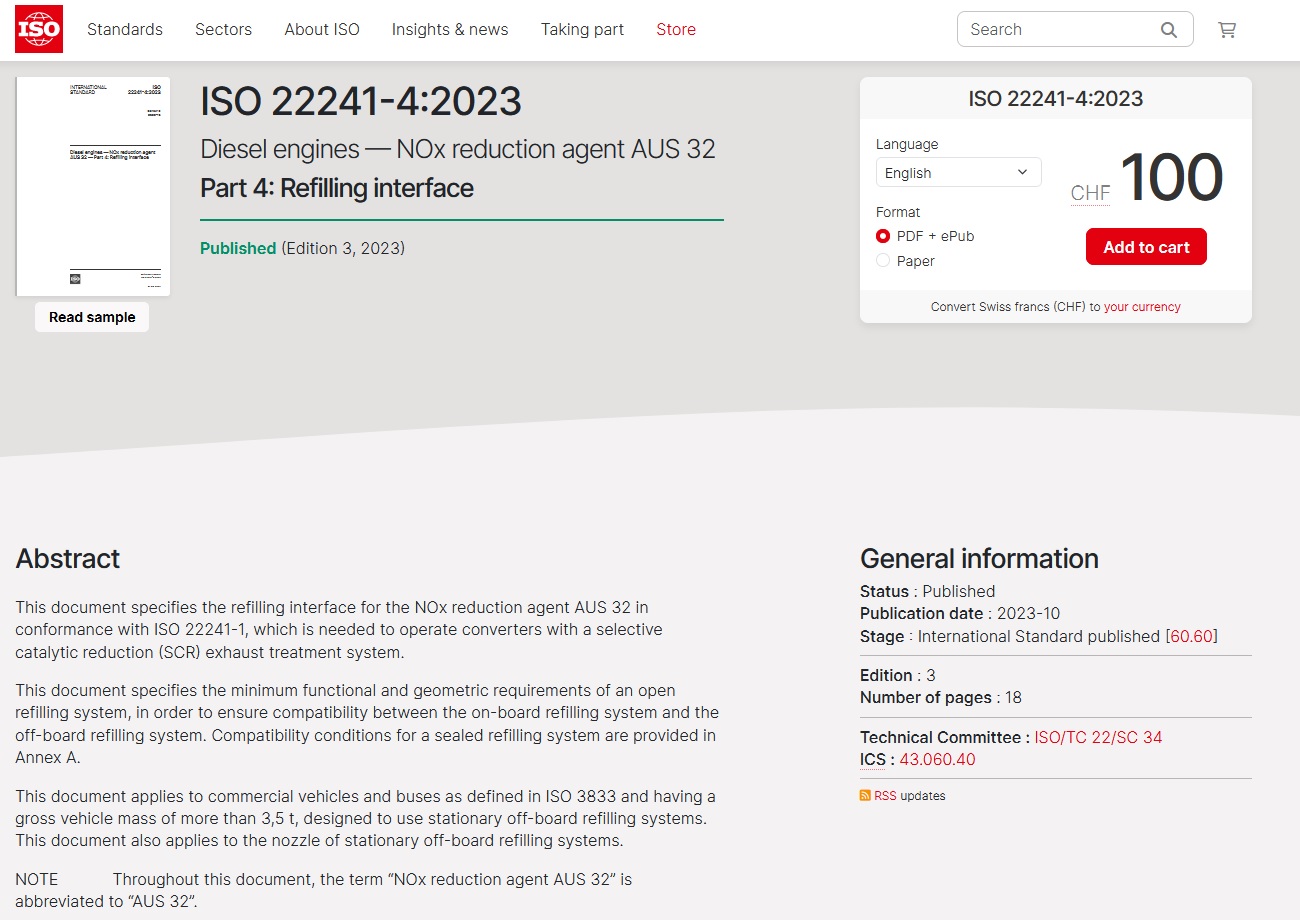
Keeping a modern diesel vehicle in optimal condition requires paying attention to an aspect that many drivers overlook: the AdBlue system. At this point, it is crucial to make an important clarification. It is imperative to use only products authorized by the manufacturer and to employ anti-crystallization additives specifically designed for selective catalytic reduction-SCR systems, ensuring their compatibility with AdBlue. Fluid quality is of the utmost importance, and the benchmark standard remains ISO 22241.
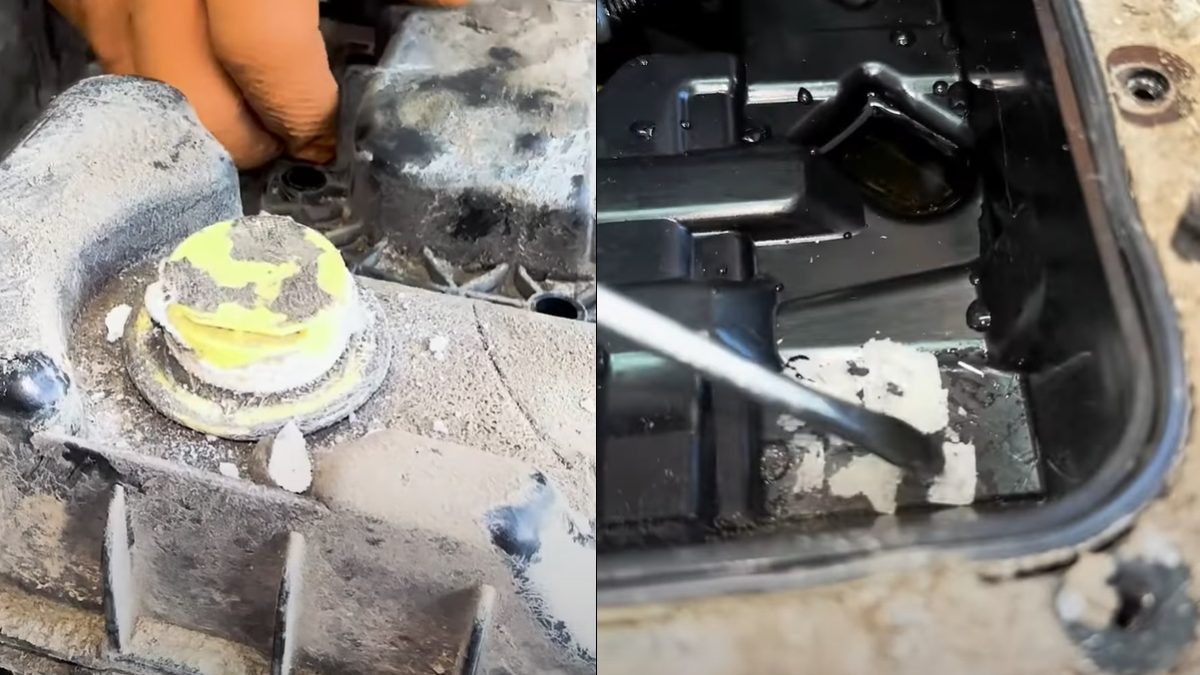
It is important to note that many drivers do not anticipate that AdBlue can cause deposits and crystallization under certain conditions, particularly in extreme cold, due to improper use, long periods of inactivity, or dosing issues. Under such circumstances, malfunctions can compromise the operation of the injector, the pump, or various components of the SCR system, which can result in costly repairs that, in some cases, reach four-figure amounts. For this reason, it is more cost-effective to implement preventive measures than to face costly repairs at the repair shop.
- Why AdBlue crystallizes and what the consequences are.
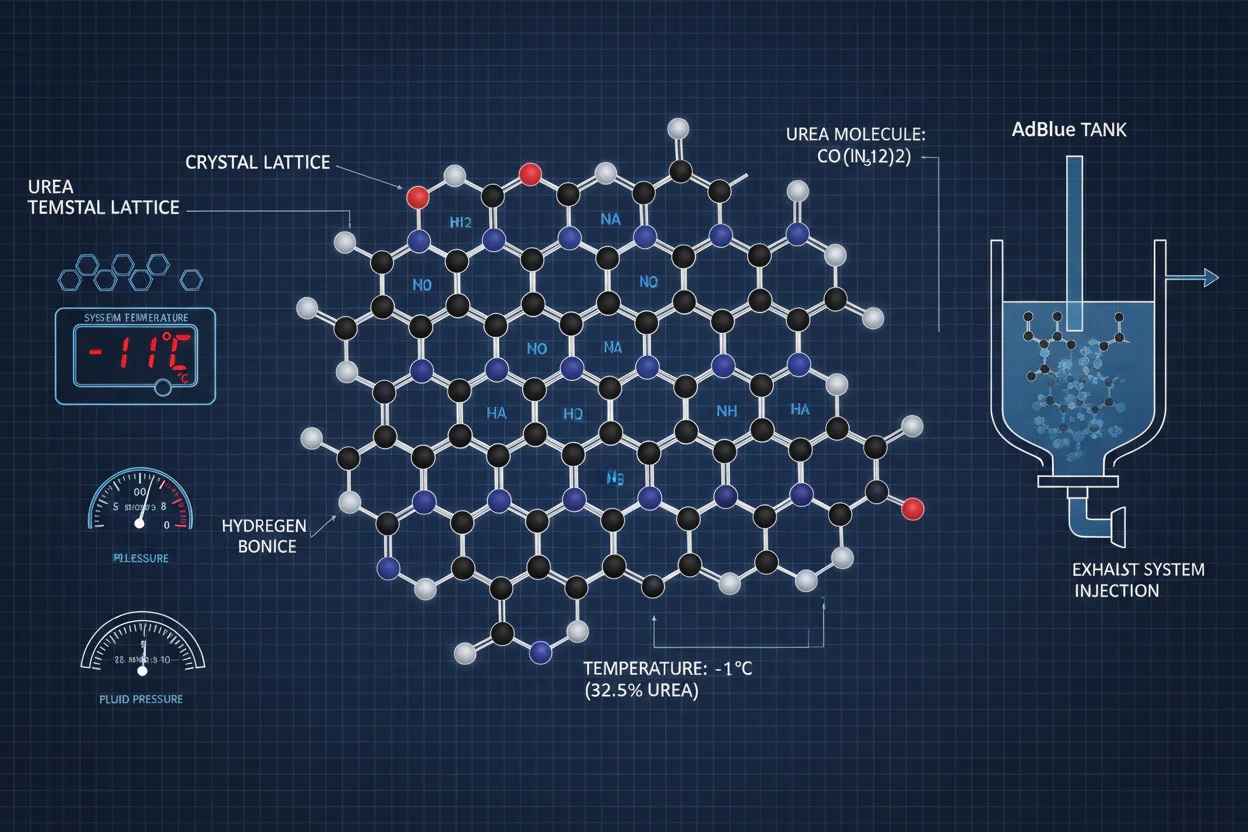
AdBlue is a solution of high-purity urea and demineralized water that helps reduce nitrogen oxides in diesel engines equipped with SCR systems. The problem arises when this fluid ages improperly, becomes contaminated, dries out in sensitive areas of the circuit, or operates under unfavorable conditions. It is also important to note that AdBlue can freeze at temperatures around -11°C, which requires the system to be properly prepared to handle such conditions.
This crystallization can cause blockages in lines, nozzles, or the SCR injector, which can result in malfunctions, warnings on the control panel, or even starting difficulties in certain vehicles. To gain a deeper understanding of these common AdBlue issues, it is important to note that they do not always stem from a significant initial failure. In many cases, they arise from residue, poor product maintenance, or improper refilling.
- How the anti-crystallization additive for AdBlue works.
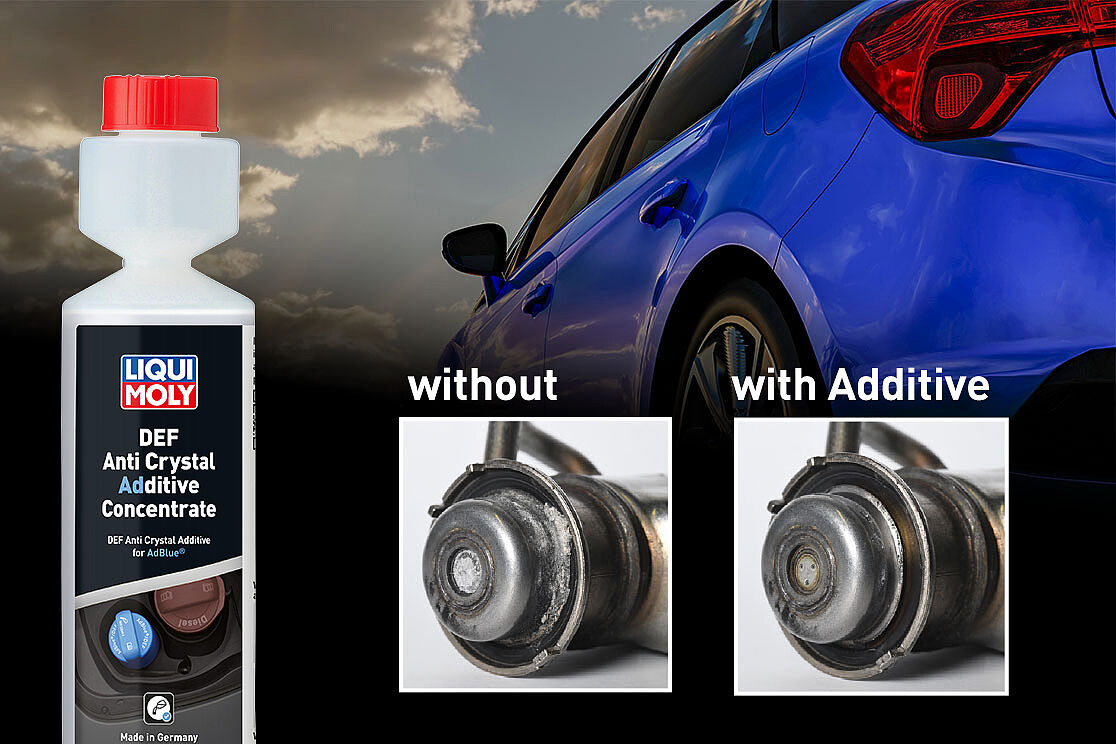
It is important to note that there is no universal additive that should be used in all vehicles. It is important to note that the use of anti-crystallization additives formulated for SCR systems, designed to reduce deposits or improve atomization, should be limited solely to those cases where the vehicle or product manufacturer explicitly specifies it. In fact, some manuals clearly warn against adding additives, water, or fuel to the AdBlue tank.
When the product is compatible, its function is not to replace the AdBlue, but to help minimize the formation of residues in sensitive parts of the system. Therefore, it is recommended not to purchase the first product you find online or base your decision solely on price. It is recommended to review the vehicle manual, confirm whether the manufacturer permits this type of treatment, and verify that the product is intended for the SCR system and not for any other use. Additionally, it is important to monitor the AdBlue level periodically, as neglecting this can have negative consequences.
- Warning signs indicating crystallization.
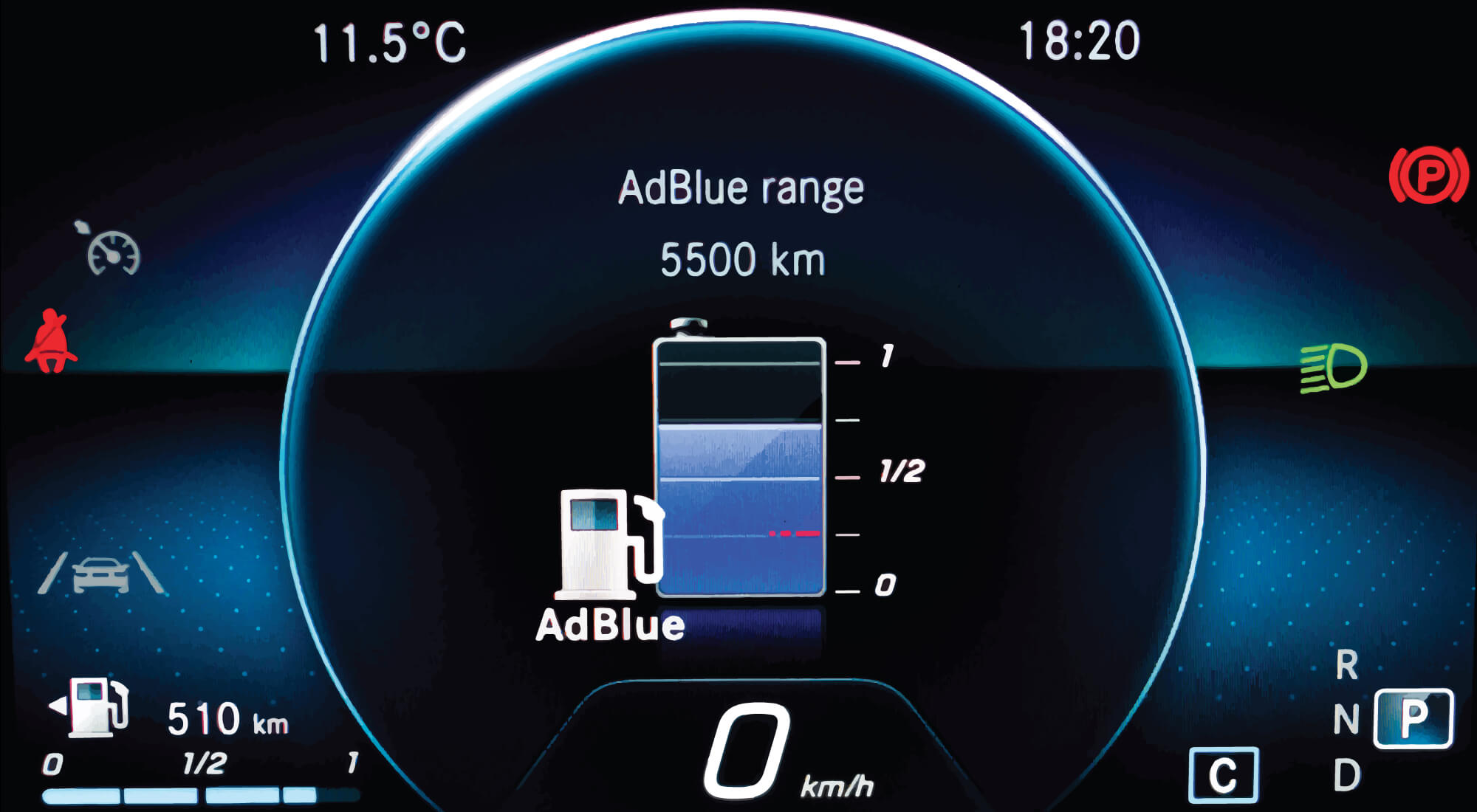
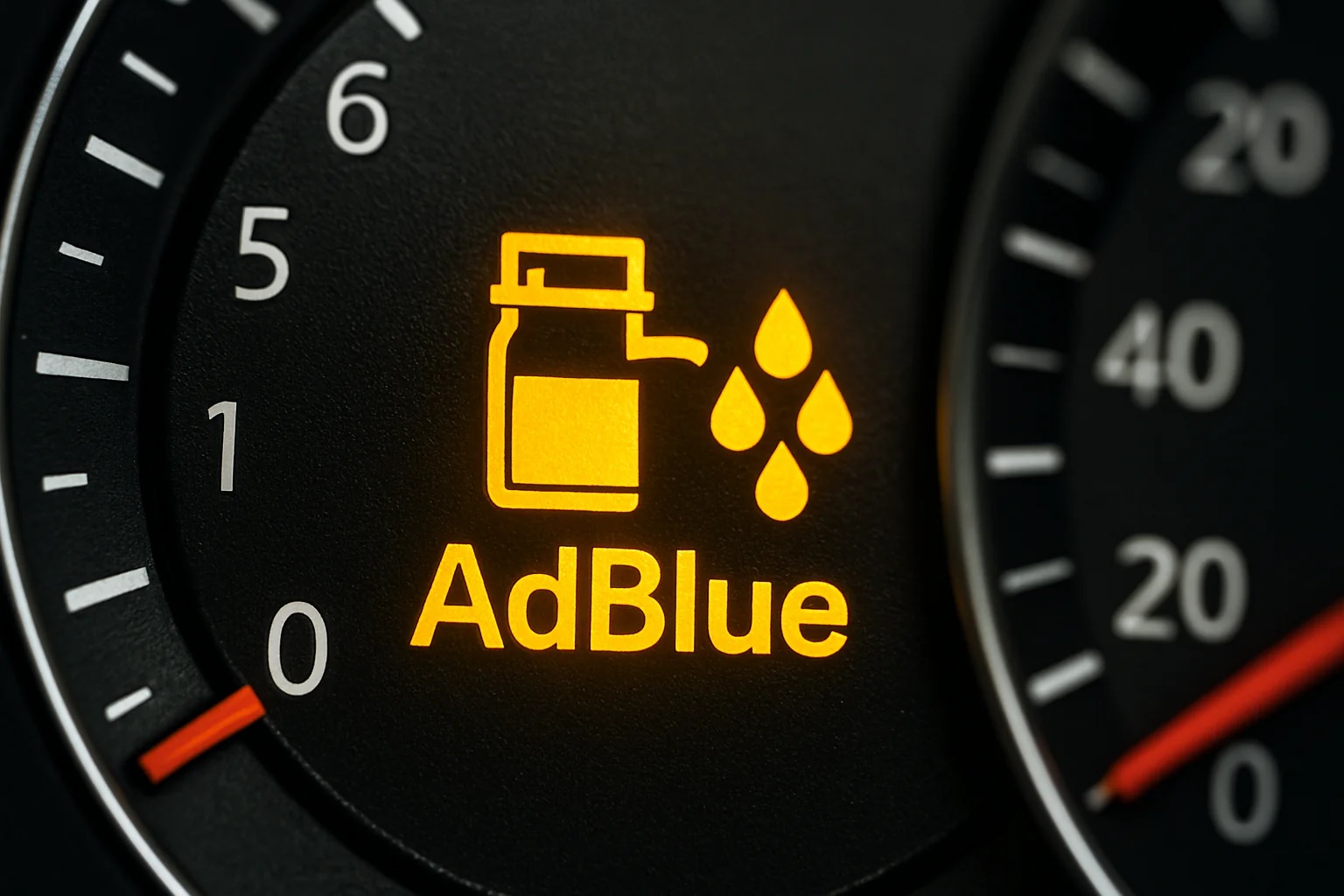
It is essential to detect the problem early to avoid more serious consequences. Among the most common signs are the emissions-related warning light, AdBlue system fault messages, injection pressure issues, difficulty refueling if there are solid residues in the filler neck, or unusual noises from the SCR pump. Additionally, a loss of performance or a startup countdown may occur in certain models.
If any of these symptoms appear, it is recommended not to make hasty decisions. It is strongly recommended to have the vehicle thoroughly inspected as soon as possible, avoiding continued use for extended periods until an irreversible failure occurs. In many cases, the dashboard already provides relevant information, so it may be helpful to review the meaning of the vehicle’s yellow warning lights, as not all indicate the same severity or the same affected component.
- How to apply the additive correctly.
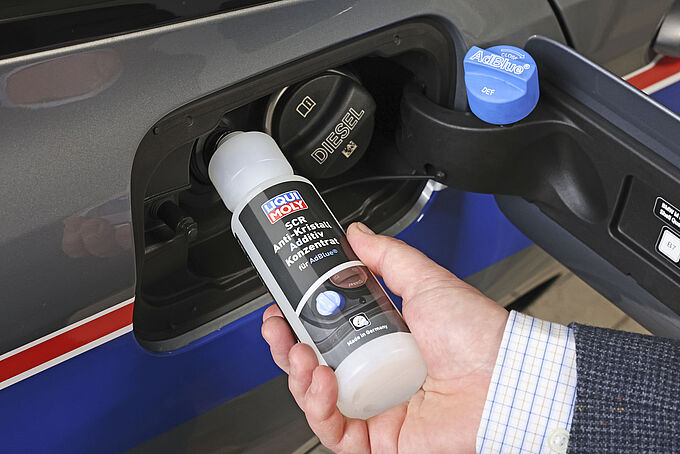
If the vehicle manufacturer permits it and the product is approved for that use, the application must strictly follow the instructions provided on the packaging and in the manual. It is important to note that there is no universal ratio that applies uniformly to all vehicles. This is another common mistake that should be avoided. Each formulation has a specific dosage, and failure to follow it can compromise results and cause complications.
It is crucial to follow the manufacturer’s instructions regarding the addition of the product, ensuring that the tank is in optimal condition and avoiding any type of contamination during the refilling process. It is imperative to handle AdBlue with precision and under optimal hygienic conditions, using airtight containers suitable for their specific use, as the presence of dirt can compromise the system’s operation. Likewise, it is imperative to avoid mixing products of dubious origin or refilling with liquids that do not meet established specifications. It is essential to use high-quality AdBlue and keep it in optimal condition.
- Protecting your investment is better than repairing it.
It is important to note that there is no requirement to use any miracle products or to treat additives as if they were mandatory. The use of a specific anti-crystallization agent for SCR is strongly recommended only if it is approved for your specific model. It is essential to maintain strict control over the condition of the AdBlue, ensure the use of quality products, and respond promptly to any warning signs.
By following these guidelines, the risks of blockages are mitigated, optimal operation of the emissions system is promoted, and breakdowns that could compromise the performance of modern diesel engines, and consequently affect profitability, are prevented. In a vehicle equipped with an SCR system, AdBlue maintenance is not a trivial matter but rather an essential component of efficient preventive vehicle maintenance.
- FAQs about AdBlue additives.
- Do all diesel cars with AdBlue need an anti-crystallization additive?.
No. This is not a universal recommendation from manufacturers, nor is it universally accepted by the systems. Before using one, it is essential to consult the vehicle manual and verify the product’s compatibility with the SCR system.
- What happens if I put an unsuitable additive in the AdBlue tank?.
Tampering with the system can cause dosing errors and, in extreme cases, damage to critical components. It is important to note that AdBlue is not a product intended for experimentation.
- Does the additive completely prevent SCR system failures?.
The system does not guarantee complete elimination of such failures. Reducing the risk of crystallization is one of the main benefits of using the additive, provided it is compatible with other system components. However, it is equally important to use high-quality AdBlue, refuel carefully, and pay attention to the vehicle’s warning indicators.
- When should the AdBlue system be inspected at a service center?.
If warnings appear on the dashboard, unusual noises are heard from the pump, or the vehicle enters an emissions-related fault mode, the problem should be reported immediately. It is important to note that delaying service often has a negative impact on the final bill.
- Implications for fleet management.
The main consequence is that if we use an inappropriate or non-approved AdBlue or anti-crystallization additive, the vehicle may break down or the SCR system may not function properly.
We recommend implementing the following measures.
- Always use AdBlue and anti-crystallization additives that comply with established standards.
- Avoid storing them under improper conditions.
- Avoid leaving the vehicle idle for extended periods, especially if it has displayed system warnings.
- Do not ignore warning signs; visit a specialized repair shop with the necessary experience and expertise to address this type of malfunction.
- If the vehicle is exposed to temperatures around -11°C, at which AdBlue freezes, thorough monitoring and control of the AdBlue is required.
- Always follow the vehicle manufacturer’s instructions.
Slide 3. Thank you for your time.
The class has developed the AdBlue you should use to avoid repairs on a diesel vehicle, as well as the implications for fleet management, see you soon.