

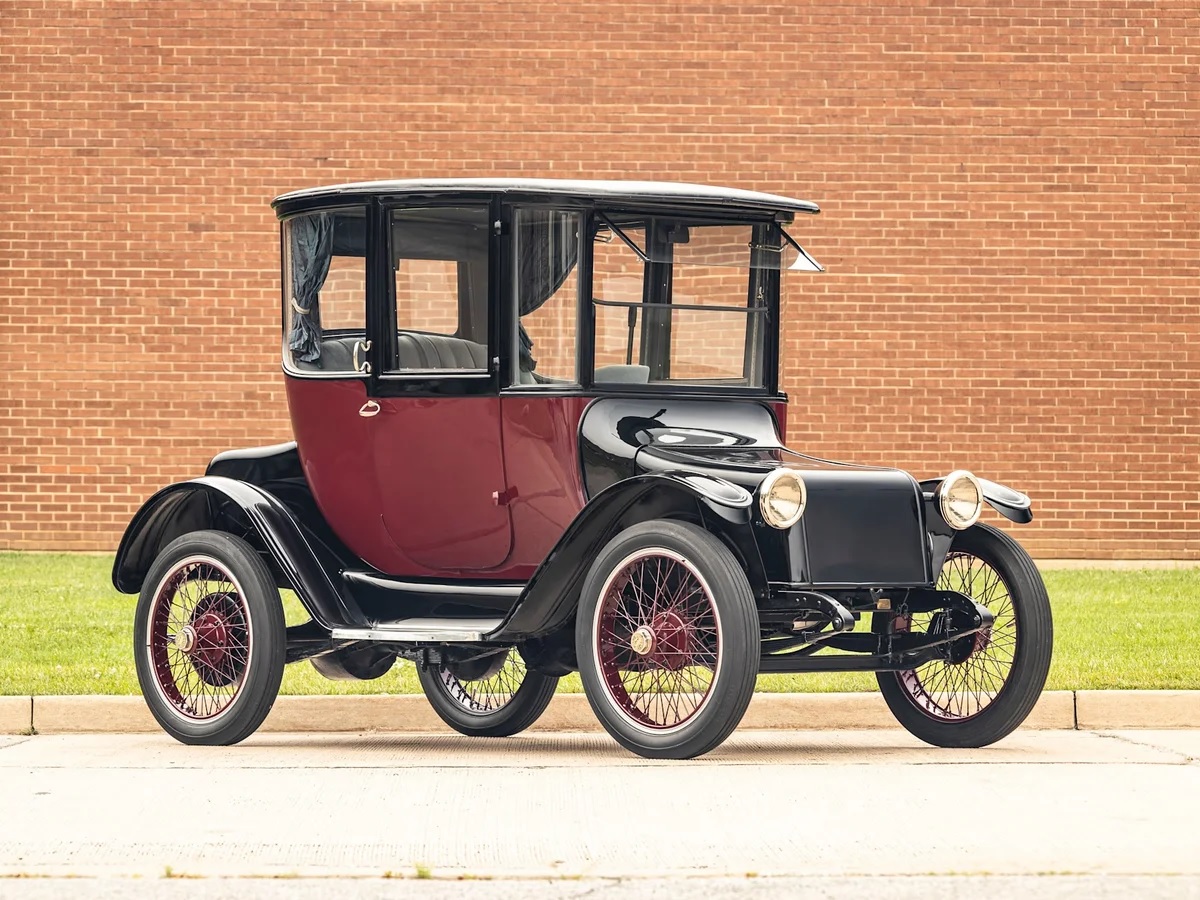
The 1918 Detroit Electric Model 75B had 42 batteries, 4.3 horsepower, and a range of 129 km
Long before Tesla, the Nissan LEAF, and even before the combustion engine car became the dominant form of transportation, electric cars were already on the roads. One of the survivors has recently resurfaced after a century of absence. The vehicle in question is a 1918 Detroit Electric Model 75B that went up for auction during Monterey Car Week, offering a glimpse into the state of technology over a century ago.
Although its specifications may seem modest compared to those of contemporary electric vehicles, they contain relevant information that shouldn't be overlooked. According to information provided by Mecum Auctions, the vehicle had an approximate range of 129 kilometers under optimal conditions. This range is comparable to, and even surpasses, that offered by some of the first modern electric cars that arrived on the market several decades later. However, it's important to note that its top speed was a mere 32 km/h (20 mph).
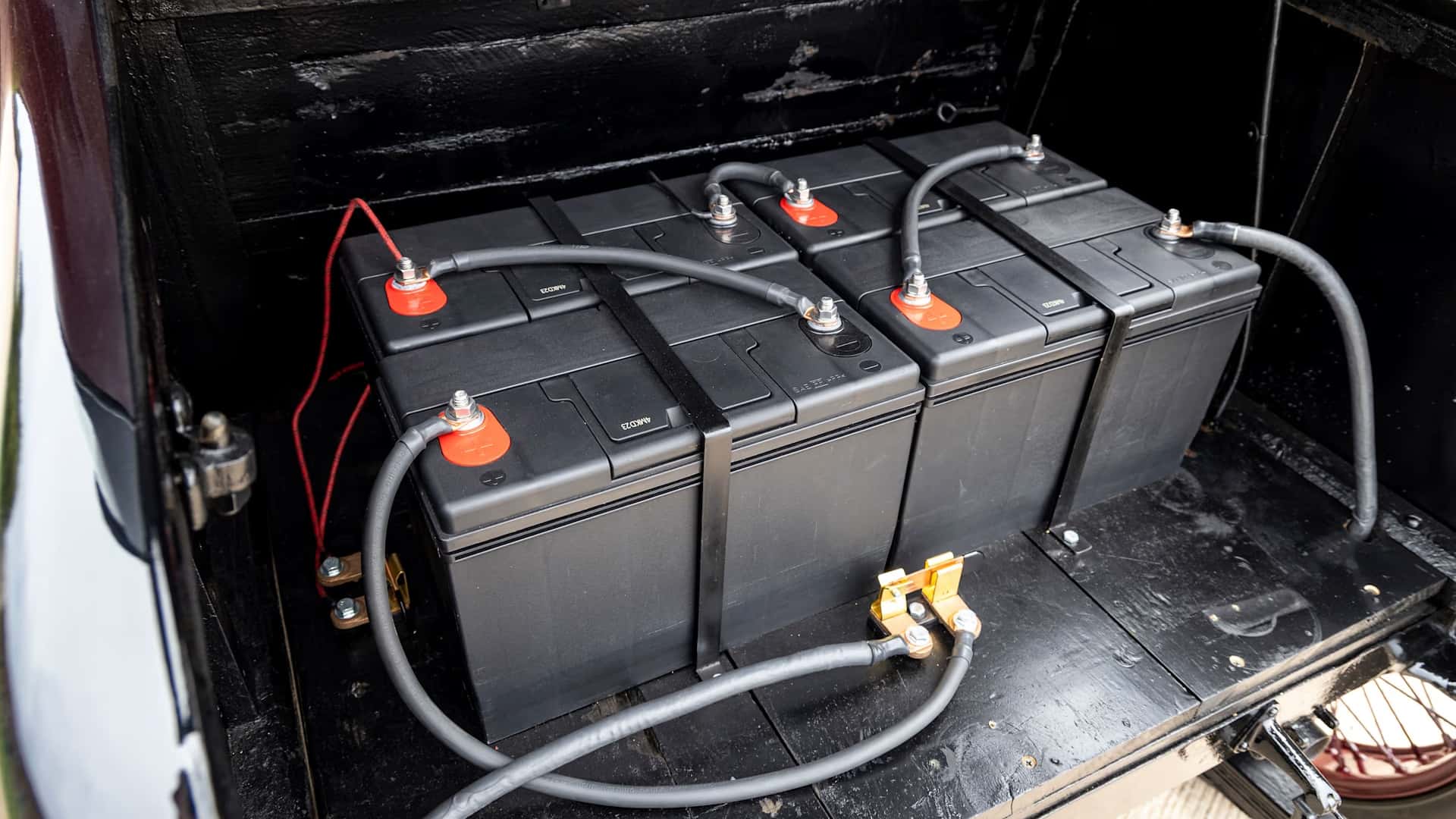
An electric car with 42 lead-acid batteries.
To understand this car, it's necessary to go back to a time when technology hadn't yet defined its dominance in the industry. In the context of the automotive sector's transition to electrification, electric vehicles coexisted with gasoline-powered ones, offering significant advantages at the time. These vehicles were characterized by their quiet operation, as they didn't emit the unpleasant fumes that engines of the era typically produced. Furthermore, they eliminated the need to manually start the engine with a hand crank.
The Detroit Electric Model 75B was manufactured by the Anderson Electric Car Company, and its propulsion system is fascinating when considered from today's perspective. The electrical power system of this model consisted of 42 independent lead-acid batteries, arranged in two identical groups. These were distributed as follows: 21 units installed in the front of the vehicle and the remaining 21 units coupled to the rear.
The energy generated by this infrastructure powered a single electric motor installed beneath the floor. The vehicle in question developed only 4.3 hp, which was sent to a differential located on the rear axle. High performance wasn't a priority, as the Detroit Electric was designed for leisurely driving, and its top speed, as mentioned earlier, was approximately 32 km/h. Despite these limitations, it's worth noting that in 1918 it achieved a range of approximately 129 km. Clearly, a direct comparison between this figure and current homologation cycles is unfounded.
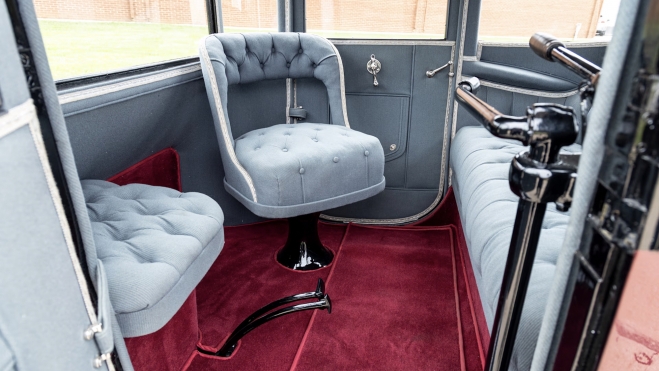
Its interior also deviates from current standards.
The surviving example presents a fundamental difference from the original vehicle. The old lead-acid batteries have been replaced with more advanced technology. This document does not specify the current technology or capacity of these batteries, nor their range.
Its passenger compartment is almost as interesting as its mechanics. The Detroit Electric model had a passenger capacity of up to four people; however, its interior layout exhibited a significantly different configuration from what would later become standard. The vehicle is equipped with a bench seat on one side and two individual seats in front. The driver appears to be seated on the left side of the bench.
Furthermore, a conventional steering wheel has been omitted. A lever or tiller is used for steering, while in front of the driver are two pedals and a third located next to the base of the seat, apparently designed to be operated with the heel. The unique seating arrangement allows one passenger to sit practically opposite the driver.
The rest of the interior unmistakably evokes a bygone era. The seats are upholstered in a robust, quilted fabric, the rear windows are fitted with curtains, and the body features expansive vertical glass surfaces. As for its exterior, this example successfully combines black and burgundy with thin spoked wheels, which today seem more fitting for a bicycle. As previously mentioned, the car in question was auctioned last Saturday, August 15th, in Monterey, with a starting price of $100,000.