Tesla’s autonomous robotaxis do not operate at night
Tesla is modifying its business model. The world's leading electric vehicle manufacturer for the past 15 years aims to transform into a technology company, with the autonomous vehicle as its flagship product. Tesla has been working toward this goal for a long time, yet challenges have been constant. Safety issues and risky decisions have been identified that could have jeopardized the company's present and future.
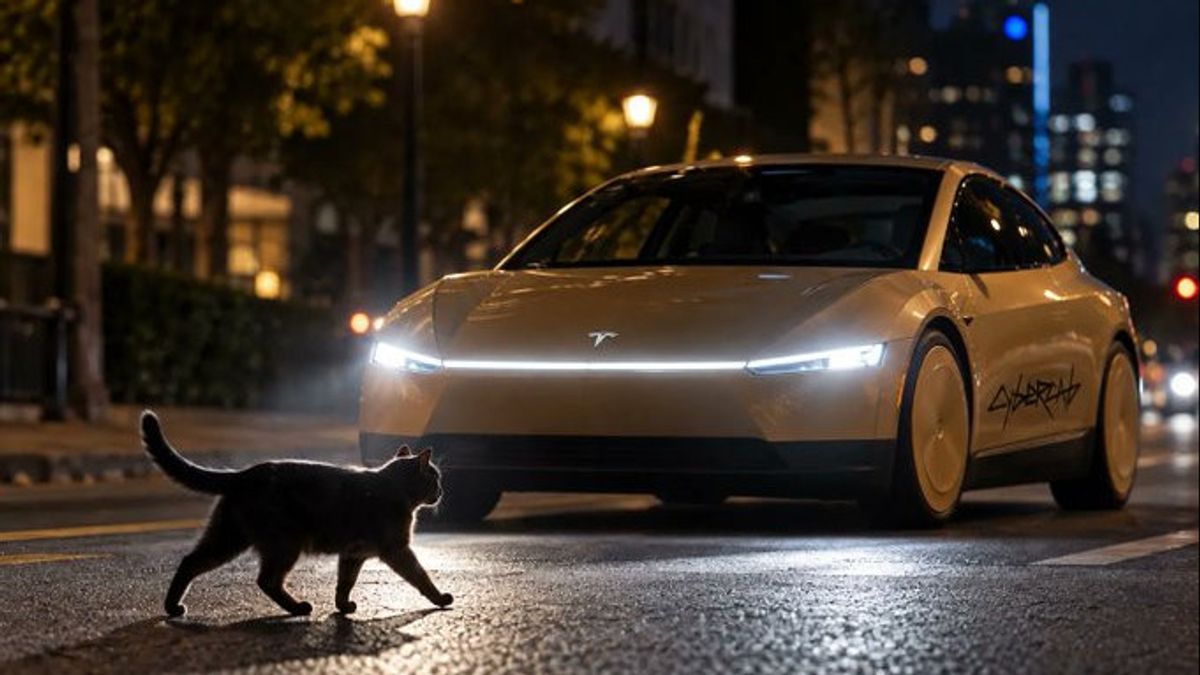
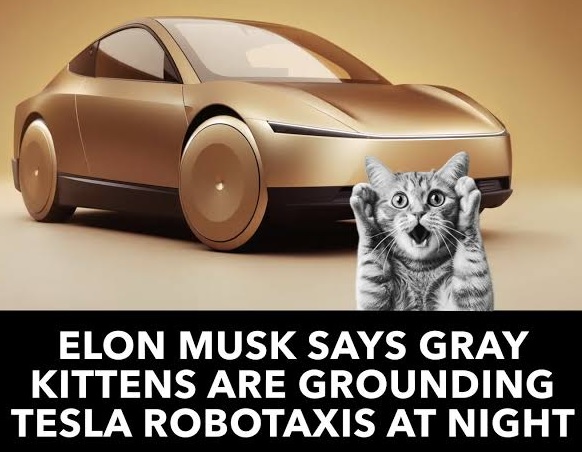
As the number of autonomous Tesla vehicles on U.S. roads has grown, so too have the recorded problems and incidents. Elon Musk himself has acknowledged that the main obstacle to implementing a nighttime robotaxi service lies in the vehicles' ability to properly identify pets in low-light conditions. The example of "gray kittens on gray asphalt" was cited to illustrate the issue. It is a detection problem involving low light and low contrast—a common weakness in camera systems. This challenge has been addressed through technologies Musk has dubbed a "crutch" and a "fool's errand."
One hour longer, yet less than on day one.
The robotaxi service announced that operations in Austin would extend until 11:00 PM, rather than the previously established 10:00 PM. Musk shared the announcement, adding: "The main goal is to avoid running over pets when they are hard to see at night."
When Tesla launched the robotaxi service in Austin in June 2025, the app accepted rides from 6:00 AM to midnight. Fifteen months later, the service ends operations an hour earlier than it did on day one. Furthermore, the service remains relatively stable, showing only marginal growth since its launch—even following the introduction of the Cybercab last month.
Why cameras fall short at night.
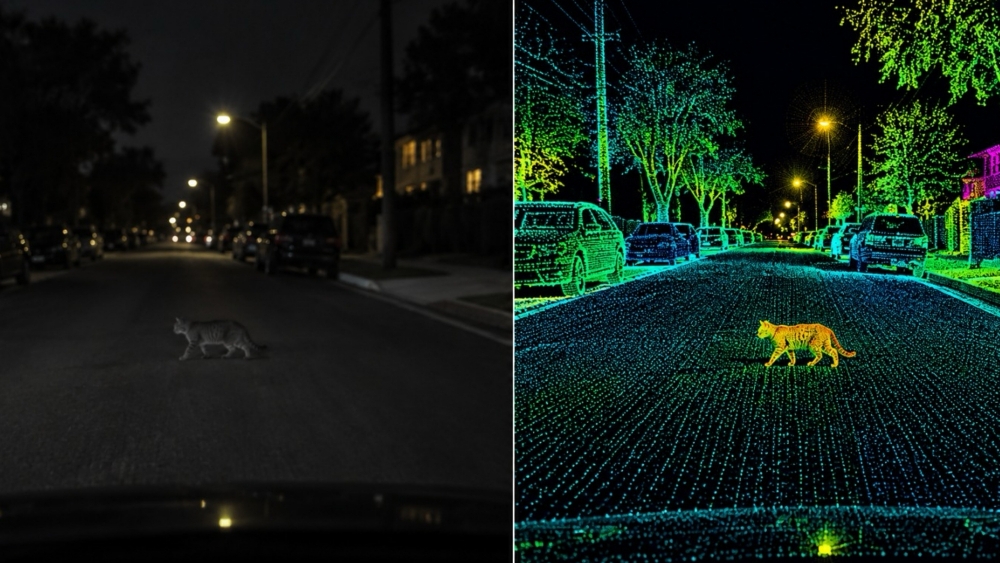
A camera is defined as a passive sensor that operates by capturing light reflected off an object and subsequently analyzing it to determine its contrast against the background. A gray living creature resting on gray ground at night offers a negligible amount of both. Beyond animals, Tesla robotaxis could struggle to recognize other small, dark objects in low-light environments.
LiDAR is an active sensor that emits laser pulses to measure return time, thereby calculating the distance and three-dimensional shape of objects on the roadway. It functions consistently—day or night—and does not require the cat to be a different color than the asphalt; it simply needs to stand out from the road surface. Radar operates by emitting radio waves, allowing for precise speed measurement. While its performance may be less robust with small objects, it remains remarkably effective in conditions such as fog, dust, and glare that can impair camera operation.
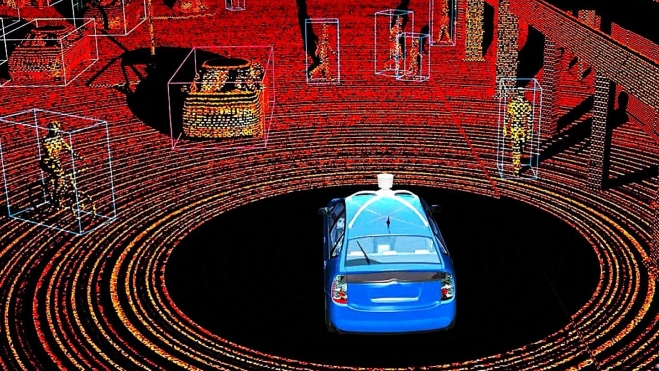
Waymo uses all three sensors; Tesla uses only cameras.
All companies operating self-driving cars at scale use all three types of sensors. Waymo’s sixth-generation system is equipped with 13 cameras, 4 LiDAR units, and 6 radars, and its fleet of approximately 4,000 driverless vehicles operates continuously, 24 hours a day. Tesla, meanwhile, has taken the opposite approach: it removed radar from its vehicles in May 2021, abandoned ultrasonic sensors in 2022, and has never sold a car equipped with LiDAR.
Musk’s history with LiDAR and night vision.
In April 2019, Musk declared that LiDAR was a "fool's errand" and that anyone relying on it was "doomed." In February 2022, he described it as a "seductive local maximum." By August 2025, the conclusion had been reached that both LiDAR and radar reduced safety due to "sensor contention." In May of this year, an image reconstruction based on photon counting was published, explaining why Tesla’s FSD offers optimal visibility in low-light conditions.
Musk was already aware of the trade-off: when Tesla removed radar in 2021, he stated via direct messages that high-resolution radar vision would be superior to vision-only systems. The NHTSA is conducting an exhaustive investigation into FSD-related incidents involving 3.2 million Tesla vehicles and has requested an internal document titled "Radar Saves Us" to gather more information on the matter.