

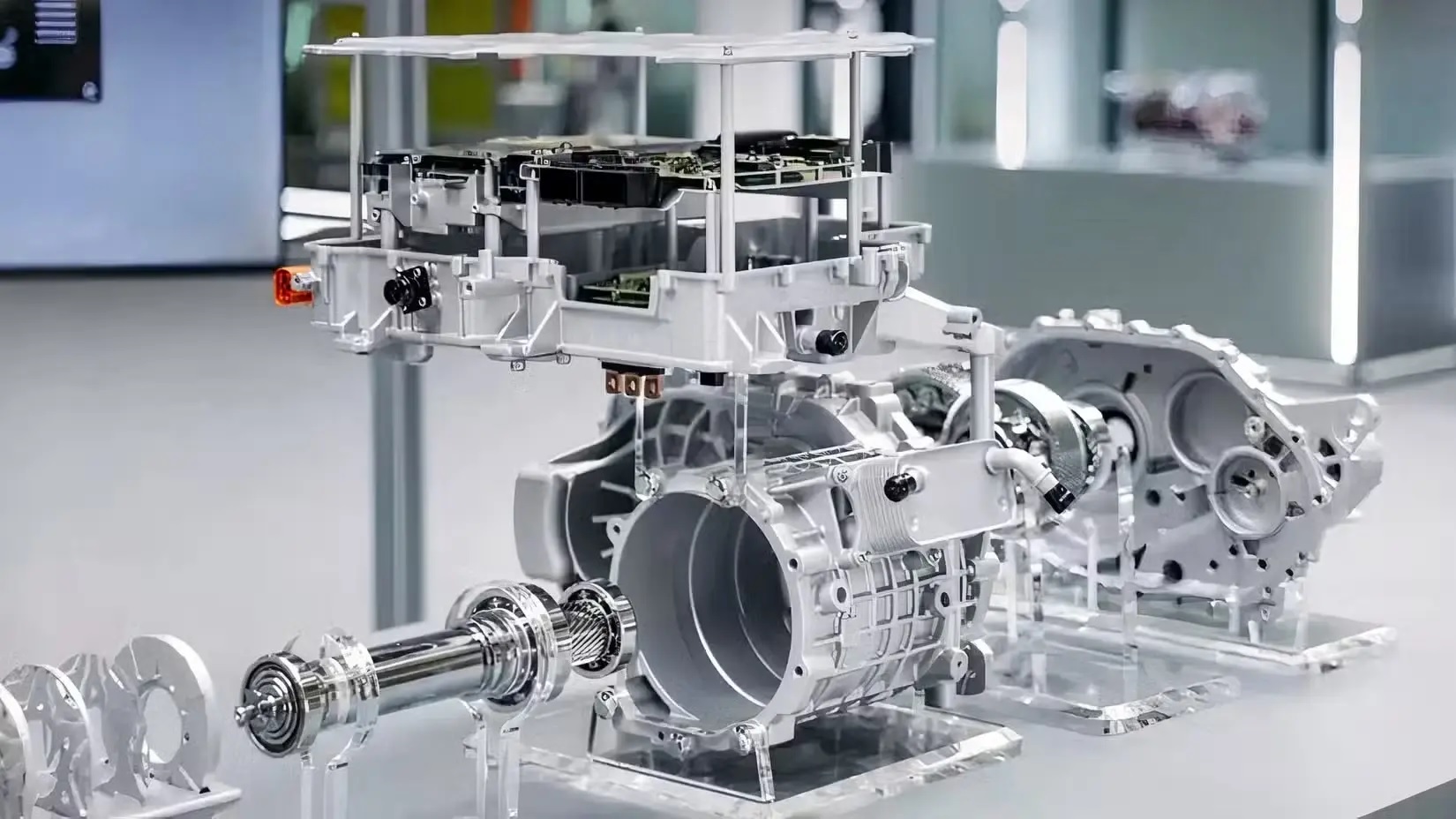
Geely's High-Efficiency Electric Motor.
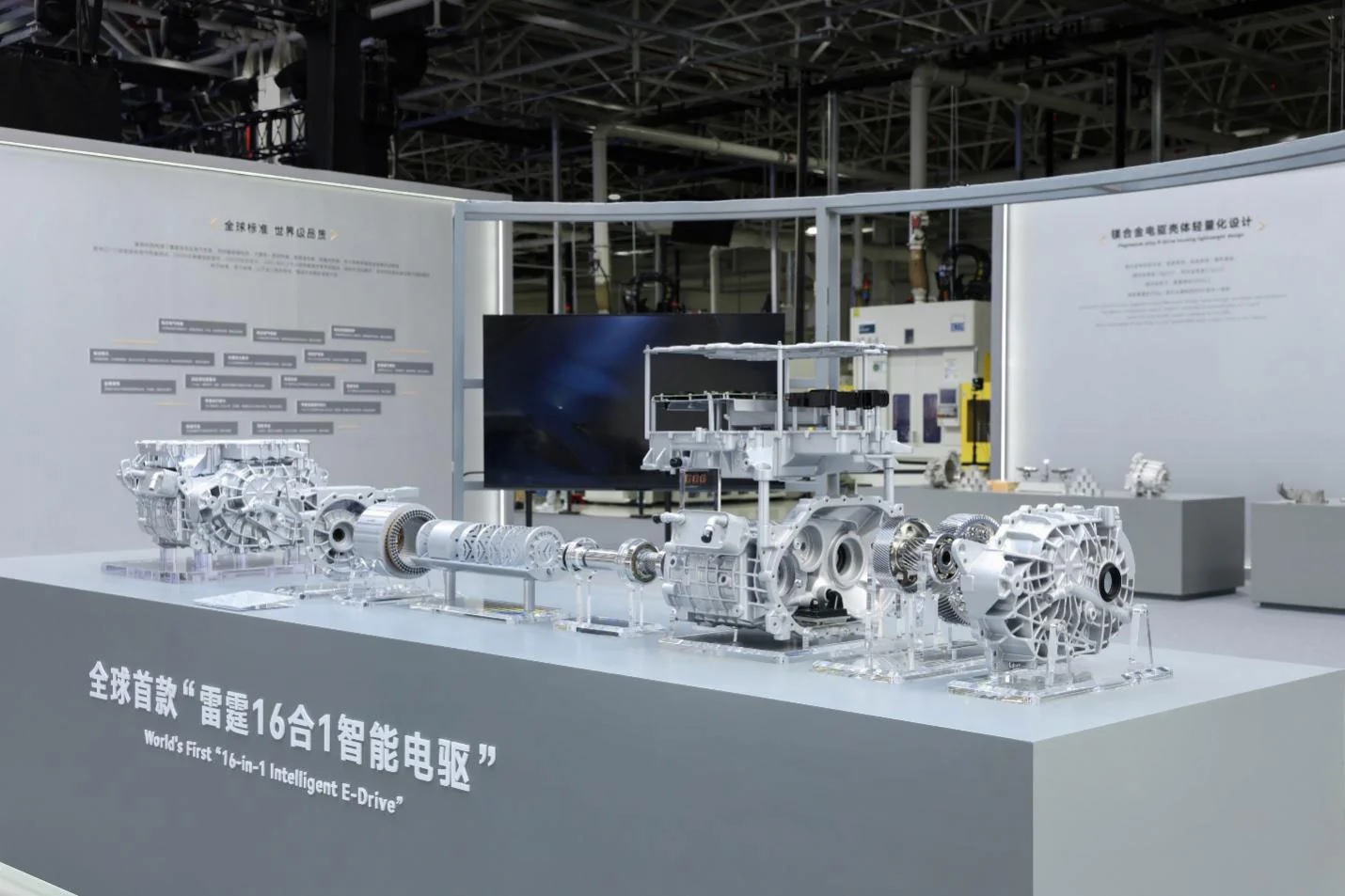
Considerable attention has been paid to battery chemistry and range, while motors have received less attention than they deserve. Motor efficiency is crucial for maximizing the energy stored in the battery. Both motors and batteries must evolve to optimize their performance and efficiency. Geely has officially unveiled its new 16-in-1 Intelligent Electric Drive System (Thunder). This technology represents a radical shift in electric vehicle architecture, unifying components that traditionally required separate housings, wiring, and brackets into a single compact module.
The significance of this advancement is certainly noteworthy, as it far surpasses the limitations of the 8-in-1 and 11-in-1 integrated systems that currently dominate the industry. By integrating twelve hardware functions and four software capabilities, the manufacturer has eliminated more than 180 redundant components in the assembly process, significantly simplifying power delivery to the wheels.
Internal Architecture and Massive Weight Reduction.
From a technical and engineering perspective, the Thunder system integrates critical chassis and energy management components, such as the synchronous motor, silicon carbide inverter, speed reducer, battery management units (both high and low voltage), and thermal management module. This electromechanical assembly is housed in a casing made of high-strength magnesium alloy.
This extreme compactness results in unprecedented physical specifications in the industry:
1. The total weight of the assembly has been set at 75 kilograms, representing a 15% reduction compared to current standards.
2. The vertical height of the module is less than 325 millimeters, freeing up 28 liters of auxiliary space in the vehicle's trunk.
3. Implementing this design has achieved a 30% reduction in wiring in high-voltage systems and a 15% reduction in low-voltage systems.
4. Regarding power density, the structural optimization allows for a declared value of 11.8 kW/kg (15.8 hp/kg).
800-volt structure and thermal resistance.
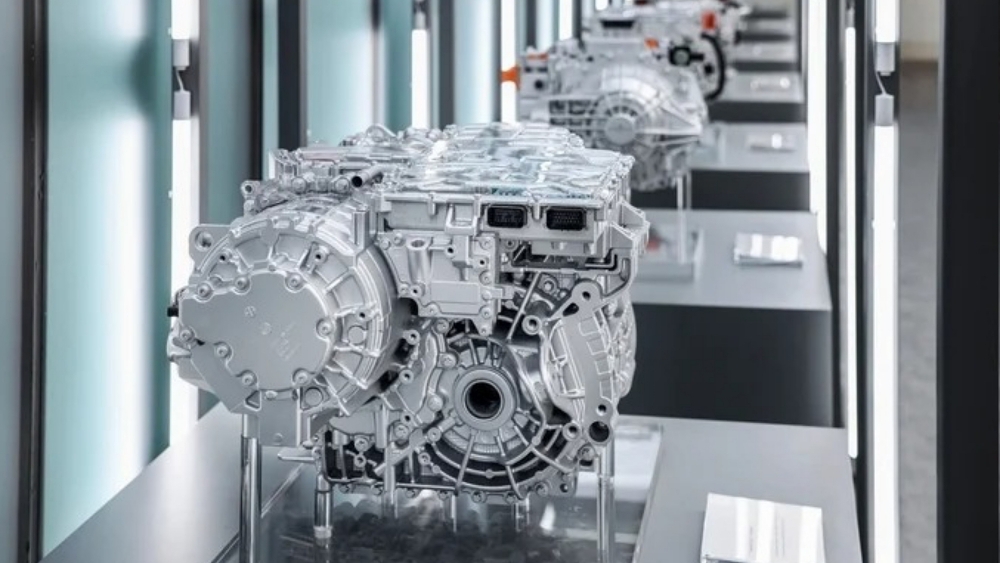
The block has been designed to fit 800V electrical platforms and benefits from an integrated control chip that compresses the system's response latency to just 2 milliseconds. To mitigate wear and friction losses, the gearbox gears have been designed with an inverted V arrangement and subjected to a rigorous high-precision grinding process, thus guaranteeing a torque deviation of less than 1%.
The block is equipped with a selective cooling system consisting of 54 independent channels that stabilize the temperature of the windings and semiconductors. In extreme winter conditions of -18°C, the integrated heat pump is capable of recovering and storing up to 7 kWh of waste heat, reducing the cabin's climate control system's energy consumption by more than 40%.
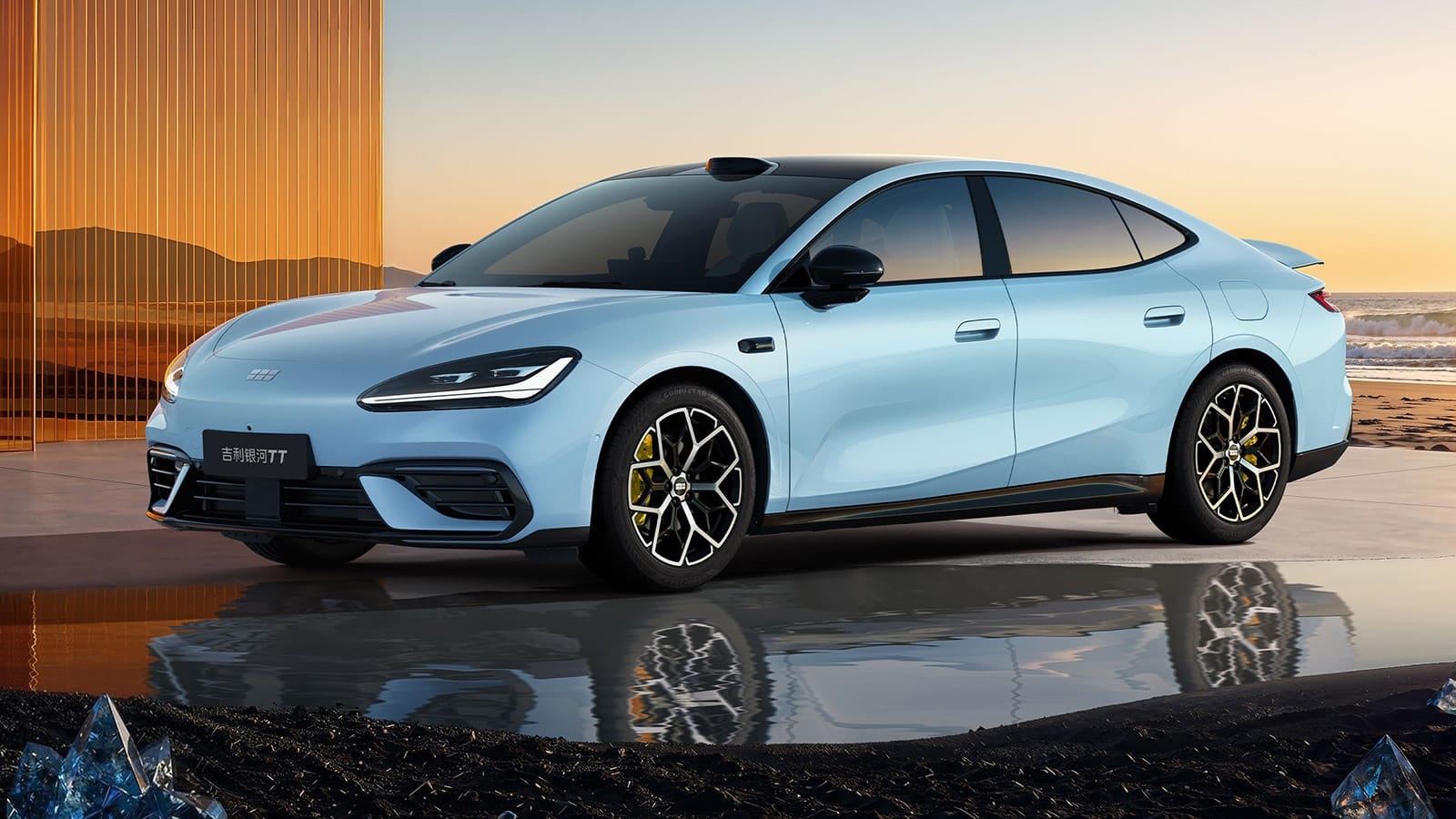
Debut in the Geely Galaxy TT and record-breaking energy consumption.
The Thunder system will be commercially launched in the new Geely Galaxy TT sports sedan, which will be offered with 52.4 kWh, 63.8 kWh, and 75.2 kWh battery capacities. The all-wheel-drive (AWD) variant uses a dual-motor setup with a combined maximum output of 425 kW (578 hp), enabling it to accelerate from 0 to 100 km/h in 3.8 seconds. In terms of pure efficiency, the system achieves an overall efficiency of 93.8% under the CLTC cycle. During validation trials, Geely set a Guinness World Record for efficiency, achieving an average energy consumption of 8.20 kWh per 100 kilometers. The manufacturer subjected the platform to an extensive durability evaluation process, comprising more than 9,000 tests, including exposure to thermal shock from -60°C to 140°C, as well as fatigue simulations equivalent to 300,000 kilometers of continuous driving.