

Current spikes degrade the battery far more than average speed does
An electric car's lifespan is significantly affected by its battery, though deterioration is not determined solely by the passage of time. As noted by bodies such as the U.S. Department of Energy, vehicle performance is influenced by various factors—such as charge and discharge cycles—as well as usage conditions, including temperature and driving style.
Against this backdrop, a study conducted by researchers at Shanghai Dianji University and published on August 14, 2026, in *Scientific Reports* focused on a specific factor: driving style. Broadly speaking, the study found that aggressive driving patterns are associated with significant battery degradation compared to smoother, more efficient driving.
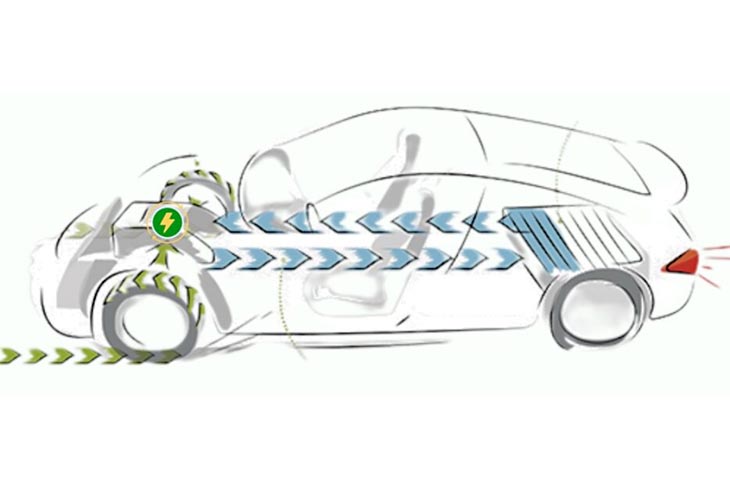
The difference arises when the battery operates under sudden surges.
The study was based on empirical data collected in 2022 from 15 electric vehicles driven in Guangzhou, China, covering a range of urban, suburban, and highway routes. The cars systematically and meticulously recorded data—such as speed, current, voltage, temperature, and state of charge—every ten seconds. Researchers subsequently organized this information into sixty-second intervals to classify driving behavior into five distinct levels.
One of the most significant findings is that the gap between driving styles cannot be explained simply by higher driving speeds. In the most aggressive category, the average effective current reached 66.02 amperes, compared to 20.56 amperes in the most efficient group, even though the average speeds of both groups were relatively similar. The key difference lay in acceleration, deceleration, and the instantaneous load placed on the battery.
This aspect is crucial, as a sudden demand for power requires the cells to deliver high current over a short period. Furthermore, regenerative braking exposes the system to intense charging pulses. According to the study, the instantaneous stress indicator reached a value 18.4 times higher during aggressive driving compared to efficient driving, suggesting significant short-term strain on the battery.
The most striking finding emerges from the long-term simulation.
When applying these usage patterns to a degradation model, the authors estimated that, after 1,000 cycles, capacity loss would be 21.15% for the efficient driving style and 53.22% for the aggressive one. The study included a counterfactual analysis designed to isolate the effect of driving behavior. In this scenario, switching from an aggressive to an efficient driving pattern reduced the short-term stress indicator by 91.3%.
However, the study itself highlights a relevant point that must be considered. It is important to note that the aforementioned percentages were not derived from physical testing, as might initially be assumed. Instead, these figures result from a meticulously calculated prediction based on a model fed with real, carefully collected data. Furthermore, the sample size is small, and battery aging depends on other factors as well, such as cell chemistry, thermal management, charging habits, and typical state-of-charge levels.
In any case, the practical takeaway from the study is quite clear. Not all forms of intensive use have an equivalent impact on battery lifespan; therefore, driving at high speeds does not necessarily equate to aggressive driving. This research establishes a link between increased wear and repeated spikes in electrical demand. Consequently, the conclusion is that smoother, less abrupt driving can help reduce the strain on the system without requiring consistently low speeds.