

Download the audio
Slide 1. Introduction.
The class develops what the MAP sensor is, the role this component plays in engine operation, and its implications for fleet management.
Slide 2. MAP Sensor: What it is and what it does.
- What is the MAP sensor?.
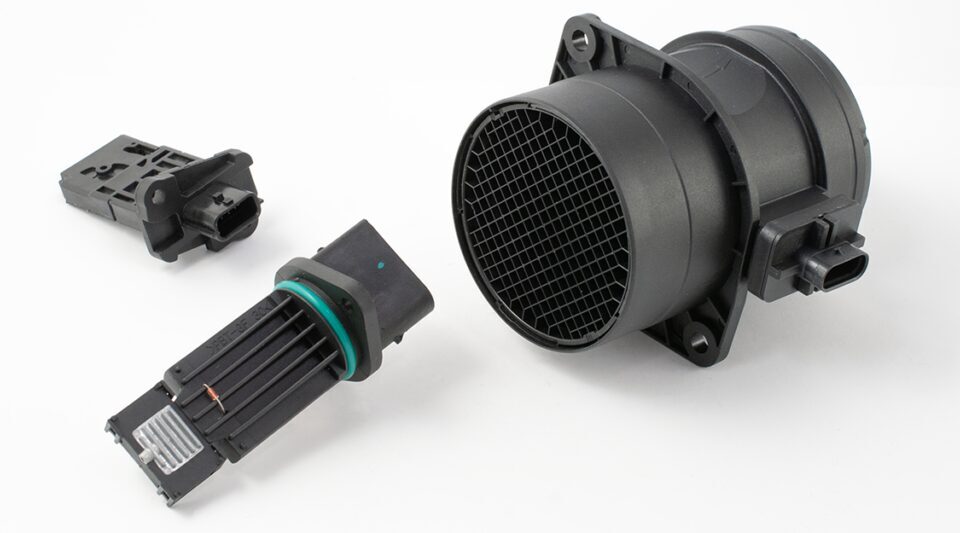
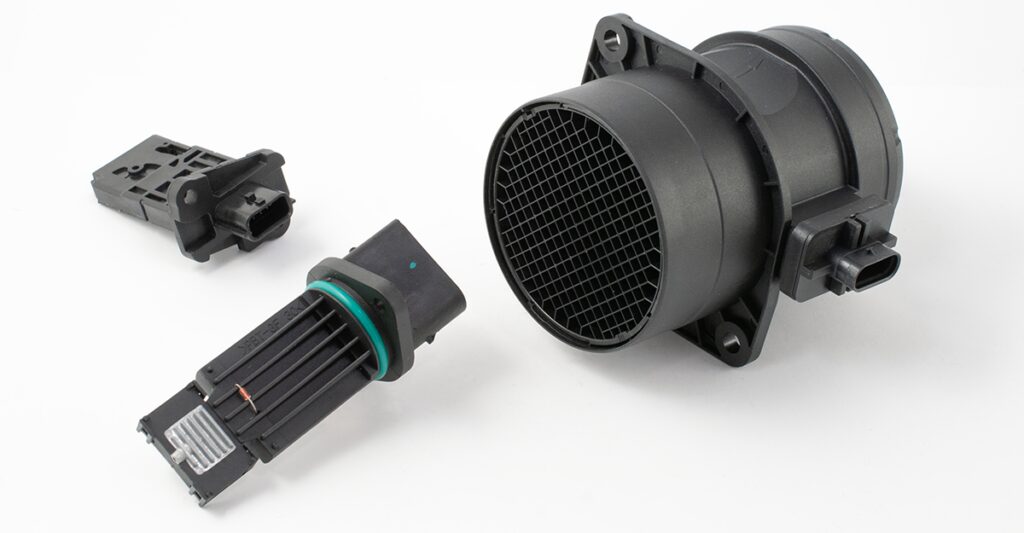
The absolute pressure sensor—also known as the MAP-Manifold Absolute Pressure sensor—is a device responsible for monitoring air pressure within the intake manifold. It is a critical component for the engine, as it provides essential information for proper ignition by enabling a precise mixture of fuel and oxygen in the combustion chamber.
The absence of this sensor would lead to erratic vehicle performance, increased fuel consumption, and higher emissions of pollutants.
- How the MAP sensor works.
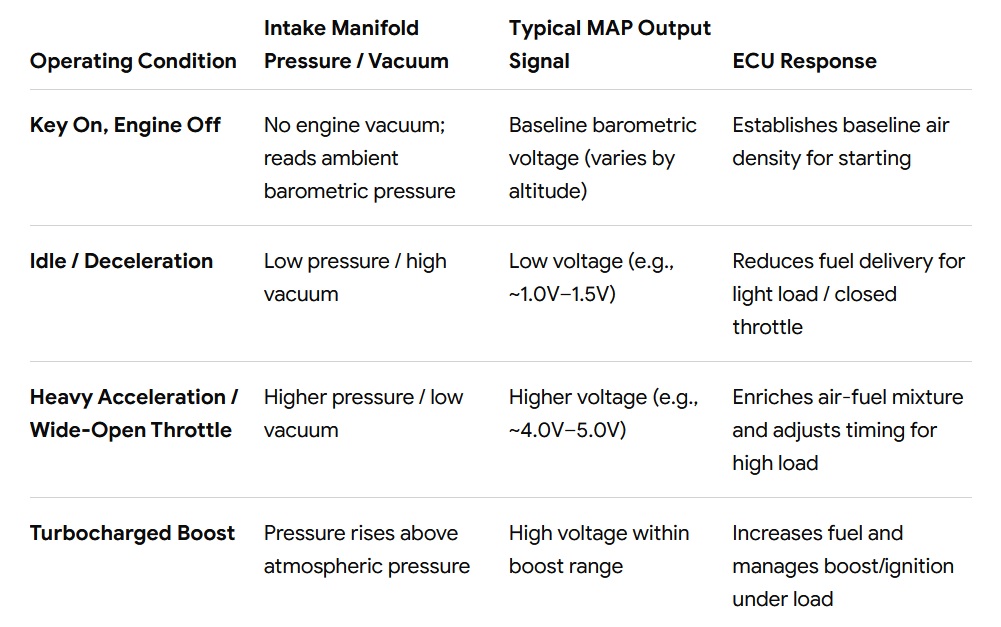
It utilizes silicon crystals that are highly sensitive to air pressure; these crystals undergo physical expansion when air enters the sensor. This expansion is converted into an electrical signal, which is then transmitted to the vehicle's computer.
The Engine Control Unit (ECU) collects and processes data regarding manifold pressure and engine speed. This data, provided by the MAP sensor, is used to calculate the exact amount of fuel that needs to be injected into the combustion chamber.
- Types of MAP sensors.
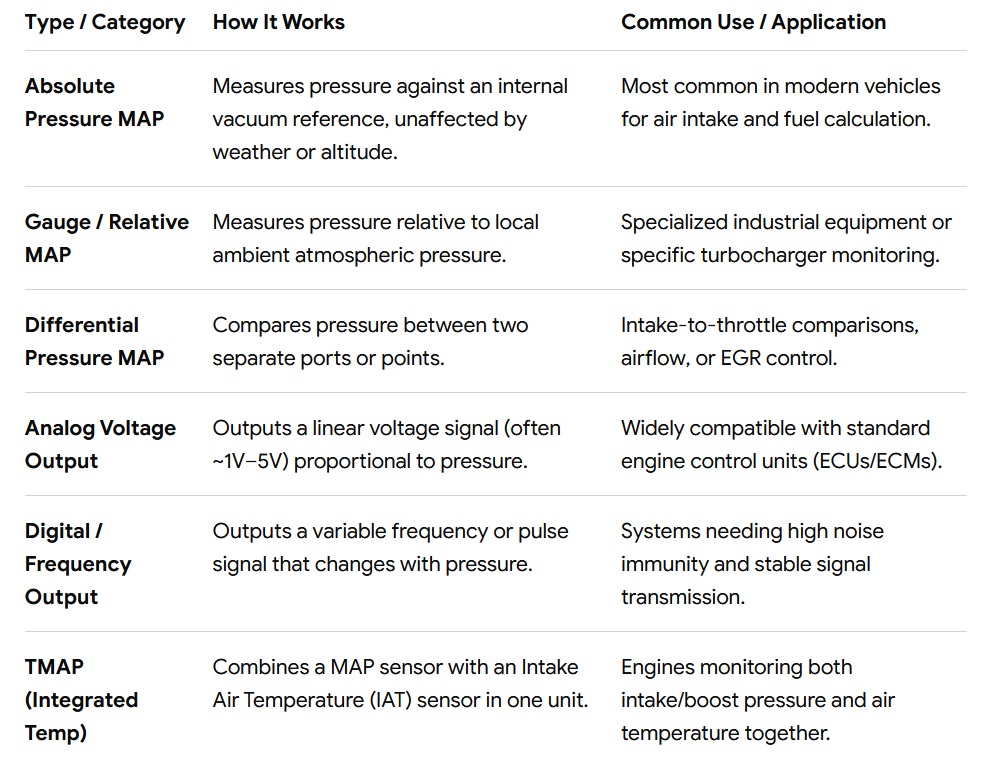
There are two types of MAP sensors that differ in their operation, although they serve the same purpose:
- Frequency-based MAP sensor.
This sensor measures the absolute barometric pressure within the engine. Based on the amount of air entering the engine, the sensor generates an electrical frequency and transmits it to the vehicle's ECU.
- Voltage-based (variable voltage) MAP sensor.
This sensor also measures the amount of air, but it does so using a variable resistor made of silicon crystals, a heat-resistant material. As the airflow entering the sensor changes, the resistance and voltage vary accordingly. The resulting signal is sent to the vehicle's control unit for data interpretation.
- Symptoms of a faulty or dirty MAP sensor.
When this component stops functioning correctly or becomes dirty, it can cause issues such as a loss of power, engine hesitation or jerking, an unstable idle, or increased fuel consumption.
MAP sensor malfunctions do not always indicate a complete failure of the unit. In many cases, an accumulation of dirt, oil, or debris from the intake system can skew readings, causing the control unit to receive incorrect information.
The symptoms of a dirty MAP sensor can be very similar to those of an electronic fault or an issue with other intake system components. Therefore, identifying a single defect is not enough to confirm that the MAP sensor is the root cause.
One of the first signs that often appears is irregular engine behavior, particularly during load changes or when power is demanded.
Some of the most common signs include:
- Loss of power.
- Jerking during acceleration.
- Unstable idle.
- Increased fuel consumption.
- Black smoke in diesel engines.
- Illumination of the check engine light.
- Difficulty maintaining smooth operation.
However, it is important to note that these symptoms may also indicate issues with other components, such as the MAF sensor, the EGR valve, intake leaks, the fuel system, or the turbocharger.
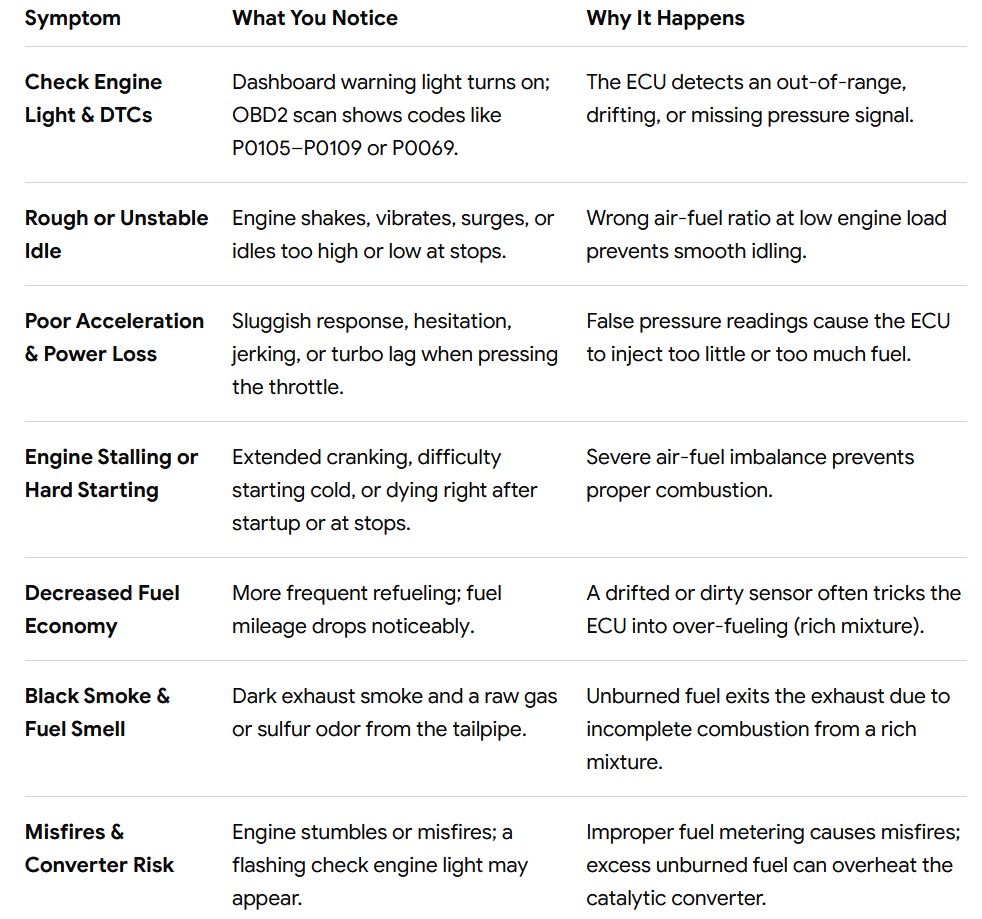
- Symptoms of power loss and jerking.
One of the most common indicators of a faulty MAP sensor is a loss of engine responsiveness.
When the engine control unit receives an incorrect manifold pressure reading, it may miscalculate the amount of fuel required. If the system detects insufficient air intake, it might limit fuel injection to protect the engine; otherwise, an improper air-fuel mixture may occur.
The driver may notice:
- A lack of power during acceleration.
- Erratic pedal response.
- Jerking or hesitation when changing speed.
- A feeling that the turbocharger is not delivering its full power.
In turbocharged engines, these symptoms can easily be mistaken for a fault in the forced-induction system. A leaking hose, a damaged intercooler, or an issue with turbocharger regulation can produce similar effects.
For this reason, an electronic diagnostic scan is recommended. The ECU is designed to record anomalous values related to intake pressure, which helps pinpoint the root cause of the problem.
- Symptoms affecting the vehicle's idle.
When a MAP sensor provides an incorrect manifold pressure reading, the engine may struggle to maintain a stable idle speed when operating under no load.
These symptoms may manifest as follows:
- Engine RPM fluctuating, rising and falling, without any input from the accelerator pedal.
- Vibrations while the vehicle is stopped.
- A tendency for the engine to stall.
- Difficulty starting the engine.
An engine at idle relies on a precise balance between air, fuel, and ignition timing. It is important to note that inaccurate data from the sensor can disrupt this balance, forcing the ECU to make constant, compensatory adjustments.
- Increased fuel consumption and black smoke emissions from the exhaust.
Another sign associated with MAP sensor faults is higher-than-normal fuel consumption.
If the ECU receives an incorrect air pressure reading, it may alter the amount of fuel injected. In a diesel engine, a discrepancy in the air-to-fuel ratio can lead to incomplete combustion, resulting in the emission of black smoke.
This smoke is a byproduct of incomplete fuel combustion, which causes an increased generation of soot particles.
Furthermore, it is important to note that a MAP sensor providing erroneous values can compromise the operation of emission-control systems—such as the EGR (Exhaust Gas Recirculation) or the particulate filter—since these systems rely on precise management of gas and air flow.
- MAP sensor maintenance.
To extend the service life of the MAP sensor, it is recommended to perform maintenance as follows:
- Check for any damaged hoses upstream of the turbocharger (if the vehicle is equipped with one), as these can allow dirt to enter.
- Verify that the electrical system is functioning correctly: the MAP sensor is a piezoelectric component that requires power supplied by the vehicle's alternator.
- It is essential to replace the air filter according to the recommended service interval.
- Check for the presence of moisture within the vehicle's circuits. Leaks can lead to inaccurate MAP sensor readings by altering the air density.
- Use the OBD port and a diagnostic tool to retrieve any error codes.
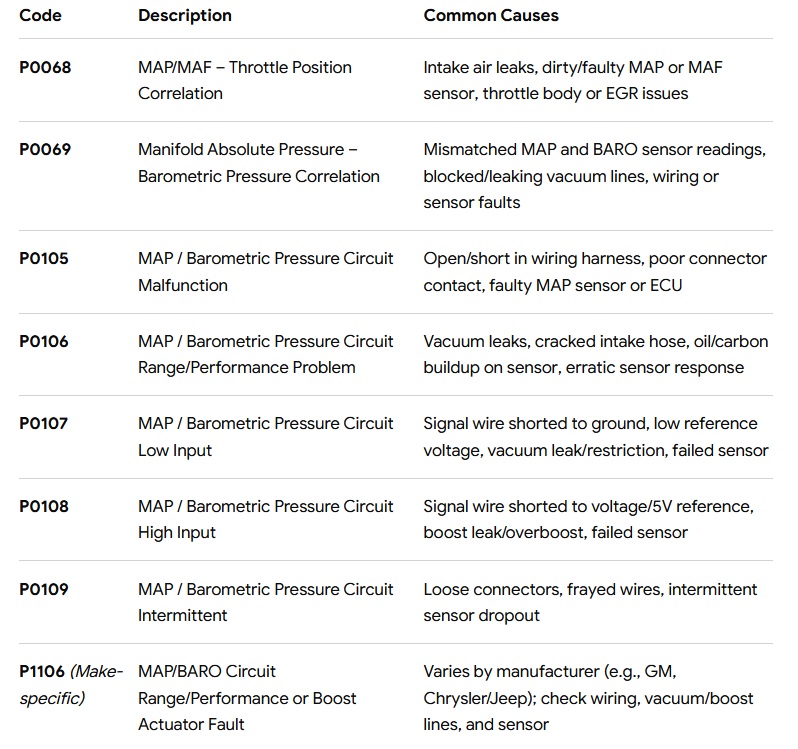
The price range for a MAP sensor can vary between 20 and 150 euros, depending on the vehicle model. To this, one must add the cost of labor, which is generally not high due to the ease of access, with the exception of certain specific situations.
- Cleaning the MAP sensor.
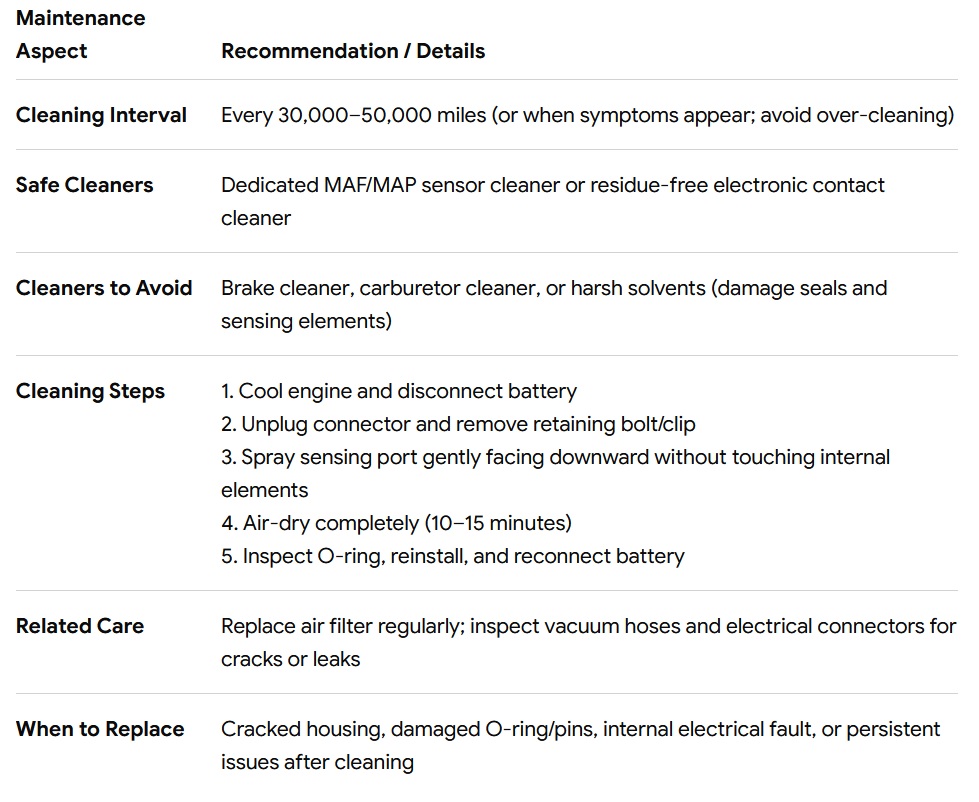
A common question is whether it is possible to clean a MAP sensor. The answer is yes, though one must proceed with caution.
If the issue is caused by dirt, cleaning may be sufficient to restore proper function. However, if there is an internal electronic failure, cleaning will not resolve the fault.
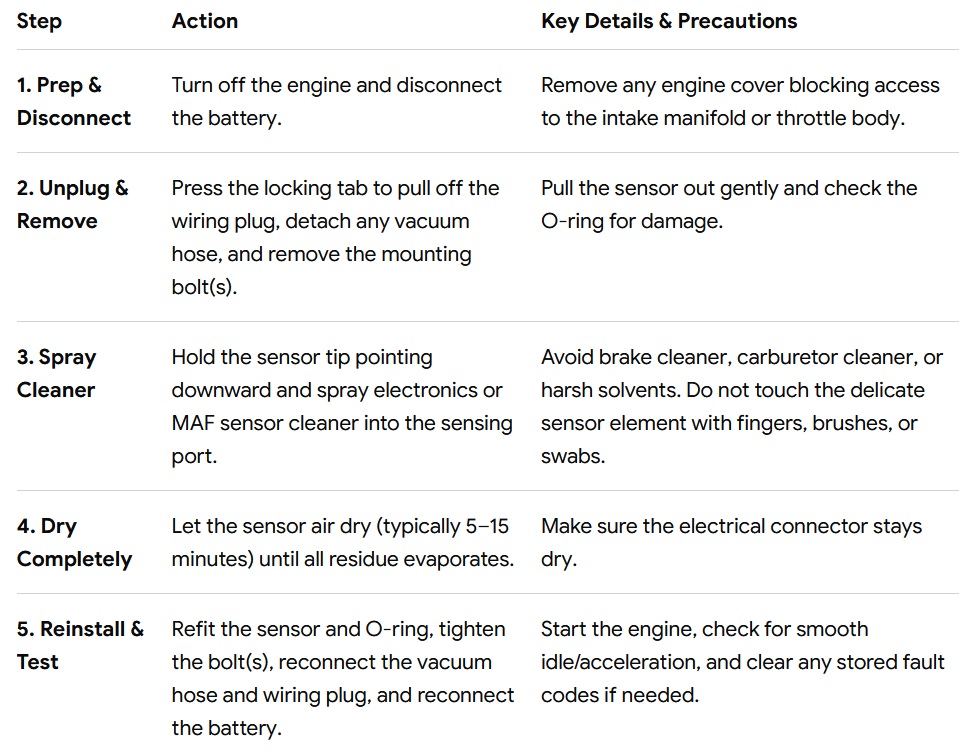
Below are the steps for cleaning the MAP sensor:
- Locate the sensor on or near the intake manifold.
- Disconnect the electrical connector while the engine is off.
- Remove the sensor, following the manufacturer’s instructions.
- Use a cleaner specifically designed for electronic components.
- Remove the dirt without touching any sensitive parts of the sensor.
- Allow it to dry completely before reinstallation.
Avoid using tools that could damage the sensing area, and do not apply harsh chemical products. It is important to note that some sensors contain delicate components that can be rendered unusable if handled incorrectly.
Furthermore, if a significant buildup of oil or carbon deposits is found, a thorough investigation is recommended to determine the source. Increased contamination of the sensor may be caused by issues with the crankcase ventilation system, the EGR system, or the intake system.
- What happens if I disconnect the MAP sensor?.
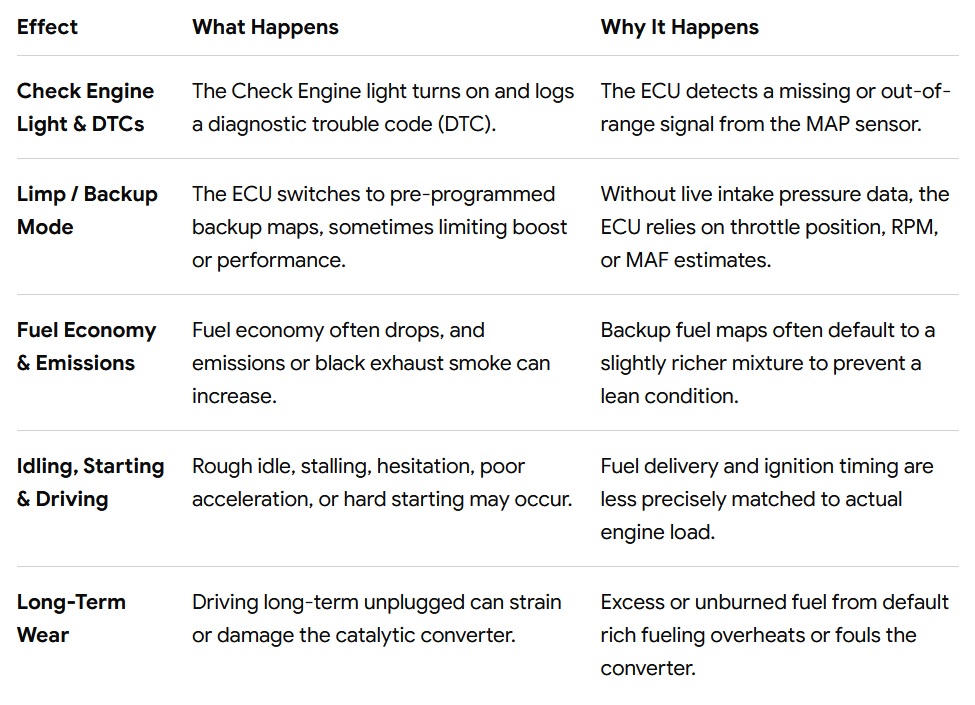
Disconnecting the MAP sensor while the vehicle is running may cause the engine control unit to detect an anomaly and activate a protective mode.
The engine may continue to operate using default values, although combustion management will be less precise. This can result in a loss of power, increased fuel consumption, and higher emissions.
Furthermore, it is advisable to avoid driving for extended periods with the sensor disconnected, as this could compromise the operation of other systems related to engine management.
- Implications for fleet management.
The main consequences of a dirty or faulty MAP sensor include: increased fuel consumption, a loss of power, engine hesitation (jerking), an unstable idle, or the illumination of the check engine light.
The following measures are recommended:
- Vehicle maintenance.
Vehicle maintenance must be performed according to the manufacturer’s instructions and within the established intervals.
Diagnostics should be run via the OBD port to check for any error codes related to the MAP sensor.
Clean the MAP sensor once a year or every 15,000–20,000 kilometers to ensure it functions correctly.
- Air filter.
It is crucial that the air filter functions properly so that the MAP sensor can accurately measure air pressure.
- Premium replacement parts.
The MAP sensor is an essential component for engine operation and emissions control; therefore, it is recommended to use premium-quality replacement parts. Do not use second-hand parts.
- Driver training.
Drivers should be trained to recognize signs such as increased fuel consumption, loss of power, engine hesitation, an unstable idle, or the illumination of the check engine light. Drivers must report these issues to the workshop supervisor or fleet manager.
- Vehicle inspection-MOT.
If the MAP sensor is not functioning correctly, the vehicle will experience higher fuel consumption and increased pollutant emissions, which will cause it to fail the mandatory vehicle inspection-MOT.
Slide 3. Thank you for your time.
The class has developed what the MAP sensor is, the role this component plays in engine operation, and its implications for fleet management, see you soon.