Download the audio
- Introduction.
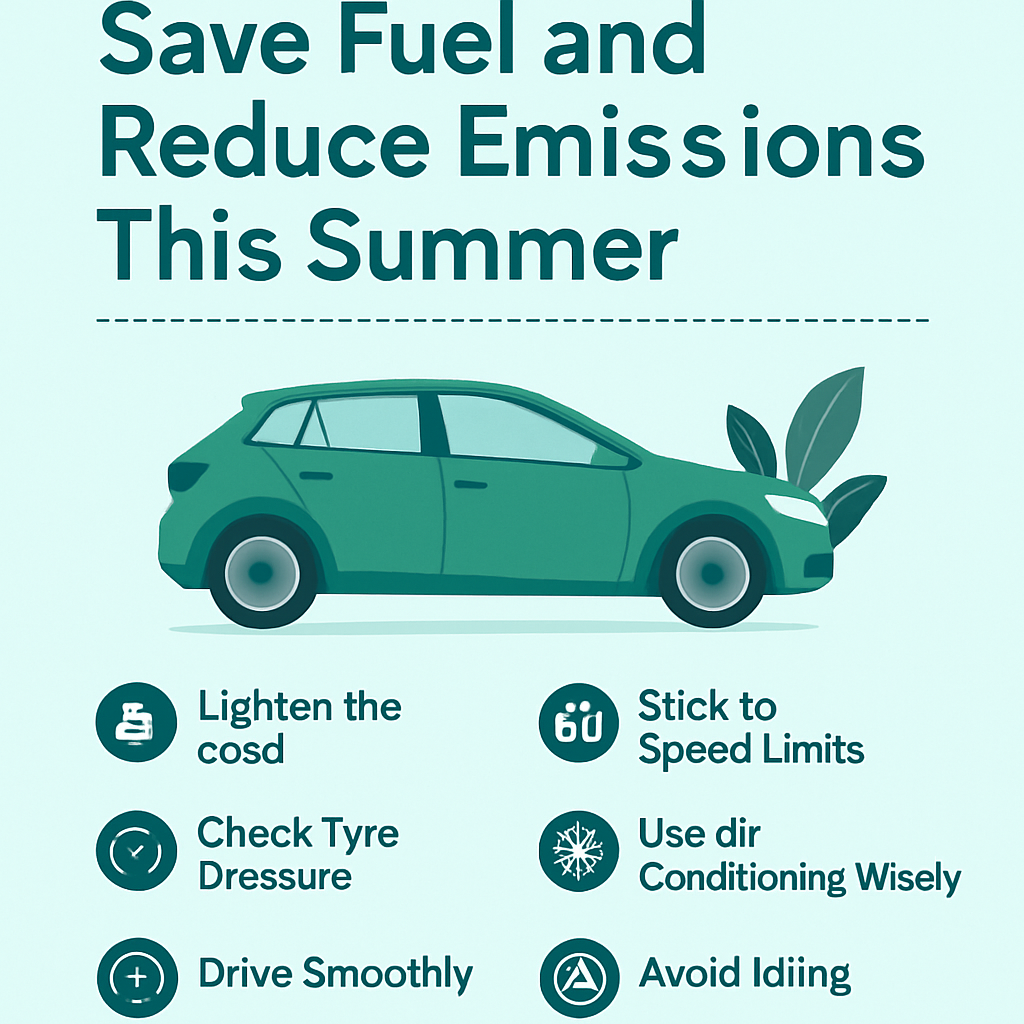
The class develops 12 tips for reducing fuel consumption and emissions.
- 12 tips for reducing fuel consumption.
- Optimize your driving style.
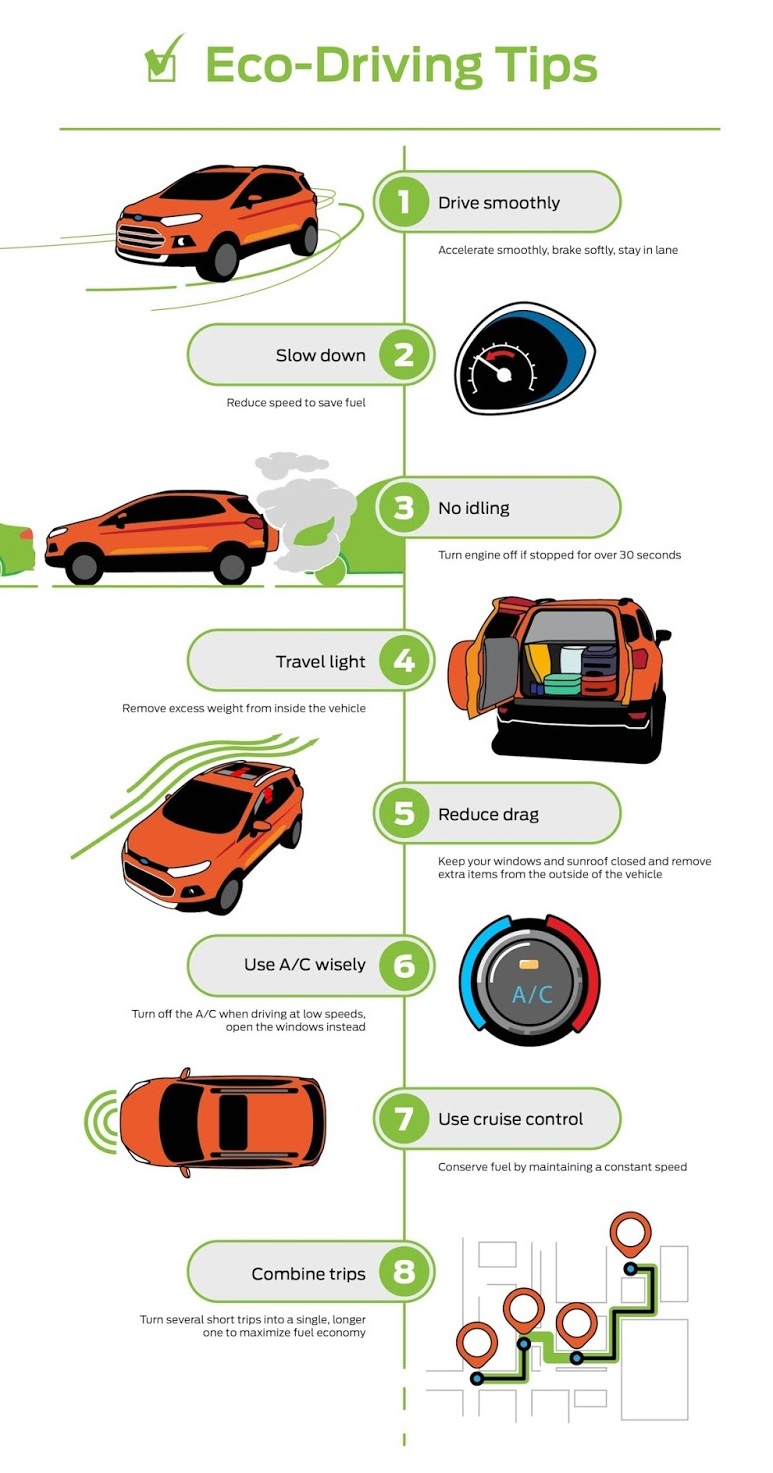
It is crucial to accelerate decisively, shift to a higher gear in a timely manner, around 2,000 RPM, and maintain your desired speed at low RPMs. It is important to note that you should only downshift if the engine begins to exhibit signs of malfunction, such as jerking or vibrations.
Even with automatic transmissions, it is possible to achieve fuel savings. In the automotive sector, it is important to highlight the functionality of the drive mode selector, which allows users to choose from various driving programs. It is recommended to select ECO mode whenever possible. The automatic transmission will shift gears earlier and adjust the RPM later, thereby reducing engine speed. In certain models, the accelerator pedal response can be adjusted or engine power slightly reduced. This technology significantly reduces fuel consumption, resulting in substantial savings for users.
- Anticipate traffic.
It is important to keep in mind that braking consumes energy. Therefore, it is strongly recommended to use engine braking as much as possible. It is crucial to avoid putting the gearshift in neutral when approaching a red light. Most combustion-engine vehicles are equipped with a fuel cut-off system that interrupts the fuel supply during deceleration.
Instead of stopping the vehicle abruptly just before reaching a traffic light, a stop sign, or any other traffic signal, it is recommended to ease off the accelerator and allow the vehicle to coast for the last few meters with the gear engaged, rather than applying the brakes suddenly.
- Avoid short trips.
A car with an internal combustion engine consumes more fuel when the engine is cold. For a gasoline engine to operate properly, the fuel mixture must be richer (with a higher concentration of fuel) during the warm-up phase than at its optimal operating temperature. This increase results in a substantial rise in the vehicle’s fuel consumption.
For short distances, we recommend using a bicycle or combining several short trips into one longer one. We recommend avoiding prolonged idling to prevent environmental pollution, excessive fuel consumption, and engine damage.
- Turn off the engine while it is idling.
Once started, the engine consumes fuel, approximately 0.5 to 1 liter per hour, even when the vehicle is stationary. Therefore, it is strongly recommended that you turn off the engine if you expect to be idling for more than 20 seconds. Most vehicles are equipped with a start-stop system that automatically shuts off the engine when the vehicle is stationary.
Therefore, it is recommended to keep the Stop/Start function enabled at all times. The additional strain on the starter motor and battery is minimal, especially when the engine is warm.
- Turn off devices that consume energy unnecessarily.
A car’s electrical devices draw their power from the vehicle’s electrical system. The alternator, which is driven by the combustion engine, is responsible for supplying this electrical power. Consequently, electrical devices that are in use consume fuel.
The demand for electrical energy is not influenced by distance traveled or speed, but by time, that is, by duration of use. Depending on the vehicle model and operating conditions, the air conditioner accounts for additional fuel consumption of approximately 0.3 to 1.5 liters per 100 kilometers. The auxiliary heater consumes approximately 0.2 to 0.5 liters per hour.
To reduce fuel costs, it is recommended that you limit engine running time to the minimum necessary. It is important to note that opening the side windows or sunroof can disrupt the airflow around the vehicle, which in turn can increase fuel consumption. Opening the windows on both sides results in an additional fuel consumption of approximately 0.2 liters per 100 kilometers traveled at a speed of 100 kilometers per hour. In urban driving conditions at low speeds, opening the vehicle’s windows can provide fuel economy benefits compared to using the air conditioning.
- Reduce weight.
To illustrate the situation, consider the following example: if the vehicle is equipped with beverage containers, or various small items, this would increase the vehicle’s weight and, consequently, fuel consumption. This phenomenon is attributable to inertia, defined as the energy required to increase the speed of a mass.
Therefore, it is recommended that you remove all unnecessary items. It has been shown that an increase of 100 kilograms in the vehicle’s weight can increase fuel consumption by up to 0.3 liters. This difference is particularly noticeable in city traffic, where frequent stops and starts have a significant impact on fuel consumption. It is important to note that every time the vehicle starts and accelerates, it consumes additional fuel.
It is important to note that accessories such as roof racks, roof boxes, and bike racks can have a significant impact on the vehicle’s fuel consumption. Therefore, it is necessary to remove roof and rear racks after use. Generally speaking, transporting items such as bicycles on a rear bike rack attached to the tow ball offers fuel efficiency advantages compared to transporting them on the vehicle’s roof.
- Use fuel-efficient tires.
Rolling resistance is significantly affected by tire quality. It is estimated that using low-friction tires can save up to 0.5 liters of fuel per 100 kilometers driven. Therefore, a tire that may seem expensive but has significantly reduced rolling resistance can more than pay for itself over its lifetime.
- Follow your car’s fuel-saving tips.
Although it may seem obvious, it is crucial to closely monitor your vehicle’s fuel consumption. Please make sure to keep the on-board computer in a visible position. In most models, the display is located on the instrument panel, specifically behind the steering wheel. By keeping a close eye on fuel consumption, you can immediately assess the impact of your driving style and make the necessary adjustments to optimize performance.
In addition to a fuel consumption gauge, some models feature electronic fuel-saving systems. These systems analyze the driver’s driving style and offer tips on how to improve it. Depending on the manufacturer, this can range from a simple score, to additional virtual range achieved through more anticipatory driving, or even a complex graphical system that precisely shows what can be improved. For example, this might include smoother acceleration or braking earlier.
These features tend to be located in submenus; however, many vehicles also display a trip summary when the engine is off. With some manufacturers, it is possible to use the vehicle’s app to directly compare fuel consumption with the fleet average and check whether you are above or below the average of other drivers. This can also serve as an incentive to use as little fuel as possible.
- Make sure your tires are properly inflated.
It is recommended that you check your tire pressure regularly. Underinflated tires can increase fuel consumption. It is important to note that even a 0.3 bar drop in tire pressure can increase rolling resistance, thereby leading to unnecessary fuel consumption.
To save even more fuel, you can increase tire pressure within the ranges recommended by the vehicle manufacturer, provided this practice is specified in the owner’s manual.
- Perform regular vehicle maintenance.
It is recommended that you have your vehicle inspected periodically. It is important to note that certain parts can have a significant impact on fuel consumption, such as the engine air filter or spark plugs. It is also crucial to change the oil regularly, always using a modern, low-viscosity oil, to ensure optimal fuel efficiency. It is essential to strictly follow the vehicle manufacturer’s specifications.
- Observe the recommended speed limit.
It is recommended to adjust your speed to the flow of traffic and keep it as constant as possible to reduce fuel consumption. It is important to note that frequent acceleration and braking can increase energy consumption, and consequently, fuel consumption.
In addition, it is crucial that vehicles overcome the air resistance that builds up around the body. This aerodynamic drag increases at a faster rate than speed, which can lead to a disproportionate increase in fuel consumption. On the highway, it is strongly recommended to adhere to the recommended speed of 120 km/h.
- Take a driver training course.
By participating in road safety training courses, you can improve your driving skills and explore your vehicle’s handling characteristics through practical driving exercises. In addition, you’ll receive valuable tips to ensure safe and anticipatory driving.
Some training centers offer special courses on eco-driving and fuel efficiency. We recommend checking to see if any are available near you.
- Thank you for your time.
The class has developed 12 tips for reducing fuel consumption and emissions. see you soon.