
Download the audio
Slide 1. Introduction.
The class develops the electrical risks associated with charging an electric vehicle during a storm, the safest conditions for charging, what to check before plugging in, and the implications for fleet management.
Slide 2. Risks when charging an electric vehicle during a thunderstorm.
- Rain and thunderstorms present different types of risks.
A charging system designed for outdoor use—and installed correctly—allows for charging during ordinary rain. However, it is important to note that charging an electric vehicle during a storm should not be taken lightly, as the possibility of a lightning strike cannot be ruled out. The primary risk is not rainwater entering the connector, but rather a power surge—either from the electrical grid or caused by an atmospheric electrical discharge (lightning) in the vicinity.
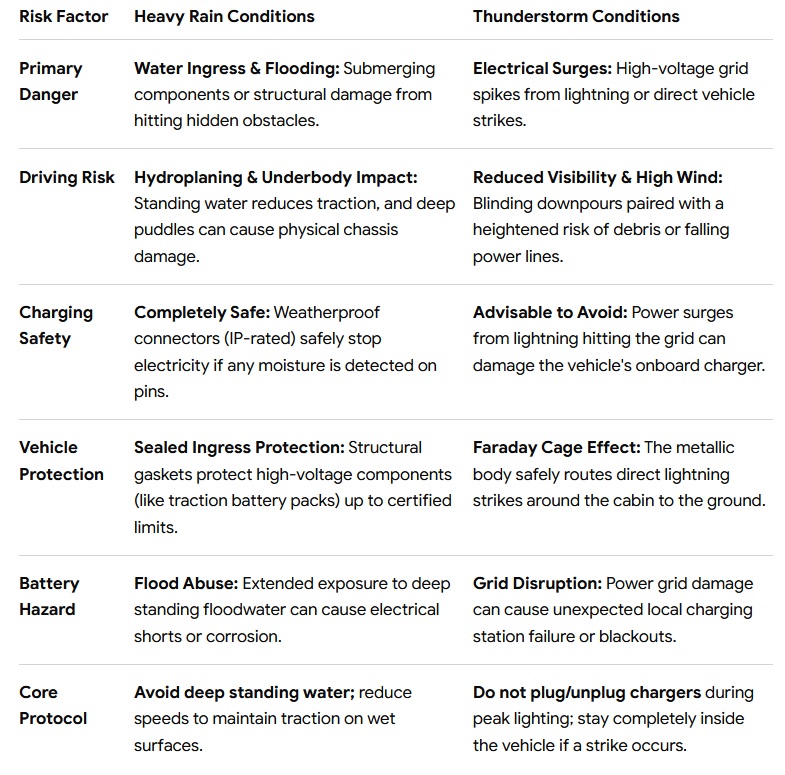
In Spain, the technical regulation ITC-BT-52 mandates the implementation of grounding systems, residual current protection (RCDs), and surge protection within charging circuits. While these measures mitigate risk, it is important to understand that no system can guarantee absolute protection against every possible direct impact. In the event of a severe thunderstorm, it is recommended to follow the instructions provided by the vehicle and charger manufacturers, and to avoid handling the equipment whenever possible.
Connectors and charging points designed for outdoor use are equipped with enclosures and control systems that prevent the connection from becoming energized unless it is established correctly. Therefore, rain alone is not a reason to stop charging, provided the equipment is in good condition and is being used according to its specifications.
A thunderstorm involving lightning carries the risk of power surges. The Royal Decree regulating charging infrastructure requires protection against both temporary and transient surges; it also accounts for the potential need for additional protection at the charging station itself, depending on the installation's design and distance from other components.
- What protections should a domestic charging point have?.
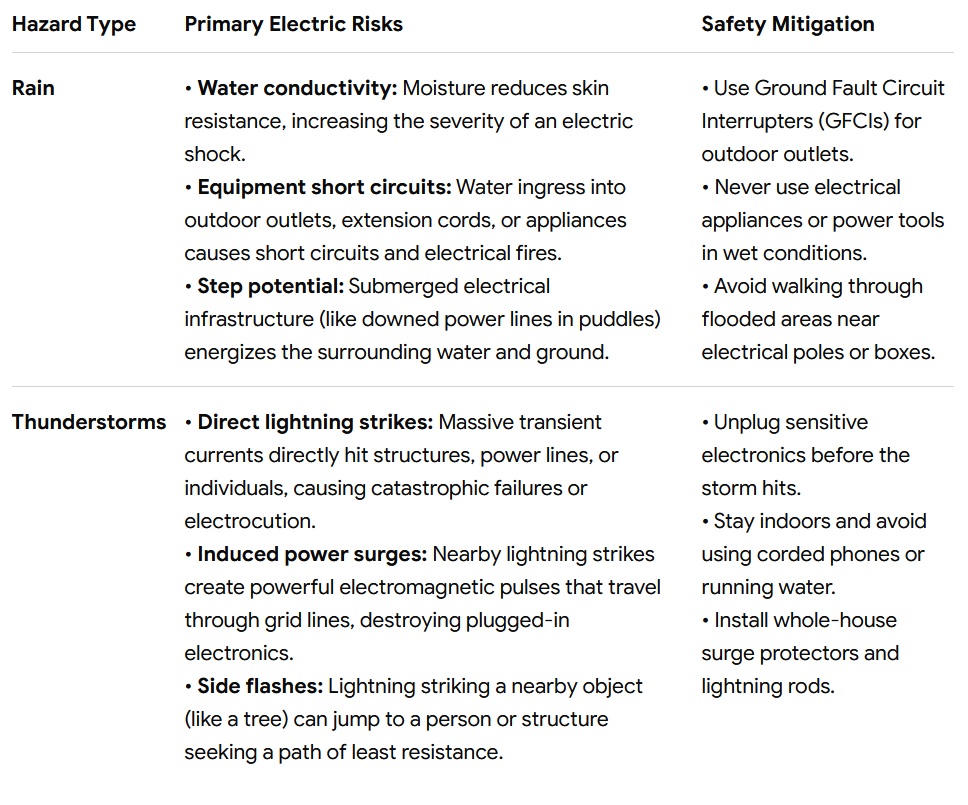
A wallbox installed in compliance with regulations must feature a dedicated circuit, a protective conductor, a grounding connection, overcurrent protection, and a residual current device (RCD). When installing an electric vehicle charger at a private residence, the equipment and protective measures must adhere to the ITC-BT-52 standard and be appropriate for the specific location of the unit.
Surge protection is particularly important during thunderstorms. If a home’s electrical system is not up to current standards, if a charger has been installed without a proper inspection of the electrical panel, or if the RCD trips frequently, one should not assume the system is safe simply because the vehicle is charging. Consequently, it is essential to have the system inspected by a qualified installer.
- What differs in a public or fleet charger?.
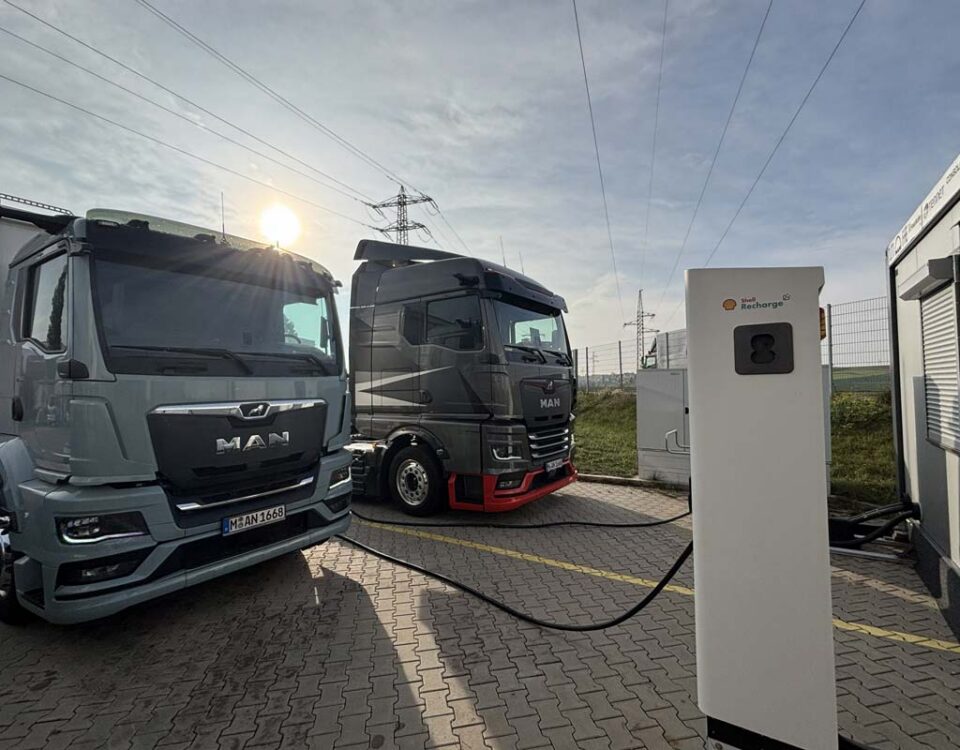
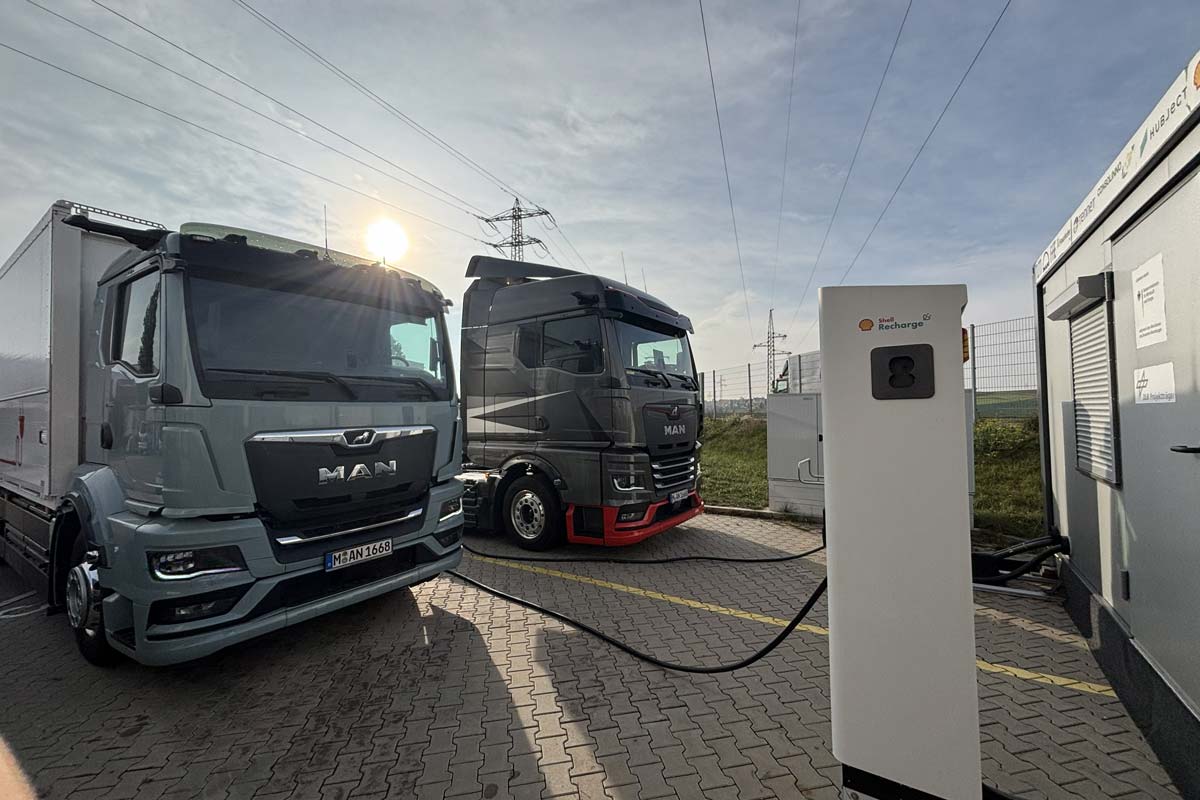
Public charging points must meet specific electrical and safety requirements. Communication between the vehicle and the charger verifies conditions before power is supplied, and the system is designed to terminate the charging session if an anomaly is detected. This feature allows for charging during rain without exposing energized contacts.
It is important to note that there is no absolute protection against a nearby lightning strike. If issues arise at a charging point—such as the operator locking the equipment, or visible damage like water accumulation inside the connector or a damaged cable—it is advised not to start or continue a charging session.
- Why the vehicle cabin does not protect the charging equipment.
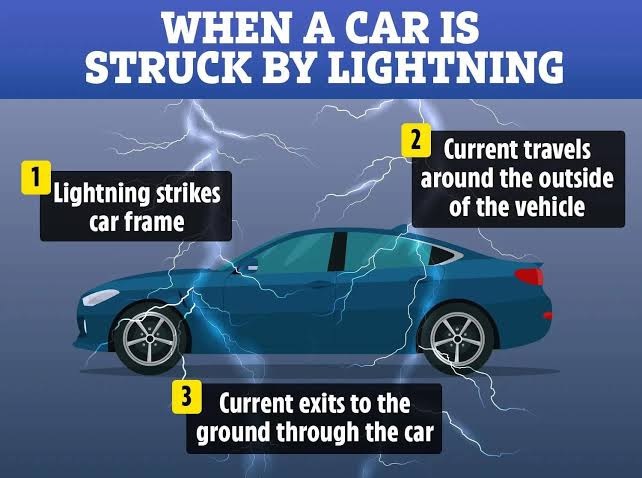
In a closed vehicle with a metal roof and body, the structure is designed to divert a lightning discharge around the passenger cabin. However, the "Faraday cage" effect does not guarantee protection for the vehicle's electronics against a direct lightning strike; the vehicle may sustain damage even while the occupants remain protected inside—provided the windows are closed and they are not in contact with any metal parts.
Therefore, relying on the "Faraday cage" concept as a justification for handling a charging cable during a severe storm is not recommended. The safest course of action is to avoid being outdoors near electrical or metallic components when lightning is in the vicinity.
- What to do if a vehicle is already charging when a thunderstorm begins.
If the charging process is underway and everything is functioning normally, it is advised not to handle the connector during a severe thunderstorm. Prioritizing your safety is crucial; if the charger or vehicle application allows for it, manage the session remotely. It is important to note that stopping the charging process should not be confused with physically disconnecting the installation from the power grid.
When conditions permit, follow the manufacturer’s standard procedure to complete the charging process. Avoid tampering with the release mechanism, touching potentially damaged connectors, or standing in areas where water has accumulated. If the charging point has experienced a power surge or stops working, it must be inspected before it can be used again.
If you live in an area with frequent precipitation, we recommend asking your installer to confirm that the surge protection systems are correctly sized and coordinated. Relevant regulations specifically address such devices to help limit damage originating from the power grid.
It is advisable to periodically inspect the cable, plug, and wallbox. Signs such as overheating, discoloration, cracks, loose components, or frequent tripping of protective devices are grounds to stop using the equipment until a professional has determined the cause. If a standard household outlet is used, do not automatically assume it is suitable for prolonged charging; you must verify that the outlet, the electrical circuit, and the portable charger are appropriate and in good condition.
- Faqs about charging an electric vehicle during a storm.
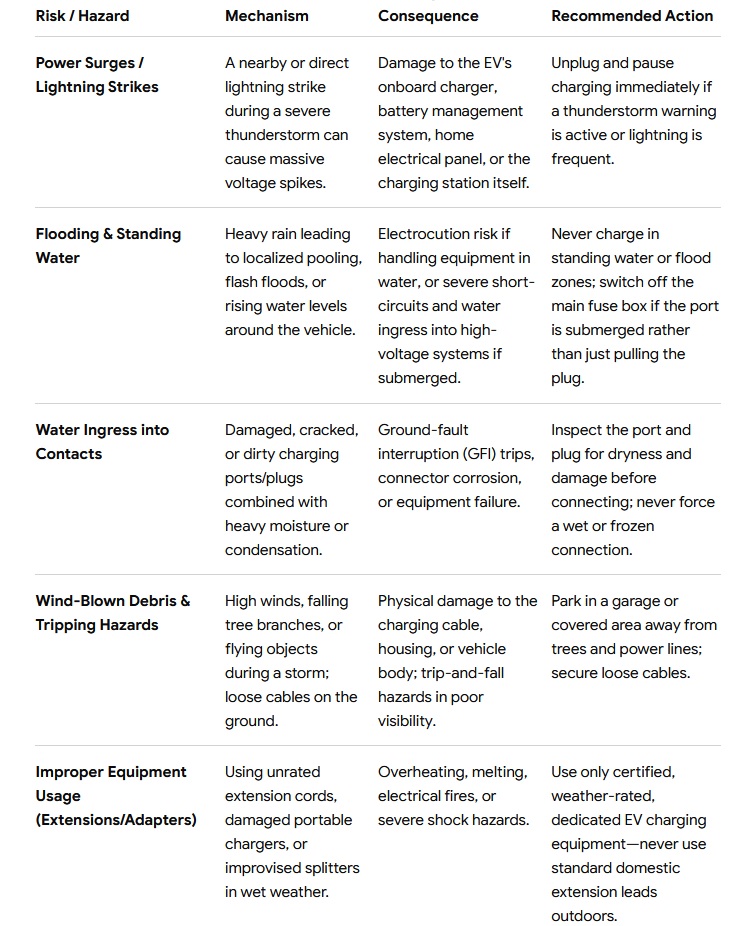
These answers help distinguish between normal operation in the rain and the precautions necessary when lightning is present, or in the event of visible damage or electrical issues.
- Is it safe to charge an electric car when it is raining?.
In general, the answer is yes, provided that an approved, correctly installed, and well-maintained charging point is used. The connectors are designed to prevent access to live parts, and the installation includes electrical safety protections. If you notice any damage, the presence of water in inappropriate areas, error messages from the charger, or an improvised installation, you should refrain from charging until a full inspection has been carried out.
- Should I unplug the car if lightning starts?.
There is no universal rule that applies to all vehicles and chargers. During a severe storm, it is best to avoid handling the charging cable. If your system allows you to stop charging remotely, you may do so and wait for the storm to pass before touching the connector. It is essential to always follow the instructions provided in your vehicle’s manual and the charging point’s documentation.
- Can a lightning strike damage the battery or the charger?.
A significant power surge can compromise the electronic components of the charger or the vehicle, even when protective systems are properly in place. For this reason, Spanish regulations require protection against temporary and transient overvoltages. It is important to note that no device offers absolute immunity against a direct lightning strike. Therefore, it is strongly recommended to implement appropriate preventive measures—such as ensuring a proper, regularly inspected installation—to guarantee user safety.
Before beginning a charging session, inspect the equipment and consult the manual. If a storm is approaching, prioritize your safety. Following a malfunction, keep the operator's notification and wait for the location to become operational again.
- Implications for fleet management.
The main consequence of a charging point failing to comply with regulations—or not being equipped to operate during thunderstorms—is that it could break down, cease to function, or even deliver an electric shock to someone interacting with it.
The following measures are recommended:
- Charging point.
Charging points must comply with all safety standards and regulations, especially during thunderstorms.
Surge protection is particularly important when thunderstorms occur.
- Avoid charging during a storm.
It is advised not to charge vehicles during a thunderstorm. If a storm begins while vehicles are charging, it is recommended to stop the charging process remotely via the app.
Avoid handling cables or connectors outdoors during periods of intense electrical activity.
- Training for personnel who manage charging and charging points.
This includes staff such as drivers or those responsible for overseeing the charging process.
They must be aware that vehicles should not be charged—and charging points should not be handled—during a thunderstorm.
- Inspection of charging points.
Following a thunderstorm, charging points should be inspected—checking sockets and cables, ensuring there is no water present, and verifying that the equipment is functioning correctly.
Do not force the electrical panel to reset, and do not use the equipment if it shows signs of errors or visible damage; contact the installer or operator instead.
Slide 3. Thank you for your time.
The class has developed the electrical risks associated with charging an electric vehicle during a storm, the safest conditions for charging, what to check before plugging in, and the implications for fleet management, see you soon.