

What is a Blow-Off Valve and What Is It Used For?.
The blow-off valve is one of the most well-known components in the world of turbocharged engines, mainly due to its characteristic sound when lifting off the accelerator. That metallic "pssshh" or dry whoosh isn't just for aesthetics; it serves a specific function within the intake system.
Its function is to release the excess pressure that remains between the turbocharger and the throttle body when the driver stops accelerating. This reduces the backpressure against the compressor, protects the turbocharger, and improves smoothness of operation. However, not all cars need it, not all engines accept it equally, and its installation can affect vehicle inspections, emissions, and electronic management.
What is a blow-off valve?.
The blow-off valve, also known as an atmospheric wastegate, is a device installed in turbocharged engines to release excess pressure from the intake system.
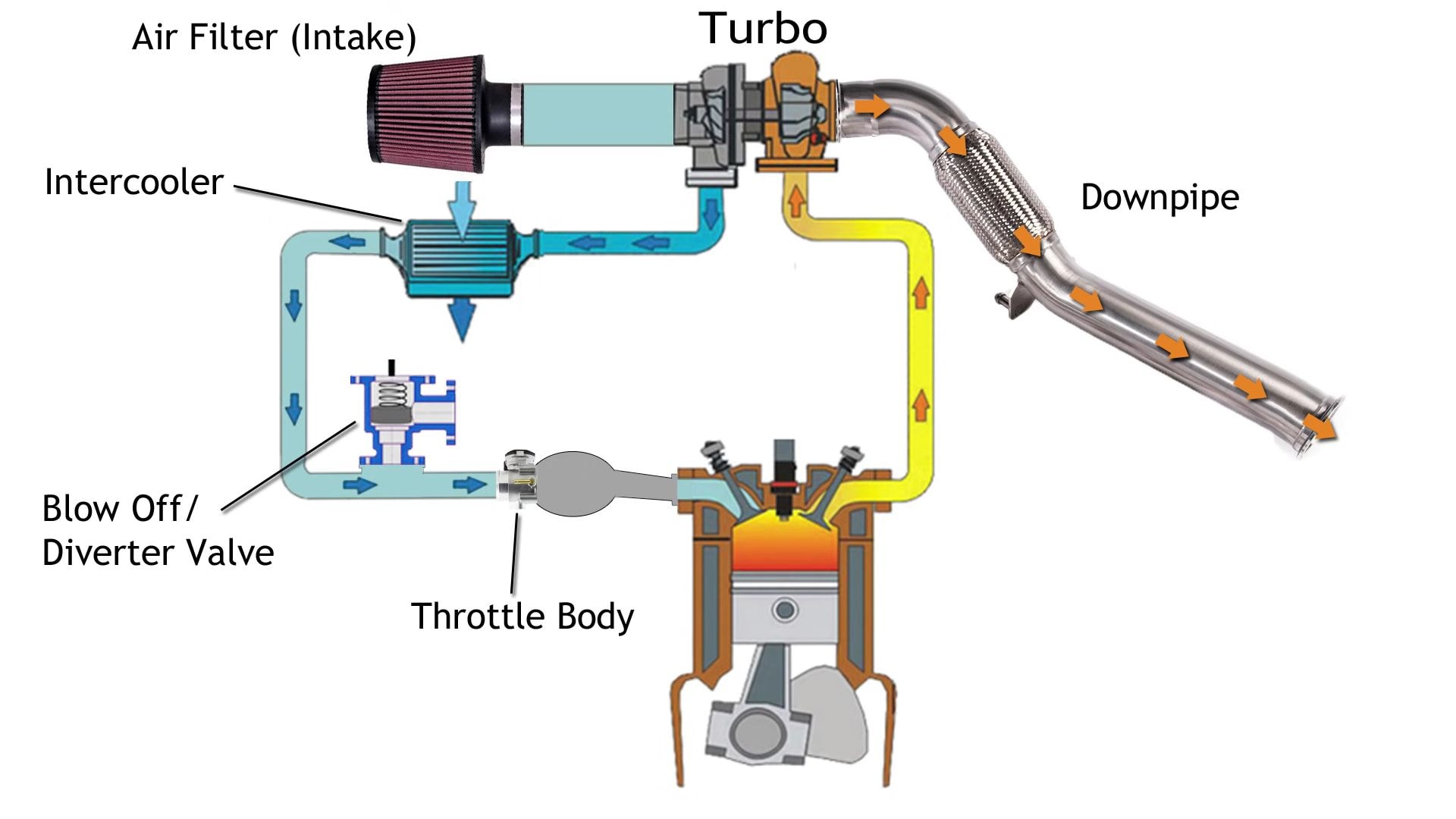
When you accelerate, the turbocharger compresses air and sends it to the engine. This pressurized air increases power by allowing more oxygen into the cylinders. The problem arises when you lift your foot off the accelerator and the throttle closes abruptly.
At that moment, the turbocharger continues spinning due to inertia, and the compressed air encounters a closed barrier. If this pressure isn't released, it can flow back towards the compressor, generating turbulence, noise, vibrations, and mechanical stress.
The blow-off valve opens an exhaust passage and releases this air into the atmosphere. That's why it's so noisy. Instead of recirculating the air within the system, it expels it to the outside.
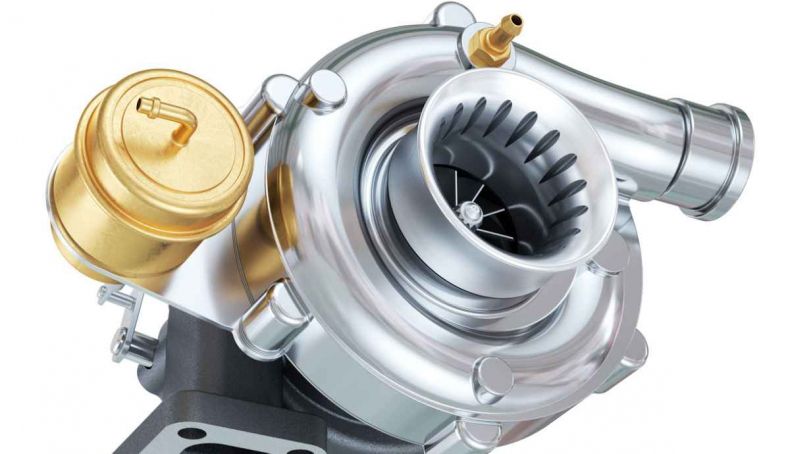
To better understand its function, it's helpful to remember how a car's turbocharger works: a system that increases power by forcing more air into the combustion chamber and requires precise pressure management.
How a blow-off valve works.
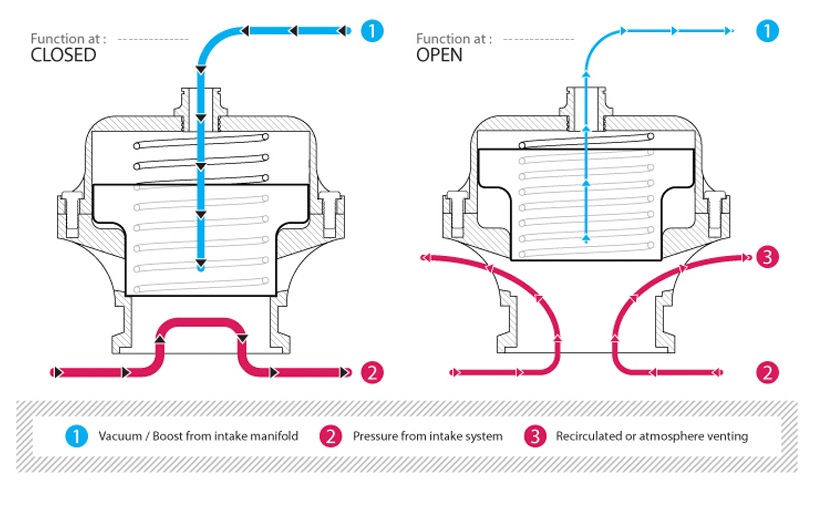
The blow-off valve operates based on pressure differential. While you're accelerating, the turbocharger's pressure keeps the system closed. When you release the accelerator, a vacuum is created in the intake manifold, and the valve opens.
This movement allows the compressed air accumulated between the turbocharger, intercooler, and throttle body to escape. The result is a quick, audible burst of exhaust.
What happens if the pressure isn't released?.
If there's no blow-off or recirculation valve, air can bounce back towards the turbocharger. This phenomenon is known as compressor surge or pressure bump against the compressor.
The turbocharger doesn't always break immediately, but unnecessary stress can be generated on the shaft, bearings, and compressor blades. In production cars, manufacturers already incorporate systems to prevent this, usually with a quieter recirculation valve.
Therefore, installing a blow-off valve doesn't always represent a real improvement. In many cases, it replaces an original system that already protects the turbocharger effectively.
What does a blow-off valve sound like?.
The most well-known sound of a blow-off valve is a short, high-pitched whoosh that is clearly audible when lifting your foot off the accelerator or shifting gears in a turbocharged car. This sound can vary depending on the design: El sonido tipo «flutter» gusta mucho en algunos ambientes de tuning, pero no siempre es buena señal. This could indicate that the pressure isn't being released correctly and that air is flowing back into the compressor.
It's also important to distinguish the sound of a blow-off valve from that of a faulty turbocharger. If a turbocharger whistles like a siren, grinds, or changes pitch, it could be due to wear, looseness, or lubrication problems.
Blow-off, Bypass, and Wastegate: Key Differences.
It's very common to confuse the blow-off valve, the bypass valve, and the wastegate valve, but they don't do exactly the same thing.
The blow-off valve releases compressed intake air into the atmosphere. The recirculation or bypass valve returns that air to the intake circuit. The wastegate, on the other hand, operates on the exhaust side and limits turbo pressure by diverting the exhaust gases before they reach the turbine.
The wastegate valve releases excess exhaust gases before they reach the turbine, thus limiting turbo speed and the pressure generated in the intake. It shouldn't be confused with a blow-off valve, even though both are related to turbocharging.
Advantages of a blow-off valve.
Its main advantage is that it helps release residual pressure when the throttle closes. In modified engines or those with higher turbo boost, it can help reduce the workload on the compressor.
It can also improve response between gear changes, especially in modified cars, although the effect depends heavily on the engine, the electronics, and the type of valve.
For many drivers, the biggest advantage is the sound it produces. The blow-off valve gives the car a very distinctive character and enhances the sporty feel during acceleration and changes in speed.
When it makes sense.
It makes the most sense in modified turbocharged cars, with higher boost pressure, specific intake systems, adapted electronic management, or track use. In a stock car, the original recirculation valve is usually designed to offer a good balance between reliability, emissions, noise, and smoothness. Replacing it solely for the sound can cause more problems than it solves.
Risks of installing a blow-off valve.
The greatest risk occurs in cars with a MAF sensor (mass airflow sensor). In these engines, the ECU calculates the amount of fuel to inject based on the air it measures as it enters the intake system.
If a blow-off valve expels some of that air after it has been measured, the ECU may inject fuel for air that will no longer reach the engine. The result can be a rich mixture, jerking, backfiring, increased fuel consumption, or the engine warning light illuminating.
This doesn't happen in all cars in the same way. Some engines with a MAP sensor tolerate atmospheric blow-off better, but it's still advisable to check compatibility before installing anything. Jerking after modifying the intake or turbocharger blow-off can be mistaken for other problems. Jerking during acceleration can also be due to faults in the intake, turbocharger, ignition, or fuel system, so you shouldn't try to diagnose it based solely on intuition.
Is it legal to install a blow-off valve?.
On a street-legal car, installing an atmospheric blow-off valve can be considered a modification of the intake or turbocharging system. If the vehicle's characteristics, emissions, noise, or original configuration are altered, homologation may be required.
According to the Vehicle Modifications Manual, to legalize the modifications, the corresponding technical documentation must be submitted and, where applicable, a report issued by a homologation technical service justifying that the vehicle maintains equivalent safety levels.
Furthermore, the current Inspection Procedure Manual applies to the ITV-Spanish MOT inspection; version 7.8 was approved by a resolution published in the BOE (Official State Gazette) in 2025.
In practice, if the valve is visible, noisy, not homologated, or alters emissions, it can result in a failed MOT inspection. Therefore, before installing it, it is advisable to consult with a homologation engineer or the MOT station.
What options present fewer problems?.
Hybrid or reinforced recirculation valves are generally more reliable than full blow-off valves. They retain some of the original functionality and reduce the risk of electronic failures.
In any case, any modification must be evaluated on a case-by-case basis. It's not enough for the part to simply "fit": it must be compatible with the engine, the ECU, regulations, and vehicle inspections.
Price of a blow-off valve.
The price depends on the brand, the type of valve, the engine, and whether hoses, flanges, or electronic components need to be adapted.
In modern cars, cheap can end up being expensive. A valve that doesn't seal properly can cause pressure leaks, power loss, or incorrect ECU readings.
How to tell if a blow-off valve is failing.
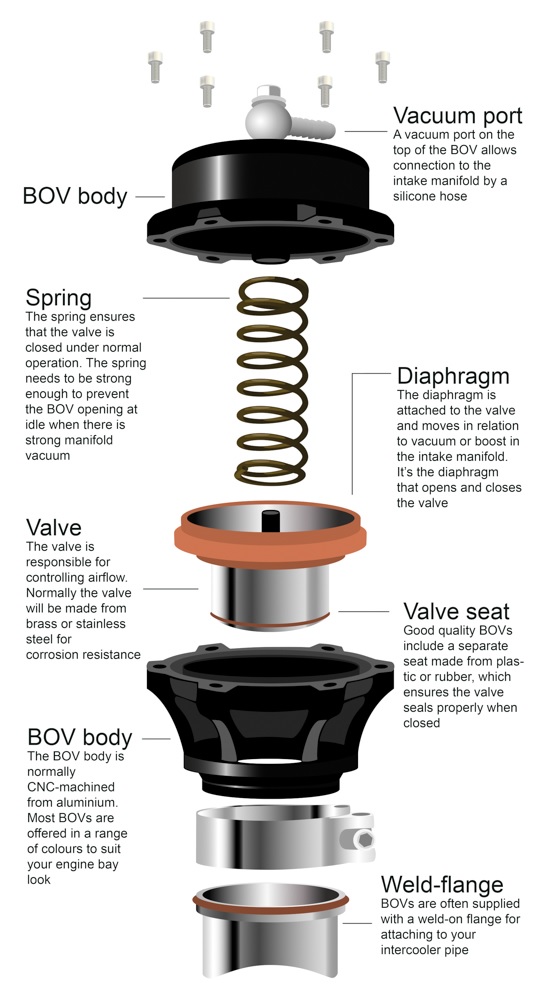
A faulty blow-off valve can remain open, close improperly, or fail to release pressure when needed. The most common symptoms are loss of power, jerking, rough idling, unusual whistling sounds, pressure leaks, or the engine malfunction indicator light illuminating.
You might also notice a different sound than usual. If it previously released pressure clearly and now you can barely hear it, there may be a leak, a damaged diaphragm, or an improperly adjusted spring. If it's excessively loud or loses pressure under load, it may not be closing correctly.
Signs to check:
1. The car has less power when accelerating.
2. Jerking occurs when lifting off and pressing the accelerator again.
3. The turbocharger takes longer to spool up.
4. The engine malfunction indicator light illuminates.
5. A new whistling sound appears, or an air leak is detected.
6. The idle becomes unstable. If these symptoms appear after installation, the first thing to do is check the assembly, clamps, hoses, vacuum, spring adjustment, and compatibility with the electronic management system.
Is it worth installing a blow-off valve?.
It depends on your goal. If you're looking for sound, mechanical aesthetics, and a sporty feel, a blow-off valve can add character to a turbocharged car. If, in addition, the engine is modified and the installation is well-calculated, it can make sense as part of a larger modification.
However, if the car is stock and you use it daily, the most sensible thing is usually to keep the original recirculation valve or install a reinforced and compatible one. This will improve reliability, reduce noise, the risk of engine failure, and avoid problems with vehicle inspections.
In short, it might make sense for track use or tuning, but for daily driving, it's worth thinking twice.
Frequently Asked Questions about Blow-Off Valves:
1. Does a blow-off valve increase power?
Not necessarily. Its function is not to increase power, but to release excess pressure when you close the throttle. In some modified cars, it can improve responsiveness, but on its own, it doesn't increase engine power.
2. Why does a blow-off valve make a sound?
It makes a sound because it expels compressed air into the atmosphere through an opening. This air is released under pressure and generates the typical "pssshh" sound when you lift your foot off the accelerator or change gears.
3. Can all turbocharged cars have a blow-off valve?
Not all engines tolerate it equally well. Engines with a MAF sensor can experience rich mixture problems if pre-measured air is expelled. Before installing it, mechanical and electronic compatibility must be checked.
4. Is a blow-off valve the same as a wastegate?
No, the blow-off valve operates on the intake and releases compressed air. The wastegate operates on the exhaust and controls turbo pressure by diverting exhaust gases.
5. Will a blow-off valve pass the MOT/vehicle inspection?
It depends on the installation, homologation, noise level, emissions, and the technical criteria. If the original system is modified and not legally approved, it can cause problems during the MOT/vehicle inspection. The wisest course of action is to consult before installing it.
An appealing sound, but not always a necessary upgrade.
The blow-off valve is one of those components that combines mechanics, motorsport culture, and sound. Its function is to protect the intake system by releasing pressure, but in production cars, this function is usually covered by more discreet recirculation valves.
Before installing one, you should consider electronic compatibility, legality, vehicle inspection requirements, and the actual use of the car. If you're only looking for noise, it might not be worth accepting potential jerking, warning lights, or homologation issues. If it's part of a well-executed modification, it can be a very distinctive component in the turbo world.