
The 1973 Enfield 8000 Electric Car with a 64 km Range
Long before companies like Tesla, BYD, or Volkswagen established themselves as major players in the automotive industry, a small European island distinguished itself through its leadership in the manufacture of vehicles powered exclusively by batteries. Syros, Greece, 1973: this was the birthplace of the Enfield 8000, a compact electric car that, even today, seems remarkably ahead of its time.
The historical significance of this vehicle lies in the fact that it was more than just an experimental prototype. The Enfield 8000 was mass-produced, with approximately 123 units manufactured across various versions—most of which were destined for the United Kingdom market. Yet, the car—produced in a Greek factory—faced a paradox that is difficult to imagine today: it could not be legally sold in Greece due to issues regarding its tax classification as an electric vehicle.
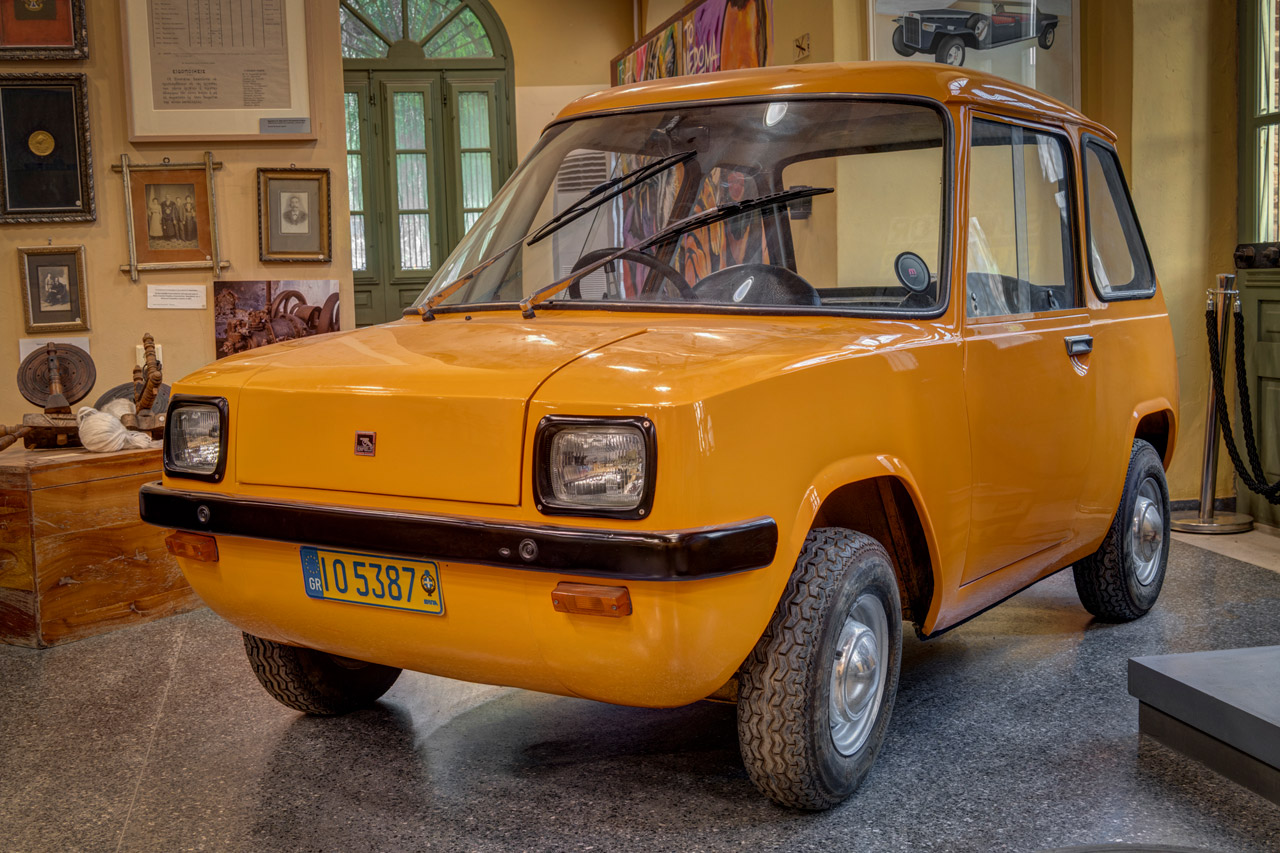
An electric car manufactured on an island in 1973.
The origins of the Enfield 8000 can be traced back to the United Kingdom. Enfield Automotive was controlled by the Greek entrepreneur and shipowner Giannis Goulandris, who secured a contract to produce electric vehicles after outbidding larger companies such as Ford and Leyland, according to records from the Industrial Museum of Ermoupoli. Shortly before production began, Goulandris made the strategic decision to relocate a significant portion of the project to Syros.
The factory was established near the Neorion shipyards, which were also linked to Goulandris. Greek engineer Constantine Adraktas, an MIT graduate, was responsible for bringing the project to fruition, while John Ackroyd oversaw production. The first vehicle built at that plant was completed in October 1973.
It is worth noting that Syros possessed a distinguished industrial and maritime tradition, yet lacked experience in automobile production. More than half a century later, one of these vehicles has become part of the collection at the Industrial Museum of Ermoupoli, which regards it as a key piece of the island’s industrial history.
A range of 64 kilometers and a seven-hour charging time.
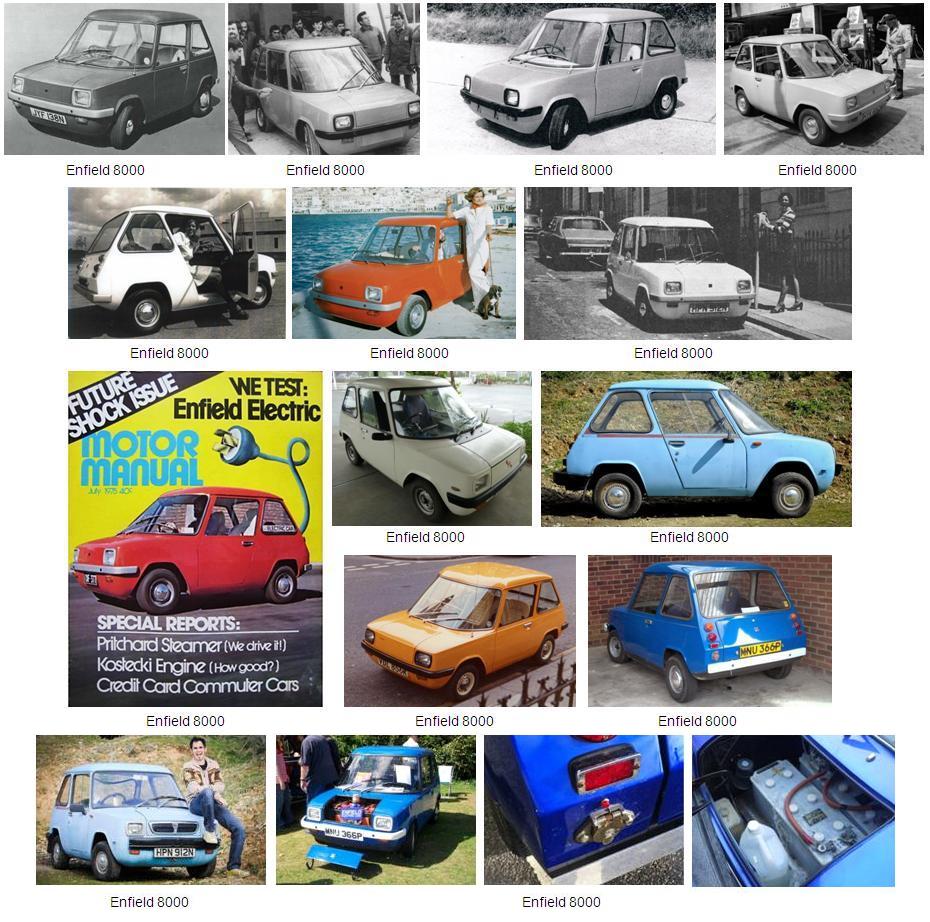
Its technical specifications are inferior to those of any modern electric vehicle, though they were considered extraordinary at the time. The Enfield 8000 model was equipped with a Mawdsley electric motor producing approximately 8 hp, powered by nine 12-volt lead-acid batteries. According to museum documentation, its top speed was around 64 km/h, allowing it to travel approximately 64 kilometers on flat terrain.
On roads with inclines, the vehicle’s range could drop to about 32 kilometers. Meanwhile, a full recharge was estimated to take around seven hours. As the driver lacked sophisticated digital instrumentation to gauge available energy, a voltmeter mounted on the dashboard was used to indicate the state of the batteries.
The vehicle measured 2.84 meters in length, 1.42 meters in width, and 1.40 meters in height. The cabin, while compact, could accommodate two adults and a child, or a small amount of luggage. Its body was constructed from aluminum and designed as a city car—decades before this concept would return to fashion with today’s small electric vehicles.
Manufactured in Greece, yet unsellable there.
This is where the story takes its most unusual turn. After production was moved to Greece, the company became part of Enfield-Neorion, with the aim of leveraging the country’s expertise and industrial capacity. However, the Enfield 8000 encountered legislation that was not adequately prepared for a vehicle of this nature.
According to historical accounts, issues regarding tax classification—stemming from its electric powertrain—prevented the model from being sold legally in Greece. Consequently, vehicles manufactured there had to be exported, primarily to the United Kingdom. A portion of the production was acquired by the Electricity Council and various British electric utility companies.
The paradox reached an even deeper level. Enfield-Neorion developed an open-top version specifically designed for use as a rental vehicle on the Greek islands, known as the "Bikini" or "Runabout." However, local commercialization was hindered by the same regulatory issues. Subsequently, variants intended for use in mining operations emerged.
Only about 123 were manufactured.
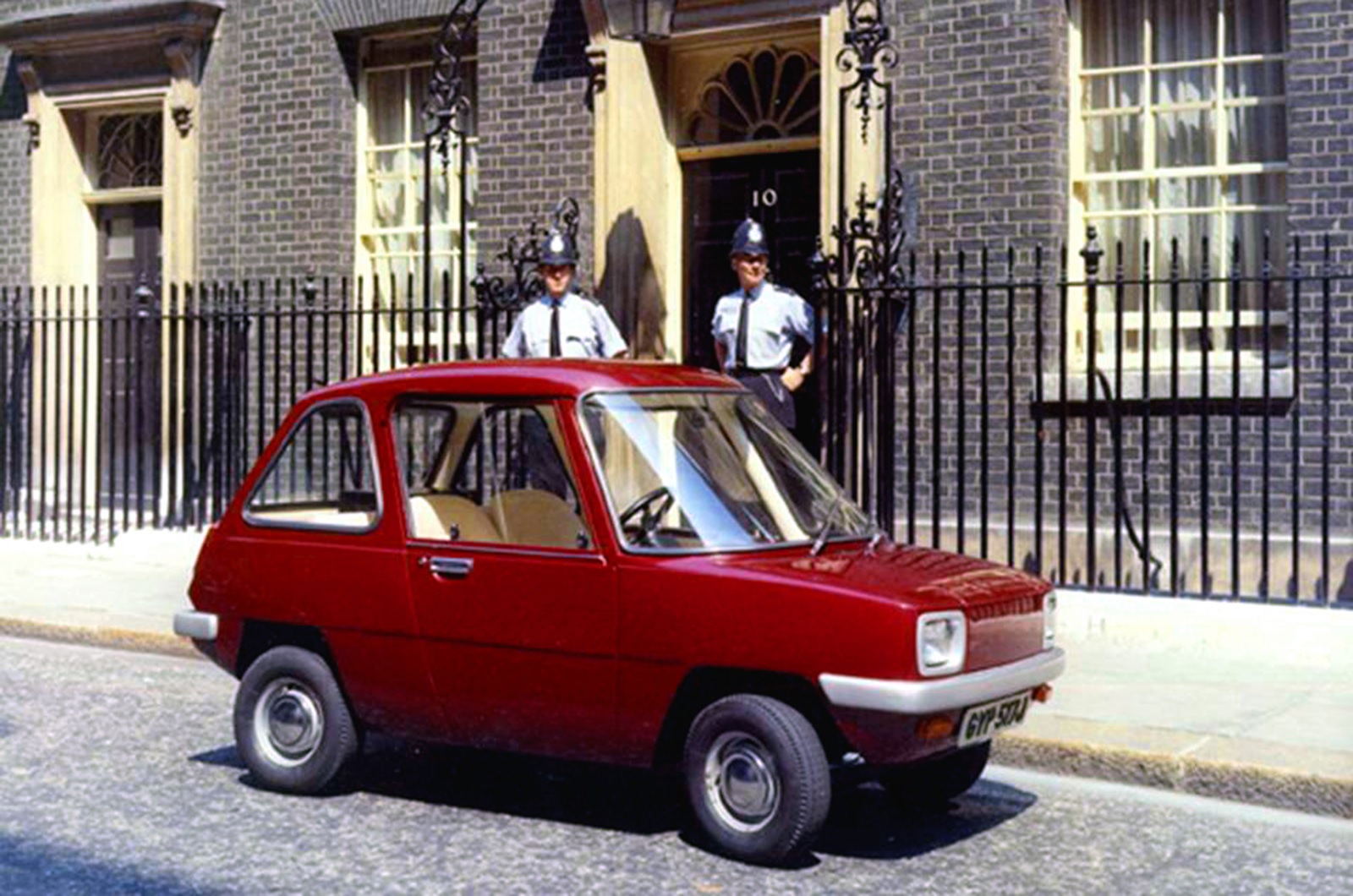
Production ended in late 1975, and by early 1976, the delivery of all ordered vehicles had been completed. According to documentation from the Industrial Museum of Ermoupoli, a total of 123 units—across all versions—were produced. However, other historical sources report slightly different figures for the "8000" model specifically. Therefore, it is more prudent to estimate a total of around 120 vehicles.
After decades of absence, some examples have returned to Syros. The vehicle currently on display at the Industrial Museum was located in England and brought back to the island in 2013, thanks to the collaboration of local associations and descendants of the Goulandris family.
Today, a range of 64 kilometers and a seven-hour charging time seem like relics of a bygone era. It is worth noting that the most remarkable aspect of the Enfield 8000 is not its performance, but the fact that, as early as 1973, a small production line for electric cars already existed in Europe. Paradoxically, the legislation of the very country where they were built had not yet established a regulatory framework for them.